The Disability Tax Credit (DTC) certificate is the official Canada Revenue Agency (CRA) application used to determine eligibility for a federal non-refundable tax credit for Canadians with severe and prolonged impairments. You apply by completing Form T2201, which requires certification from a medical practitioner. Approval for the DTC can reduce income tax payable and is often a gateway to accessing other disability-related benefits and programs. The application process involves submitting the form digitally or by mail, with the CRA providing a formal Notice of Determination after review.
Understanding the Disability Tax Credit and Form T2201
The Disability Tax Credit is a federal program designed to help offset some of the extra costs associated with living with a severe and prolonged disability. It reduces the amount of income tax an eligible individual or their supporting family member owes. The DTC is not a monthly payment but a credit claimed on an annual income tax return. Because it is non-refundable, its value depends on whether the eligible person had income tax payable during the approved years. The official application for this credit is Form T2201, the Disability Tax Credit Certificate. This form is the mechanism by which the Canada Revenue Agency certifies that an individual's impairment meets the legal definition for the credit. Approval for the DTC can also serve as a gateway to other programs like the Canada Workers Benefit Disability Supplement and Registered Disability Savings Plans. The credit includes both a federal portion and a provincial or territorial portion, and an additional supplement may apply for eligible individuals under the age of 18.

Core Eligibility Criteria for the DTC
Eligibility for the Disability Tax Credit is based entirely on the functional impact of an impairment, not on a specific medical diagnosis alone. The Canada Revenue Agency requires that the impairment be both severe and prolonged. A prolonged impairment is one that has lasted, or is expected to last, for a continuous period of at least one year. The severity is assessed against the impairment's effect on basic activities of daily living. To be considered severe, an individual must generally have a marked restriction in at least one of the listed categories. A marked restriction means the individual is unable to perform the activity, or it takes them three times longer to perform it than someone of a similar age without a disability, all or almost all the time, which the CRA defines as at least 90 percent of the time. The eligible categories of basic activities of daily living include walking, feeding, dressing, eliminating (bowel or bladder functions), hearing, speaking, and vision. Mental functions necessary for everyday life also constitute a category, covering adaptive functioning, attention, concentration, memory, problem-solving, and regulation of behaviour and emotions. If an individual does not have a single marked restriction, they may still qualify under the cumulative effect of significant limitations. This applies if the person has significant limitations in two or more of the basic activities of daily living. A third pathway to eligibility is for individuals who require life-sustaining therapy. The therapy must be needed to support a vital function, required at least three times per week for an average of at least 14 hours per week, and cannot include time for activities like travel or shopping for medication.
The Canada Revenue Agency specifically defines the basic activities of daily living that are assessed for a marked restriction or significant limitation. These functions include walking, dressing, feeding, eliminating, hearing, speaking, and vision. Mental functions necessary for everyday life are also included in this assessment. Eligibility for the Disability Tax Credit depends on how an impairment affects a person's ability to perform these everyday functions. The CRA evaluates the severity, duration, and functional impact of these limitations.
- Walking
- Feeding
- Dressing
- Eliminating (bowel or bladder functions)
- Hearing
- Speaking
- Vision
- Mental functions necessary for everyday life
Step-by-Step Application Process
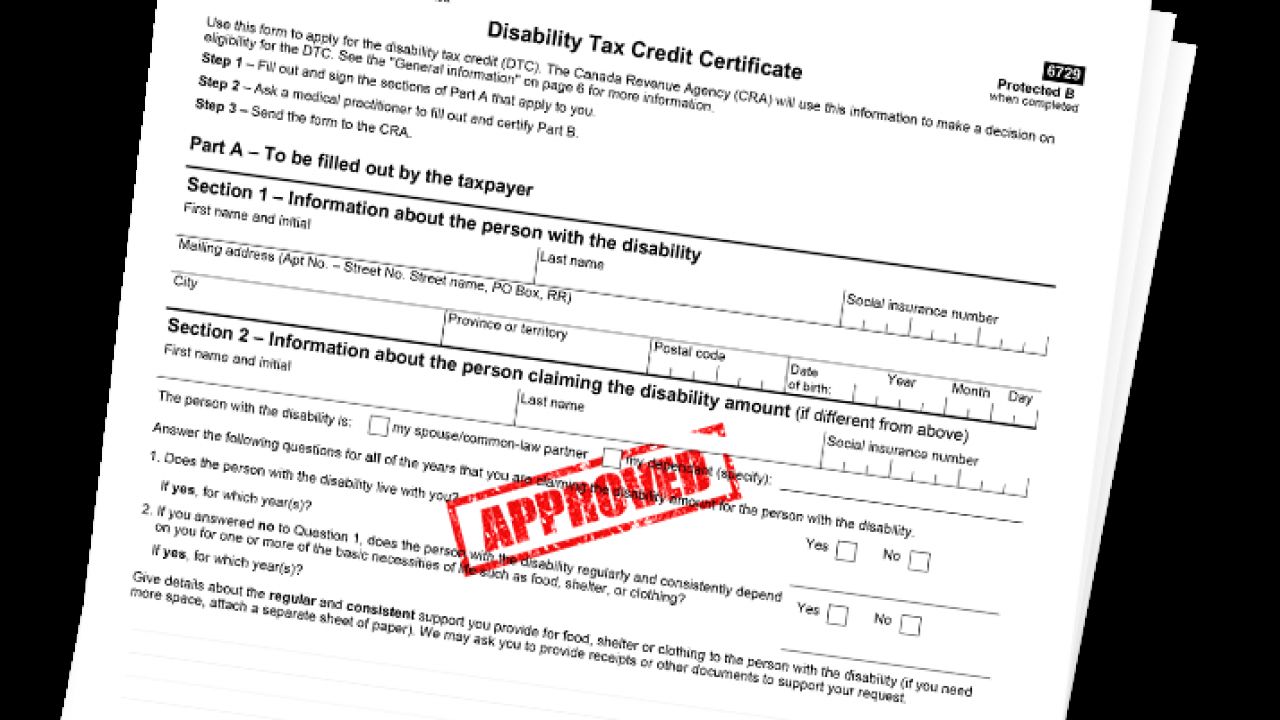
Applying for the Disability Tax Credit involves obtaining, completing, and submitting Form T2201. The form is divided into two parts that must be completed by different parties. Part A is for the applicant's personal information and must be filled out by the person with the disability or their legal representative. Part B is the medical certification section and must be completed by an appropriate medical practitioner. You can initiate the application through several methods, including online via CRA My Account, by phone, or by using a paper form. As of July 14, 2026, the CRA requires that all DTC applications be submitted using the dedicated digital DTC application form or by mailing the paper form. You can no longer submit the application through the general 'Submit documents' feature in your CRA account. If you apply online or by phone, you will receive a reference number after completing Part A, which you must give to your medical practitioner to complete Part B digitally. If using the paper form, you must download the current version from the CRA website, complete Part A, and then have your practitioner complete Part B on the same physical form. It is critical to use the latest form version, as the CRA will stop accepting forms issued before 2023 after September 8, 2026. Once fully completed, paper applications must be mailed to the appropriate CRA tax centre, the addresses for which are listed on the form's final page. You should always keep a copy of your entire submitted application for your personal records.
The standard application for the Disability Tax Credit involves completing Form T2201, the Disability Tax Credit Certificate. Part A of the form must be filled out by the applicant, who is the person with the disability or their legal representative. Part B of the form must be completed and certified by a qualified medical practitioner. Once both parts are completed, the form must be submitted to the Canada Revenue Agency either digitally through a CRA My Account or by mail.
- Decide on your application method: digital, phone, or paper.
- Complete Part A of Form T2201 with your personal and tax information.
- Provide the form or reference number to a qualified medical practitioner.
- The practitioner completes Part B, certifying the nature, duration, and impact of your impairment.
- Submit the fully completed form via the mandated channel (digital portal or mail).
- Wait for the CRA's formal Notice of Determination, which states whether you are approved.
The Canada Revenue Agency advises that the review process for a Disability Tax Credit application typically takes about eight weeks. This timeframe can sometimes be longer if the CRA requires additional information. You should submit your application well before you plan to file your tax return if you intend to claim the credit for that year. Claiming the Disability Tax Credit on your tax return without an approved Form T2201 on file with the CRA will likely result in the claim being disallowed. The CRA will send a letter called a Notice of Determination to inform you of their eligibility decision.
Completing the Medical Certification (Part B)
The medical certification in Part B of Form T2201 is the essential component of the Disability Tax Credit application. Only specific medical practitioners are authorized to complete this section, and the appropriate practitioner depends on the nature of the impairment being certified. A medical doctor or psychiatrist can certify impairments in any of the eligible categories. For restrictions specifically in walking, feeding, or dressing, an occupational therapist is also a qualified certifier. An optometrist can certify vision restrictions, while an audiologist can certify hearing restrictions. A psychologist is authorized to certify impairments in mental functions necessary for everyday life. It is important to prepare for the appointment with your medical practitioner. You should review the form and your restrictions thoroughly beforehand to effectively communicate how your impairment affects your daily functioning. The practitioner will need to describe the impairment, state how long you have had it, and confirm that it meets the criteria for being severe and prolonged. They must also indicate how long they have been your patient and whether they have medical records supporting the impairment for the period in question. Medical practitioners may charge a fee for completing this form, which commonly ranges from $100 to $250. This fee is considered an eligible medical expense that you can claim on your income tax return. Starting September 1, 2026, individuals approved for the Canada Disability Benefit will automatically receive a one-time, lump sum payment of $150 to partially cover the cost of medical practitioner fees for Form T2201.
The list of medical practitioners qualified to complete Part B of Form T2201 is defined by the Canada Revenue Agency based on the category of impairment. A medical doctor or psychiatrist can certify for all categories of impairment. An occupational therapist can certify for restrictions in walking, feeding, or dressing. The medical practitioner must certify that the applicant has a severe and prolonged impairment. Medical practitioners may charge a fee for completing this form, which is an eligible medical expense for a tax return.
- Medical doctor or psychiatrist (all impairment categories)
- Occupational therapist (for walking, feeding, or dressing restrictions)
- Optometrist (for vision restrictions)
- Audiologist (for hearing restrictions)
- Psychologist (for mental functions necessary for everyday life)
Key Dates and Submission Rules
The Canada Revenue Agency has implemented specific deadlines and rules for the Disability Tax Credit application process that applicants must follow. A crucial rule change took effect on July 14, 2026, which mandates that all DTC applications must be submitted using the CRA's digital Disability Tax Credit application form or by mailing the paper form. The previous method of uploading documents through the 'Submit documents' feature in a CRA My Account is no longer accepted for DTC applications. Furthermore, the CRA has announced that after September 8, 2026, it will no longer accept older versions of the paper Form T2201. Specifically, any Form T2201 issued before the 2023 tax year will be considered invalid and will not be processed. Applicants must download the most current version of the form directly from the Canada.ca website. There is no annual deadline to apply for the DTC. Applications can be submitted at any time. However, for the credit to be claimed on a specific year's tax return, the CRA must have approved the T2201 before or during the processing of that return. The CRA's review process generally takes about eight weeks from receipt of a complete application. These procedural updates are designed to streamline the application process and ensure all submissions are made using the most current eligibility criteria and form layout.
After Submission: The CRA Review and Determination
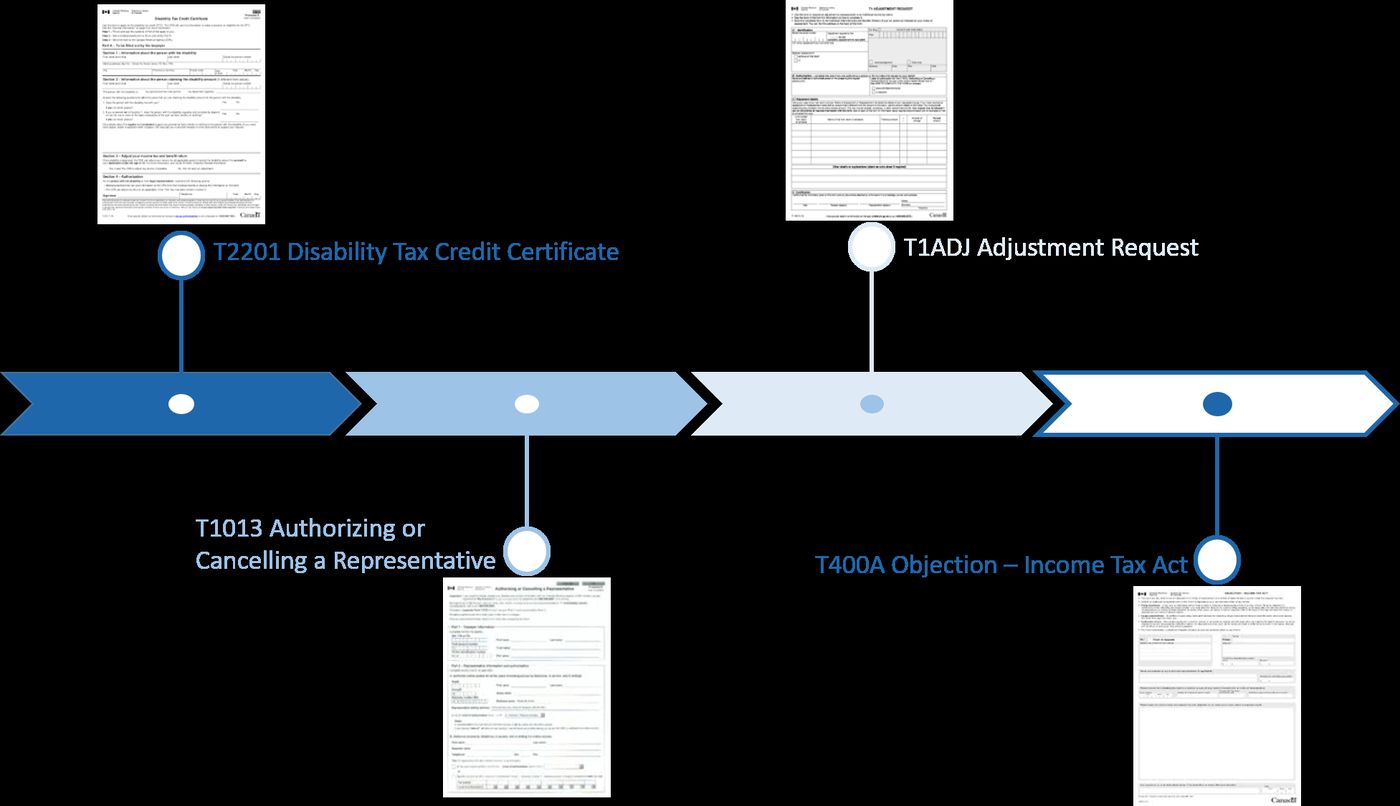
Once your completed Form T2201 is received, the Canada Revenue Agency begins its review to determine eligibility. The CRA may contact you or your medical practitioner for additional information or clarification during this process. The outcome of the review is communicated through a formal letter called a Notice of Determination. This letter will state whether your application for the Disability Tax Credit has been approved or denied. If approved, the notice will specify the years for which you are eligible, which can include the current year and past years. Approval means the CRA has certified that your impairment meets the legal definition of severe and prolonged. With an approved T2201 on file, you or a supporting family member can claim the DTC on your annual income tax returns. The credit can be claimed retroactively for up to ten previous tax years, provided the impairment was present and severe during those years. You do not need to reapply each year. The approval is often for a multi-year period or indefinitely, unless the CRA specifies a review date. If your application is denied, the Notice of Determination will explain the reason. You have the right to object to the CRA's decision if you believe an error was made. The objection process involves submitting a formal request for the CRA to reconsider its determination, often with new or additional supporting information.
Common Application Mistakes to Avoid
Several common errors can delay or jeopardize a Disability Tax Credit application. One of the most frequent mistakes is applying based solely on a medical diagnosis without adequately demonstrating how the condition causes a marked restriction in daily functioning. The CRA assesses functional impact, not the condition's name. Another error is using an outdated paper form. After September 8, 2026, the CRA will not process Form T2201 versions issued before 2023. Applicants must always download the latest form from the official CRA website. Incorrectly submitting the application is also problematic. As of July 14, 2026, applications must go through the dedicated digital DTC portal or be mailed. Using other electronic submission methods in CRA My Account will result in the application not being processed. Incomplete forms are a major cause of delay. This includes missing signatures in Part A, which authorizes the CRA to review your medical information, or having a medical practitioner complete a section for which they are not qualified. For example, an optometrist cannot certify a walking restriction. Failing to provide sufficient detail in Part B is another issue. The medical practitioner must describe the specific effects of the impairment, not just list a diagnosis. Finally, some applicants mistakenly believe they are ineligible if they have no tax payable. While the DTC itself is non-refundable, being approved for it is a prerequisite for other benefits like the Canada Disability Benefit and Registered Disability Savings Plans, which are valuable regardless of tax liability.
Provincial and Territorial Components
The Disability Tax Credit is composed of both a federal credit and a corresponding provincial or territorial credit. When you are approved for the federal DTC, you automatically become eligible for the provincial or territorial portion as well. Each province and territory sets its own credit amount, which is calculated as a percentage of the federal base amount. These provincial credits are also non-refundable and work to further reduce the amount of provincial or territorial income tax you owe. The combined value of the federal and provincial credits can be substantial. For example, an individual eligible for the full federal credit will also receive the full provincial credit for their jurisdiction. The calculation for these credits is integrated into the income tax return process. When you file your return through tax software or with a paper schedule, the system will apply both credits if you have entered your DTC approval information. It is important to note that while the eligibility is determined federally by the CRA, the financial benefit is delivered through both levels of government's tax systems. This structure ensures that the credit accounts for regional differences in tax rates and the cost of living.
Frequently asked questions
What is Form T2201 used for?
Form T2201, the Disability Tax Credit Certificate, is the official Canada Revenue Agency application used to determine if an individual has a severe and prolonged impairment that qualifies them for the Disability Tax Credit. The form requires completion by the applicant and certification by a medical practitioner. Approval of this form by the CRA certifies eligibility for the non-refundable tax credit. This approval can also serve as a gateway to access other federal, provincial, or territorial disability-related programs and benefits.
Who is eligible to apply for the Disability Tax Credit?
Eligibility is based on having a severe and prolonged impairment in physical or mental functions. The impairment must cause a marked restriction in at least one basic activity of daily living, such as walking, dressing, or mental functions, all or almost all the time for a continuous period of at least one year. Individuals who do not have a single marked restriction may qualify under the cumulative effect of having significant limitations in two or more activities, or if they require life-sustaining therapy. A medical practitioner must certify the impairment on Form T2201.
How long does it take to get approved for the DTC?
The Canada Revenue Agency states that the processing time for a Disability Tax Credit application is typically about eight weeks from when they receive a complete Form T2201. However, this timeframe can be longer if the CRA requires additional information or clarification. It is advisable to submit the application well in advance of filing your tax return if you hope to claim the credit for that tax year. The CRA will review your application and send you a Notice of Determination letter to inform you of their decision.
Can I claim the DTC for past years?
Yes, the Disability Tax Credit can be claimed retroactively. If your impairment was severe and prolonged in previous years, you can apply to have the CRA reassess your tax returns for up to ten previous tax years. You indicate this request in Part A, Section 3 of Form T2201. If approved, the CRA will apply the credit to those past years, which may result in a refund for any taxes paid during those years, depending on your income and tax payable.
What happens if my DTC application is denied?
If the CRA denies your application, they will send you a Notice of Determination letter explaining the reasons for the denial. You have the right to object to this decision. The objection process involves formally requesting that the CRA reconsider its determination. You can submit new or additional information from your medical practitioner to support your case. It is important to review the denial reasons carefully and address the specific points the CRA raised about your functional limitations.
Do I need to reapply for the DTC every year?
No, you generally do not need to reapply each year. Once the CRA approves your Form T2201, the approval is often for a multi-year period or indefinitely, unless the CRA specifies a future review date on your Notice of Determination. You simply continue to claim the credit on your annual income tax return for as long as the impairment persists and the approval remains valid. If your condition improves significantly, you are obligated to inform the CRA.
Sources and further reading
- The Disability Tax Credit Application Guide disabilitycreditcanada.com
- Disability Tax Credit (DTC) inclusioncanada.ca
- Applying for the DTC, Canada Disability Benefit canadadisabilitybenefit.ca
- Form T2201, Disability Tax Credit (DTC) explained wealthsimple.com
- Canadian Disability Tax Credit (DTC): Eligibility & How to Apply turbotax.intuit.ca
This article explains how things work and is not financial, tax or legal advice. Rules, limits and rates change, so check the current figures with the Canada Revenue Agency, your province or your financial institution before you act.