The Disability Tax Credit (DTC) is a non-refundable federal tax credit designed to reduce the amount of income tax owed by Canadians with severe and prolonged disabilities or their supporting family members. The credit amount varies annually, with the 2025 federal base amount set at $10,138, plus a supplement of $5,914 for individuals under 18. This credit helps offset some of the extra costs associated with a disability by directly lowering federal and provincial tax payable. Being approved for the DTC also serves as a gateway to other important government benefits and programs.
Understanding the Disability Tax Credit Amounts
The Disability Tax Credit amount is set annually by the federal government and consists of a base amount for eligible individuals, plus an additional supplement for those under 18 years of age. For the 2025 tax year, the federal base amount is $10,138. The amounts are adjusted each year. The 2024 base amount was $9,872 with a $5,758 supplement, and the 2026 base amount is scheduled to be $10,341. These figures represent the credit amount used to calculate a reduction in taxes owed. They are not a direct payment.
To determine the actual tax reduction, the DTC amount is multiplied by the lowest federal personal income tax rate, which is 15 percent. If an individual owes less than this amount in federal tax, the credit will reduce their tax payable to zero, but they will not receive a refund for the unused portion. However, that unused portion may often be transferred to a supporting family member. The DTC is a non-refundable credit, meaning it can reduce or eliminate taxes owed but does not result in a payment if no tax is payable.
Provincial and territorial governments also offer corresponding disability tax credits. The provincial amount varies by jurisdiction and is calculated using that province's lowest tax rate. For instance, a resident of British Columbia would multiply the provincial credit amount by the BC rate of 5.06 percent. It is important for claimants to be aware of both the federal and provincial components, as the combined credit can lead to a more substantial reduction in total tax liability. The eligibility for the provincial credit is generally based on the same federal approval via Form T2201.
Eligibility Criteria for the DTC
To qualify for the Disability Tax Credit, an individual must have a severe and prolonged impairment in physical or mental functions, as certified by a qualified medical practitioner. The impairment must have lasted or be expected to last for a continuous period of at least 12 months. The Canada Revenue Agency assesses eligibility based on marked restrictions in specific categories of basic activities of daily living. These categories include speaking, hearing, walking, feeding, dressing, eliminating (bowel or bladder functions), and mental functions necessary for everyday life.
A marked restriction means the individual is unable or takes an inordinate amount of time to perform the activity, even with appropriate therapy, devices, and medication. Specifically, the activity must take three times longer than someone of a similar age without the impairment, or the individual must be unable to perform it at least 90 percent of the time. For mental functions, this includes significant limitations in adaptive functioning, attention, concentration, memory, judgement, problem-solving, and regulation of behaviour and emotions. The assessment is completed by a healthcare professional on Form T2201.
Individuals may also qualify if they have significant limitations in two or more of the basic activities of daily living, even if no single limitation is considered marked. Furthermore, eligibility extends to those who require life-sustaining therapy. This therapy must be needed to support a vital function, administered at least two times per week, and require an average of 14 hours per week. Examples include insulin therapy for diabetes, dialysis for kidney failure, or oxygen therapy. The combination of multiple impairments can also be considered if their cumulative effect is equivalent to a marked restriction.
How to Apply for the Disability Tax Credit
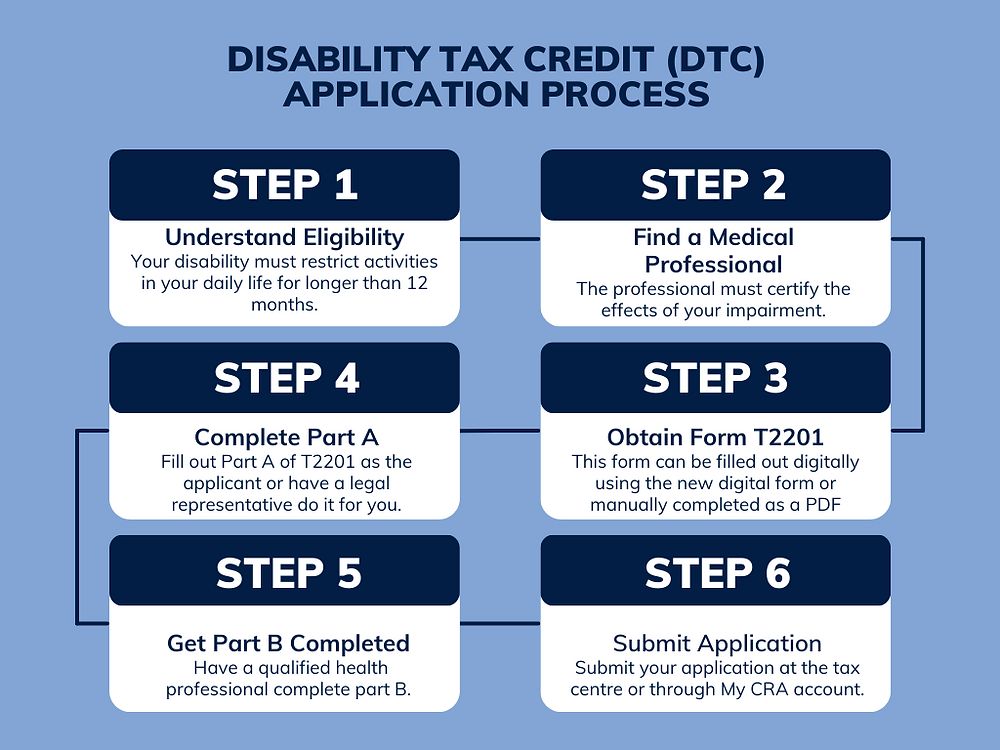
The application for the Disability Tax Credit is made using Form T2201, the Disability Tax Credit Certificate. The process involves two main parts: Part A is completed by the person with the disability or their legal representative, and Part B must be filled out and certified by an appropriate medical practitioner such as a doctor, nurse practitioner, or occupational therapist. The form requires detailed information about the nature and duration of the impairment. Applicants can choose to submit the form digitally through their CRA My Account or by mailing a paper copy to the Canada Revenue Agency.
The applicant completes Part A of Form T2201 with their personal information. This includes authorizing the Canada Revenue Agency to contact their medical practitioner. The applicant can also consent to have the CRA adjust previous years' tax returns if the disability was present in the past. The medical practitioner must then accurately complete Part B of the form. Incomplete or unclear information in Part B is a common reason for application delays or denials. If applying online, the applicant receives a confirmation number. This number must be given to the medical practitioner so they can complete their section electronically and match it to the correct application.
After submission, the CRA reviews the application and sends a Notice of Determination by mail. The standard processing time is approximately 8 weeks, though it can be longer if additional information is required. If approved, the eligibility is often granted for a future period, and individuals do not need to reapply each year. They simply claim the credit on their annual tax return until the CRA indicates a review is needed. A denial can be appealed by filing a formal objection within 90 days of the date on the denial notice.
Claiming the Credit and Transferring Unused Amounts
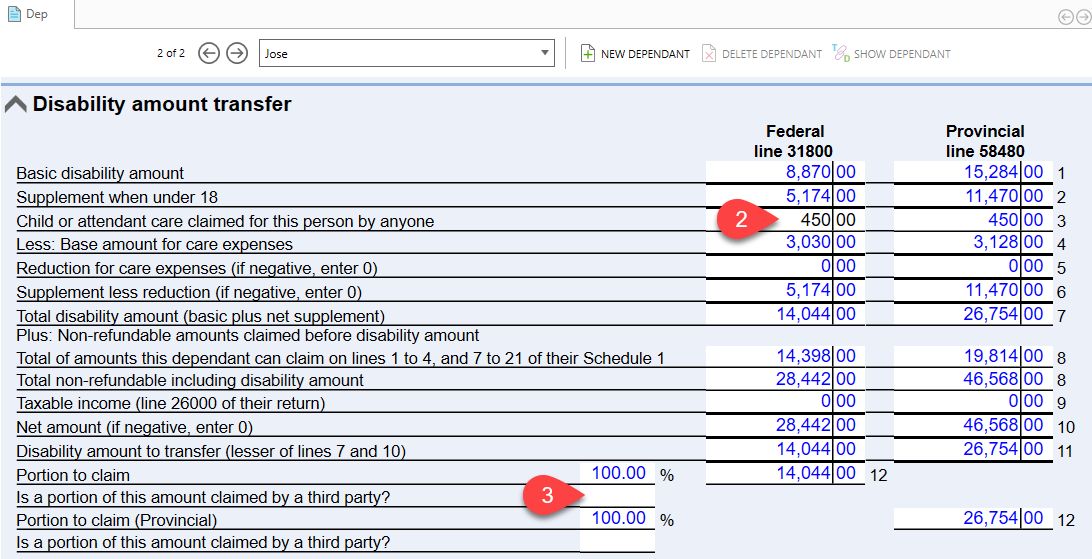
Once approved, the Disability Tax Credit is claimed on the personal income tax return. An eligible individual claims the base amount on line 31600. If the individual is under 18, the supplement is also claimed here, though it may be reduced by any child care and attendant care expense deductions claimed for that dependant. The calculation involves subtracting certain claimed expenses from the maximum supplement. If the person with the disability does not have enough taxable income to use the entire credit, the unused portion can be transferred to a supporting relative.
To transfer the credit, the supporting family member must be named on the approved T2201 form. The transfer is claimed on line 31800 for a dependant or line 32600 for a spouse or common-law partner. The person with the disability must first claim the credit on their own return. Any amount not needed to reduce their own tax payable to zero can then be transferred. This mechanism ensures that the financial benefit of the credit reaches the household supporting the individual with the disability, maximizing its impact.
For the supplement for children under 18, specific rules apply. The maximum supplement amount is reduced by any child care and attendant care expenses claimed for that dependant. A detailed worksheet is provided by the CRA to help calculate the final supplement amount. It is important to coordinate claims between the disability supplement and other dependent-related credits to optimize the tax outcome. The ability to transfer unused credits is a key feature of the DTC, making it a valuable tool for families.
Retroactive Claims and Related Benefits
A significant feature of the Disability Tax Credit is its retroactive application. If an individual's impairment is determined to have been severe and prolonged in previous years, they can apply to claim the credit for up to 10 prior tax years. On the T2201 form, applicants can authorize the CRA to adjust all applicable past returns. If approved, the CRA will reassess those years and issue any resulting tax refunds, which can include interest. This retroactive claim can provide a substantial one-time financial benefit for individuals and families who have been living with a disability for many years.
Approval for the DTC acts as a gateway to several other federal and provincial programs. It is a prerequisite for opening a Registered Disability Savings Plan (RDSP), which is a long-term savings plan with government grants and bonds. It also qualifies individuals for the Canada Workers Benefit Disability Supplement, an enhanced refundable tax credit for working individuals with disabilities. For families with children under 18, it triggers eligibility for the Child Disability Benefit, a tax-free monthly payment. Furthermore, it can simplify claims for the Canada Caregiver Credit and medical expenses.
Approval for the Disability Tax Credit can lead to eligibility for other benefits. These include the Home Buyers' Amount for first-time home buyers with disabilities. It also includes the ability to claim certain home renovation expenses through the Home Accessibility Tax Credit. The DTC serves as a gateway to accessing broader government support programs. Securing DTC approval is often the first step in a financial plan for disability-related costs. Individuals are encouraged to use government Benefits Finder tools to discover all programs for which they may be eligible.
Federal Disability Amounts by Year
The federal Disability Tax Credit amounts are adjusted each year. The base amount for an adult and the supplement for a child under 18 change annually. These changes affect the maximum potential tax reduction. The government publishes the specific amounts for each tax year. A table typically outlines the federal amounts for recent and upcoming years.
| Tax Year | Base Amount (Age 18+) |
|---|---|
| 2026 | $10,341 |
| 2025 | $10,138 |
| 2024 | $9,872 |
| 2023 | $9,428 |
| 2022 | $8,870 |
The published DTC figures are used to calculate the non-refundable tax credit. This is done by multiplying the amount by the 15 percent federal tax rate. It is important to use the correct amount for the specific tax year being filed. This applies to both current year and retroactive claims. The supplement for a child under 18 may be reduced by any child care and attendant care expense deductions claimed for that dependant in the same year.
Common Mistakes and Where to Get Help
Several common errors can delay or derail a Disability Tax Credit application. Incomplete Form T2201, particularly Part B filled out by the medical practitioner, is a frequent issue. The description of the impairment must be detailed, clearly linking the condition to the specific eligibility criteria of marked restriction, multiple significant limitations, or life-sustaining therapy. Vague statements like patient has difficulty walking without quantifying the impact are often insufficient. Applicants should ensure their medical practitioner understands the CRA's definitions and provides concrete examples of how the impairment affects daily life. Another mistake is not applying for retroactive years when the disability has existed for a long time. Applicants should carefully consider the start date of their impairment and authorize the CRA to adjust prior years.
Furthermore, individuals sometimes assume they do not qualify because they can manage some activities, not realizing that the criteria consider the cumulative effect of multiple limitations or the inordinate time required. Not exploring the transfer of unused amounts to a supporting family member is another oversight that can leave money unclaimed. Many non-profit organizations across Canada offer free help with the DTC application process. Organizations like Inclusion Canada through its Barriers-Free Benefits program, the Mood Disorders Society of Canada's Pathway to Benefits, and other disability-specific groups provide navigation services. These resources can be invaluable for understanding the complex criteria and completing the forms correctly. While private companies also offer assistance, they often charge a fee or take a percentage of the retroactive credit. Seeking free, reputable help first is generally advisable for most applicants.
- Incomplete or vague information from a medical practitioner on Form T2201.
- Not applying for the full 10-year retroactive period when eligible.
- Overlooking the ability to transfer unused credit amounts to a supporting family member.
- Failing to account for how child care expense deductions reduce the under-18 supplement.
- Assuming a condition does not qualify without checking the criteria for multiple impairments or life-sustaining therapy.
- Not using free non-profit navigation services before considering paid help.
Key Steps in the DTC Application Process
Applying for the Disability Tax Credit involves a defined sequence of steps, from gathering information to receiving a decision. Following these steps carefully can help ensure the application is complete and processed efficiently. The process centers on Form T2201 and requires coordination between the applicant and a medical professional. The first step is to obtain Form T2201, the Disability Tax Credit Certificate, from the CRA website or by phone. Next, you must complete Part A of the form with the applicant's personal information and consent for the CRA to contact the practitioner and adjust prior years. The third step is to have a qualified medical practitioner complete and certify Part B, detailing the severe and prolonged impairment.
- Obtain Form T2201, the Disability Tax Credit Certificate, from the CRA website or by phone.
- Complete Part A of the form with the applicant's personal information and consent for the CRA to contact the practitioner and adjust prior years.
- Have a qualified medical practitioner complete and certify Part B, detailing the severe and prolonged impairment.
- Submit the fully completed form digitally through CRA My Account or by mail to the Canada Revenue Agency.
- Wait for the CRA's review, which typically takes 8 weeks, resulting in a Notice of Determination letter.
- If approved, claim the credit on line 31600 of your tax return for the current and future years.
- For retroactive claims, the CRA will reassess prior returns if authorized on the form.
- If denied, file a formal objection within 90 days of the date on the denial notice.
After approval, you do not need to reapply for the Disability Tax Credit annually. You continue to claim the credit on your tax return each year until the Canada Revenue Agency advises otherwise. It is important to keep a copy of the approved Form T2201 and the Notice of Determination for your records. If your situation changes or your eligibility period expires, you may need to submit a new application in the future.
Frequently asked questions
How much is the Disability Tax Credit for 2025?
For the 2025 tax year, the federal Disability Tax Credit base amount is $10,138. This amount is multiplied by the 15 percent federal tax rate to calculate the reduction in taxes owed. The credit is non refundable, meaning it reduces taxes payable but does not result in a cash refund if the credit exceeds the tax owed. These figures are set by the federal government and are subject to change each year.
Can I get the Disability Tax Credit as a cash refund?
No, the Disability Tax Credit is a non refundable tax credit. This means it can reduce or eliminate the federal and provincial income tax you owe, but if the credit is larger than your tax payable, you will not receive the difference as a cash refund. However, any unused portion can often be transferred to a supporting family member. The credit is designed to help offset extra costs related to a disability by lowering tax liability. It is applied to the tax owed by the person with the disability first, with any remaining balance potentially transferable.
How far back can I claim the Disability Tax Credit?
You can claim the Disability Tax Credit retroactively for up to 10 previous tax years, provided you meet the eligibility criteria for those years. On Form T2201, you can authorize the Canada Revenue Agency to adjust all applicable prior year returns. If approved, the CRA will reassess those years and issue any refunds owed, which may include interest. This retroactive application is a key feature of the DTC, allowing individuals to receive credit for years they were eligible but had not yet applied. The process requires that the disability was severe and prolonged during those past years.
Who can fill out the medical section of the DTC form?
Part B of Form T2201 must be completed and certified by a qualified medical practitioner. This includes medical doctors, nurse practitioners, optometrists for vision impairments, audiologists for hearing impairments, occupational therapists, physiotherapists, psychologists, and speech language pathologists, depending on the nature of the disability. The practitioner must certify that the applicant has a severe and prolonged impairment that meets the Canada Revenue Agency's eligibility criteria. Their role is to attest to the disability's impact on activities of daily living or life sustaining therapy requirements.
Does a child with a disability qualify for an extra amount?
Yes, an additional supplement is available for individuals who are under 18 years of age at the end of the tax year and are eligible for the DTC. For 2025, this supplement is $5,914. This amount may be reduced if child care or attendant care expense deductions are claimed for the same dependant. The supplement is intended to recognize the additional costs of caring for a child with a disability. The maximum supplement is reduced by certain care expenses claimed, and if the result is negative, no supplement is added.
What other benefits come with being approved for the DTC?
Approval for the Disability Tax Credit opens access to several other government programs. These include the Registered Disability Savings Plan (RDSP), the Canada Workers Benefit Disability Supplement, the Child Disability Benefit, and may simplify claims for the Canada Caregiver Credit and medical expenses. It serves as a gateway benefit for many disability related supports. The Canada Revenue Agency and provincial governments use DTC approval to determine eligibility for these additional programs. Some benefits require a separate application while others are provided automatically.
Sources and further reading
- Disability Tax Credit (DTC) inclusioncanada.ca
- Canadian Disability Tax Credit (DTC): Eligibility & How to Apply turbotax.intuit.ca
- Benefits of the Disability Tax Credit and related programs mydtc.dabc.ca
- A Guide to the Canada Disability Tax Credit disabilityawards.ca
- Disability tax credit (DTC) support.hrblock.ca
This article explains how things work and is not financial, tax or legal advice. Rules, limits and rates change, so check the current figures with the Canada Revenue Agency, your province or your financial institution before you act.