Credit card interest rates in Canada are the annual percentage rates (APR) charged on balances not paid in full by the statement due date. Standard rates typically range from 19.99% to 25.99%, while low-interest cards can offer rates as low as 4.99% to 15.99%. Understanding how this interest is calculated daily and compounded is crucial for managing debt. For Canadians, these rates directly impact the cost of carrying a credit card balance and can significantly affect personal finances.
How Credit Card Interest is Calculated
Credit card interest in Canada is calculated daily based on your annual percentage rate (APR) and your average daily balance. The daily periodic rate is determined by dividing your card's APR by 365 days. This daily rate is then multiplied by your account's average daily balance to determine the interest charge for that day. These daily charges are summed over your billing cycle, typically 30 days, and added to your statement as the monthly interest charge. This method of daily calculation means interest compounds, as you are charged interest on both the original principal and any accumulated interest from previous days. The calculation uses the average daily balance, which accounts for fluctuations in your balance throughout the billing period, so payments made during the cycle will lower the average and reduce the interest charged.
Over a 30-day billing cycle, this results in approximately $16.43 in interest charges for that month. This new interest is then added to your existing balance, increasing the principal upon which the next month's interest is calculated. This compounding effect is why carrying a balance can lead to rapidly growing debt. Lenders only charge this interest when the due date lapses and you have not paid the balance in full. For standard purchases, most Canadian credit card companies offer an APR-free grace period between the end of the previous billing cycle and the due date, but this does not apply if you carry a balance from a prior month.
Understanding the Grace Period and When Interest Applies
Most credit cards in Canada offer an interest-free grace period on standard purchases, which is a key feature for avoiding finance charges. The grace period is the time between your statement closing date and your payment due date, typically around 21 days. If you pay your full statement balance by the due date, you are not charged any interest on the purchases from that billing cycle. This grace period applies only to new purchases, not to any carried-over balance from previous months. If you have an existing balance, new purchases may begin accruing interest immediately, depending on the card issuer's policy. The cut-off or closing date signals the end of your previous 30-day billing cycle and the start of the next, with the due date being the date by which you must make a minimum payment.
There are important transactions that are never covered by a grace period. Cash advances, which include ATM withdrawals and certain cash-like transactions such as wire transfers or buying lottery tickets, begin accruing interest immediately from the transaction date. The interest rate for cash advances is often higher than the standard purchase rate, sometimes around 22% or more. Similarly, if you miss a payment due date or only make the minimum payment, you lose the grace period. In this case, interest is typically charged retroactively on the entire balance from the original purchase dates, not just from the due date forward. This practice, known as reach back, can make carrying a balance very expensive. Paying on time ensures you maintain a good credit rating and avoid late payment charges, which can appear as additional interest.
Different Types of Credit Card Interest Rates
Credit card accounts in Canada often have multiple interest rates that apply to different types of transactions. The purchase rate is the standard interest rate applied to everyday retail purchases when the balance is not paid in full by the due date. This is the rate most commonly referenced, typically falling between 19.99% and 25.99%. The cash advance rate applies to withdrawals of cash from an ATM or other cash-like transactions and is usually higher than the purchase rate. Cash advances do not have a grace period, so interest starts accruing immediately from the transaction date. Some cards come with a variable APR that will fluctuate with a certain benchmark, like the prime rate, while most other cards have a fixed APR, meaning it generally does not fluctuate.
Balance transfer rates apply when you move debt from one card to another. While the regular rate is similar to purchase rates, issuers often offer promotional low or 0% rates for a limited time to attract new customers. Promotional or introductory interest rates are temporary offers that can apply to purchases, balance transfers, or both. Once the promotional period ends, the account reverts to the regular stated rates. Some cards also have a penalty rate, which is a significantly higher interest rate that may be applied if you miss payments. A penalty rate could increase your regular rate by a substantial margin, such as 10 percentage points, as a consequence for late payment. It is not uncommon for cards to charge multiple APR interest rates, one on purchases, another on cash advances, and still another on balance transfers.
- Purchase Rate: Standard rate for retail purchases, typically 19.99%-25.99%.
- Cash Advance Rate: Higher rate for cash withdrawals, interest starts immediately.
- Balance Transfer Rate: Rate for moving debt, often has promotional offers.
- Promotional Rate: Temporary low or 0% rate to attract new customers.
- Penalty Rate: Increased rate triggered by missed payments.
- Variable APR: Rate that fluctuates with a benchmark like the prime rate.
- Fixed APR: Rate that generally does not change.
Standard, Low, and Promotional Interest Rates
The range of credit card interest in Canada includes standard rates, low-interest options, and promotional offers. Standard credit card APRs for general-use cards tend to run between 19.99% and 25.99%, with many cards clustering in the 19.99% to 23.99% range. A low-interest credit card is generally defined as having a rate below the typical rate of 20.99%. These cards often offer APRs between 8.99% and 12.99%, with some market offerings as low as 4.99% to 15.99%. Low-interest cards are designed for individuals who occasionally carry a balance and want to minimize interest costs, often trading off premium rewards or perks. They can be helpful to people with existing higher balances looking to pay lower interest or for people who prefer simple credit cards with no additional perks.
Promotional interest rates are a common marketing tool used by card issuers. These are temporary rates offered for a limited time, such as 0% on purchases for the first six months from account opening. Promotional rates can also apply to balance transfers. It is crucial to understand that when the promotional period ends, the account will revert to the card's standard purchase, cash advance, or balance transfer rates as outlined in the cardholder agreement. For example, a standard rate of 24.99% on purchases or 27.99% on cash advances may apply if a minimum payment is not received before the due date twice within any 12 consecutive statement periods. Some cards have a fixed APR, meaning the rate generally does not fluctuate, while others have a variable APR that will change with a certain benchmark, like the prime rate. Variable rate cards can be another form of low-interest option, though the rate is not guaranteed.
The Impact of Making Minimum Payments
Making only the minimum payment on your credit card balance is a common practice that can lead to long-term debt. The minimum payment is usually calculated as a percentage of your total statement balance, often 2%, or a fixed minimum dollar amount like $40, whichever is greater. If your new balance is less than the minimum, you typically must pay the full amount. Paying the minimum by the due date helps you avoid late fees and protects your credit rating, but it does not stop interest from accruing on the remaining balance. You will still be charged interest on the balance, but as long as you do not let your balance grow indefinitely, this can be a helpful option for managing expenses when cash is in short supply.
The true cost of minimum payments is revealed in how little of your payment goes toward reducing the principal debt. This pattern continues each month, meaning it can take many years and cost a significant amount in interest to pay off the original debt. The following table illustrates a simplified three-month projection based on a $2,000 starting balance at 20.99% APR with minimum payments of 2% of the balance. This demonstrates how minimum payments primarily service the interest, making it difficult to escape credit card debt. If you lack sufficient funds to pay your balance in full, you can opt to pay the minimum required by the due date, which appears on your statement, but this will extend the repayment period considerably.
Key Factors and Common Mistakes
Several key factors influence the total interest you pay on credit card debt. The most obvious is the annual percentage rate (APR). A higher rate means more interest accrues each day on your balance. Your average daily balance is the second critical factor, as interest is calculated on this amount. Making larger payments or paying more frequently during the billing cycle lowers your average daily balance and reduces interest. The type of transaction also matters, as cash advances typically have higher rates and no grace period, making them more expensive from day one. Another factor is the billing cycle length, which is typically 30 days, over which the daily interest charges are summed.
Common mistakes can lead to unexpectedly high interest charges. One major error is assuming the grace period applies to all transactions, not realizing that cash advances and balance transfers often do not qualify. Another is only making the minimum payment, which extends the debt repayment period and maximizes interest costs. Missing a payment due date can trigger penalty interest rates and cause you to lose the grace period on new purchases. Finally, not understanding the end date of a promotional rate can result in a sudden jump to a much higher standard rate, increasing the cost of any remaining balance. Being aware of these factors and pitfalls is essential for managing credit card costs effectively. Credit cards provide a convenient way to make purchases, but this convenience can be costly if not managed properly, as the card issuing company charges you a carrying cost on the unpaid amount, which is how the issuers make money.
Strategies to Manage and Reduce Interest Costs
There are specific strategies Canadians can use to manage and reduce the interest costs associated with credit cards. The most effective strategy is to pay your statement balance in full by the due date every month, which utilizes the interest-free grace period and avoids all purchase interest charges. If you cannot pay in full, paying more than the minimum payment significantly reduces the principal faster and cuts the total interest paid over time. Taking advantage of the interest-free grace period for planning can also help. For instance, if you have a payment due at month's end but need to make a large purchase early in the month, waiting until just after the statement cut-off date can defer payment for that purchase until the following month's due date.
Another strategy is to consider a balance transfer to a card with a low promotional rate. A balance transfer involves moving outstanding debt from a high-interest card to one with a lower rate, often 0% for a promotional period. This can help you pay down the principal more quickly without accruing new interest. However, it is vital to pay off the transferred balance before the promotional rate expires. Using a low-interest credit card for everyday spending if you occasionally carry a balance is another way to reduce costs, as these cards have APRs typically between 8.99% and 12.99%. Finally, avoid using your credit card for cash advances unless absolutely necessary, due to the higher rates and immediate interest accrual. Understanding that credit card companies calculate interest daily and compound it over time means that even small reductions in your average daily balance can lead to meaningful interest savings.
Frequently asked questions
What is the average credit card interest rate in Canada?
The average rate of interest on credit card debt in Canada is approximately 19%. Standard credit card interest rates typically range from about 19.99% to 25.99%, with many cards sitting in the 19.99% to 23.99% range. Some cards can have rates as high as 29.99%. Low-interest credit cards offer rates below the typical range, often between 4.99% and 15.99%. The average rate on credit card debt reflects the cost of borrowing money so you can spend money today to purchase things you would normally have to save for.
How is credit card interest calculated?
Credit card interest is calculated daily, not annually or monthly. First, your annual percentage rate (APR) is divided by 365 days to get a daily periodic rate. This daily rate is then multiplied by your account's average daily balance to find that day's interest charge. These daily amounts are added together over your billing cycle, usually 30 days, to determine the monthly interest charge posted to your statement. This interest is then added to your balance, and future interest is calculated on the new, higher total, which is the compounding effect. For example, with a 19.99% APR and a $1,000 average daily balance, the monthly interest would be approximately $16.43.
Do I pay interest if I pay my balance in full every month?
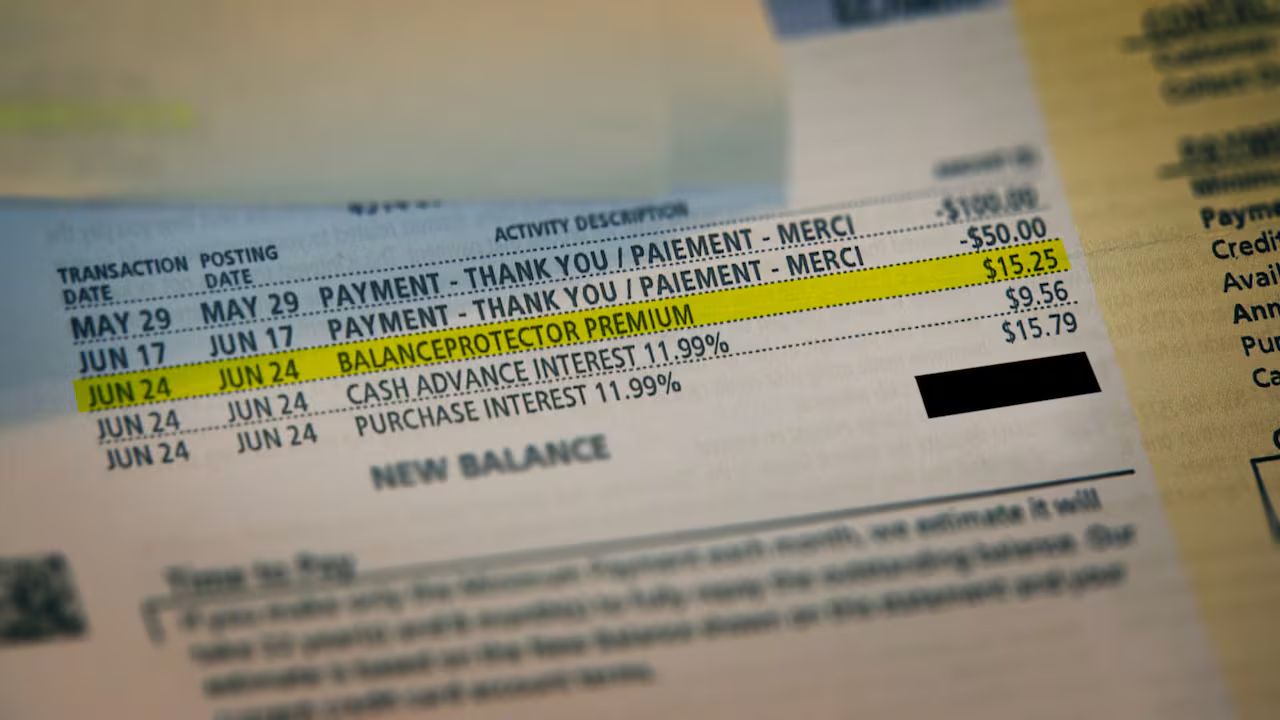
If you pay your full statement balance by the payment due date, you will not be charged interest on the purchases from that billing cycle. This is due to the interest-free grace period, which is typically about 21 days between your statement date and your payment due date. However, this grace period only applies to standard purchases. It does not apply to cash advances, which begin accruing interest immediately, or to any existing balance carried over from a previous month. If you carry a balance, pay late, or both, you will see an interest charge on your following monthly statement labelled as purchase interest.
What is a cash advance interest rate?
A cash advance interest rate is the rate applied when you borrow cash against your credit card limit, such as at an ATM. This rate is usually higher than the standard purchase interest rate on the same card. For example, a card might have a 19% purchase rate and a 22% cash advance rate. Crucially, there is no grace period for cash advances. Interest begins accruing from the very day of the transaction and continues until the balance is paid in full. These charges will show up on your monthly statement as cash advance interest, and cash advances are considered cash-like transactions.
What is a low-interest credit card?
A low-interest credit card in Canada is generally defined as a card with an interest rate that is less than the typical rate of 20.99%. These cards often have annual percentage rates (APRs) ranging from 8.99% to 12.99%, with some market options as low as 4.99% to 15.99%. They are designed for cardholders who may occasionally carry a balance and want to minimize interest costs. These cards may have fewer premium rewards or perks compared to standard cards with higher interest rates. They can be helpful for consolidating an outstanding balance from a high-interest card to take advantage of lower interest charges.
What happens if I only make the minimum payment?
If you only make the minimum payment, you avoid late fees and protect your credit score, but you will be charged interest on the remaining balance. The minimum payment is often 2% of your statement balance or a fixed amount like $40, whichever is higher. Because interest is calculated daily on the outstanding balance, a large portion of your minimum payment goes toward covering the interest charge, with only a small amount reducing the principal debt. This can make paying off the balance take many years and cost significantly more in total interest.
Sources and further reading
- How does credit card interest rate work rbcroyalbank.com
- Compare the best credit cards in Canada ratehub.ca
- How Does Credit Card Interest Work in Canada? innovationcu.ca
- Apply Online for Low interest rate Credit Cards in Canada td.com
- How Does Credit Card Interest Work in Canada? 4pillars.ca
This article explains how things work and is not financial, tax or legal advice. Rules, limits and rates change, so check the current figures with the Canada Revenue Agency, your province or your financial institution before you act.