CPP Disability benefits are paid monthly on the same dates as Canada Pension Plan retirement pensions, typically on the third-to-last business day of each month. For 2026, payments are scheduled from January 28 to December 22. These payments are a crucial source of income for Canadians under 65 who have a severe and prolonged disability that prevents regular work. Understanding the schedule, eligibility, and how these benefits interact with other income is essential for financial planning.
CPP Disability Payment Schedule for 2026
The payment dates for Canada Pension Plan Disability benefits are set by the Government of Canada and follow a consistent monthly pattern. Payments are issued on the same dates as CPP retirement, survivor, and children's benefits, as well as Old Age Security and the Guaranteed Income Supplement. For the 2026 calendar year, the payment dates are January 28, February 25, March 27, April 28, May 27, June 26, July 29, August 27, September 26, October 28, November 26, and December 22. These dates generally fall on the third-to-last business day of each month, with the exception of December which has an earlier date before the holidays. The next payment after the current date is October 28, 2026. Service Canada has not yet published the official payment calendar for 2027.
Payments are distributed via direct deposit into a recipient's bank account or by mailed paper cheque. To receive your payment on the scheduled date without delay, signing up for direct deposit is strongly recommended. Paper cheques are mailed during the last three business days of each month and their arrival depends on postal service delivery times, which can result in a later receipt. It is important to ensure your banking information is up to date in your My Service Canada Account to prevent any payment interruptions. You can update your account information through your My Service Canada Account or by contacting Service Canada directly.
Eligibility Rules for CPP Disability Benefits
To qualify for CPP Disability benefits, you must be under the age of 65 and have a disability that is both severe and prolonged. A severe disability means you are incapable regularly of pursuing any substantially gainful occupation. A prolonged disability means your condition is likely to be long continued and of indefinite duration or is likely to result in death. You must also have made enough contributions to the Canada Pension Plan during your working years. The contribution requirements are based on your earnings and the number of years you contributed. Full details on the contribution rules are available on the Government of Canada CPP Disability eligibility page.
There are specific provisions that can help some applicants meet the contribution requirements. The late applicant provision may allow you to qualify if you met the contribution requirements when your disability began and have been continuously disabled since then, even if you stopped working some time ago. The child-rearing provision can exclude periods of low earnings when you were raising children under the age of seven from the calculation, which may help you qualify. Credit splitting after a separation or divorce can also allocate CPP credits from a former spouse or common-law partner to help meet the requirements. Some work is permitted while receiving CPP Disability benefits, but there is an earnings threshold that triggers a review of your eligibility.
In 2026, you must contact Service Canada once you earn $7,400 before tax. Earnings above this level can lead to a review to determine if you are still eligible for benefits because you are capable of substantially gainful work. If you are considering a return to work, it is important to speak with Service Canada or seek legal advice first to understand how it may affect your benefits. This step helps prevent an overpayment situation where you might have to repay benefits you were not entitled to receive.
How CPP Disability Benefit Amounts Are Determined
The amount of your monthly CPP Disability benefit is based on two components. The first is a flat-rate amount that is the same for all recipients. The second is an earnings-related portion calculated from your contributions to the CPP over your working life. Your contributions are based on your earnings and how many years you contributed. Most people receive an amount well below the maximum possible payment. You can see a personal estimate of your potential benefit by checking your Statement of Contributions in your My Service Canada Account. Your My Service Canada Account also shows your Record of Earnings and a projected payment amount.
CPP benefits are adjusted for inflation once per year in January. The increase is based on the annual change in the Consumer Price Index. In January 2026, CPP benefits increased by 2.0%. This adjusted amount then remains constant for the rest of the calendar year, through December 2026. The adjustment for 2027 will be announced by the federal government in late 2026. The maximum monthly CPP retirement pension at age 65 for 2026 is $1,507.65, which serves as a reference point, though CPP Disability amounts are calculated separately. At age 65, your CPP Disability benefit automatically converts to a CPP retirement pension, and it is important to note that the retirement pension is usually a lower monthly amount than the disability benefit. This is because the retirement pension does not include the flat-rate component that is part of the CPP Disability calculation. The conversion happens automatically and you do not need to reapply.
The Impact of CPP Disability on Long-Term Disability Benefits
Many Canadians receiving CPP Disability are also claimants under group long-term disability insurance policies. Most LTD policies from insurers like Manulife, Sun Life, Canada Life, Desjardins, and RBC Insurance require you to apply for CPP Disability. They often also require you to appeal a CPP Disability denial. This is because CPP Disability benefits are typically deducted from your monthly LTD payment. Depending on the specific policy wording, the insurer may reduce your LTD benefit by the full amount of your CPP Disability payment, and sometimes by any children's benefits received as well. Insurers may begin deducting an estimated CPP Disability amount from your LTD payments even before your CPP application is approved.
If CPP Disability is approved retroactively, providing a lump-sum payment for past benefits, your insurer will usually claim the overlapping period as an overpayment. They may then ask you to repay that amount from the lump sum. It is crucial to review any repayment demand carefully, as the calculated amount is not always correct. A denial of CPP Disability does not automatically mean your LTD claim is invalid, as the two programs use different definitions of disability. LTD policies often have an own occupation test for an initial period, followed by a stricter any occupation test, while the CPP uses a strict any substantially gainful occupation test. If your LTD benefits are denied or terminated, be aware that the insurer's internal appeal process does not pause the limitation period for taking legal action against the insurer. It is advisable to seek legal advice early rather than waiting for the outcome of an internal appeal.
Steps to Apply for CPP Disability Benefits
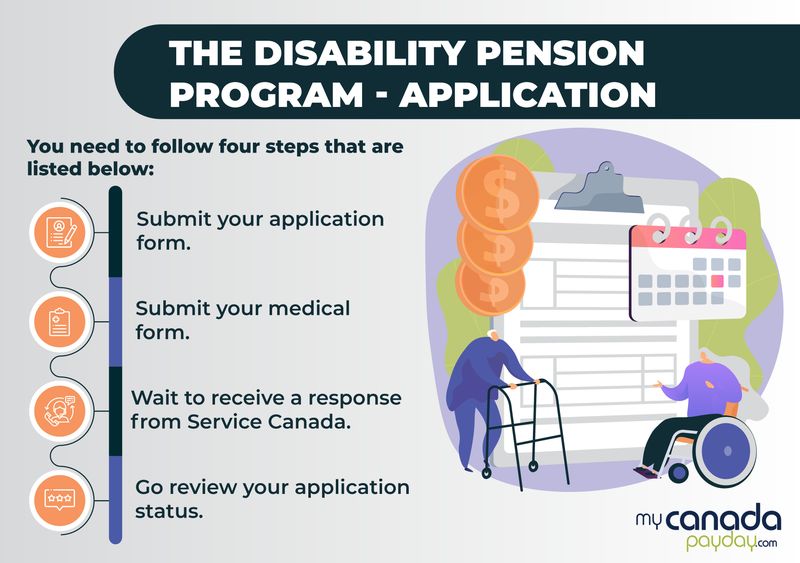
Applying for CPP Disability benefits requires gathering medical and personal information to demonstrate your eligibility. You must complete the application form, which is available online through your My Service Canada Account or as a paper form from Service Canada. The application requires detailed information about your medical condition, work history, and contributions to the CPP. You will also need to provide consent for Service Canada to obtain medical information from your doctors and other healthcare providers. You need your Social Insurance Number and banking information for direct deposit as part of the application process. Apply at least 6 months before you want your payments to begin, as processing can take up to 120 days for a paper application.
- Gather your personal information, including your Social Insurance Number.
- Collect details about your medical condition and treatment history.
- Obtain information about your employment history and CPP contributions.
- Complete the application form online via My Service Canada Account or on paper.
- Submit all required supporting documents, including medical reports.
- Provide your banking information for direct deposit setup.
- Wait for a decision from Service Canada, which can take several months.
- If denied, you have the right to appeal the decision.
If you are already receiving an early CPP retirement pension, there is a special provision. If you apply for CPP Disability within 15 months of starting your retirement pension, you may be able to have the retirement pension replaced by CPP Disability. This is only possible if you are found to have become disabled before your retirement pension began. If your disability started after you began receiving the retirement pension, this provision does not apply. Processing can take up to 120 days for a paper application, while online applications are usually decided in about 7 to 14 business days.
Common Mistakes and Important Considerations
One common mistake is delaying the application process. It can take several months for Service Canada to process an application, and benefits are not retroactive indefinitely. Applying as soon as you believe you are eligible helps ensure you receive benefits sooner. Another error is not reporting changes in your circumstances, such as a return to work or an increase in earnings. Failing to inform Service Canada about earning over the $7,400 threshold in 2026 can result in an overpayment that you will have to repay. Many recipients do not understand the interaction between CPP Disability and other benefits, particularly private long-term disability insurance.
Assuming that a CPP Disability denial means you are not disabled under your LTD policy is incorrect, as the definitions differ. Another oversight is not planning for the automatic conversion from CPP Disability to the CPP retirement pension at age 65, which usually results in a lower monthly payment. Budgeting for this reduction is an important part of long-term financial planning. Relying on paper cheques instead of direct deposit can lead to unnecessary payment delays, especially around holidays or during postal service disruptions. Ensuring your contact and banking information is always current in your My Service Canada Account prevents administrative issues. Finally, not seeking advice or clarification when considering a return to work can jeopardize your benefits. Speaking with Service Canada or a legal professional before making such a decision is essential to understand the rules and protect your income.
Comparison of CPP Retirement and Disability Key Features
The Canada Pension Plan offers different benefits for retirement and disability, each with distinct rules and purposes. The following table outlines the key differences between CPP Disability benefits and CPP retirement pensions, which is important for understanding your entitlements. This comparison helps clarify the different eligibility ages, payment structures, and rules regarding work. Knowing these details assists in managing your benefits and planning your finances effectively.
| Feature | CPP Disability Benefit | CPP Retirement Pension |
|---|---|---|
| Eligibility Age | Under 65 | 60 to 70 |
| Main Eligibility Criteria | Severe and prolonged disability | Age and contribution history |
| Payment Composition | Flat-rate amount + earnings-related portion | Earnings-related portion only |
| Automatic Conversion | Converts to retirement pension at 65 | No conversion |
| Earnings Threshold (2026) | $7,400 (pre-tax) triggers review | No limit. Can work and receive pension |
| Impact on LTD Insurance | Usually deducted from LTD payments | Typically does not affect LTD |
| Application Timing | Apply when disability occurs | Apply up to 12 months before start date |
CPP Disability is a monthly, taxable benefit for people under 65 who have contributed enough to the CPP and cannot work regularly because of a severe and prolonged disability. The disability benefit includes a flat-rate amount that the CPP retirement pension does not include. There are strict rules about working while receiving CPP Disability. In 2026, you must contact Service Canada once you earn $7,400 before tax as earnings above that level can lead to a review of eligibility. In contrast, the CPP retirement pension can be received while continuing to work without affecting the payment amount.
Frequently asked questions
What are the CPP Disability payment dates for 2026?
CPP Disability benefits are paid on the same monthly schedule as CPP retirement pensions. For 2026, the payment dates are January 28, February 25, March 27, April 28, May 27, June 26, July 29, August 27, September 26, October 28, November 26, and December 22. Payments are typically issued on the third-to-last business day of each month, with December being an exception for an earlier date. The next scheduled payment is October 28, 2026.
How much can I receive from CPP Disability?
The amount varies for each person based on their contributions to the CPP. It consists of a flat-rate amount plus an earnings-related portion. Most recipients receive less than the maximum. Your specific amount depends on your earnings history and how many years you contributed. You can get a personal estimate by checking your Statement of Contributions in your My Service Canada Account. Benefits increased by 2.0% in January 2026 due to indexation.
Can I work while receiving CPP Disability benefits?
Yes, but there are limits. In 2026, you must contact Service Canada if your pre-tax earnings reach $7,400. Earning above this threshold can trigger a review to determine if you are still eligible, as the benefit is for those unable to pursue any substantially gainful occupation regularly. If you are considering returning to work, it is important to speak with Service Canada first to understand how it may affect your benefits.
What happens to my CPP Disability when I turn 65?
Your CPP Disability benefit automatically converts to a CPP retirement pension when you turn 65. The conversion happens without you needing to reapply. It is important to note that the retirement pension amount is usually lower than your disability benefit because it does not include the flat-rate component. You should plan your budget for this reduction in monthly income.
How does CPP Disability affect my private long-term disability insurance?
Most group long-term disability policies require you to apply for CPP Disability. Insurers commonly require claimants to apply and to appeal a CPP Disability denial. CPP Disability is usually deducted from your LTD benefit. Your insurer reduces your monthly LTD payment by the amount of your CPP Disability benefit. If CPP Disability is approved retroactively, your insurer will usually claim the overlapping period as an overpayment and may ask you to repay it from the lump sum. A CPP Disability denial does not decide your LTD claim because CPP uses a strict test and your LTD policy has its own definition of disability.
How do I apply for CPP Disability benefits?
You can apply online through your My Service Canada Account or by mailing a paper application from Service Canada. The application requires detailed medical and work history information. You must provide consent for Service Canada to obtain medical information from your doctors. Processing times can vary, so apply as soon as you believe you are eligible. If you are denied, you have the right to appeal the decision.
Sources and further reading
- CPP Payment Dates 2026: Schedule, Amounts & ... kotaklaw.com
- CPP payment dates 2026, eligibility, tips & amounts lotly.com
- CPP payment dates 2026: schedule, amounts, and when to ... wealthsimple.com
- CPP payment dates in 2026, and more to know about ... moneysense.ca
- CPP Payment Dates 2026: Schedule koho.ca
This article explains how things work and is not financial, tax or legal advice. Rules, limits and rates change, so check the current figures with the Canada Revenue Agency, your province or your financial institution before you act.