Counterfeit Canadian coins, particularly $2 toonies, are a persistent issue that can result in financial loss for individuals and businesses. These fakes are often produced overseas and enter circulation through illicit schemes, undermining confidence in Canadian currency. Recognizing counterfeit coins involves checking for specific design flaws, incorrect weight, and poor manufacturing quality. This guide details the known types of fakes, how to identify them, and the legal and economic implications for Canadians.
The Scale and Impact of Counterfeit Coins in Canada
The circulation of counterfeit Canadian coins represents a tangible threat to the economy and public trust in currency. While bank note counterfeiting rates have remained low, coin counterfeiting, especially of the $2 toonie, has seen significant incidents. One of the largest schemes involved a Quebec man, Jean-Francois Genereux, who was convicted in 2023 for importing 26,630 counterfeit toonies ordered directly from a Chinese manufacturer. In a separate case, Chinese Canadian businessman Daixiong He was implicated in distributing millions of dollars worth of counterfeit toonies, depositing over $3 million worth in Canadian banks. These fakes are profitable to produce because the cost of raw materials and manufacturing in China is sufficiently low. The financial loss from accepting a counterfeit coin falls entirely on the individual or business that receives it, as there is no reimbursement from any institution. This reality makes public awareness and detection skills critically important for all Canadians who handle cash. The Royal Canadian Mint and the Bank of Canada work to maintain confidence in currency, as once public trust is lost, it is very difficult to regain.
Identifying the Major Counterfeit Toonie Series
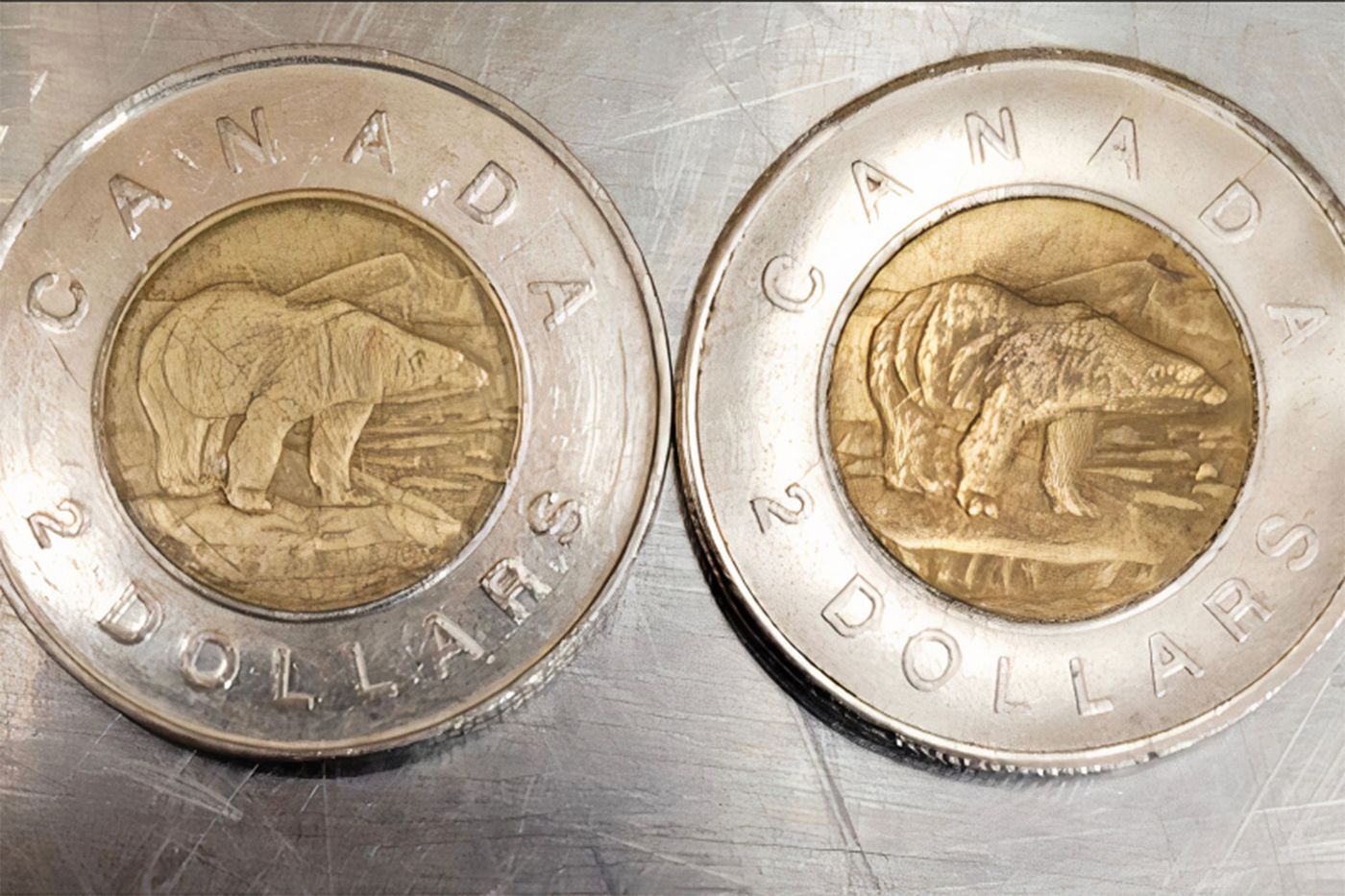
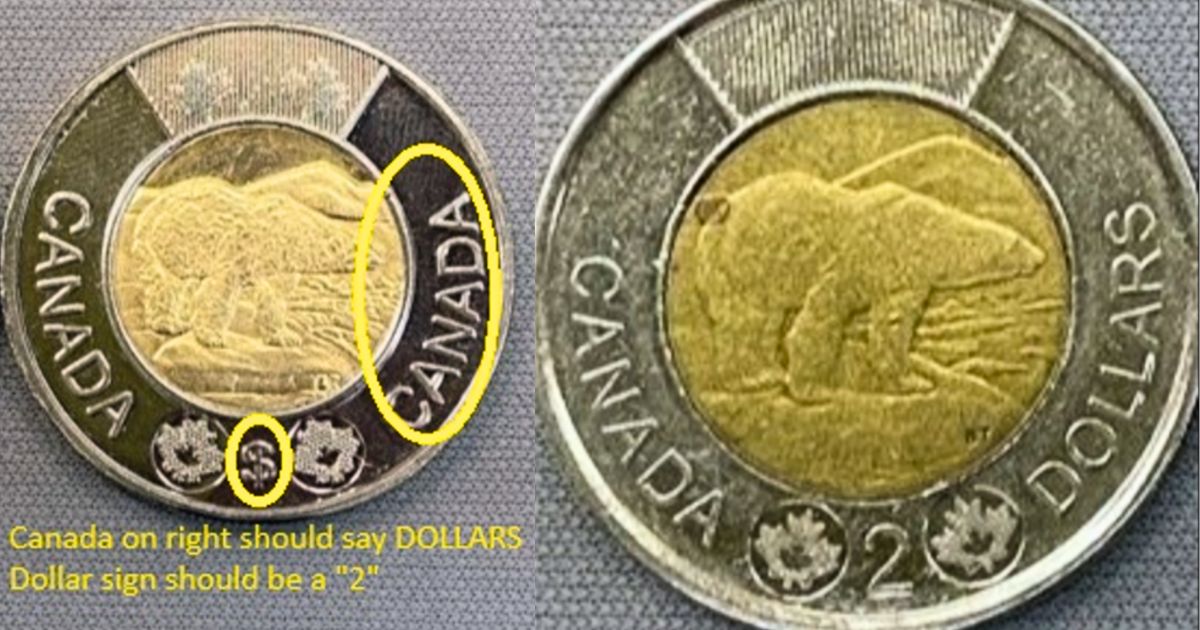
Since the toonie's introduction in 1996, two major series of counterfeit versions have plagued circulation, with a third series gaining significant media attention. The most notorious fakes are often identified by nicknames derived from their distinctive flaws. The 'Camel Toe' toonie, linked to the Daixiong He case, is named for the erroneous split-toe design on the polar bear's paw, which resembles a camel's hoof. Another major series is the 'Double Dollar' or 'Double Canada' fake, which features unusual die errors like a repeated 'CANADA' inscription and a duplicated dollar sign on the obverse side of the coin. A shipment of 10,000 of these coins was intercepted by Canada Border Services Agency officers in Québec in 2023. While police stated these particular coins did not enter circulation, tens of thousands from similar batches remain unaccounted for. Collectors and experts maintain online catalogues, such as the BWJM.ca Counterfeit Toonies Catalogue, to document these varieties and aid in public education. The earliest wave of counterfeit toonies is linked to a so-called 'Montréal Mint' which first emerged in 2004, showing this is a long-standing problem.
Key characteristics of known counterfeit toonies include their appearance, weight, and die strike errors. The coins' weight can give them away, as a genuine toonie made between 1996 to 2011 weighs about 7.31 grams while counterfeits weigh less. Distinctive design flaws, such as a split-toe design on the polar bear's paw known as the 'camel-toe,' are also common indicators. Other flaws include repeated 'CANADA' text and dollar signs on the obverse or incorrect date years like 2012, 1996, 2002, 2004, 2005, and 2006.
- The 'Camel Toe' fake shows a polar bear paw with a distinct split.
- The 'Double Dollar' fake has repeated text and symbols.
- Counterfeits often bear dates like 1996, 2002, 2004, 2005, 2006, and 2012.
- They are typically lighter, weighing around 6.99 grams versus a genuine toonie's 7.31 grams.
- Exhibits poor die strikes, misalignments, and lack of fine detail.
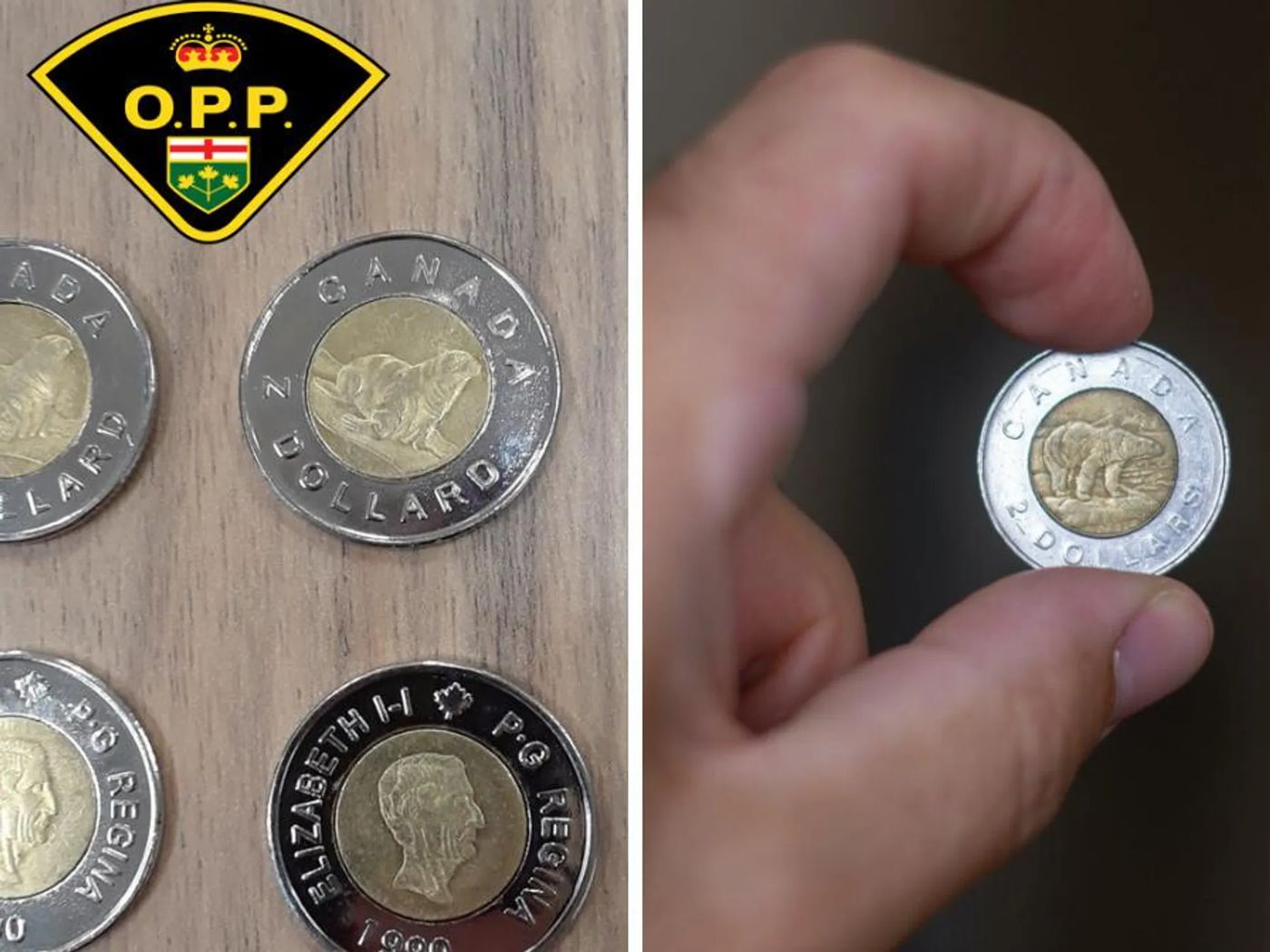
- New variants continue to emerge, such as a 1999-dated 'Nunavut' fake found in Ontario.
The adaptation of counterfeiters is evident in the ongoing discovery of new fakes with different date years, such as a new 1999-dated 'Nunavut' fake found in Ontario. This suggests the problem is not static but evolving as counterfeiters remain active. Coin roll hunters, who search through bulk coins, take huge risks by handling these counterfeits. The collecting of counterfeit coins is illegal and explicitly not condoned by educational and reference websites.
How to Spot a Fake Toonie: A Physical Inspection
Canadian consumers can protect themselves by learning the simple physical checks that differentiate a genuine toonie from a counterfeit. The first and most reliable test is weight. A genuine toonie minted between 1996 and 2011 weighs approximately 7.31 grams, while most known counterfeits weigh a noticeably lighter 6.99 grams. Using a small precision scale can provide a definitive answer. Visually, one should examine the coin's design details closely. Look for the specific errors associated with known fakes, such as the malformed polar bear paw or duplicated lettering. Genuine coins are struck with highly detailed dies, resulting in sharp, clear features. Counterfeits often appear softer, with blurred elements and less definition in the patterns. The edge of a real toonie features alternating serrated and smooth sections, while a fake may have an inconsistent or poorly defined edge. Finally, listen to the sound the coin makes. A genuine toonie has a distinctive ring when dropped on a hard surface, due to its bi-metallic construction, whereas a counterfeit may produce a duller thud. The coins' appearance, their weight, as well as die strike errors and even die misalignments can give them away as counterfeit $2 coins.
The Legal Framework and Consequences
Counterfeiting currency is a serious criminal offence in Canada under the Criminal Code. It is illegal to make, possess, purchase, sell, import, export, or knowingly use counterfeit coins or bank notes. The penalties upon conviction can include substantial fines and imprisonment. In the case of Jean-Francois Genereux, the Quebec man who imported over 26,000 fake toonies, the consequence was a jail sentence. Daixiong He, however, avoided jail time by paying a fine equal to the face value of the seized counterfeit coins. The Royal Canadian Mint and the Bank of Canada work closely with law enforcement, including the Royal Canadian Mounted Police and the Canada Border Services Agency, to monitor threats and prosecute offenders. Public confidence in currency is essential for a functioning economy, and counterfeiting directly undermines that confidence. The law places the responsibility on the bearer, meaning that if you unknowingly accept a counterfeit coin, you bear the financial loss. There is no government or bank reimbursement program for individuals who receive counterfeit currency. Statistics pertaining to counterfeit Canadian currency categorize fakes as 'passed', which have successfully entered the financial system, or 'seized', those confiscated by law enforcement.
What to Do If You Suspect a Counterfeit Coin
If you believe you have received a counterfeit Canadian coin, you must follow specific steps to comply with the law and aid enforcement. The most important action is to give the suspected counterfeit coin to your local police force. You should not try to spend it or return it to the person who gave it to you. If the police investigation determines the coin is genuine, it will be returned to you. Timely reporting is crucial as it helps law enforcement track counterfeiting activity and can lead to the prosecution of those responsible. Do not take matters into your own hands by destroying the coin, as it may be needed as evidence. When handling the suspected fake, try to remember the circumstances in which you received it, such as the time, location, and a description of the person who gave it to you, and provide this information to the police. It is not an offence to inadvertently receive a counterfeit, but knowingly using or keeping one is illegal. Businesses that handle cash should train their staff to check high-value coins, particularly toonies, as part of their standard procedures. Checking bank notes and coins protects everyone, so do not be offended if someone carefully examines your money.
The Role of Enforcement and Prevention
Several federal agencies play a coordinated role in combating the production and distribution of counterfeit Canadian currency. The Canada Border Services Agency is the first line of defence, intercepting bulk shipments of fake coins at ports of entry, as seen in the Québec seizures. The Royal Canadian Mounted Police investigates domestic distribution networks and works with international partners to target overseas manufacturers. The Royal Canadian Mint is responsible for the integrity of coinage and conducts forensic analysis on seized counterfeits. The Bank of Canada leads public education campaigns on the security features of bank notes and sets strict policies on the reproduction of currency images, even for training or theatrical purposes. These institutions focus on deterrence through prosecution, removing counterfeits from circulation, and educating the public to reduce the chance of fakes being accepted. Their collective efforts aim to keep the number of counterfeits in circulation low and stable, thereby maintaining the high level of public confidence that Canadian currency enjoys. The Bank of Canada's prevention strategy focuses on working with police and prosecutors to monitor and respond to counterfeiting threats and to minimize their impact on Canadians.
Common Mistakes and Public Misconceptions
There are several common mistakes Canadians make regarding counterfeit coins that can lead to financial loss or legal trouble. A major misconception is that banks or the government will reimburse you for a counterfeit coin you accepted in good faith. In reality, the bearer of the counterfeit bears the full loss, which is the same policy followed in other countries. Another mistake is attempting to return a suspected fake to the person who gave it to you or trying to spend it elsewhere to avoid a loss, which is illegal if done knowingly. Some people may also believe that only older or worn coins can be counterfeit, but the recent seizures involve fake toonies dated as recently as 2012 and appearing new. Furthermore, individuals might think spotting fakes requires expert knowledge, but many counterfeits have obvious flaws like the 'camel toe' paw or double lettering that are visible with careful examination. Relying solely on the 'feel' of a coin without checking its specific weight or design details is another error, as some modern fakes can feel convincing at first touch. Any reproduction of bank note images, including those for prop or training purposes, must comply with the Bank of Canada's strict reproduction policy, highlighting the seriousness with which all currency reproduction is treated.
Frequently asked questions
What does a counterfeit toonie look like?
Counterfeit toonies often have visible design flaws. The 'Camel Toe' fake has a polar bear paw that looks split like a hoof. The 'Double Dollar' fake may have the word 'CANADA' or a dollar sign stamped twice. They typically lack the sharp detail of a genuine coin, appear blurry, and are often dated 1996, 2002, 2004, 2005, 2006, or 2012. The most reliable test is weight, as fakes weigh about 6.99 grams compared to a real toonie's 7.31 grams.
Is it illegal to own a counterfeit Canadian coin?
Yes, it is a criminal offence under the Criminal Code to possess counterfeit currency knowingly. The law prohibits making, possessing, purchasing, selling, importing, exporting, or using counterfeit coins or bank notes. If you unknowingly receive a fake, you must surrender it to the police. Knowingly keeping or trying to use a counterfeit coin can lead to prosecution, resulting in fines or imprisonment.
What should I do if I get a fake $2 coin?
If you suspect you have received a counterfeit $2 coin, you should give it to your local police department. Do not attempt to pass it on to someone else. Provide the police with any details about where and when you received it. If the coin is genuine, it will be returned to you after investigation. Reporting counterfeits helps law enforcement track and stop criminal activity.
Where are most counterfeit Canadian coins made?
Law enforcement and experts state that the vast majority of counterfeit toonies are manufactured in China. The low cost of raw materials and production there makes the criminal venture profitable. Major seizures, such as the 26,630 fake toonies imported into Québec, have been traced directly to Chinese metal makers. These coins are often ordered online and shipped via courier to Canada.
Do I get my money back if I accept a counterfeit coin?
No, there is no reimbursement for individuals or businesses that accept counterfeit currency, whether a coin or a bank note. The financial loss is borne by the person who accepts it. This is the policy in Canada and is standard in other countries. This underscores the importance of checking currency, especially higher-denomination coins like the toonie, before accepting it.
Are there fake coins other than toonies?
Yes, there are fake coins other than toonies. Counterfeit versions of legendary Canadian coins exist, including the 1921 'Fishscale' 5 cent piece and the 1921 50 cent piece. However, the modern $2 coin, or toonie, is the primary target for counterfeiters in current circulation. The higher value of the toonie makes it a more profitable target for criminal ventures.
Sources and further reading
- A toonie for seven cents: The business of counterfeits canadiancoinnews.com
- BWJM.ca Counterfeit Toonies Catalogue cameltoetoonies.ca
- How Canadian consumers can spot counterfeit $2 coins globalnews.ca
- Counterfeit prevention bankofcanada.ca
This article explains how things work and is not financial, tax or legal advice. Rules, limits and rates change, so check the current figures with the Canada Revenue Agency, your province or your financial institution before you act.