Car liability coverage, also known as third-party liability insurance, is a mandatory component of auto insurance required by law to drive a vehicle anywhere in Canada. This coverage provides financial protection if you are found legally responsible for causing injury to another person or damage to their property in an automobile accident. It covers costs such as legal fees and compensation claims up to the limits specified in your policy. Understanding the provincial minimum requirements and the scope of this coverage is essential for all Canadian drivers to ensure they are adequately protected against significant financial risk.
What Third-Party Liability Insurance Covers
Third-party liability insurance is designed to protect you from the legal and financial consequences of being at fault in an accident. The coverage applies when you, or anyone driving your car with your permission, cause harm to another person or damage to their property. This insurance acts as a safety net by paying for legitimate claims against you, including compensation for medical expenses, loss of income, pain and suffering, and repair or replacement costs for damaged property. It also covers associated legal defence costs if you are sued. The policy responds up to the maximum limit you have selected, such as $200,000 or $1 million. It is crucial to understand that this coverage is for the other party's losses, not for your own injuries or vehicle damage. The coverage is divided into two specific types, bodily injury and property damage, which handle different kinds of claims.
Bodily injury liability coverage handles expenses associated with injuring someone else in an at-fault accident. Your policy may respond by covering the costs of their medical expenses and loss of wages as a result of the injury. Property damage liability helps pay for damage you cause to someone else’s personal property during an accident. This can include anything from their car to their house or other structures. Both components are included in the mandatory third-party liability coverage required across Canada. This coverage is distinct from first-party insurance like accident benefits, which cover your own injuries regardless of who is at fault.
Mandatory Minimum Coverage Limits by Province and Territory
Every Canadian province and territory sets its own minimum required amount for third-party liability coverage. These are the absolute lowest limits you can legally purchase to drive. The most common minimum across Canada is $200,000. This amount is mandatory in Ontario, Alberta, British Columbia, New Brunswick, Newfoundland and Labrador, Prince Edward Island, Saskatchewan, Yukon, Northwest Territories, and Nunavut. Two provinces require a higher minimum level of protection. Manitoba and Nova Scotia mandate a minimum of $500,000 in third-party liability coverage. Quebec has the lowest provincial requirement, with a mandatory minimum of $50,000. It is important to verify these requirements with your provincial regulator or insurance provider as they are subject to change. The minimums are part of a broader mandatory insurance package that includes other coverages like accident benefits.
Third-party liability insurance is mandatory for all vehicle owners in Canada. The minimum required coverage limit varies by province and territory. For example, Ontario, Alberta, British Columbia, New Brunswick, Newfoundland, Prince Edward Island, Saskatchewan, Yukon, Northwest Territories, and Nunavut all have a minimum coverage limit of $200,000. Nova Scotia and Manitoba require a higher minimum of $500,000, while Quebec has a lower minimum of $50,000. Drivers should confirm the exact requirements with their insurer or provincial authority, as these are the minimums and higher coverage is often recommended.
| Province/Territory | Minimum Third-Party Liability |
|---|---|
| Alberta | $200,000 |
| British Columbia | $200,000 |
| Manitoba | $500,000 |
| New Brunswick | $200,000 |
| Newfoundland and Labrador | $200,000 |
| Nova Scotia | $500,000 |
| Ontario | $200,000 |
| Prince Edward Island | $200,000 |
| Quebec | $50,000 |
| Saskatchewan | $200,000 |
| Northwest Territories | $200,000 |
| Nunavut | $200,000 |
| Yukon | $200,000 |
Why Minimum Coverage Is Often Not Enough
The mandatory minimum coverage limits are set by law as a baseline, but they are frequently insufficient to cover the full costs of a serious accident. If a claim against you exceeds the limit on your policy, you are personally responsible for paying the remaining balance. This can lead to severe financial hardship, including the loss of personal assets or even bankruptcy. Legal costs and court settlements for severe injuries or multiple claimants can easily surpass $200,000. Lawsuits in the United States, where many Canadians drive, are notably more common and can result in multi-million dollar awards. For these reasons, insurance advisors commonly recommend purchasing a liability limit of at least $1 million. Increasing your liability limit provides a much greater buffer of financial security and often does not proportionally increase your insurance premium. This recommendation is a standard practice from major insurance providers in Canada.
Several key factors make higher liability limits a prudent choice for most drivers. The cost of medical care, rehabilitation, and long-term care for serious injuries can be extremely high. Legal fees for defending a lawsuit add a significant amount to any settlement. Court awards for pain and suffering and loss of future income can reach into the millions. If multiple people are injured in an accident you cause, the claims can quickly multiply. Driving in the United States exposes you to a legal environment with a higher likelihood of costly lawsuits. The exchange rate between the US and Canadian dollar can further increase the cost of a US settlement. Consulting with an insurance advisor can help you determine an appropriate limit based on your assets and risk exposure.

How Liability Insurance Is Purchased in Canada
The system for purchasing mandatory auto insurance, including liability coverage, varies significantly across Canada. In some provinces, you buy insurance directly from private insurance companies. This is the case in Alberta, Ontario, Nova Scotia, New Brunswick, Newfoundland and Labrador, Northwest Territories, Nunavut, Prince Edward Island, and Yukon. Other provinces have government-run insurance entities for mandatory coverage. In British Columbia, Manitoba, and Saskatchewan, drivers must purchase the mandatory minimum coverage, including liability, from the government insurer. Quebec has a hybrid system where bodily injury coverage is provided by a government insurer, while property damage liability coverage is purchased from private insurers. Regardless of the system, you can typically purchase additional optional coverages from private insurers. This includes increasing your liability limits or adding collision and comprehensive coverage.
The steps to obtain liability coverage generally involve contacting an insurance provider, either a private company or a government entity, and providing details about yourself and your vehicle. You will select a liability limit that meets or exceeds your province's minimum. The provider will then issue a policy and an insurance card, which you must carry as proof of insurance. You can increase your liability coverage amount at any time by contacting your insurance provider to adjust your policy. It is advisable to review your coverage limits regularly, especially after major life changes or if you plan to drive in the United States. An insurance advisor can guide you on the appropriate coverage limit for your specific situation.
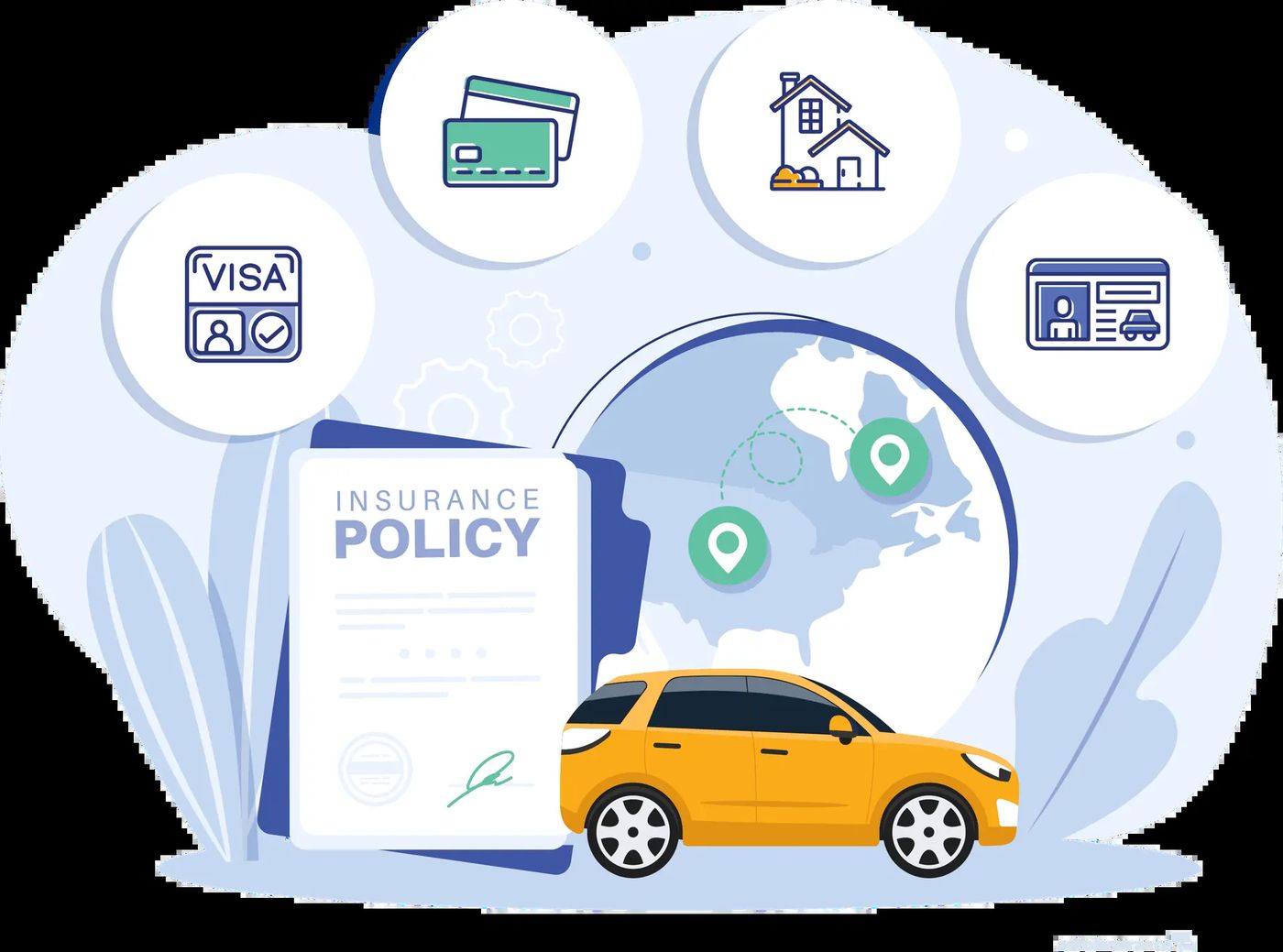
Key documents and proofs you need to drive legally in Canada include your valid driver's licence, vehicle registration, and proof of insurance. For visitors from the United States, a valid U.S. passport or NEXUS card serves as proof of citizenship and identity at the border. Your U.S. driver's licence is valid in Canada, and you should carry a physical copy of your insurance card or policy declarations page. Canadian law requires all persons entering the country to carry proof of citizenship and identity, and all drivers must have valid auto insurance according to the Financial Consumer Agency of Canada.
Common Exclusions and Related Mandatory Coverages
It is critical to know what third-party liability insurance does not cover. This mandatory coverage does not pay for repairs to your own vehicle after an accident you cause. It also does not cover your own medical expenses if you are injured. Damage you cause intentionally is excluded from coverage. Furthermore, liability insurance does not cover normal wear and tear on your vehicle or mechanical breakdowns. For these reasons, liability insurance is almost always sold alongside other mandatory coverages that protect you directly. In most provinces, your mandatory insurance package must include Accident Benefits, which cover your medical and rehabilitation costs if you are injured. Many provinces also require Direct Compensation Property Damage coverage, which handles repairs to your car when another driver is at fault, and Uninsured Automobile coverage, which protects you if you are hit by an uninsured or unidentified driver. These coverages work together to form a complete mandatory insurance package.
The following are standard exclusions under a third-party liability insurance policy. Damage to your own vehicle is not covered, requiring separate collision or comprehensive coverage. Your own medical treatment or rehabilitation costs are excluded, which is why accident benefits are mandatory. Intentional damage caused by you is not covered by any standard auto policy. Damage from normal wear and tear or mechanical failure is considered a maintenance issue, not an insurable event. Damage to property owned by you or in your care is excluded, as liability only covers third-party property. Business use of your vehicle unless specifically endorsed on the policy is typically excluded from personal auto coverage.
To address these gaps, other mandatory and optional coverages are available. Accident Benefits are required in most provinces and provide compensation for medical treatment, rehabilitation, and income replacement if you are injured, regardless of fault. Uninsured Automobile coverage is mandatory in most provinces except Quebec and provides benefits if you are injured by an uninsured or hit-and-run driver. Direct Compensation Property Damage is a mandatory coverage in many provinces that allows you to claim from your own insurer for vehicle repairs when another driver is at fault, streamlining the claims process under a no-fault system.
Liability Insurance for Visitors and Renters
Drivers visiting Canada from other countries, such as the United States, need to understand how liability coverage works. Most U.S. car insurance policies extend the same liability coverage and limits to Canada for short tourist trips. It is crucial to check your specific policy and contact your insurer before traveling to confirm this and to see if you need to notify them of your plans. For longer stays exceeding six months, you may need to obtain a Canadian driver's licence and insurance. When renting a car in Canada, the rental company is required to provide the mandatory provincial insurance on the vehicle. This includes the minimum third-party liability coverage. Your personal insurance policy from the U.S. may also extend to a rental car in Canada, but you must verify this with your provider before declining the rental company's optional insurance products. The types of U.S. coverages that usually extend into Canada include liability, collision, and comprehensive.
Visitors should take several specific steps to ensure they are properly covered. Contact your U.S. insurance provider to confirm your liability coverage extends to Canada and ask if you need to notify them of your travel plans or purchase additional coverage for a longer trip. Obtain a physical copy of your insurance card and policy declarations page to carry with you in case your phone service is not working. Ensure you have a valid driver's licence, which is accepted in Canada without an International Driving Permit according to USA.gov. Carry your vehicle registration if driving your own car, as it can be used to confirm your identity if stopped by police. For rentals, confirm with both your personal insurer and the rental company what liability coverage is included and what optional coverages are available.
Following an accident in Canada, you should contact local authorities if necessary and exchange information with other parties involved. You must notify your insurance company as soon as possible. If your car insurance policy covers rental cars in the United States, it will likely extend that coverage to Canada for short trips. However, you must always check the specific details of your policy with your insurance provider. As a tourist, you can typically use your valid U.S. driver's licence and U.S. car insurance for up to six months. For longer stays, you are advised to check the specific local laws of the province you will be visiting.
Provincial Mandatory Insurance Packages
The specific bundle of mandatory coverages varies from province to province. While third-party liability is a constant, the other required components differ. In Ontario, the mandatory package consists of Third Party Liability ($200,000 minimum), Accident Benefits, Direct Compensation Property Damage, and Uninsured Automobile coverage. Alberta's mandatory package is very similar, requiring Third Party Liability ($200,000), Direct Compensation Property Damage, and Accident Benefits. In British Columbia, mandatory Basic Autoplan includes up to $200,000 in Third Party Liability, up to $200,000 for Basic Vehicle Damage, and other protections like Underinsured Motorist coverage. Manitoba's Autopac Basic includes up to $500,000 in Third Party Liability, Personal Injury coverage, and All Perils coverage. New Brunswick requires Third Party Liability ($200,000), Direct Compensation Property Damage, Accident Benefits, and Uninsured Automobile Insurance. Newfoundland and Labrador mandates Third Party Liability ($200,000), Direct Compensation Property Damage, and Uninsured Automobile Coverage. These packages are designed to provide a base level of protection for all drivers.
Each provincial system has its own governing body and specific policy documents. In Alberta, the Standard Owner’s Automobile Policy is the prescribed contract, with updates such as those from January 4, 2022. New Brunswick uses the New Brunswick Standard Owner’s Policy. British Columbia's system is administered by the Insurance Corporation of British Columbia (ICBC), while Manitoba Public Insurance runs the Autopac system. Quebec's unique system separates bodily injury coverage, provided by a public plan, from property damage liability, which is purchased privately. Because requirements and policies can change, it is essential to consult with a local qualified insurance representative or refer to provincial government resources for the most current information. Helpful sources include government sites like the Alberta Automobile Insurance Rate Board for regulation overviews or the Financial and Consumer Services Commission of New Brunswick for automobile insurance details.
Frequently asked questions
Is liability car insurance mandatory in Canada?
Yes, third-party liability insurance is mandatory for all vehicle owners in every province and territory in Canada. It is a legal requirement that must be included in your auto insurance policy before you can legally drive on public roads. Each province sets its own minimum coverage limit, which ranges from $50,000 in Quebec to $500,000 in Manitoba and Nova Scotia. This coverage is part of the mandatory auto insurance package that also includes other protections like accident benefits.
What is the minimum liability coverage in Ontario?
The minimum required third-party liability coverage in Ontario is $200,000. However, an Ontario auto insurance policy must include more than just liability. The mandatory package also includes Accident Benefits, Direct Compensation Property Damage coverage, and Uninsured Automobile coverage. Insurance advisors often recommend purchasing much higher liability limits, such as $1 million, for better financial protection against costly lawsuits and claims that could exceed the minimum.
Can I increase my liability coverage above the minimum?
Yes, you can and often should increase your third-party liability coverage above your province's minimum required limit. You can contact your insurance provider at any time to adjust the liability limit on your policy. Increasing to $1 million or more is commonly recommended to protect your personal assets from large lawsuits, especially given the high cost of injury claims and legal settlements. This increased coverage is particularly important if you drive in the United States where lawsuit awards are typically higher.
Does my U.S. car insurance cover me in Canada?
For short trips, most U.S. car insurance policies extend the same liability coverage and limits to Canada. This means your existing policy's protection applies while driving in Canada. You must verify this with your specific insurer before traveling, as some may require notification or have conditions for longer stays. You should carry physical proof of insurance, and your coverage is typically valid for tourist visits of up to six months, after which you may need to obtain Canadian insurance.
What does liability insurance not cover?
Liability insurance does not cover damage to your own vehicle or your own medical expenses if you are at fault in an accident. It also excludes intentional damage, normal vehicle wear and tear, and mechanical breakdowns. For protection for yourself and your car, you need other coverages like Accident Benefits, Collision, and Comprehensive insurance, which are often optional but highly recommended. These optional coverages address the gaps left by the mandatory liability-only policy.
Who sells mandatory liability insurance in British Columbia?
In British Columbia, drivers must purchase the mandatory minimum auto insurance, which includes third-party liability coverage, from the government insurer, the Insurance Corporation of British Columbia (ICBC). This package is called Basic Autoplan. Optional additional coverages can be purchased from private insurers, but the mandatory base policy comes from ICBC. This system is different from provinces like Ontario and Alberta where all insurance is purchased from private companies.
Sources and further reading
- Third-Party Liability Car Insurance: Coverage & Protection belairdirect.com
- Liability car insurance & other mandatory coverage rbcinsurance.com
- Does My U.S. Car Insurance Work in Canada? allstate.com
- Mandatory auto coverages where you live ibc.ca
- What is Liability Car Insurance? brokerlink.ca
This article explains how things work and is not financial, tax or legal advice. Rules, limits and rates change, so check the current figures with the Canada Revenue Agency, your province or your financial institution before you act.