The value of a Canadian penny is determined by factors like its year, condition, rarity, and the presence of minting errors. While most circulated pennies are worth only their one-cent face value, certain rare dates and varieties can be worth hundreds or thousands of dollars to collectors. The Royal Canadian Mint ceased distribution of the penny in 2013, making all pre-2012 coins potentially more collectible over time. Understanding which pennies are valuable helps Canadians assess old change jars and family collections.
What Determines a Canadian Penny's Value
The market value of a Canadian one-cent coin is not fixed and depends on a confluence of specific factors. The year of minting is a primary determinant, as low mintage figures from certain years immediately create scarcity. The physical condition or grade of the coin is equally critical. A penny with minimal wear and crisp, original details commands a significantly higher premium than a heavily circulated one. Rarity extends beyond mintage to include specific varieties and minting errors, which are often catalogued and sought after by specialists. Furthermore, collector demand and trends in the numismatic market influence prices, with values documented through auction records, dealer price guides, and published catalogues.
Supply and demand dynamics play a constant role, where a coin that is highly desired by collectors but exists in only a few known high-grade specimens will see its value escalate. The finish of the coin, such as proof or cameo surfaces produced for collectors, also adds substantial value over standard circulation strikes. Historical significance, such as a coin being among the first issued by the Dominion of Canada or from the Province of Canada before Confederation, contributes to its desirability. Ultimately, a penny's worth is a negotiated price between a knowledgeable seller and a willing buyer, informed by these established factors.
Key Dates and Their Potential Values
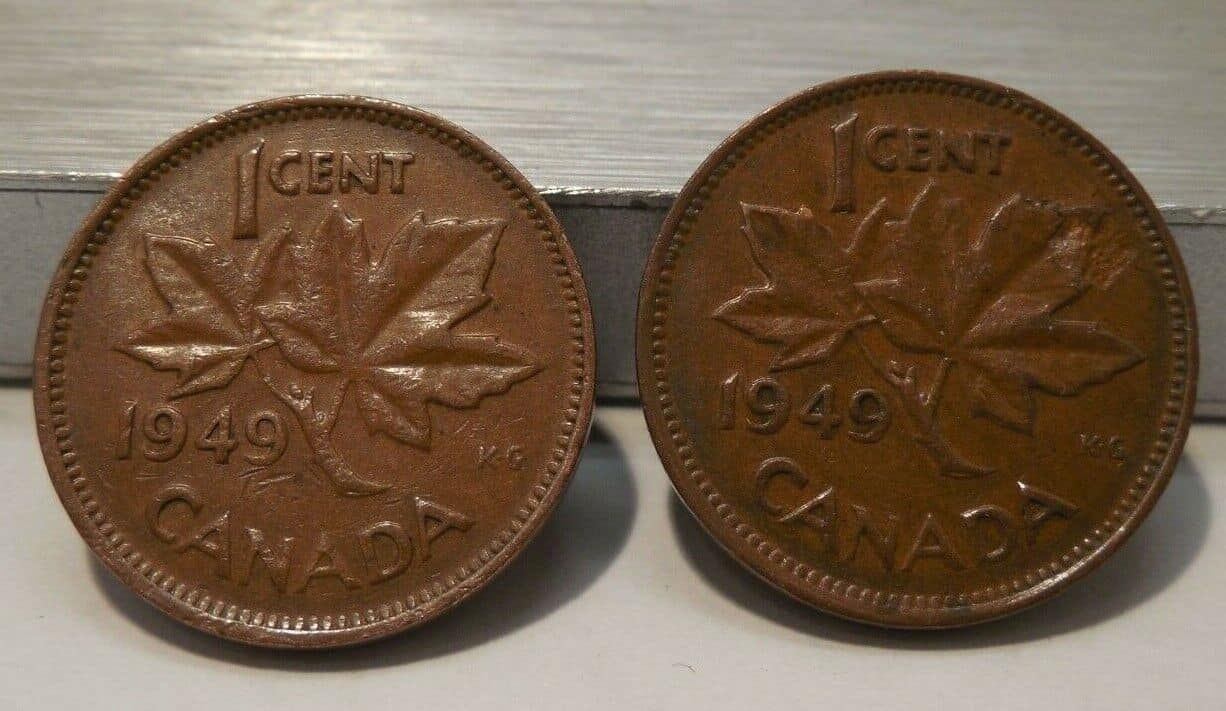
Certain years and varieties of Canadian pennies are renowned for their rarity and corresponding market value. These coins often have low original mintages. They may also have survived in very small numbers over time. Distinctive minting errors can also make a penny highly valuable. The value of such coins always depends heavily on the coin's state of preservation and can range from a modest premium to life-changing sums.
- 1858 Large Cent: One of the rarest Canadian pennies, especially in pristine condition. A near-mint example sold for over $21,000 in 2019.
- 1859 "Narrow 9" Variety: Features a doubled die except on the numeral 9. An excellent condition specimen sold for over $17,000 in 2017.
- 1887 Cent: While 1.5 million were minted, examples in near-mint condition are incredibly rare. One sold for more than $17,000 at auction.
- 1921 Small Cent: Despite a mintage of 7.6 million, this is a rare find in change. A very crisp example sold for almost $2,700 in 2019.
- 1936 Dot Cent: An extremely rare coin struck in 1937 but dated 1936, identifiable by a small dot under the date. One in mint condition sold for $402,000 at auction.
- 1940 Newfoundland Penny: Issued before Newfoundland joined Canada. One with beautiful details sold for almost $1,800 in 2017.
Collectors also watch for valuable varieties from the 1950s. The 1953 Canadian penny has variations related to the design of Queen Elizabeth II's gown. A 1953 penny with a shoulder strap can sell for about $60. The 1955 Canadian penny also has a rare no shoulder fold version that may be worth $125 or more. Proof sets containing these rare varieties have realized over $3,200 at auction.
Understanding Condition and Grading
The condition, or grade, of a penny is the single most important factor affecting its value after its rarity has been established. A coin's grade is a standardized assessment of its wear and preservation. Circulated coins range from heavily worn with details smoothed out to lightly worn with most major features intact. Uncirculated coins have never been used in commerce and retain their original mint luster, though they may still have contact marks from production and handling. Proof coins are specially struck with polished dies and planchets, resulting in a mirror-like background and frosted design elements, and are made specifically for collectors.
Professional grading services encapsulate coins in tamper-evident holders and assign a numeric grade on a standardized scale. This service provides authentication and a consistent condition assessment that is trusted in the marketplace. For example, a 1921 penny in worn condition may be worth only a few dollars, while the same date graded in near-perfect condition realized almost $2,700 at auction. The difference between a coin worth face value and one worth a small fortune often comes down to the sharpness of its details and the absence of wear. The term "cameo" is used to describe a frosted visual appearance on the design, which is highly prized on proof coins.
Minting Errors and Varieties
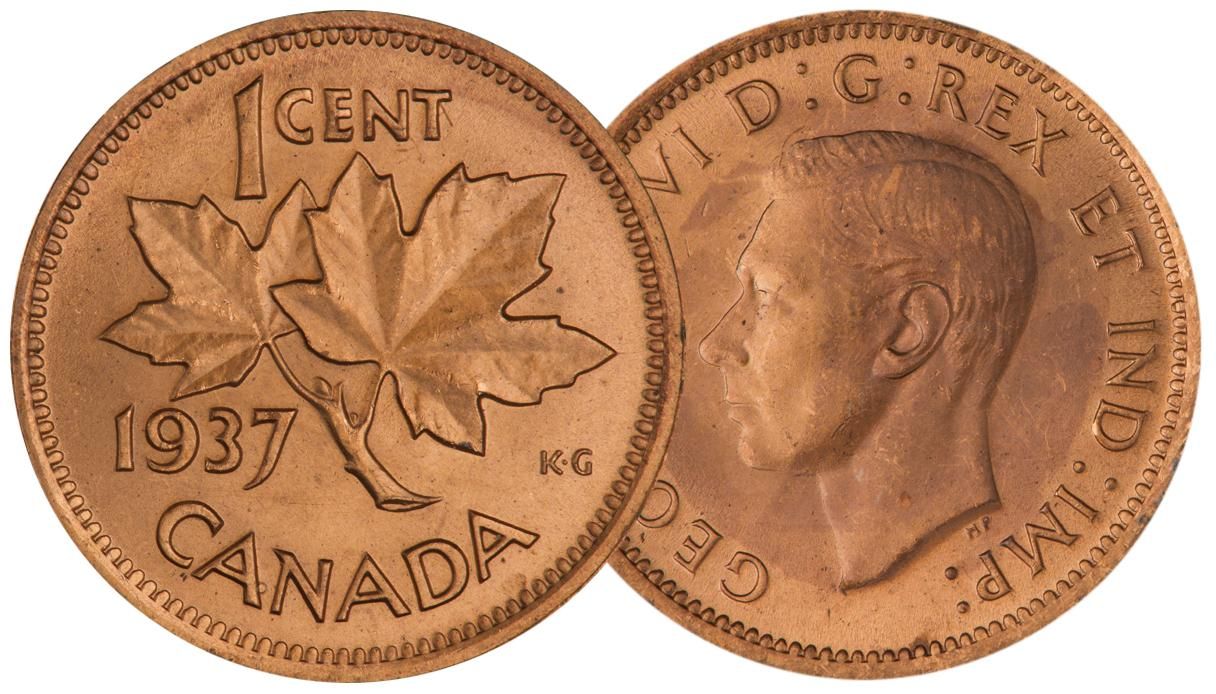
Coins with errors or distinctive varieties created during the minting process are highly collectible and can be valuable. These occur due to deteriorated dies, die clashes, double strikes, or other production anomalies. When such features are recognized by major catalogues, certification companies, and the collector community, they become documented varieties with associated market values. The 1859 "Narrow 9" penny is a classic example of a doubled die error. The 1936 Dot cent is a variety resulting from a specific mintmark application. Varieties also include design modifications, such as the 1953 and 1955 pennies where the presence or absence of a shoulder strap or fold on Queen Elizabeth's gown creates distinct and rarer versions. Collectors use magnification to identify these small but critical differences that can turn a common coin into a valuable collectible.
The History and Demise of the Canadian Penny
The one-cent coin was first introduced in 1858 by the Province of Canada, which needed to replace the British sterling system with a decimal currency. These first large cents were minted in London, England. Following Confederation in 1867, the Dominion of Canada began issuing its own coinage. The Royal Canadian Mint's Ottawa facility opened in 1908 and took over production of the nation's circulation coinage. However, due to rising production costs and changing consumer habits, the Royal Canadian Mint stopped distributing pennies in 2013. The last pennies for circulation were minted in 2012, after which the government began a withdrawal and melt-down program. This cessation has increased collector interest in all pre-2012 pennies, as they are no longer being produced.
How to Check and Preserve Your Pennies
If you have a collection of old Canadian pennies, a systematic approach can help you identify potentially valuable pieces. First, sort the coins by year and examine the dates carefully, paying special attention to the key dates listed earlier. Use a magnifying glass to look for mint marks, dots, or design varieties like the 1953/1955 shoulder strap. Inspect the coin's overall condition, noting any wear on the highest points of the design. Compare your coins to images of graded examples online or in reference books to estimate their condition. It is important to handle coins carefully by the edges to avoid adding fingerprints or scratches. For storage, use inert materials like acid-free paper envelopes, cardboard holders, or archival-quality plastic flips. Avoid cleaning coins, as this almost always damages the surface and drastically reduces their collectible value. If you believe you have a rare or high-value coin, seeking an opinion from a reputable coin dealer or getting it professionally graded is a prudent step.
Common Misconceptions About Penny Value
Several misconceptions can lead people to overestimate or underestimate the value of their pennies. A common mistake is assuming age alone guarantees value. Conversely, some believe that all pennies minted after a certain year are worthless, yet varieties like the 1955 No Shoulder Fold penny disprove this. Another error is thinking that a coin must be shiny to be valuable, but improper cleaning destroys a coin's natural surface and patina, severely diminishing its worth. Finally, while the face value of the penny was removed in 2013, banks and businesses may still accept them at one cent, but a collector or dealer may pay significantly more for a rare date or high-grade specimen. It is wise to check a coin's potential collector value before spending it or turning it in to a bank, as even common-date pennies in uncirculated condition can be worth more than face value.
Frequently asked questions
What should I look for on a 1953 or 1955 Canadian penny?
On 1953 and 1955 Canadian pennies, examine Queen Elizabeth II's portrait with magnification. Look for a detail on her gown near the shoulder. The presence or absence of a shoulder strap or shoulder fold creates a rarer variety. A 1953 penny with a shoulder strap or a 1955 penny with no shoulder fold can be worth $60 to $125 or more, depending on condition, compared to the common versions.
Should I clean my old Canadian pennies?
You should never clean collectible Canadian pennies. Cleaning, whether with chemicals or abrasives, damages the coin's original surface and patina, which collectors value. This damage is permanent and will drastically reduce the coin's market value. Coins should be handled carefully by the edges and stored in appropriate, inert holders to preserve their condition.
What is the most valuable Canadian penny?
The most valuable Canadian penny is the 1936 Dot cent. This extremely rare coin, which was actually struck in 1937 but dated 1936, features a small dot just under the date. One example in pristine mint condition has sold for as much as $402,000 at auction, making it the record-holder. The coin features King George VI and its immense value stems from its extreme rarity and the specific error or variety it represents. This highlights how certain errors and varieties, when recognized by collectors and certification companies, can dramatically increase a coin's worth far beyond its face value.
Are all Canadian pennies from before 1925 valuable?
Not all Canadian pennies from before 1925 are automatically valuable. While this period often contains scarcer dates with lower original mintages, a coin's value depends heavily on its specific year, condition, and rarity. For instance, a common date penny from the early 1900s in heavily worn condition may only be worth its metal value or a few dollars. The 1921 penny, for example, is considered very rare despite a mintage of 7.6 million, with crisp examples selling for thousands of dollars.
Is a 1940 Canadian penny valuable?
The standard 1940 Canadian penny is not considered highly valuable because over 85.7 million were minted, making it common. Its value in typical circulated condition is very low. However, a 1940 penny from Newfoundland, which was a separate dominion until it joined Canada in 1949, is much rarer and can be valuable. These Newfoundland pennies are harder to find in good condition. One 1940 Newfoundland penny with beautiful details sold for almost $1,800 in 2017. This demonstrates the importance of a coin's origin and context within Canadian numismatic history.
Can I still spend Canadian pennies?
Yes, Canadian pennies remain legal tender and can technically be used in cash transactions at their face value of one cent. However, the Royal Canadian Mint stopped distributing them in 2013 and the last new penny was minted in 2012. While businesses may choose to accept them, it is important to check any older pennies first. For coins that are from rare dates, have minting errors, or are in exceptional uncirculated condition, their collector value likely far exceeds one cent. The government previously collected pennies to melt down, so preserving potentially valuable coins is advised.
Sources and further reading
- Canadian coins price guide, value, errors and varieties coinsandcanada.com
- 10 Rarest & Most Valuable Canadian Pennies Worth a Mint lovetoknow.com
This article explains how things work and is not financial, tax or legal advice. Rules, limits and rates change, so check the current figures with the Canada Revenue Agency, your province or your financial institution before you act.