A budget template is a pre-formatted document used to track income and expenses, and a budget tool is an application or spreadsheet that helps you create and manage a spending plan. For Canadians, using these resources is a fundamental step in personal finance, helping to monitor spending, plan for savings, and avoid debt. The Government of Canada and various non-profit organizations offer free, secure templates and online planners tailored to Canadian financial guidelines. These tools simplify the process of building a realistic budget that aligns with typical household spending patterns across the country.
The Role of Budget Templates and Tools
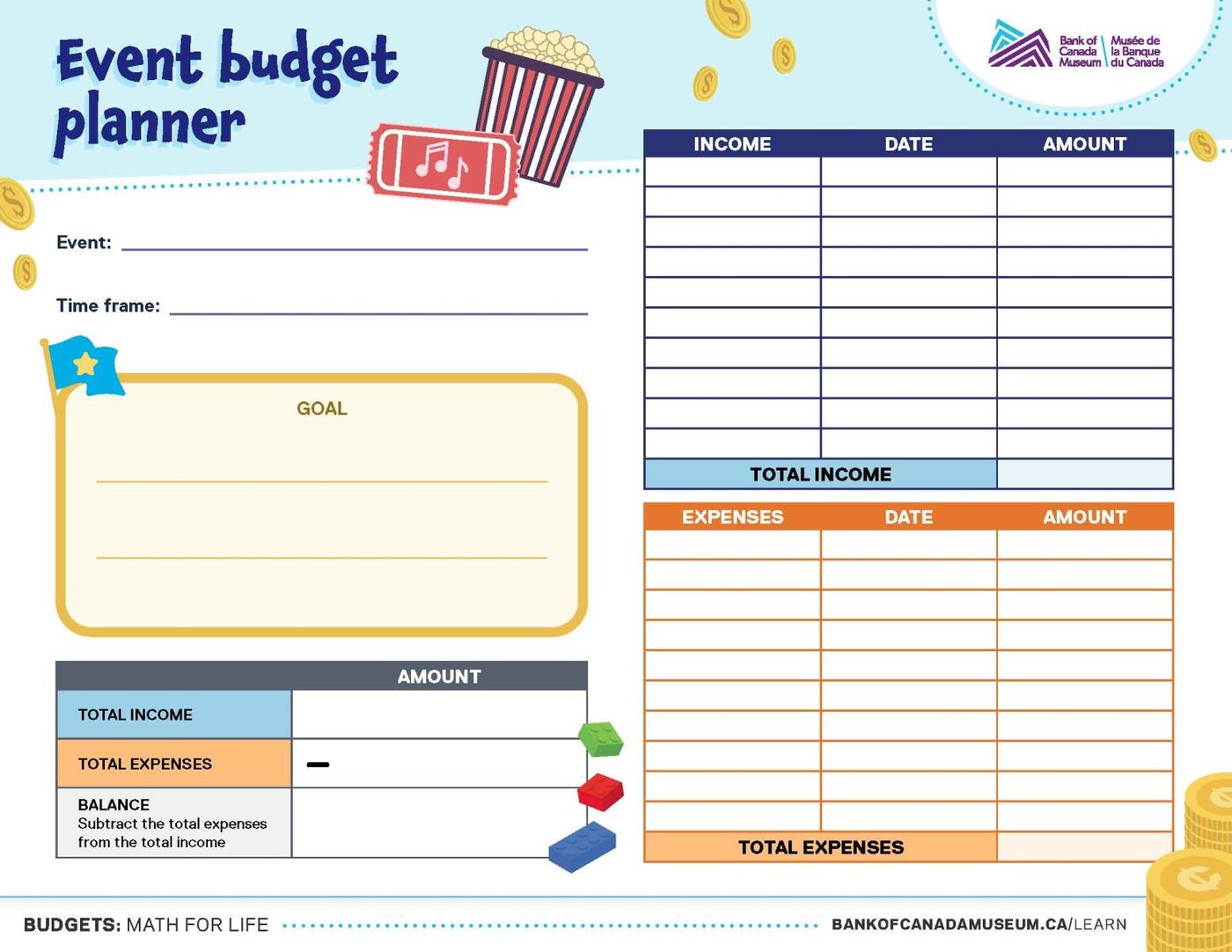
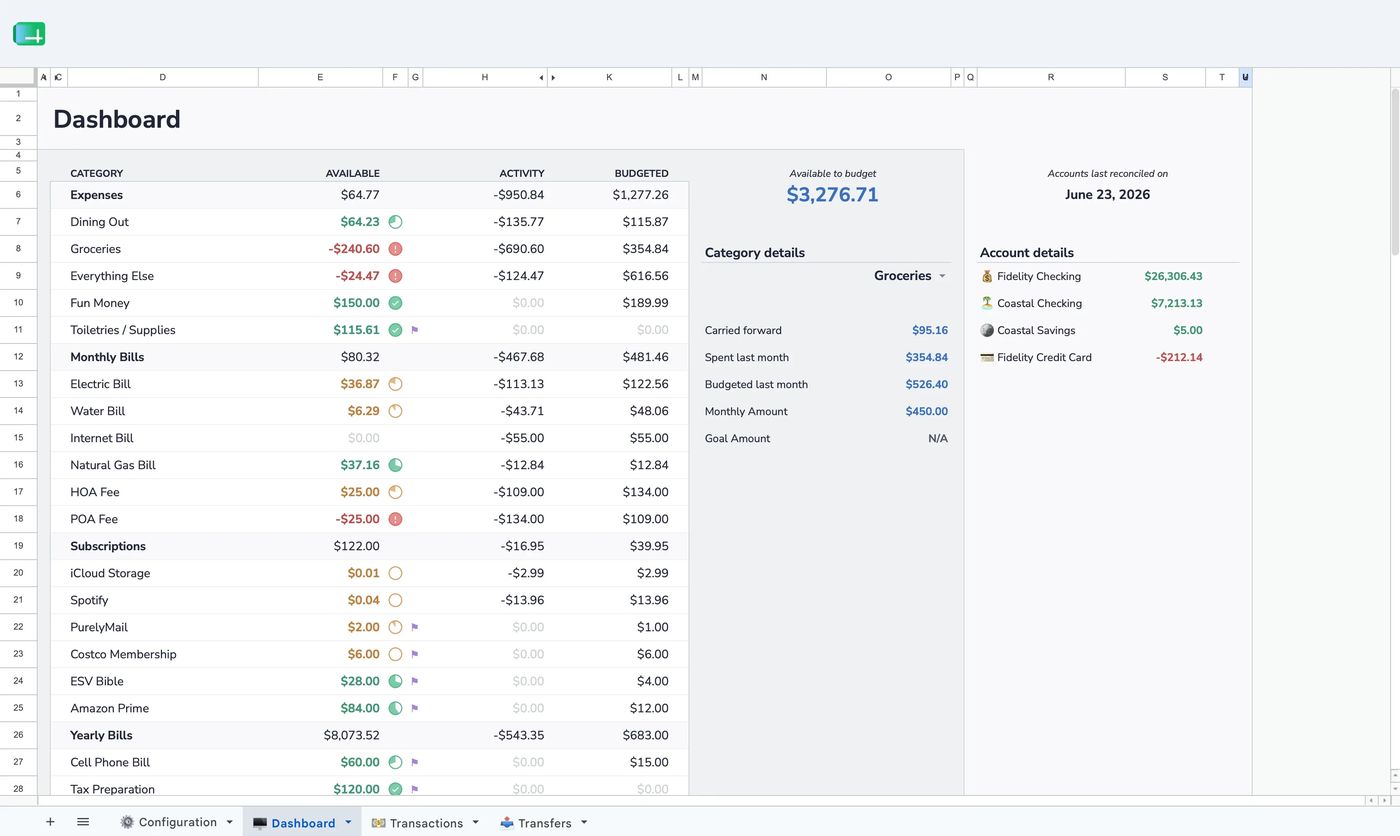
A budget template provides a structured framework, typically in a spreadsheet format, where you can list all sources of income and categorize your monthly expenses. The primary function is to give you a clear snapshot of where your money is going and to ensure your spending does not exceed your earnings. Many Canadian templates, such as the one from MoneySense updated in January 2024, come pre-populated with common expense categories and built-in formulas to automatically calculate totals and balances. These templates are designed to be customized, allowing you to rename categories and input your specific financial data to reflect your personal or household situation. Using a template moves you away from vague financial intentions and towards a concrete, actionable plan that can be reviewed and adjusted monthly.
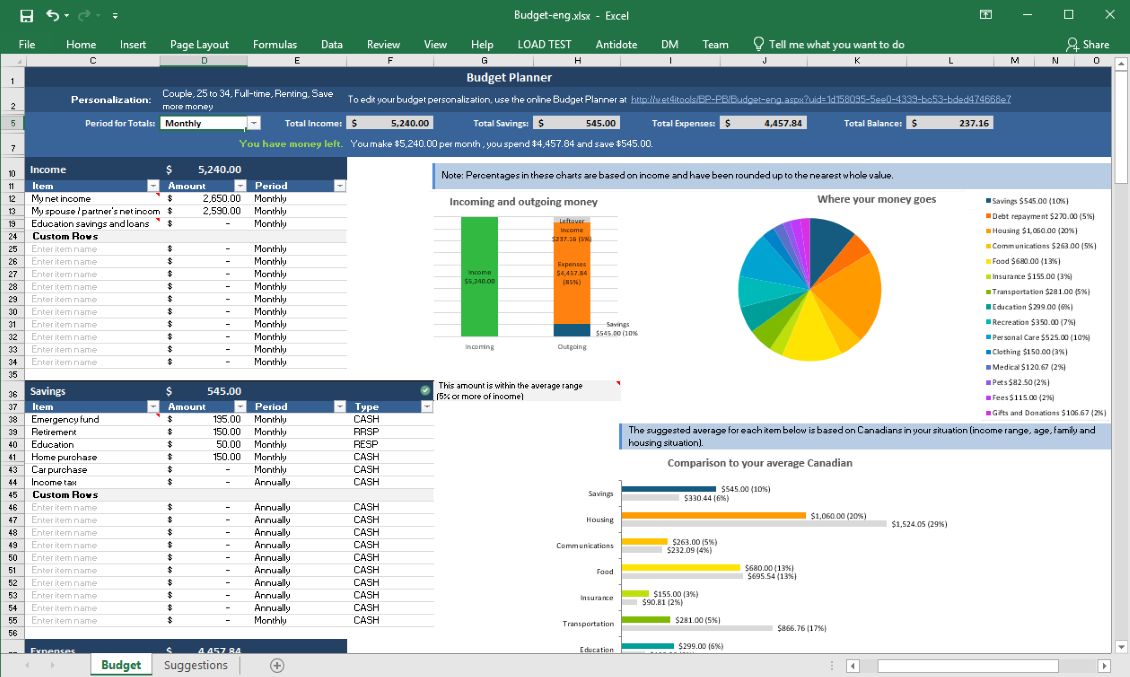
Budget tools, such as the online Budget Planner from the Financial Consumer Agency of Canada, often provide a more interactive experience. These tools guide you through a step-by-step process, asking for your income and expense details and then generating a completed budget for you. A significant advantage of these tools is that they incorporate Canadian financial guidelines based on aggregated data from thousands of credit counselling sessions. This means as you enter your numbers, the tool can compare your spending in categories like housing, food, or transportation to national averages and offer personalized tips. The Government of Canada's tool also allows you to save your budget online securely, making it easy to update and revisit.
The core objective of both templates and tools is to help you achieve a balanced budget where your total expenses, including debt repayment and savings, are less than or equal to your net income. If a tool identifies that your expenses are too high, it will alert you and suggest areas for adjustment. This proactive feedback is crucial for preventing reliance on credit to cover shortfalls. Furthermore, these resources help you plan for non-monthly and unexpected expenses by integrating savings calculators, which determine how much to set aside each month for annual costs or emergencies. This planning helps break the cycle of using credit cards for irregular bills, which is a common contributor to debt.
Key Features of Canadian Budget Resources
Canadian budget templates and tools distinguish themselves by incorporating local financial contexts and privacy considerations. A prominent feature is the inclusion of spending guidelines that reflect how Canadians with similar household sizes typically allocate their after-tax income. These guidelines serve as a benchmark, helping you identify if your spending in a particular category, such as entertainment or groceries, is significantly above or below the norm. The interactive budget calculator from non-profit credit counsellors, for example, warns you if your entered expenses for a category are too high or low based on these benchmarks. This guidance is invaluable for newcomers to budgeting or for anyone reassessing their financial habits.
Security and privacy are central concerns addressed by many Canadian offerings. Several resources emphasize that their spreadsheet templates do not require you to link any bank accounts or share login credentials. This is important because disclosing passwords and PINs to a third-party budgeting app may violate your financial institution's electronic banking agreement. Downloadable templates, such as the free Excel budget calculator spreadsheet, operate entirely on your local device, be it a PC, Mac, or mobile device using apps like Numbers or Google Sheets. Your financial data never leaves your control, which provides a layer of security not always guaranteed by cloud-based applications.
Another key feature is interoperability and accessibility. Many providers offer their budget tools in multiple formats to suit different user preferences and software access. For instance, a single budgeting system might be available as an online web app for use in any browser, a downloadable Microsoft Excel worksheet, a version for Mac's Numbers app, and a French-language version. Some are also compatible with free office suites like OpenOffice. This flexibility ensures that Canadians without paid software subscriptions can still access high-quality budgeting aids. Furthermore, some online tools allow you to export your data to a spreadsheet or import from a spending tracker, creating a cohesive financial management ecosystem.
How to Use a Budget Template or Tool
Using a budget template begins with gathering your financial information, including recent pay stubs, bank statements, and bills. Your first step is to input your net income, which is your take-home pay after taxes and other deductions. It is crucial to use net income rather than gross income, as this reflects the actual money available for spending. Next, you will list all your monthly expenses, starting with fixed costs like rent or mortgage payments, loan repayments, and insurance premiums. Then, you estimate variable expenses such as groceries, dining out, fuel, and entertainment. For your first draft, it is acceptable to make educated guesses for variable categories. You can refine these figures later by tracking your actual spending over a month.
The process within an online budget planner, like the Government of Canada's tool, is similarly straightforward but more guided. You proceed through a series of fields where you enter amounts for income and various expense categories. The tool automatically performs all calculations, providing a running tally of your surplus or shortfall. As you input data, the tool may offer real-time feedback, pointing out missed categories or suggesting adjustments based on Canadian spending guidelines. Once completed, these online planners often generate a summary with charts and actionable tips to improve your financial situation. You can then save this plan and return to update it as your circumstances change.
After the initial budget is created, the most important phase begins: comparison and adjustment. You must compare your planned budget against your actual spending. This involves tracking every expense for at least one full month and categorizing each transaction. Many people use a separate expense tracker spreadsheet, and some advanced tools allow you to import this tracked data directly into your budget template. This comparison will reveal discrepancies between your estimates and reality, highlighting areas where you tend to overspend. You then revise your budget figures to be more accurate and realistic. This iterative process is essential for transforming a static template into a living, effective financial plan that you can stick to long-term.
Common Sources for Free Canadian Templates
Canadians have access to a variety of reputable sources for free budget templates and tools, primarily from government agencies and non-profit organizations. The Financial Consumer Agency of Canada, a federal body, offers the primary online Budget Planner. This tool is hosted on Canada.ca and allows you to create a personalized budget, save it online, and receive tips based on your inputs. The Government of Canada also provides a downloadable interactive budgeting template module that can be used offline. These resources are funded by the government and are designed to be neutral, comprehensive, and secure for all Canadian residents.
Non-profit credit counselling organizations are another major source of free budgeting aids. Credit Canada, for example, offers a free expense tracker and budget spreadsheet that users can download. Similarly, the Credit Counselling Society provides an intelligent, interactive Canadian budget calculator spreadsheet for Excel and an online app version. These tools are built by accredited credit counsellors and incorporate the spending guidelines they use in client sessions. They are specifically designed not only to help with budgeting but also to educate users on debt avoidance and savings strategies, reflecting their non-profit, service-oriented mandate.
Financial media and educational websites also distribute free templates. MoneySense, a Canadian personal finance publication, offers a free Excel budget template that was updated in January 2024. These media templates often focus on user-friendliness and are accompanied by articles explaining how to use them. Furthermore, if you have access to Microsoft Excel or Google Sheets, both platforms host a library of premade budget templates. You can find these by searching within the application's template gallery. While not uniquely Canadian, these can be customized with Canadian dollar symbols and tax considerations, providing a flexible starting point for those comfortable with spreadsheet software.
- The Financial Consumer Agency of Canada (FCAC) Budget Planner is the primary government tool.
- Credit Canada provides a free expense tracker and budget spreadsheet.
- The Credit Counselling Society offers an interactive budget calculator in Excel and online app formats.
- MoneySense publishes a free Excel budget template, updated in January 2024.
- The Government of Canada provides a downloadable interactive budgeting template module.
- Microsoft Excel and Google Sheets have built-in libraries of generic budget templates.
Integrating Budgeting with Other Financial Goals
A well-constructed budget is the foundation for achieving broader financial goals, such as saving for a down payment, funding education, or preparing for retirement. Modern Canadian budget tools facilitate this by including built-in savings calculators. These calculators help you determine how much money you need to set aside each month for annual expenses like property taxes or holiday gifts, as well as for emergency funds and long-term goals. By treating savings as a non-negotiable monthly expense category in your budget, you ensure that progress toward these goals happens systematically, rather than relying on leftover funds at the end of the month.
Budgeting is also intrinsically linked to debt management. A primary purpose of tracking income and expenses is to identify surplus funds that can be directed toward debt repayment. If your initial budget shows expenses exceeding income, the tool highlights this deficit, forcing you to find areas to cut back so you can allocate more to paying down credit cards or loans. Some budget templates from credit counselling organizations include specific sections for detailing all your debts, including balances, interest rates, and minimum payments. This creates a clear action plan for becoming debt-free, which is a critical step toward financial stability for many Canadians.
For those seeking more personalized guidance, the path from a self-made budget to professional advice is well-supported. Many providers of free templates explicitly state that their tools are a complement to, not a replacement for, professional counselling. Non-profit credit counselling organizations invite users who are struggling to balance their budget or deal with debt to book a free, confidential appointment with a counsellor. These professionals can review your budget, help you negotiate with creditors, and develop a sustainable plan. This integration means that a budget template can be the first step in a continuum of financial help, from self-guided planning to expert intervention.
- Budget tools include built-in savings calculators for annual and emergency expenses.
- Templates help identify surplus income that can be directed to debt repayment.
- Some templates have dedicated sections for listing debts, balances, and interest rates.
- Non-profit credit counsellors offer free appointments to review budgets and manage debt.
- Budgeting ensures savings for goals is treated as a fixed monthly expense.
- A balanced budget prevents reliance on credit to cover spending shortfalls.
Frequently Asked Questions
What is the best free budget template for Canadians? There is no single best template, as it depends on personal preference. Key options include the Government of Canada's online Budget Planner for an interactive, guided experience, and downloadable Excel templates from sources like MoneySense or non-profit credit counsellors for those who prefer spreadsheet control. All these options are free and incorporate Canadian financial guidelines. Should I use my net or gross income in a budget? You should always use your net income, which is your take-home pay after taxes, Canada Pension Plan contributions, Employment Insurance premiums, and other deductions. This is the actual amount of money you have available to spend each month, making it the correct figure for creating a realistic budget.
Are online budget tools safe and private? Reputable tools from Canadian government agencies and non-profits are designed with privacy in mind. The online FCAC Budget Planner saves data securely on its servers. Many users prefer downloadable spreadsheet templates because they operate entirely on your personal device, with no requirement to share banking passwords or grant account access, eliminating privacy concerns related to third-party data sharing.
What if my expenses are higher than my income? If your initial budget shows a deficit, the tool will alert you. You must then adjust your numbers by reducing discretionary spending in categories like dining, entertainment, or subscriptions. If you cannot balance it on your own, non-profit credit counselling organizations offer free appointments with counsellors who can help you analyze your budget and explore options like debt management programs.
How often should I update my budget? You should review your budget at least monthly, comparing your planned spending to your actual expenses. Major life changes like a new job, a move, or a change in family size necessitate an immediate update. Regularly updating your budget ensures it remains an accurate and useful tool for your current financial situation.
Can I use these tools on a Mac or without Excel? Yes. Most Canadian budget resources are offered in multiple formats. The FCAC tool works in any web browser. Many spreadsheets are provided as .xlsx files compatible with Excel, Google Sheets, and OpenOffice. Specific versions are also often available for Mac's Numbers app (.numbers files), ensuring broad accessibility regardless of your device or software.
Frequently asked questions
What is the best free budget template for Canadians?
There is no single best template, as it depends on personal preference. Key options include the Government of Canada's online Budget Planner for an interactive, guided experience. Downloadable Excel templates are available from sources like MoneySense or non-profit credit counsellors for those who prefer spreadsheet control. All these options are free and incorporate Canadian financial guidelines.
Are online budget tools safe and private?
Reputable tools from Canadian government agencies and non-profits are designed with privacy in mind. The online FCAC Budget Planner saves data securely on its servers. Many users prefer downloadable spreadsheet templates because they operate entirely on your personal device. This eliminates privacy concerns related to sharing banking passwords or granting account access to third parties.
What if my expenses are higher than my income?
If your initial budget shows expenses higher than income, the tool will alert you. You must then adjust your numbers by reducing discretionary spending. If you cannot balance it on your own, non-profit credit counselling organizations offer free appointments. Counsellors can help you analyze your budget and explore options like debt management programs.
How often should I update my budget?
You should review your budget at least monthly, comparing your planned spending to your actual expenses. Major life changes like a new job or a move necessitate an immediate update. Regularly updating your budget ensures it remains an accurate and useful tool. This helps you stay on track with your current financial situation and goals.
Can I use these tools on a Mac or without Excel?
Yes. Most Canadian budget resources are offered in multiple formats. The FCAC tool works in any web browser. Many spreadsheets are provided as .xlsx files compatible with Excel, Google Sheets, and OpenOffice. Specific versions are also often available for Mac's Numbers app (.numbers files), ensuring broad accessibility regardless of your device or software.
Should I use my net or gross income in a budget?
You should use your net income. This guidance comes from an update to a budget template spreadsheet, where it was clarified that you should enter your net income. Net income is your take home pay after all deductions. Using this figure ensures your budget is based on the actual money you have available to spend. This creates a more accurate and realistic financial plan. The advice was provided in response to a user question about how to use the template correctly.
Sources and further reading
- Free budget template spreadsheets to customize excel.cloud.microsoft
- Intelligent, Free Excel Budget Calculator Spreadsheet mymoneycoach.ca
- Make a budget using one of these templates braininjurycanada.ca
- MoneySense's free Excel template for your monthly budget moneysense.ca
- Free Budget Template & Calculator for Canadians nomoredebts.org
This article explains how things work and is not financial, tax or legal advice. Rules, limits and rates change, so check the current figures with the Canada Revenue Agency, your province or your financial institution before you act.