Currency exchange rates determine the value of one nation's money in terms of another, directly impacting the cost of travel, international purchases, and money transfers for Canadians. These rates are set by the global foreign exchange market, where currencies are traded around the clock. The Bank of Canada publishes indicative average rates daily, but the actual rates Canadians pay are retail rates offered by banks and other financial institutions. Understanding how these rates are set, what influences their movement, and the costs involved in converting money is essential for managing personal finances in a global economy.
What Determines an Exchange Rate
The value of the Canadian dollar relative to other currencies is primarily determined by the global foreign exchange market. This decentralized marketplace operates 24 hours a day where banks, financial institutions, corporations, and governments buy and sell currencies. The forces of supply and demand for each currency drive its price. When demand for the Canadian dollar is high, its value appreciates against other currencies. Conversely, when sellers outnumber buyers, its value depreciates. The Bank of Canada notes that it very rarely intervenes in these markets to support the currency's value. The rates quoted in media reports are typically wholesale interbank rates, used for large transactions between major financial players.
For individual consumers, the applicable rate is a retail exchange rate. Financial institutions set these rates for client transactions, which involve much smaller amounts and additional processing compared to wholesale trades. The retail rate is derived from the wholesale market rate but includes a margin for the service provider. This is why the rate a Canadian receives when exchanging money at a bank branch differs from the mid-market rate seen on financial news channels. The mid-market rate is the midpoint between the global buy and sell prices and is considered the fairest benchmark, though it is generally not available to retail customers directly from traditional banks.
Key Factors That Move Exchange Rates
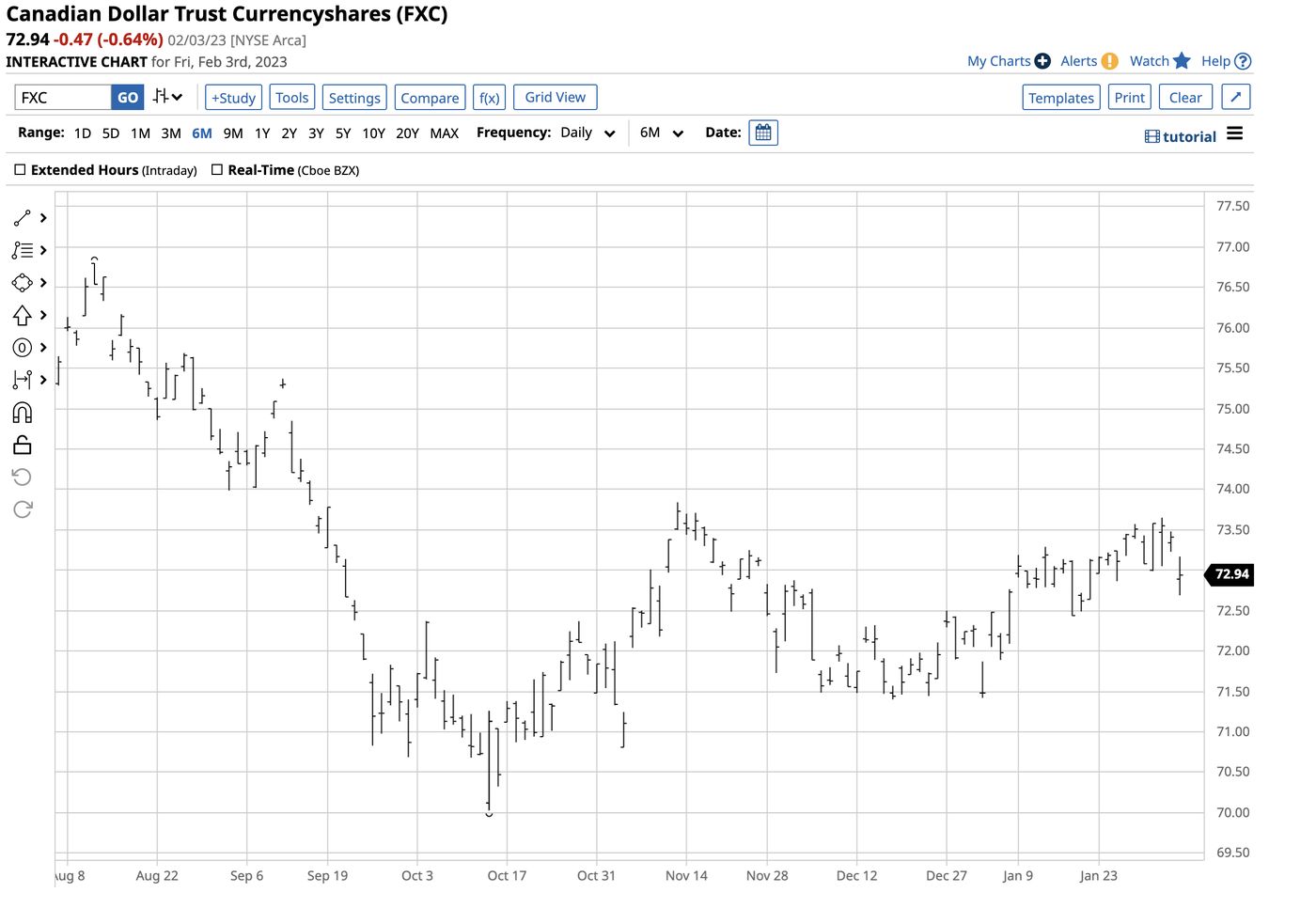
Exchange rates are volatile and react to a complex mix of economic and political events. Economic data releases are a primary driver, with indicators such as employment reports, inflation data, and gross domestic product figures from Canada and its major trading partners causing immediate fluctuations. When Canadian economic data is strong, it often leads to increased demand for the loonie from international investors, pushing its value higher. Interest rate decisions by the Bank of Canada and other central banks are also highly influential, as higher interest rates can attract foreign capital seeking better returns, thereby increasing demand for that currency.
Political stability and geopolitical events significantly influence currency values. Elections, trade negotiations, and international conflicts can create uncertainty, leading investors to move funds into currencies perceived as safer havens. Commodity prices play an outsized role for the Canadian dollar, given the country's status as a major exporter of resources like oil, natural gas, and lumber. A rise in oil prices often strengthens the CAD. Furthermore, broader market sentiment and risk appetite guide currency flows, with traders moving money into higher-yielding or safer assets based on the global economic outlook. These factors collectively ensure that exchange rates are in a constant state of change.
How Canadians Convert Currency
Canadians have several options for converting money, each with different processes and cost structures. The most traditional method is visiting a bank branch. Major banks like RBC, TD, and Scotiabank offer foreign currency cash at their branches, with US dollars, euros, and pounds sterling often available on hand. For other currencies, customers can typically place an order online, by phone, or in branch for pick-up within three to seven business days. Banks also facilitate non-cash conversions for instruments like cheques, drafts, and wire transfers directly through customer accounts. It is often more beneficial to convert Canadian dollars to the local currency before leaving Canada, as banks and exchange services abroad may charge higher rates and additional commissions.
Online money transfer specialists like Wise have grown in popularity by offering conversions at the mid-market exchange rate with a transparent, upfront fee. These services are typically used for electronic transfers abroad rather than for obtaining physical cash. For everyday spending abroad, Canadians commonly use credit or debit cards. Financial institutions do not set the exchange rate for these point-of-sale or ATM transactions. Instead, the rate is determined by the card network (like Visa or Mastercard) and includes a markup. Prepaid travel cards are another option, allowing users to lock in a rate when they load the card. Canadians should review the agreements for their specific cards to understand the associated exchange rates and fees.
- Bank Branches: For cash and non-cash transactions, with rates guaranteed at transaction time.
- Online Bank Portals: To order foreign currency for branch pick-up.
- Money Transfer Services: For sending funds abroad, often with competitive rates.
- Credit/Debit Cards: For purchases and ATM withdrawals internationally.
- Prepaid Travel Cards: Loaded with foreign currency in advance.
- Foreign Exchange Centres: Specialized kiosks sometimes offering on-hand currency.

Fees and Markups in Currency Conversion
The cost of converting currency extends beyond the quoted exchange rate, encompassing various fees and hidden markups. Banks and transfer services create retail exchange rates by adding a margin to the wholesale mid-market rate. This hidden markup is a primary cost, even when a service advertises zero fees. For cash transactions, the rate is typically less favourable than for non-cash transactions because it includes costs for shipping, handling, and physical storage. Non-cash rates apply to paper instruments like cheques and drafts, as well as electronic wire payments, which incur lower processing costs and thus receive a better rate.
Additional fees can apply depending on the method. Ordering currency online for branch pickup usually does not carry an extra fee from the bank itself. However, using a credit card for a foreign purchase often incurs a foreign transaction fee, typically a percentage of the amount converted, on top of the card network's exchange rate. ATM withdrawals abroad may attract both a fee from the local machine operator and a charge from the cardholder's home bank. Money transfer services may charge a flat fee or a percentage of the amount sent. The full cost of a transfer is the sum of this visible fee and the hidden markup embedded in the exchange rate deviation from the mid-market benchmark.
Cash vs. Non-Cash Exchange Rates
Financial institutions explicitly differentiate between rates for cash and non-cash transactions, with cash rates being consistently less favourable. The rationale for this difference lies in the higher costs associated with handling physical money. Cash requires secure storage, transportation, and insurance, and it involves more manual processing. These shipping and handling charges are factored into the exchange rate offered for banknotes. Consequently, converting a sum of Canadian dollars will yield less foreign cash than if the same amount were converted via a non-cash method.
Non-cash rates are applied to transactions that do not involve physical currency. This category includes wire transfers sent or received, the purchase of bank drafts or cheques in a foreign currency, and conversions within a bank account. For example, when an incoming wire transfer in US dollars is deposited into a Canadian dollar account, the bank converts the funds at the non-cash rate in effect at the time of posting. Because these electronic or paper-based transactions are more efficient for the institution to process, they pass on some of the savings via a better exchange rate. This distinction makes non-cash methods generally more cost-effective for moving money across borders.
The Role of the Bank of Canada
The Bank of Canada plays a central role in monitoring and reporting on foreign exchange rates, though it does not set retail rates for consumers. Its primary function is to publish authoritative reference data. Each business day by 16:30 Eastern Time, the Bank publishes daily average exchange rates for the Canadian dollar against many currencies. These are indicative rates, calculated from averages of aggregated price quotes from financial institutions, and they apply to non-cash transactions up to $9,999. The Bank also publishes monthly and annual average rates, providing valuable data for tracking trends over time.
Beyond reporting, the Bank calculates the Canadian Effective Exchange Rate (CEER) index, a weighted average of the CAD's value against the currencies of Canada's major trading partners. This index replaced the older Canadian-Dollar Effective Exchange Rate index (CERI) in January 2018. The CEER offers a broad view of the loonie's international competitiveness. While the Bank has the capacity to intervene in foreign exchange markets, it states that such actions are very rare. Its published data serves as a foundational benchmark for the financial industry and the public, informing economic analysis and providing a standard against which retail exchange rates can be compared.
Historical Context and Notable Trends
The Canadian dollar has experienced significant fluctuations over the decades, influenced by commodity cycles, interest rate differentials, and global economic events. Historically, the CAD has often traded at a discount to the US dollar, though it has seen periods of parity and even strength above the greenback. The loonie's value is closely tied to the price of oil and other natural resources. During commodity booms, the currency tends to appreciate substantially. Political and economic agreements have also shaped the currency's trajectory. The implementation of the Canada-United States Free Trade Agreement and later the North American Free Trade Agreement increased cross-border trade flows, impacting demand for both currencies. These historical movements underscore the sensitivity of the exchange rate to external shocks and highlight the importance for Canadians to be aware of the factors that can cause their currency's purchasing power to change internationally.
Comparing Provider Costs and Services
The total cost of converting currency varies significantly between different types of service providers. Major Canadian banks offer convenience and security, with extensive branch networks for cash pickup and integrated account services for wire transfers. Their exchange rates, however, typically include a noticeable markup from the mid-market rate. Online money transfer specialists often provide rates much closer to the mid-market benchmark, with a separate and transparent fee, which can result in lower overall costs for electronic transfers. Their services are usually conducted entirely online.
Prepaid travel cards may have initial purchase fees, reload fees, and potentially inactivity fees. Foreign exchange kiosks at airports or in tourist areas are known for having some of the least favourable rates and high service charges. When comparing, it is crucial to look at the total cost, which is the combination of the exchange rate margin and any additional fees. A slightly better rate can be outweighed by a high fixed fee on a small transfer, while on a large transfer, even a small difference in the rate has a substantial financial impact.
| Provider Type | Typical Access | Common Fee Structures |
|---|---|---|
| Major Banks | Branch, online, phone | Margin in exchange rate, possible wire transfer fees |
| Online Transfer Services | Online only | Transparent upfront fee, low margin on rate |
| Credit Cards | Point-of-sale, online | Foreign transaction fee (%), margin in network rate |
| Prepaid Travel Cards | Online, phone | Purchase fee, reload fee, potential inactivity fee |
| Foreign Exchange Kiosks | Airports, tourist areas | High margin in rate, possible service charge |
Frequently asked questions
What is the mid-market rate and why is it important?
The mid-market rate is the midpoint between the global buy and sell prices for a currency pair. It is the real benchmark rate used in wholesale markets and is considered the fairest exchange rate. It is important because it serves as a reference point to evaluate the true cost of a retail currency conversion. The difference between the mid-market rate and the rate you are offered represents the hidden markup charged by a bank or service.
Can I lock in an exchange rate for a future transaction?
Yes, some services allow you to lock in a rate. When ordering foreign currency cash from a bank for future pickup, the rate is typically guaranteed at the time of the transaction. Some online money transfer services offer a rate guarantee for a period, such as 24 hours, allowing you to secure a rate as long as you complete the transfer within that window. This can be useful when planning for known future expenses like a property purchase or tuition payment abroad.
What is the difference between the exchange rate I see on the news and what my bank offers?
The exchange rate reported in the media is the wholesale interbank or mid-market rate used by banks for large transactions. In contrast, your bank offers a retail exchange rate for client transactions. This retail rate includes a markup to cover the additional processing and smaller transaction sizes typical for individuals. Financial institutions like RBC note that client transactions are priced using a retail rate, which is different from the wholesale market rates quoted in media. Therefore, the rate you receive from a bank is typically less favourable than the benchmark rate you see published.
Is it cheaper to exchange money at my bank before I travel or use my card abroad?
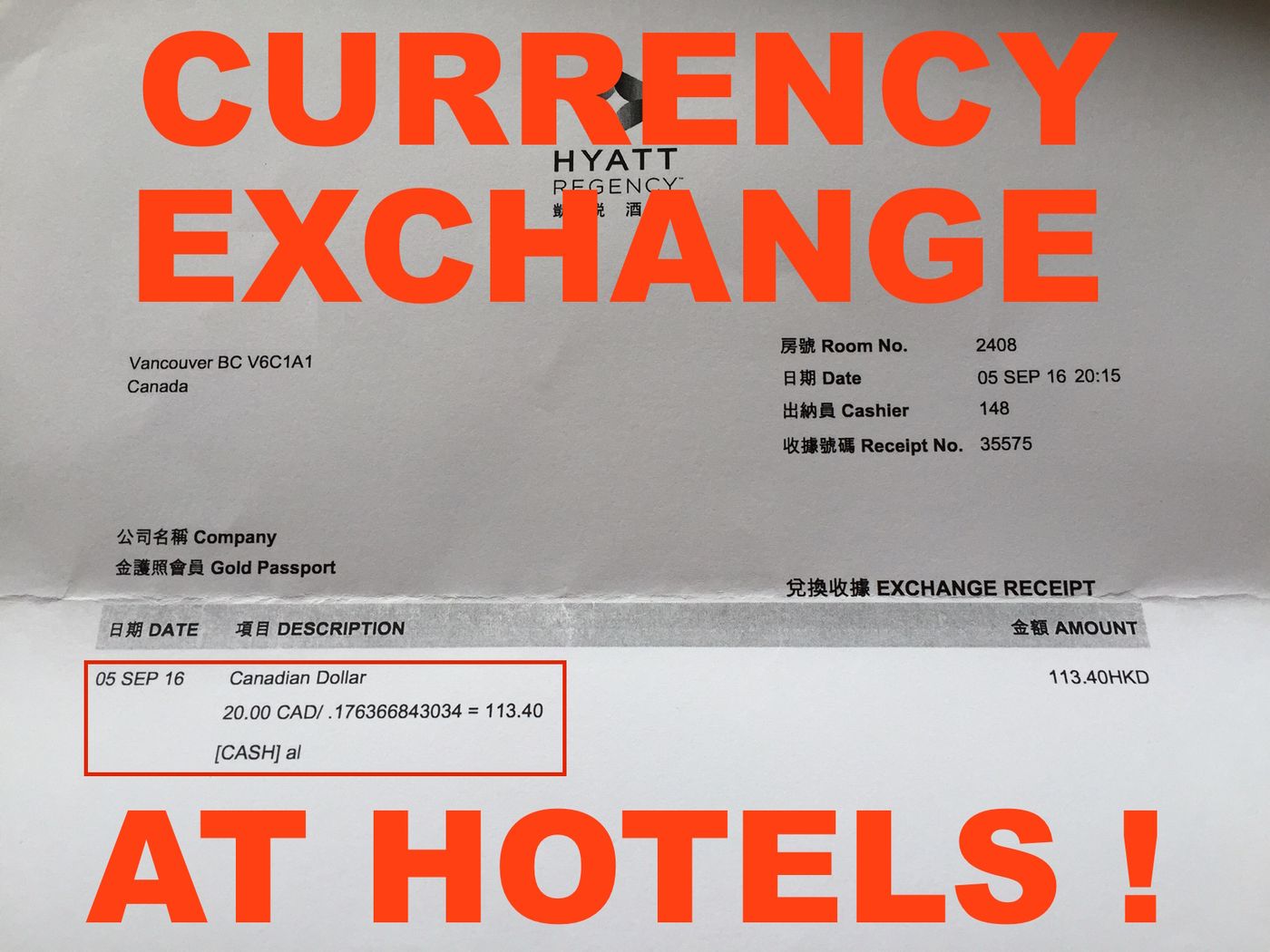
It is often more beneficial to convert your Canadian dollars to local currency before leaving Canada. Many banks, foreign exchange kiosks, and hotels in other countries charge commissions or offer higher exchange rates than those available domestically. Using a debit or credit card abroad involves different exchange rates and fees set by the card networks, which are not set by your bank. For cash needs, purchasing currency from a Canadian bank in advance is generally advised to avoid less favourable rates and extra charges abroad.
Why do banks charge different rates for cash and wire transfers?
Banks apply different exchange rates for cash and wire transfers due to varying processing costs. Cash transactions incur shipping, handling, and secure storage charges, making the exchange rate for cash less favourable. Non-cash transactions, such as wire transfers, drafts, and cheques, are electronic or paper-based and require less physical processing. Therefore, financial institutions apply a more favourable non-cash rate to these instruments. RBC explicitly states that cash rates include these additional costs, while non-cash rates do not.
How often do exchange rates change?
Exchange rates fluctuate constantly throughout the day as the global foreign exchange market operates 24 hours a day. Rates react to economic data, political events, and market sentiment in real time. The Bank of Canada publishes a fixed indicative daily average exchange rate each business day by 16:30 ET, which is an aggregate from financial institutions. However, the live rates used by banks for actual transactions can change by the second, and banks can only guarantee a rate at the exact time a purchase or sale is conducted.
Sources and further reading
- Exchange rates bankofcanada.ca
- Foreign Currency Exchange Rates scotiabank.com
- Foreign Exchange Currency Converter, RBC Royal Bank apps.royalbank.com
- Currency Converter & Live Exchange Rates td.com
- Best Canadian dollar exchange rate wise.com
This article explains how things work and is not financial, tax or legal advice. Rules, limits and rates change, so check the current figures with the Canada Revenue Agency, your province or your financial institution before you act.