The Canadian dollar exchange rate, particularly against the US dollar, is a critical financial metric for Canadians. It determines the value of the loonie in international trade and directly impacts the cost of cross-border shopping, travel, and investments. The rate is set by the global foreign exchange market where currencies are traded, influenced by factors like commodity prices, interest rates, and economic data. Understanding how this rate works, its historical context, and the costs involved in converting money is essential for managing personal finances effectively.
How the CAD/USD Exchange Rate Is Determined
The value of the Canadian dollar relative to the US dollar is established in the global foreign exchange market, one of the largest financial markets in the world. Banks, corporations, investors, and governments trade currencies here, with prices fluctuating based on supply and demand. The rates quoted in financial media, such as 1 USD to 1.40 CAD, are typically interbank rates used for wholesale transactions, often involving minimum amounts like US$5,000,000. These are the baseline rates from which all other consumer rates are derived. The Bank of Canada publishes daily, monthly, and annual average exchange rates, but these are indicative figures calculated from aggregated price quotes from financial institutions. It is important to note that the Bank of Canada very rarely intervenes in the market to support the Canadian dollar's value, allowing market forces to set the price. The exchange rate Canadians actually receive for transactions is a retail rate, which includes a spread added to the interbank rate to account for market movement and processing costs.
This spread is the primary way financial institutions earn revenue on currency exchange services. When a client completes a transaction for an amount smaller than the multi-million dollar interbank minimum, a retail rate is applied. This rate accounts for the time and cost of accumulating smaller client amounts before they can be traded on the wholesale market. Furthermore, the type of transaction affects the rate applied, with a distinction made between cash and non-cash transactions. Non-cash rates, applied to electronic transfers, cheques, and drafts, are more favourable because these instruments do not require physical handling and storage. Cash transactions incur shipping and handling charges, making the exchange rate for physical currency less favourable than the non-cash rate.
Key Factors That Influence the Exchange Rate
Several economic and market factors cause the Canadian dollar to appreciate or depreciate against the US dollar. Commodity prices are a traditional driver, as Canada is a major exporter of resources like oil, natural gas, and lumber. When global demand for these commodities rises, it often strengthens the CAD as buyers need Canadian dollars to pay for them. Interest rate differentials between the Bank of Canada and the US Federal Reserve are another crucial factor. Higher interest rates in Canada can attract foreign investment, increasing demand for the loonie. Broader economic data, including GDP growth, employment figures, and trade balances, also shape investor sentiment and currency valuations. Geopolitical events, global risk appetite, and the relative strength of the US economy all contribute to daily volatility.
The Canadian Effective Exchange Rate index, or CEER, is a weighted average of the Canadian dollar against the currencies of Canada's major trading partners, providing a broader view of its international value. Market participants constantly analyze these factors, leading to the fluctuations seen in the exchange rate over short and long periods. For instance, over a 90-day period, the USD to CAD rate might move between 1.3763 and 1.4280, with an average rate and a measure of volatility calculated from this range. Tracking these movements over time reveals the currency's volatility and long-term trends, which are important for businesses and individuals with cross-border financial interests.
Historical Context and Notable Trends
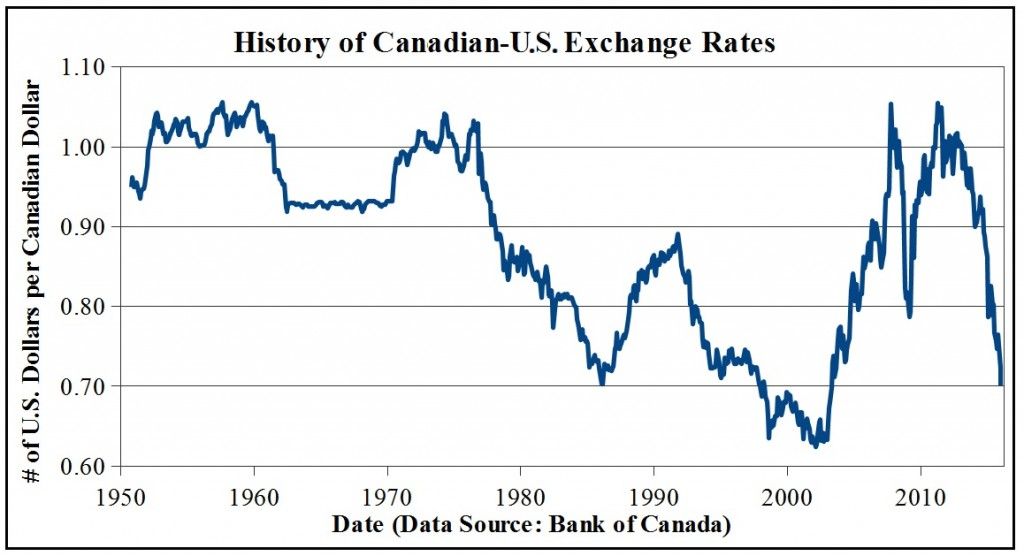
The Canadian dollar has experienced significant fluctuations against the US dollar throughout modern financial history. The exchange rate is often discussed in terms of parity, where one Canadian dollar equals one US dollar. The loonie has traded both above and below this psychological benchmark multiple times, driven by the economic factors previously mentioned. Periods of high commodity prices, particularly oil, have historically correlated with a stronger Canadian dollar. Conversely, during global economic downturns or when interest rates in Canada are significantly lower than in the US, the CAD often weakens. Tracking these movements over time reveals the currency's volatility and long-term trends.
The Bank of Canada maintains historical exchange rate data, which includes legacy noon and closing rates up to April 2017. It also maintained the Canadian-Dollar Effective Exchange Rate index data up to January 2018, which has since been replaced by the Canadian Effective Exchange Rate index. This historical record shows that the CAD/USD exchange rate is dynamic. The data provides context for understanding current market movements. The foreign exchange market determines how much the Canadian dollar is worth.
Methods for Converting Currency and Associated Costs
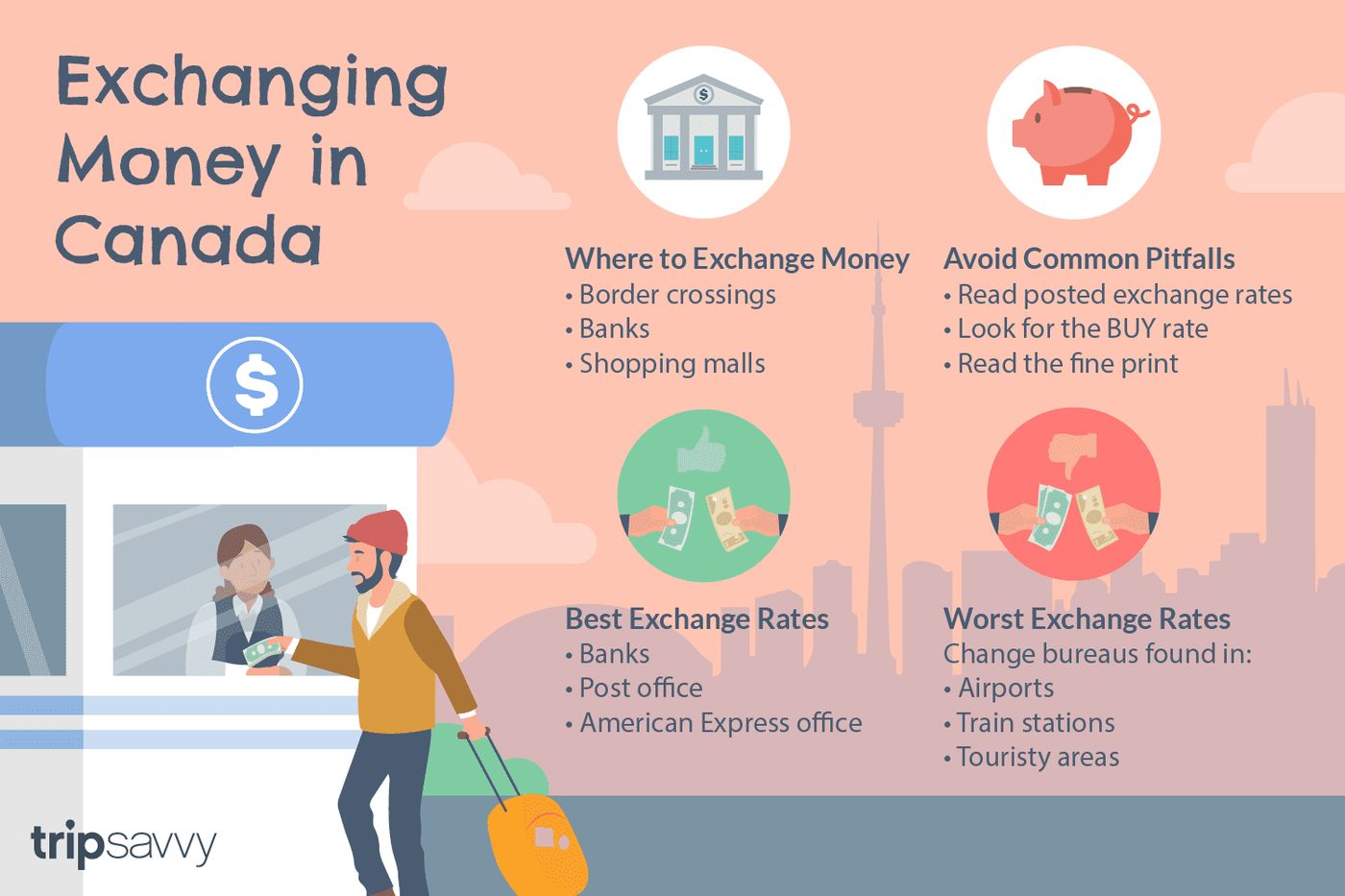
Canadians have several options for converting between Canadian and US dollars, each with different cost structures. Major banks like RBC and TD offer foreign exchange services through online banking, in branches, and at dedicated foreign exchange centres. For electronic transfers between linked cross-border accounts, such as RBC Royal Bank and RBC Bank accounts, transfers can be instant and free, with typical online transaction limits of $25,000. Banks apply their retail exchange rate, which is less favourable than the interbank rate, and this rate differs for cash versus non-cash transactions. Non-cash rates are better, so electronic transfers generally offer more value than exchanging physical banknotes.
Specialized foreign exchange providers and online money transfer services often advertise bank-beating rates and no hidden fees, claiming to provide more value on every transfer. These services typically use the mid-market rate for their currency converters for informational purposes but apply a different rate with a margin when sending money. Customers are advised to see all pricing upfront before initiating a transfer. For obtaining US cash while in the United States, Canadians can use debit cards at no-fee ATM networks, request cash back with debit card purchases at retailers, or even get a cash advance at a US financial institution by showing a US Visa Debit card and photo ID, with advances sometimes allowing withdrawals up to $5,000.
- Bank Transfers: Electronic, non-cash rates, often with fees or built-in spreads.
- Online FX Providers: May offer competitive mid-market rates with transparent fees.
- Branch Cash Exchange: Convenient but uses less favourable cash exchange rates.
- ATM Withdrawals Abroad: Subject to the ATM operator's fees and the bank's foreign exchange rate.
- Credit/Debit Card Purchases: Use the card network's exchange rate, often with a foreign transaction fee.
- Prepaid Travel Cards: Loaded with foreign currency at a set rate, locking in the exchange.
To save on exchange rates when you bank with RBC, a Premium Checking account offers a preferred exchange rate. Another way to save is to hold onto your US currency until rates are favourable. When you have a US checking or savings account, you can keep your money in US dollars until you are ready to exchange it. This means you can wait until you see a better rate to convert your currency. With RBC Bank, you can transfer CAD to USD and back as many times as you want for free.
Bank and Provider Fees and Rate Structures
Financial institutions structure their foreign exchange revenue around the spread between the interbank rate and the retail rate they offer customers. The retail rate includes a margin that accounts for the service, market risk, and processing. A clear example is the distinction between cash and non-cash rates. For instance, on a given day in October 2026, RBC listed a non-cash rate of 1.43630. The cash rate for the same day would be less favourable due to added handling costs. Banks typically do not charge a separate commission fee for standard conversions, instead baking their profit into the exchange rate itself. For specific services like wire transfers sent abroad, banks may charge a flat fee in addition to applying their exchange rate. When using debit or credit cards outside Canada, different exchange rates and fees apply, and these are governed by the cardholder agreements. The following table illustrates how different providers apply their rates for common transaction types.
| Provider Type | Rate Applied | Typical Additional Fees |
|---|---|---|
| Major Bank (Wire/Transfer) | Retail Non-Cash Rate | Possible wire transfer fee |
| Major Bank (Cash) | Retail Cash Rate | None (spread included) |
| Online FX Specialist | Margin on Mid-Market Rate | Often no fee, or low transparent fee |
| ATM Operator Abroad | ATM Owner's Rate | ATM access fee, possible bank fee |
You can compare exchange rates from different providers to find the best rate. Some online services allow you to set up a rate alert to get a notification when your desired exchange rate is reached. It is often more beneficial to convert your Canadian dollars to the local currency of your travel destination before you leave Canada. Many banks, foreign exchange kiosks and hotels in other countries charge commission or service charges in addition to exchange rates that are often higher than those in Canada.
Practical Limits and Cross-Border Banking
When converting large sums, Canadians will encounter transaction limits set by financial institutions. For example, RBC allows cross-border transfers between RBC Royal Bank and RBC Bank accounts via online banking up to $25,000 per transaction. For amounts exceeding this, clients must call to arrange single transfers up to $100,000. There is no limit to the number of transfers one can make between checking and savings accounts. These limits are in place for security and operational reasons. To open a US account with a Canadian bank like RBC, one does not need to be a US resident, have a US address, or have a Social Security Number, making cross-border banking accessible for many Canadians.
Cross-border banking simplifies currency conversion by allowing clients to hold funds in both CAD and USD. Clients can transfer money between these accounts instantly when conversion rates are favourable. This setup provides flexibility to convert CAD to USD when the Canadian dollar is strong, and vice versa, without incurring transfer fees between linked accounts. Such accounts also facilitate easier access to US cash through associated debit cards and ATM networks. For frequent travellers or those with financial obligations in both countries, these banking relationships can streamline finances and reduce conversion costs over time by providing a dedicated platform for managing two currencies.
Frequently asked questions
Why is the cash exchange rate worse than the rate for transfers?
Exchange rates applied to cash transactions include shipping and handling charges. This makes the exchange rate for cash less favourable than the non-cash rate. Non-cash rates are applied to paper instruments like cheques and drafts, and to electronic transactions. These instruments do not require physical storage or movement, so a more favourable rate is applied.
How can I get the best exchange rate for Canadian dollars?
To secure a competitive rate, compare offers from multiple sources including your bank, online foreign exchange specialists, and credit unions. Generally, non-cash electronic transfers offer better rates than cash exchanges. Some premium bank accounts offer preferred exchange rates. Additionally, using a service that allows you to set a rate alert can help you convert money when the market reaches your desired level.
What is the difference between the interbank rate and the rate I get?
The rate you receive as a client is a retail rate, which is different from the interbank rate quoted in the media. Interbank rates are used by banks and other large financial institutions to buy and sell currencies in the wholesale market, typically for minimum amounts of US$5,000,000. Client transactions are for much smaller amounts and require additional processing. Therefore, a retail rate is applied, which includes a spread added to the interbank rate to account for market movement between the time of your transaction and when the bank can trade the accumulated smaller amounts.
Are there limits on how much currency I can convert at once?
Yes, financial institutions often set limits on currency conversion amounts. For example, with RBC, cross-border transfers between your RBC Royal Bank and RBC Bank accounts via online banking are limited to $25,000 per transaction. If you need to transfer more than that amount at one time, you can call an RBC Bank Advisor, who can accommodate single transfers up to and including $100,000. For checking and savings accounts, however, there is no limit to the number of transfers you can make.
Can I open a US bank account from Canada?
Yes, it is possible to open a US bank account from Canada. Specifically, to open an RBC Bank US account, you do not need to be a resident of the United States nor have a US address or Social Security Number. The requirements are that you must be 18 years or older and live in either Canada or the US. The sign-up process can be completed online in just a few minutes using your Canadian identification.
What happens when I use my debit or credit card in the US?
When using a US Visa Debit card in the United States, you have several options for accessing cash. You can use your card at one of over 50,000 no-fee Allpoint and PNC ATMs, or at any Visa, NYCE, or PLUS ATM. You can also get cash back with debit card purchases at larger retail merchants by selecting 'cash back' at the card terminal before completing your purchase. Additionally, you can visit most US financial institutions, show your photo ID and your US Visa Debit card, and request a cash advance, which allows you to withdraw up to $5,000, with the amount varying by institution.
Sources and further reading
- USD ⇔ CAD Currency Converter, RBC Bank rbcbank.com
- 1 USD to CAD, US Dollars to Canadian Dollars Exchange ... xe.com
- Foreign Exchange Currency Converter, RBC Royal Bank apps.royalbank.com
- Exchange rates bankofcanada.ca
- Currency Converter & Live Exchange Rates td.com
This article explains how things work and is not financial, tax or legal advice. Rules, limits and rates change, so check the current figures with the Canada Revenue Agency, your province or your financial institution before you act.