An Ontario take-home pay calculator estimates your net income after all mandatory payroll deductions. Your gross salary is reduced by federal and provincial income taxes, Canada Pension Plan contributions, Employment Insurance premiums, and Ontario-specific charges like the Ontario Health Premium. Understanding these deductions is crucial for personal financial planning, as the final amount deposited into your bank account can be significantly less than your advertised salary. This guide explains each component of the calculation using the rates and rules for the 2026 tax year.
What Constitutes Take-Home Pay in Ontario
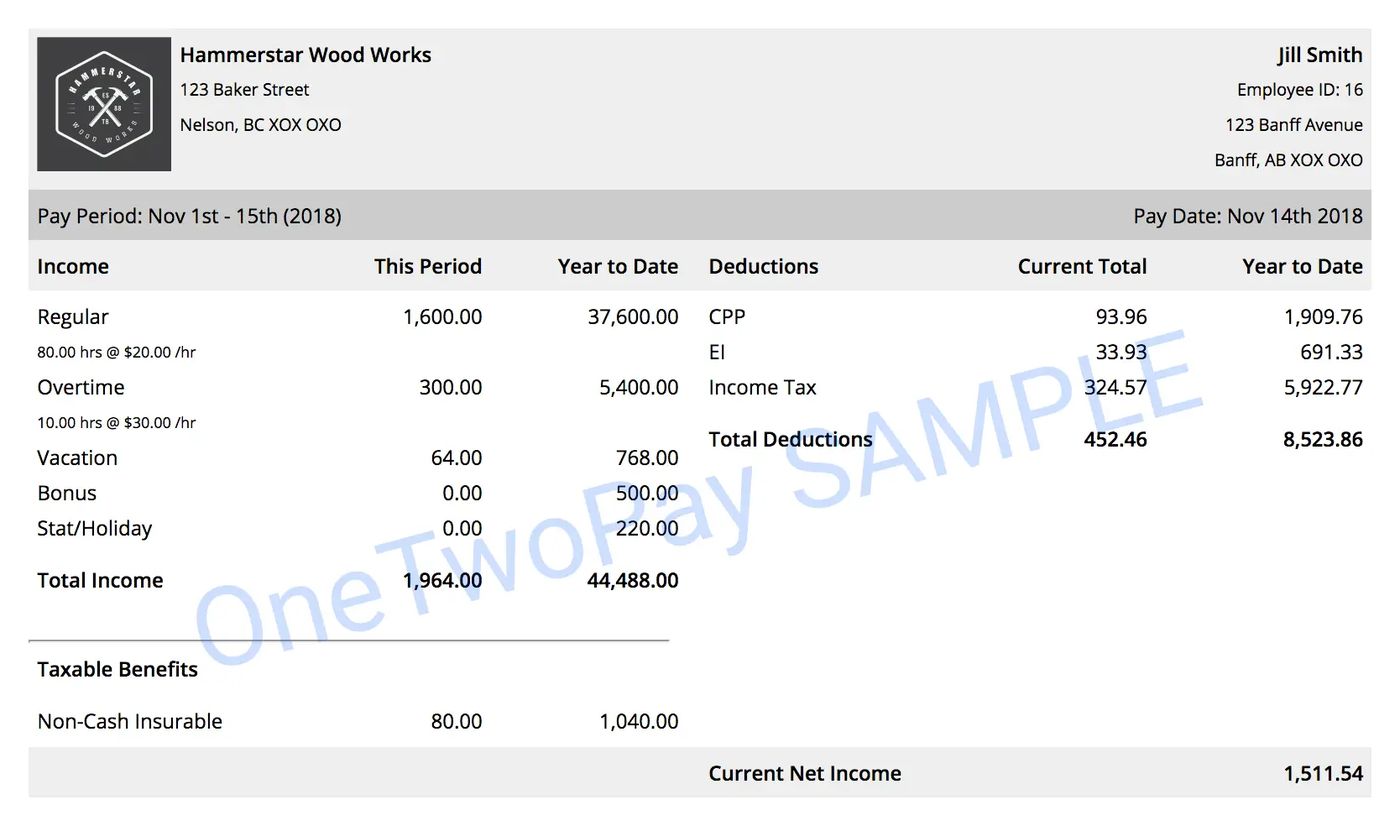
Take-home pay, or net pay, is the amount you receive after all mandatory deductions are subtracted from your gross salary. In Ontario, seven key deductions determine your final income. These are federal income tax, Ontario provincial income tax, Ontario surtaxes, the Ontario Health Premium, Canada Pension Plan contributions, CPP2 contributions, and Employment Insurance premiums. Voluntary deductions, such as contributions to an RRSP, employer pension plans, group benefits, or union dues, can further reduce your paycheque but vary by individual and employer. The calculation uses progressive tax brackets, meaning you pay a higher rate only on income that exceeds certain thresholds. For the average Ontarian, take-home pay typically ranges from 71% to 83% of gross earnings, with the exact percentage dependent on your income level. Self-employed individuals must also include earnings from business, professional practice, or commission, which are subject to the same deductions when calculated annually. Garnishments for obligations like child support are treated as taxable salary and included in income calculations to prevent tax evasion.
Federal and Ontario Provincial Income Tax
Federal income tax for 2026 uses five progressive brackets, with rates applied only to the portion of income within each bracket. The federal basic personal amount is approximately $16,500 for 2026, which creates a non-refundable tax credit. Ontario employs its own five-bracket provincial tax structure, with rates from 5.05% to 13.16%. The Ontario basic personal amount is $12,747 for 2026, providing a provincial tax credit on the first portion of income. Unlike most provinces, Ontario applies two additional surtaxes on the provincial tax owed after credits. These surtaxes effectively raise the top provincial rate from 13.16% to about 20.53%. Consequently, the combined federal and provincial top marginal tax rate in Ontario reaches roughly 53.53%, placing it 11th highest among Canadian jurisdictions. The federal tax brackets are indexed to inflation each year, and for 2026 the lowest bracket rate dropped from 15% to 14%, providing a slight increase in take-home pay for all earners. Ontario has not indexed its basic personal amount upward in recent years, keeping it steady at $12,747.
Ontario-Specific Deductions: Surtax and Health Premium
Ontario residents face two unique deductions not found in most other provinces. The Ontario surtax is not a separate tax but an additional charge applied to your calculated provincial tax bill. The surtax has two tiers, applying rates of 20% and 36% to portions of the tax bill, which significantly increases the effective provincial tax rate for middle and high earners. The Ontario Health Premium is a separate levy that ranges from $0 to $900 annually based on your taxable income. This premium is collected through the provincial income tax system and goes into the province's general revenue, not directly to OHIP. You cannot opt out of paying the Health Premium, and it functions as an additional income-based charge. There is no benefit-tracking linking the premium paid to individual healthcare costs received. The premium amount increases on a sliding scale as income rises, with the maximum $900 applying at higher income brackets. These two charges mean Ontario's tax system, while having relatively low base provincial rates, results in a higher effective tax burden due to these layered additions.
Canada Pension Plan and Employment Insurance Deductions
Contributions to the Canada Pension Plan and Employment Insurance are mandatory federal payroll deductions for all employees in Ontario. CPP contributions are calculated on employment income up to the Year's Maximum Pensionable Earnings, which is $74,600 for 2026. A second tier, called CPP2, applies to earnings between the YMPE and an upper earnings limit of $85,000. Together, CPP and CPP2 contributions can deduct up to approximately $4,800 annually from higher earners. Employment Insurance premiums are deducted on income up to the maximum insurable earnings of $68,900 for 2026. Both CPP and EI have annual maximum contribution amounts, meaning deductions stop once your year-to-date earnings surpass these ceilings. This can cause your take-home pay to increase partway through the year once these limits are reached. The cessation happens in stages: EI stops first at $68,900, then CPP stops at $74,600, and CPP2 immediately starts on earnings up to $85,000. For individuals earning above these thresholds, paycheques later in the year will be higher as these deductions are no longer withheld. It is important to note that these are employee contribution rates. Employers pay matching amounts that do not affect your take-home pay.
Key Tax Credits and Their Impact
The Basic Personal Amount is a fundamental non-refundable tax credit that reduces the amount of tax you owe. For 2026, the federal BPA is approximately $16,500, and the Ontario BPA is $12,747. This credit is calculated by multiplying the BPA by the lowest tax rate, resulting in a dollar-for-dollar reduction of your tax liability. The federal credit is $16,500 multiplied by 14%, equaling $2,310. The Ontario credit is $12,747 multiplied by 5.05%, equaling about $644. Other common tax deductions in Ontario can further reduce taxable income. These include mortgage interest on loans for rental property, charitable donations, student loan interest, and child care expenses for dependants under age 13. Claims for mental health treatment costs, such as therapy, can also generate tax credits. It is important to declare all applicable deductions when filing your taxes to lower your final tax liability. The Canada employment amount is another non-refundable credit available to employees. Dividend income from Canadian companies is taxable and must be reported separately from other income, and capital gains or losses on such dividends should also be reported separately.
- Basic Personal Amount: Federal ~$16,500, Ontario $12,747.
- Mortgage interest deduction for rental property.
- Charitable donations reduce taxable remuneration.
- Student loan interest is a deductible credit.
- Child care expenses for dependants under 13.
- Mental health treatment costs like therapy.
- Canada employment amount for employees.
- Dividend income reported separately.
Factors That Influence Your Paycheque
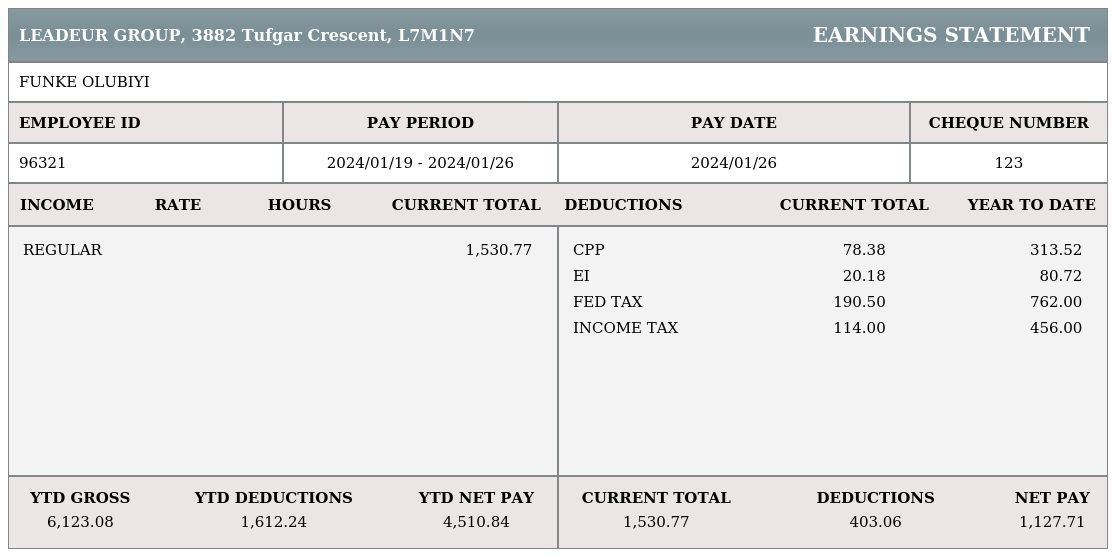
Several variables beyond your gross salary affect your final net pay. Your province of employment, not residence, dictates which provincial tax rates and rules apply. For example, someone living in Gatineau but working in an Ottawa office falls under Ontario payroll deductions, meaning CPP rather than QPP and the higher EI rate. Pre-tax contributions to benefits like certain insurance plans reduce your taxable income, thereby lowering your immediate tax burden. Post-tax deductions, such as RRSP contributions, are subtracted from your net income after tax withholding. Garnishments, like those for child or spousal support, are treated as taxable salary and must be included in your income calculations. Self-employed individuals must report earnings from business, professional fees, and commissions separately, ensuring they are not included in previous years' filings. Dividend income from Canadian companies is taxable and should be reported distinct from other income types. Other reportable income includes spousal support, awards, scholarships, life insurance proceeds, annuity payments, and earnings from foreign sources. Voluntary deductions like union dues, disability insurance, and Supplementary Death Benefit can add $1,500 to $2,500 annually for union members, while health and dental premiums, overtime, and retroactive payments create further variance.
2026 Deduction Rates and Thresholds
The following table outlines the key rates and income thresholds for payroll deductions in Ontario for the 2026 tax year. These figures are essential for understanding how each portion of your income is taxed and where deductions cap. The federal tax brackets are progressive, and the basic personal amount is indexed annually. Ontario's brackets and surtax thresholds are fixed for the year, and the Health Premium scales with income. CPP and EI have defined contribution rates and annual maximums.
| Deduction | Rate or Bracket | Income Threshold/Ceiling (2026) |
|---|---|---|
| Ontario Health Premium | Sliding Scale | $0 at low income to $900 at high income |
| CPP2 Contribution | 4% (Employee) | On earnings between $74,600 and $85,000 |
| Federal Basic Personal Amount | Credit of ~$2,310 | $16,500 x 14% |
| Ontario Basic Personal Amount | Credit of ~$644 | $12,747 x 5.05% |
Worked Calculation Example
Consider an individual with a gross annual salary of $100,000 in Ontario for 2026. First, apply the federal and Ontario basic personal amounts as tax credits. The federal credit of $2,310 and the Ontario credit of approximately $644 are subtracted from the calculated tax owed. The Ontario Health Premium is added based on the income level. For $100,000, it would be at or near the maximum of $900. After summing all these mandatory deductions, the resulting amount is the net take-home pay. For illustration, a $30 hourly wage working 40 hours per week equals a gross annual salary of $62,400. After federal and provincial tax, CPP, and EI in Ontario, the approximate take-home pay is $77,600, demonstrating how deductions scale with income. Another example is an EC-05 Step 1 federal public servant in Ontario with a gross salary of $100,265, who takes home approximately $68,310 annually after federal tax, Ontario tax, CPP, EI, and Public Service Pension Plan contributions.
Special Considerations for Federal Public Servants and Self-Employed
Federal public servants in Ontario have additional payroll considerations due to the Public Service Pension Plan. PSPP contribution rates differ between Group 1 members, who started contributing before January 1, 2013 and can retire at 60, and Group 2 members, who started on or after that date with a retirement age of 65. Rates also vary for earnings below and above the Year's Maximum Pensionable Earnings of $74,600. For a Group 2 member earning $100,000 in 2026, the combined PSPP rate is about 8.66% of gross salary. This is a significant deduction alongside standard taxes and CPP/EI. Self-employed individuals in Ontario must use a tax calculator to enter all earnings from business, professional fees, and commission for the year. They are responsible for remitting both the employee and employer portions of CPP contributions, and they do not pay into EI unless they opt into special benefits. Self-employed income must be reported accurately and not included in previous years' filings. They can also deduct RRSP contributions, though they are not mandated to contribute the maximum amount. Understanding these distinctions is vital for accurate net income calculation and financial planning.
Frequently asked questions
What is the difference between gross pay and take-home pay in Ontario?
Gross pay is your total salary before any deductions, while take-home pay is the net amount deposited into your bank account after all mandatory deductions. In Ontario, these deductions include federal tax, provincial tax, Ontario surtaxes, the Ontario Health Premium, CPP, CPP2, and EI premiums. Voluntary deductions like pension contributions or union dues can further reduce your pay. The take-home amount is typically 71% to 83% of your gross salary.
How does the Ontario Health Premium work?
The Ontario Health Premium is an additional income-based charge collected through your provincial income tax. It ranges from $0 for lower incomes to a maximum of $900 per year for higher incomes. The premium is not paid directly to OHIP but goes into the province's general revenue. You cannot opt out of paying it, and it is automatically deducted based on your taxable income when you file your taxes.
When do CPP and EI deductions stop during the year?
CPP and EI deductions stop once your year-to-date earnings reach their annual maximums. For 2026, EI premiums stop after you earn $68,900. CPP contributions stop after you earn $74,600, at which point CPP2 contributions immediately begin on earnings up to $85,000. Once these ceilings are passed, the deductions cease for the remainder of the year, causing your take-home pay to increase.
What is the Basic Personal Amount and how does it help?
The Basic Personal Amount is a non-refundable tax credit that every Canadian taxpayer receives. For 2026, the federal BPA is approximately $16,500, and the Ontario BPA is $12,747. It is multiplied by the lowest tax rate to generate a credit that reduces your tax payable. This means the first portion of your income is effectively tax-free, lowering your overall tax liability significantly.
What are Ontario surtaxes and who pays them?
Ontario surtaxes are two additional charges applied to your calculated provincial tax bill after credits. The first surtax is 20 percent on Ontario tax over five thousand three hundred fifteen dollars. The second surtax is 36 percent on Ontario tax over six thousand eight hundred two dollars. These surtaxes do not apply to income directly but to the tax owed, effectively increasing the top provincial base rate of 13.16 percent to an effective rate of about 20.53 percent. They primarily affect middle and high income earners in Ontario whose provincial tax liability exceeds the stated thresholds. This structure makes Ontario's combined federal and provincial top tax rate one of the highest in Canada.
Does my province of residence or employment determine my tax deductions?
Your province of employment determines your payroll deductions, not your province of residence. Payroll deductions follow the tax rates and rules of the province where you report for work. For example, a person living in Gatineau, Quebec, who reports to an office in Ottawa, Ontario, will have Ontario provincial tax, Canada Pension Plan contributions, and Employment Insurance premiums deducted. This means you are subject to the specific deductions of your work province, such as the Ontario Health Premium, and not those of your home province like the Quebec Parental Insurance Plan. This rule is standard across Canadian payroll calculations.
Sources and further reading
- 2026 income tax calculator for Ontario wealthsimple.com
- Ontario Take-Home Pay Calculator 2026: Your Net ... loanscanada.ca
- Government of Canada Take-Home Pay Calculator (2026) fedpay.ca
This article explains how things work and is not financial, tax or legal advice. Rules, limits and rates change, so check the current figures with the Canada Revenue Agency, your province or your financial institution before you act.