An hourly to salary calculator converts your wage into an annual salary or finds your effective hourly rate from a yearly pay. This conversion is essential for Canadian workers comparing job offers, budgeting, or understanding their true compensation. It accounts for hours worked, paid time off, and provincial tax deductions to show net take-home pay. Knowing how to translate between hourly and annual figures helps you make informed career and financial decisions.
How the Hourly to Salary Calculation Works
The core calculation multiplies your hourly wage by the number of hours you work in a year. For a standard full-time schedule of 40 hours per week for 52 weeks, this is 2,080 hours annually. If you make $25 per hour, your gross annual salary would be $52,000. The calculator also performs the reverse operation, dividing an annual salary by the yearly work hours to find an equivalent hourly rate. These figures represent gross income before any taxes or deductions are applied. The calculator allows you to adjust these standard assumptions for a personalized result.
You can determine the annual salary of an employee by multiplying their hourly wage by the number of hours they work in a year. Similarly, you can determine the hourly wage of an employee by dividing their annual salary by the number of hours they work in a year. The calculator handles these conversions instantly once you input the basic figures. It also provides gross daily, weekly, and monthly income amounts based on your input for comprehensive financial planning.
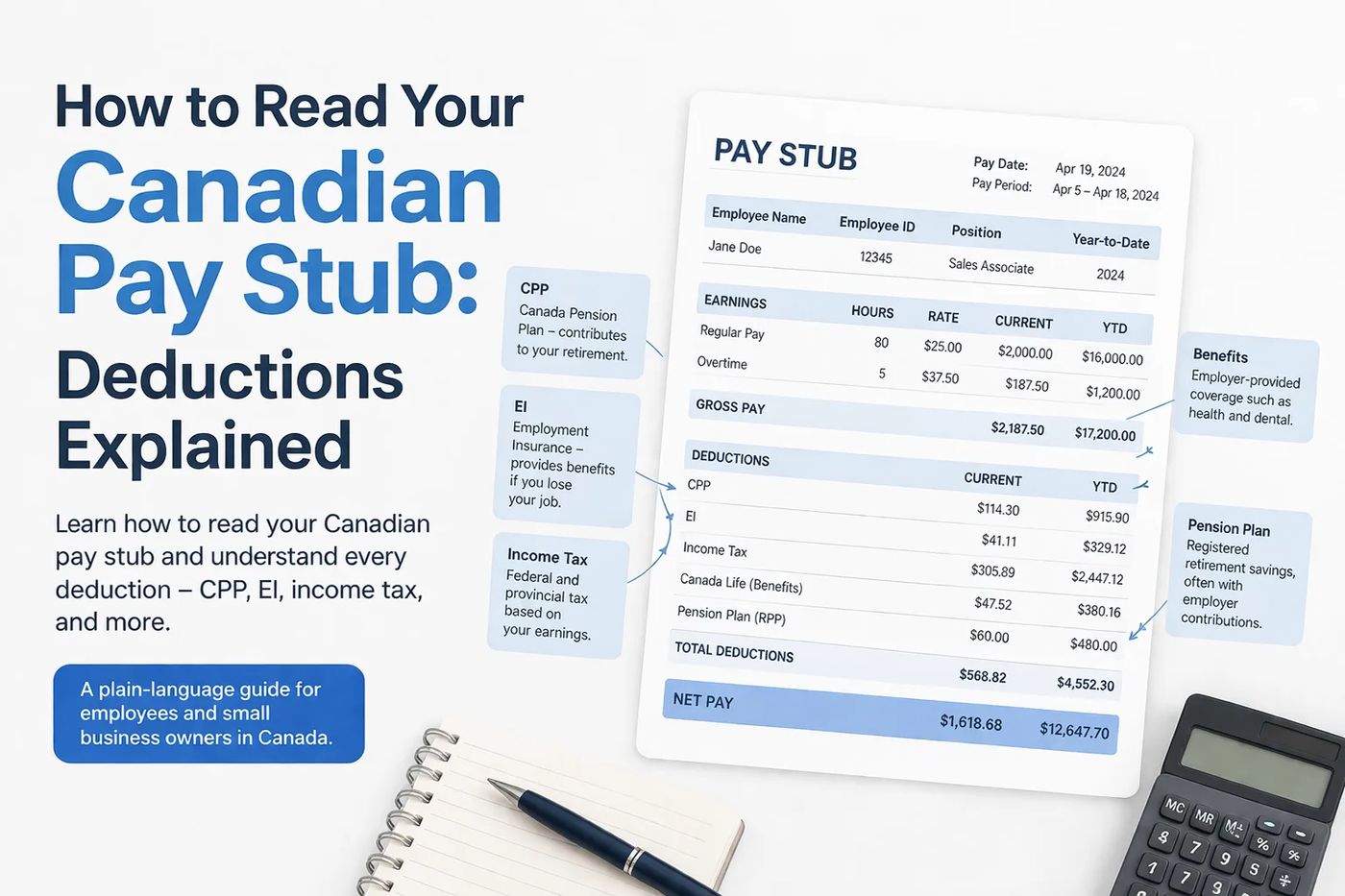
Key Inputs That Change Your Results
Your hourly wage or annual salary is the primary input. The number of hours worked per week directly scales your total earnings. A full-time schedule of 40 hours generates a higher annual income than a part-time schedule of 30 hours, even at the same hourly rate. The number of weeks worked per year is another critical factor. While a full year is 52 weeks, some positions may involve unpaid time off. The calculator can use 50 weeks for two weeks unpaid or 48 weeks for four weeks unpaid. Your province or territory of residence determines the provincial income tax rates and brackets applied to your earnings. The selected tax year (2024, 2025, or 2026) applies the correct federal and provincial tax rules, CPP/QPP contribution rates, and EI premium limits for that period.
Paid Time Off (PTO) per year significantly affects your adjusted hourly wage. This input includes paid holidays, vacation days, sick days, and personal days. When you are paid for days you do not work, your effective earnings per hour worked increase. For example, an employee with a $50,000 salary and two weeks of PTO has a higher adjusted hourly wage than an employee with the same salary but no PTO, because the paid time off is accounted for in fewer total worked hours. The calculator excludes PTO days from the total work hours in a year to find this adjusted rate. The more paid time off you have, the higher your adjusted hourly wage becomes, as it represents how much you make per hour actually worked.
The calculator can also handle different pay frequencies for advanced scenarios. It can calculate payouts for annual, quarterly, monthly, bi-weekly, semi-monthly, weekly and even special cases like 10, 13 or 22 pays per year. This flexibility allows salaried employees to see how their fixed annual amount breaks down into each pay period. For hourly workers, it shows how varying weekly hours impact each paycheque under different payment schedules.
Canadian Work Hours and Vacation Rules
In Canada, full-time employees typically work 35 to 40 hours per week, often structured as 8 hours per day. Part-time employees are generally those working 30 hours or less per week. Many office and government jobs operate on a 37.5-hour work week. The standard calculation for a full-time year uses 40 hours per week for 52 weeks, totaling 2,080 hours. A 37.5-hour week for 52 weeks equals 1,950 hours annually. If you take two weeks off without pay, your yearly work hours drop to 2,000 based on a 40-hour week.
Vacation pay is a fundamental right for most Canadian hourly and salaried workers. Employment standards in every province require employers to pay at least 4% of an employee's gross wages as vacation pay, which is equivalent to about two weeks of pay. Many employers increase this to 6% after five years of service. This means if you receive vacation pay, you are effectively paid for 52 weeks a year even when you take time off. For hourly jobs that add 4% vacation pay, you should typically set the weeks per year to 52 in the calculator. Part-time employees will generally also receive paid-time off, including holidays or a premium for holiday pay, as these are days not worked but for which regular wage is paid.
Full-time employees usually have paid-time off in Canada, which includes holidays, vacation days, sick days, and personal days. The Labour Force Survey by Statistics Canada provides data on earnings, and as of August 2026, the average hourly wage for employees was $37.02. The lowest-paid quarter of workers averaged $18.66 per hour, highlighting significant variation by province, industry, and experience level. These averages can serve as a benchmark when using the calculator to evaluate your own wage or a job offer.
Understanding Payroll Deductions in Canada
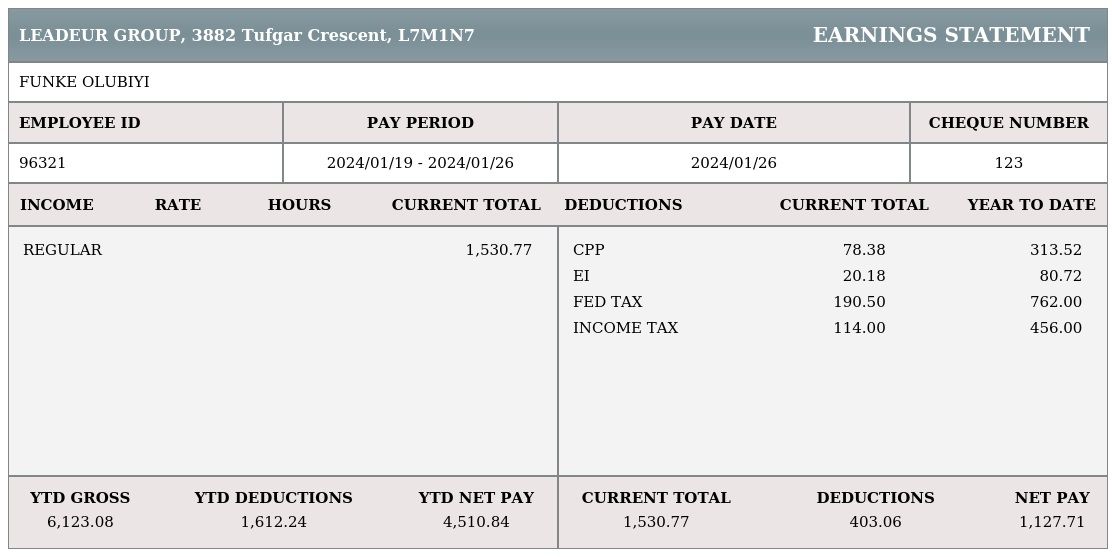
Your gross annual income is reduced by mandatory payroll deductions to arrive at your net take-home pay. Federal and provincial income taxes are withheld based on your income level and the tax brackets for your province and the selected year. The Canada Pension Plan (CPP) or Quebec Pension Plan (QPP) contributions are deducted from your earnings up to an annual maximum. Employment Insurance (EI) premiums are also deducted, with a yearly maximum insurable amount. In Quebec, the Quebec Parental Insurance Plan (QPIP) premiums replace a portion of the federal EI deductions. The effective income tax rate shown by the calculator is the total income tax you pay as a percentage of your gross income, reflecting the progressive nature of the tax system.
- Federal/Provincial Income Tax: Withheld based on your earnings and location.
- CPP/QPP: Pension plan contributions with an annual maximum.
- EI: Employment Insurance premiums with a yearly maximum.
- QPIP: Applies in Quebec for parental insurance.
The calculator uses the Payroll Deductions Online Calculator (PDOC) methodology to estimate these deductions for all provinces except Quebec, which has its own calculation. The net annual income is your salary after all these taxes and deductions have been applied, representing the actual amount you take home. An amount is usually withheld from your paycheque to account for federal and provincial taxes, and this might be more or less than your actual income tax owed when you file your annual return. The salary calculator estimates your income taxes based on your gross pay and location of employment to give you a close approximation.
This calculator can handle advanced scenarios such as tax exemption, CPP exemption, and EI exemption for specific employment situations. It is always up to date with the latest federal and provincial tax tables. This allows for accurate net pay calculations for all provinces and territories. The estimates reflect the most current contribution rates and insurable earnings limits for the selected tax year, which can be 2024, 2025, or 2026.
Salary vs. Wage Employment in Canada
A salary refers to a fixed amount an employee is paid per year, regardless of the exact number of hours worked. Salaried employees might work more than their scheduled hours without additional pay, though depending on province and occupation, they may still be eligible for overtime. A wage is typically an hourly rate paid for each hour worked. Total pay for hourly employees increases directly with more hours worked. For salaried employees, working more hours effectively lowers their adjusted hourly wage because their total pay remains fixed. The calculator can show this effect by inputting a salary and varying the hours worked per week.
When using the calculator as an employer, it helps determine the annual cost of raising an hourly rate or factoring in annual overhead expenses for hourly workers. The tool can convert an hourly worker's cost into an annual salary equivalent for budgeting and comparison purposes. It is important to note that the calculator provides estimates for educational purposes and does not constitute legal or financial advice. The information is a courtesy to users and does not guarantee performance, and you should not rely on it as your recruiting or legal advisor.
Salary is not based on the amount of actual hours worked, which means salaried employees might work more hours than scheduled and still be paid the same fixed salary. An hourly employee is paid for each hour that they work, so if you are paid by the hour, you enter your hourly pay or hourly rate into the calculator. If you are a salaried employee, you can instead enter your salary into the gross annual income field directly. This distinction is crucial for getting an accurate conversion and understanding your true earnings per hour.
Worked Example Using Canadian Figures
Consider a full-time employee in Ontario working 40 hours per week for 52 weeks a year, with an hourly wage of $30. They receive two weeks of paid vacation. Total work hours in the year excluding PTO are 2,000 hours. Using the 2026 tax year and Ontario provincial rates, the calculator would then apply deductions. CPP contributions would be deducted at the 2026 rate, up to that year's maximum pensionable earnings. EI premiums would be deducted at the 2026 rate, up to the annual maximum insurable earnings. The result would be a net annual income, which is the take-home pay after all deductions. This shows how the same salary translates to a higher hourly rate with fewer weekly hours. The calculator performs these adjustments instantly, providing gross daily, weekly, and monthly income amounts alongside the annual and hourly figures.
Provincial Variations and Important Notes
Each province and territory has its own income tax rates, brackets, and basic personal amounts, which significantly impact net income. Quebec has a distinct tax system and uses QPP and QPIP instead of federal CPP and a portion of EI. Most provinces adjust their minimum wage rates on a set date each year, and some have different rates for students, liquor servers, and other specific groups. The average hourly wage for employees across Canada was $37.02 in August 2026 according to Statistics Canada, but this varies widely by province, industry, and experience level. The lowest-paid quarter of workers averaged $18.66, indicating the range of earnings.
| Province/Territory | Key Consideration |
|---|---|
| Quebec | Uses QPP and QPIP. Distinct tax calculation |
| Ontario | Follows federal CPP/EI but has its own tax brackets |
| Alberta | Has a single flat tax rate for provincial income tax |
| All Jurisdictions | Must provide at least 4% vacation pay |
The calculator is designed to handle these provincial differences for the tax years 2024 through 2026. It is crucial to select the correct province and tax year to get an accurate estimate of your deductions and net income. The results are estimates intended for planning and comparison. The calculator is for educational and informational purposes only and does not constitute financial, tax, or legal advice, as results are based on simplified assumptions and may not reflect your actual situation. Always consult a qualified professional before making financial decisions, as tax laws and contribution limits change frequently.
General adult wage rates are in effect on specific dates, such as October 1, 2026. The yearly pay calculation in the calculator assumes 40 hours a week for 52 weeks before tax by default, but you can modify this. The tool also helps you create a realistic budget whether you are paid hourly or salary, integrating concepts like RRSP refunds and TFSAs into a broader financial picture. The disclaimer notes that terms and conditions apply to any financial data, and rates are per annum and subject to change without notice. The calculator is a flexible tool that saves you time and effort by quickly recalculating all types of wages, from monthly to yearly, and it can also be used as an hourly-to-salary calculator.
Frequently asked questions
How do I calculate my annual salary from my hourly wage?
Multiply your hourly wage by the number of hours you work in a year. For a standard full-time schedule of 40 hours per week and 52 weeks per year, that is 2,080 hours. For example, an hourly wage of $25 multiplied by 2,080 hours gives a gross annual salary of $52,000. You must then account for paid time off and apply tax deductions to find your net take-home pay. You can also use the calculator by simply entering the hourly rate and hours per week.
Do hourly workers get paid for vacation in Canada?
Yes, in most cases. Employment standards in every Canadian province require employers to pay hourly workers at least 4% of their gross wages as vacation pay, which is roughly equivalent to two weeks of pay. Many employers pay 6% after five years of service. This means hourly workers are compensated for vacation time even if they are not paid for specific days off. Therefore, for an hourly job with vacation pay, you would typically use 52 weeks per year in the calculator.
What is the difference between gross and net income?
Gross annual income is your total earnings before any deductions. Net annual income, or take-home pay, is the amount you receive after subtracting federal and provincial income taxes, CPP/QPP contributions, and EI/QPIP premiums. The hourly to salary calculator shows both figures, helping you understand the impact of deductions on your pay. The effective income tax rate is also displayed, showing tax as a percentage of your gross income.
How does paid time off affect my hourly wage?
Paid time off increases your adjusted hourly wage. Since you are paid for days you do not work, your total earnings are spread over fewer actual worked hours. For example, with a fixed salary, having more paid vacation days means you earn more per hour worked. The calculator accounts for this by excluding PTO hours from the total work hours in the year. The adjusted hourly wage result shows how much you make per hour actually worked after accounting for all paid time off.
$60,000 a year is how much an hour?
This is calculated by dividing the annual salary by the total yearly hours. However, many office and government jobs use a 37.5-hour work week, which would result in a higher equivalent hourly rate. Your adjusted hourly wage can also increase if you receive paid time off, as you are paid for days not worked. To get an accurate figure for your situation, you should use an hourly to salary calculator, inputting your specific weekly hours and weeks worked per year.
Sources and further reading
- Annual Salary Calculator (2024 to 2026): Gross & After‑Tax wowa.ca
- Hourly to Salary Calculator for Employers indeed.com
- Hourly to Salary Calculator Canada 2026 waypointbudget.com
- Salary to Hourly Calculator omnicalculator.com
- Payroll Calculator calc.paymentevolution.com
This article explains how things work and is not financial, tax or legal advice. Rules, limits and rates change, so check the current figures with the Canada Revenue Agency, your province or your financial institution before you act.