The Vietnamese đồng (VND) is the official currency of Vietnam, issued by the State Bank of Vietnam. It is one of the lowest-valued currencies in the world, with a history shaped by inflation and revaluations following the country's reunification. For Canadians, the đồng is relevant for travel, remittances, and business with Vietnam, requiring an understanding of its exchange dynamics. This article details the đồng's history, its current banknotes, and practical information for converting Canadian dollars to Vietnamese đồng.
What is the Vietnamese Đồng?
The Vietnamese đồng is the sole legal tender of Vietnam, managed by the State Bank of Vietnam. Its name originates from the Sino-Vietnamese word for copper, reflecting its historical roots. The currency is denoted by the symbol ₫ and the international currency code VND, and it is informally referred to as 'đ' or 'Đ' in Vietnamese. Due to persistent historical inflation, the đồng has a very low unit value, making it one of the world's least valued currencies. As of 28 February 2026, it is the third-lowest valued currency unit globally, behind only the Iranian rial and the Lebanese pound, with one United States dollar equaling 26,045 đồng. The đồng is now exclusively a banknote-based currency, with coins having been withdrawn from circulation, and it is subdivided into 10 hào and 100 xu, units that are no longer used due to inflation.
Historical Development and Inflation
The đồng's history is deeply intertwined with Vietnam's political and economic evolution, beginning with its introduction by the Viet Minh government in 1946 to replace the French Indochinese piastre at par. Following the country's division, separate đồng currencies existed in North and South Vietnam, with the Southern version introduced in 1953 and later replaced by a 'liberation dong' in 1975 after the fall of Saigon. After reunification, the currency was unified on 3 May 1978, with one new đồng equalling one Northern đồng or 0.8 Southern 'liberation' đồng. A damaging revaluation occurred on 14 September 1985, when one new đồng was set to equal ten old đồng. This policy backfired catastrophically, wiping out savings and triggering hyperinflation that peaked at 700 percent in September 1986, with agricultural product prices increasing by 2000 percent compared to a decade earlier. The crisis had a lasting impact, contributing to the đồng's extremely low value today, and subsequent Đổi Mới reforms in the 1990s and early 2000s helped stabilize inflation rates, but the currency's fundamental valuation remained low.
The government has periodically devalued the đồng to manage economic pressures and spur exports. Notable devaluations include a 5 percent move in November 2009 alongside an interest rate hike to 8 percent, a 3.25 percent adjustment in February 2010 raising the rate to 18,544 VND/USD, and a 9.3 percent increase in the official USD/VND rate to 20,693 in February 2011. More recently, in response to global inflationary pressures, the State Bank of Vietnam widened the đồng's trading band from 3 to 5 percent in October 2022, which contributed to a 2.98 percent depreciation against the US dollar within a week. This decline continued into 2024, with the đồng losing about 4.5 percent of its value between 1 January and the end of July that year. Between 19 June 2014 and 2016, the currency was devalued a total of five times as part of efforts to ensure stability.
Banknotes and the Shift to Polymer
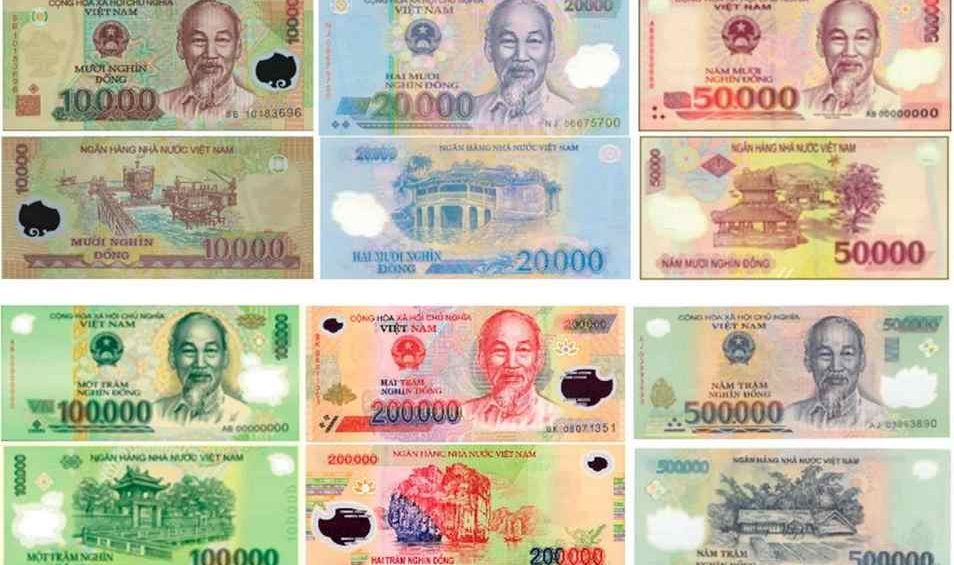
Vietnamese banknotes have evolved significantly, particularly in their materials and denominations, with five distinct series appearing over the decades. Since 2003, Vietnam has been replacing cotton paper banknotes with polymer (plastic) notes for denominations of 10,000₫ and higher, a move initially claimed to reduce printing costs. This change was implemented to increase durability, enhance security features, and reduce long-term printing costs, with lower denominations still printed on paper. The transition was not without controversy, as it sparked criticism from newspapers citing printing mistakes and alleging that the son of the State Bank governor benefited from contracts, leading the government to ban two newspapers from publishing for a month. Today, polymer notes are standard for higher values, while lower denominations like 200, 500, 1,000, 2,000, and 5,000₫ cotton notes remain in wide circulation and are universally accepted despite being discontinued from production.
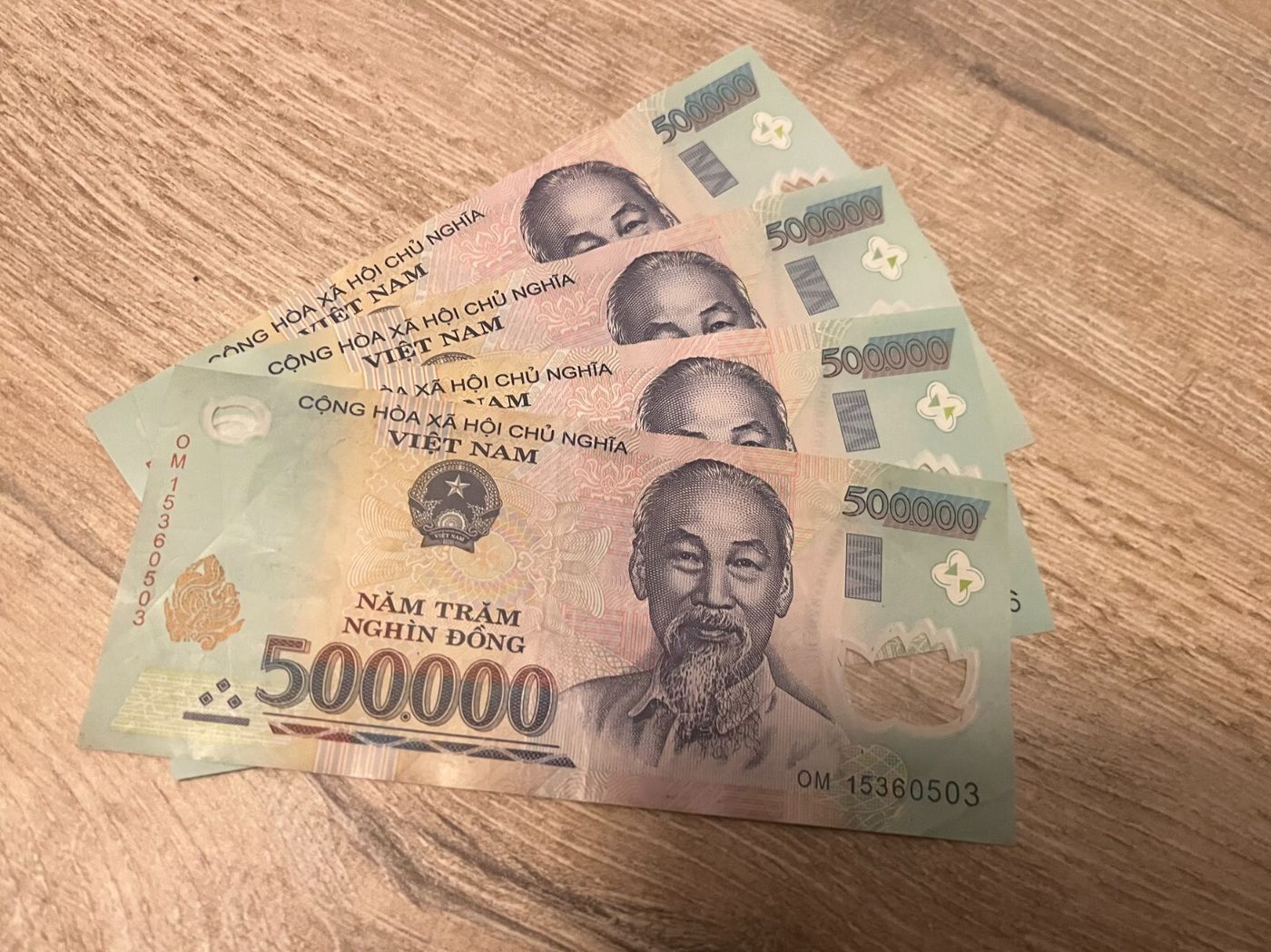
The highest denomination in circulation is the 500,000₫ polymer note, which has been issued since 2003 and is dark blue in colour. A 200,000₫ note was introduced in 2006, and other high-value notes include the 100,000₫ (1994), 50,000₫ (1990), and 20,000₫ (1991). Lower-value notes, such as the 100₫ bill, remain technically legal tender but are rarely used for transactions due to their minuscule value, approximately US$0.004, and are often treated as collectibles or sold for more than face value. The State Bank has also issued commemorative banknotes, like a polymer 50₫ note in 2001 for the central bank's 50th anniversary and a cotton 100₫ note in 2016 for its 65th anniversary, though these are primarily for collectors. Earlier note series were often confusing to users, lacking unified themes in their design until the coordinated 2003 series.
The Failure of Coinage and Other Currency Forms
Vietnam's experience with coinage illustrates the practical challenges of a currency experiencing high inflation. The first coins of the unified dong were aluminum issues from 1978 in denominations of 1, 2, and 5 hào and 1 đồng, minted in East Germany, but they quickly became worthless due to the inflation of the 1980s and 1990s. The State Bank attempted to reintroduce coins in December 2003, minting denominations of 200, 500, 1,000, 2,000, and 5,000₫ in nickel-clad or brass-clad steel. The goal was to reduce the cost of producing small, easily worn paper notes and to facilitate vending machine transactions, which previously required tokens. Initially, there was public excitement, but practical acceptance was low due to concerns over the usefulness of small coins like the 200₫ piece given inflationary pressures. Banks sometimes refused to accept coin deposits or cash in large numbers of coins, prompting laws to require banks to service them. Despite these measures, public rejection persisted, and the State Bank of Vietnam withdrew all coins from distribution in April 2011, making Vietnam a solely banknote-based economy. Commemorative coins in various metals have been issued since 1986 but have never entered circulation.
From 1992 to 2002, the State Bank also issued 'Bearer's Checks' or 'State Bank Settlement Checks' in large denominations from 100,000 to 5,000,000 đồng to support industrial-scale money transactions. These checks had multiple security features, designs that changed every five to six months, and expiration dates five or six months after issue to prevent counterfeiting. They functioned until the banking system was upgraded to handle large electronic transfers, rendering them unnecessary. This period highlights the currency system's adaptation to economic needs before full digitalization.
Exchange Rates: Canadian Dollars to Vietnamese Đồng
For Canadians, understanding the exchange rate between the Canadian dollar (CAD) and the Vietnamese đồng (VND) is essential for travel, sending remittances, or conducting business. The exchange rate fluctuates constantly based on global currency markets, influenced by factors such as relative inflation, interest rates, economic performance, and commodity prices like oil. The mid-market rate is the benchmark rate between buyers and sellers in the international forex market, but the rate consumers receive from banks or money transfer services will include a margin or fee, making the actual rate less favourable. As per recent data, the approximate mid-market conversion shows that 1 Canadian dollar is equivalent to a large number of đồng, with volatility observed over different periods. For example, over a recent 7-day period, the VND to CAD rate moved between 0.000054 and 0.000055 with an average of 0.000054, while over 90 days it moved between 0.000052 and 0.000055.
Canadians looking to exchange money should always check live rates and compare total costs from different providers. Tools like rate alerts can notify users when a desired exchange rate is reached. Historical charts can help analyse trends over the past 12 months or longer. It is important to remember that the rate shown on search engines is typically the mid-market rate. The rate offered by transfer services includes their margin and fees.
Sending Money from Canada to Vietnam
Canadians have several options for converting and sending Canadian dollars to Vietnamese đồng, each with different costs and speeds. Major methods include using international money transfer services like Western Union or Wise, banks, and specialized currency exchange offices. These services typically allow for cash pickup at thousands of agent locations in Vietnam or direct bank deposits, and they can be initiated online, via mobile apps, or in person. When comparing options, it is vital to look at the total cost, which consists of the exchange rate margin applied and any fixed transfer fees, as providers make money from the difference between the mid-market rate and their offered rate.
Key steps for sending money include entering the amount to be sent into a provider's currency converter to see an estimated exchange rate and total fees before confirming. Payment methods from Canada can include bank account debits, credit cards, or debit cards, though using a credit card may incur cash advance fees and interest charges. For security, providers use encryption and fraud prevention, and senders should only transfer money to trusted recipients, keep the tracking number (MTCN) private, and monitor the transfer status. The recipient in Vietnam can typically collect the funds in đồng at a local agent, often within minutes or hours, or receive it in a bank account. Some services also offer rewards programs where points can be earned and redeemed for discounts on future transfer fees.
Key Risks and Considerations for Canadians
Engaging with the Vietnamese đồng presents specific risks and considerations for Canadian individuals and businesses. The primary risk is exchange rate volatility, as the đồng has a history of managed devaluations and can be sensitive to domestic economic policy and global market shifts. This volatility means the amount of đồng received for a fixed Canadian dollar amount can change significantly between the time a transfer is quoted and when it is completed, impacting the cost of remittances or business contracts. Another major consideration is the difference between the mid-market rate and the rate offered by service providers, as banks and money transfer services apply a margin to the exchange rate, which is a hidden cost. It is essential to compare the total cost, the fee plus the exchange rate margin, across different providers to find the best value, as savings calculated on one example transfer may not be indicative of all transactions.
Counterfeit currency is a concern in any cash based economy. Vietnam's shift to polymer notes for high denominations has improved security. Canadians exchanging or carrying large amounts of đồng should obtain currency from reputable sources such as licensed banks or exchange bureaus. For those using đồng in Vietnam, it is important to note that the lowest denomination notes have negligible value. Coins are not in use, so familiarity with common polymer and cotton banknotes is necessary. The 100 dong bill is largely a collectible. Practical transactions focus on notes of 1,000 đồng and higher. The 500,000 dong note is the most valuable banknote in circulation.
Vietnamese Đồng in the Global Currency Landscape
The Vietnamese đồng holds a unique position in global finance as a consistently low-valued currency. After the revaluation of the Zimbabwean dollar in August 2006, the đồng became the world's least valued currency unit for several months, only to be surpassed again by the Zimbabwean dollar in March 2007 in terms of black market rates and in September 2007 for official rates. Following the cessation of the Zimbabwean dollar in April 2009, the đồng became the second-least valued currency after the Iranian rial, a status it held as of November 2014. As of February 2026, it ranks as the third-least valued. This standing is a direct result of the historical inflation crisis of the mid-1980s and the subsequent policy responses. The currency's low value means that foreign exchange transactions involve very large numbers, which can be confusing, and even high-denomination notes like the 500,000₫ are worth only about 40 US cents or euro cents. The State Bank of Vietnam continues to manage the currency with tools like adjusting trading bands and interbank rates to balance export competitiveness with domestic stability, operating within regional Asian financial markets where economies compete for advantage.
Frequently asked questions
What is the highest Vietnamese đồng banknote?
The highest denomination Vietnamese đồng banknote in circulation is the 500,000₫ note. It is a polymer (plastic) note, dark blue in colour, and has been issued since 2003. There is also a 200,000₫ polymer note issued in 2006. Lower denominations are printed on cotton paper or polymer, but the 500,000₫ note represents the largest single bill value.
Why is the Vietnamese đồng worth so little?
The Vietnamese đồng has an extremely low unit value primarily due to historical hyperinflation. This followed a disastrous currency revaluation in 1985. That revaluation intended to increase the currency's value but instead wiped out savings. It triggered inflation that peaked at 700 percent in 1986. Although reforms later stabilized inflation, the cumulative effect left the đồng as one of the world's lowest valued currencies. It maintains this status today.
Can I use coins in Vietnam?
No, you cannot use coins in Vietnam for everyday transactions. The State Bank of Vietnam reintroduced coins in 2003. It withdrew them from distribution in April 2011 due to a lack of public acceptance. Vietnam is now a banknote only economy for physical currency. All transactions are conducted using paper or polymer đồng notes.
Where can I exchange Canadian dollars for đồng in Vietnam?
In Vietnam, you can exchange Canadian dollars for đồng at licensed locations. These include major banks and authorized currency exchange bureaus in large cities. International airport currency counters also offer this service. Banks generally offer security and reliable rates. Exchange bureaus may offer competitive rates but require verification of their legitimacy. It is advisable to avoid informal street exchanges.
What is the best way to send money from Canada to Vietnam?
The best way depends on the amount, speed, and cost. International money transfer services like Wise or Western Union often offer competitive exchange rates and lower fees compared to traditional banks, especially for online transfers. It is crucial to compare the total cost (exchange rate margin plus transfer fee) across several providers. Always check the final amount in đồng that the recipient will get before confirming the transfer.
How much is 1 Canadian dollar in Vietnamese đồng?
The exact conversion fluctuates daily. It is important to note that the mid-market rate is a benchmark and the actual rate offered by banks or money transfer services will be lower due to applied margins and fees. For example, one source notes a rate of 17,852.22 VND for 1 CAD, while another lists 18,406 VND. These figures reflect the currency's value in recent data. The Vietnamese đồng itself is one of the lowest valued currencies in the world.
Sources and further reading
- Vietnamese đồng (Wikipedia) en.wikipedia.org
- 1 VND to CAD, Vietnamese Dongs to Canadian Dollars ... xe.com
- CAD to VND | Convert Canadian Dollar to Vietnamese Dong westernunion.com
- Tỷ giá chuyển đổi Đô-la Canada sang Đồng Việt Nam. ... wise.com
- Tỷ giá đô Canada (CAD) hiện nay, 1 đô Canada bằng ... - ACB acb.com.vn
This article explains how things work and is not financial, tax or legal advice. Rules, limits and rates change, so check the current figures with the Canada Revenue Agency, your province or your financial institution before you act.