A ticker symbol is a unique abbreviation used to identify a publicly traded security on a specific stock exchange. These symbols, which can be letters, numbers, or a combination, provide a shorthand for investors to reference, trade, and research stocks. In Canada, ticker symbols are used on exchanges like the Toronto Stock Exchange (TSX) and the TSX Venture Exchange (TSXV). Understanding ticker symbols is fundamental for anyone participating in the Canadian or global financial markets.
What a Ticker Symbol Is and How It Works
A ticker symbol is an arrangement of symbols or characters that uniquely identifies the shares of a publicly listed company on a particular stock exchange. These symbols are a shorthand method for investors and traders to refer to a security without using its full corporate name. The format and allocation of these symbols are specific to each stock exchange and follow distinct conventions. The primary function of a ticker symbol is to provide a clear and concise identifier for trading and settlement systems. To fully qualify a specific stock, both the ticker symbol and the exchange or country of listing must be known, which is often done by appending an exchange code to the ticker.
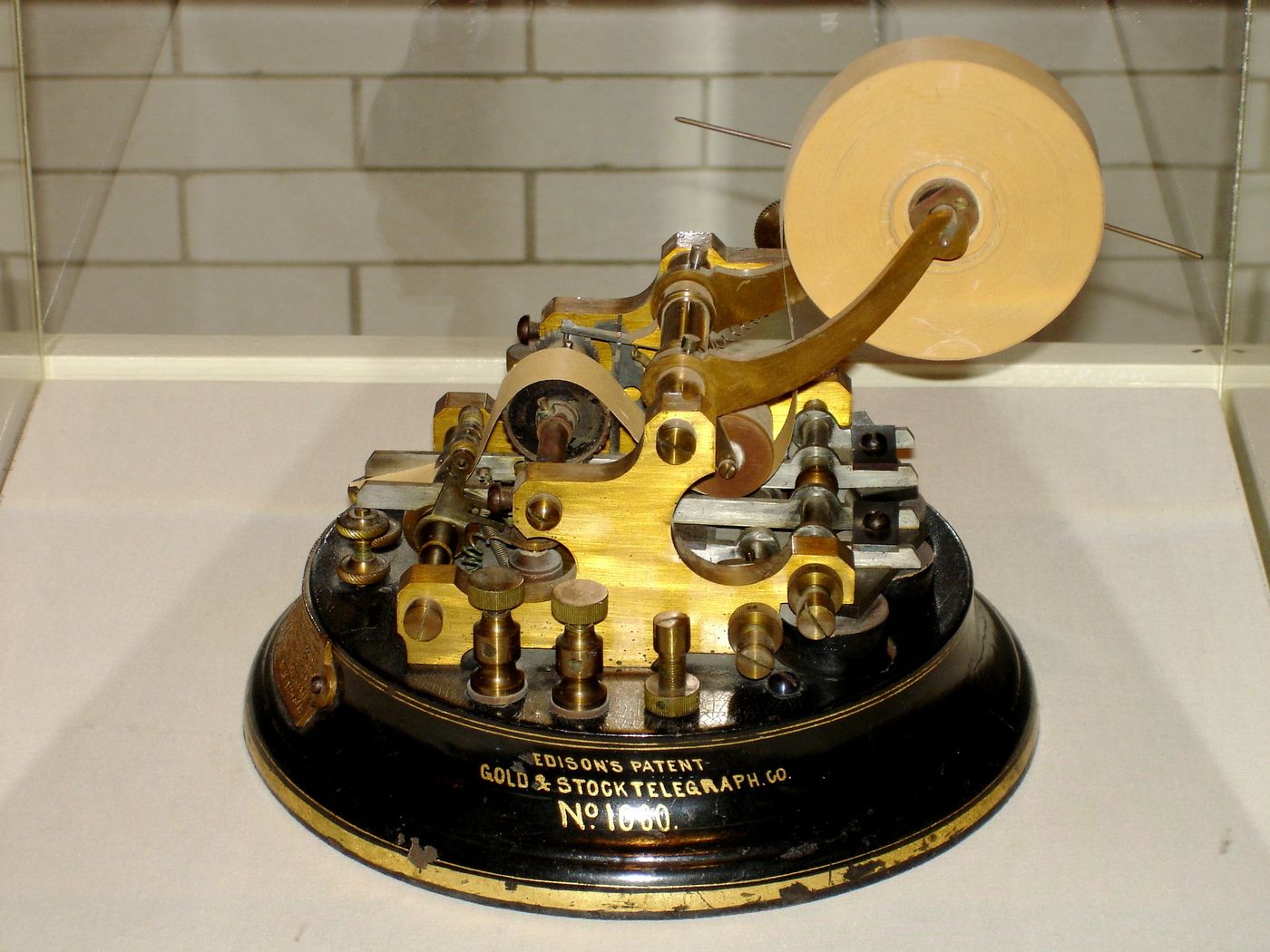
The original purpose of keeping symbols short was born from the technology of the ticker tape machine invented by Edward Calahan. These machines printed price information on a narrow strip of paper, and shorter symbols reduced the number of characters required. This historical constraint influenced the development of brief, memorable identifiers. Today, even with fully electronic trading, the principle of concise identification remains. The symbols facilitate rapid communication and data processing across global financial networks. They are a foundational element of market infrastructure.
While ticker symbols are the most common identifier for stocks, they have limitations. They are dependent on the exchange where the security is listed and can change due to corporate actions like mergers. For instance, Exxon used the symbol XON before its 1999 merger with Mobil, after which it adopted XOM. Furthermore, ticker symbols are generally used for equities and do not uniformly cover other securities like bonds or warrants. These limitations have led to the development of universal codes for settlement, such as the International Securities Identifying Number.
History and Development of Ticker Symbols
The first known use of a ticker symbol occurred in 1867, following the invention of the ticker tape machine. It was used to identify shares of the Union Pacific Railroad Company. The term ticker itself refers to the noise made by these mechanical machines once widely used by stock exchanges. In the early days of multiple regional exchanges in the United States, a single company could have many different ticker symbols. This lack of standardization created confusion and inefficiency in the national market.
Modern letter-only ticker symbols in the United States were developed by Standard & Poor's to establish a national standard. The S&P system was later adopted and modified by the wider securities industry. A significant shift occurred in July 2007 when the U.S. Securities and Exchange Commission approved a rule change allowing companies moving from the New York Stock Exchange to the Nasdaq to retain their symbols. Initially, this did not apply to companies with one or two-letter symbols, but later any stock could move between these exchanges without changing its ticker. In the United Kingdom, stock codes were historically known as EPICs, named after the London Stock Exchange's Exchange Price Information Computer, before being renamed Tradable Instrument Display Mnemonics in 1996.
Ticker Symbol Conventions in Canada
In Canada, the primary equities exchanges are the Toronto Stock Exchange (TSX) and the TSX Venture Exchange (TSXV). These exchanges, operated by TMX Group, facilitate fully electronic trading. The TSX is Canada's premier senior equities market, while the TSXV is a public venture capital marketplace for emerging companies. Other Canadian exchanges include the Canadian Securities Exchange (CSE), which provides a modern alternative for accessing public capital, and the NEO Exchange. Each exchange has its own listing requirements and trading platforms, but all use ticker symbols as the primary identifier for listed securities.
The TSX and TSXV use special codes appended after the ticker symbol to convey additional information. While the base ticker symbols themselves follow conventions similar to U.S. markets, these suffixes are critical for identifying specific share classes or other security features. For example, a suffix may indicate whether shares are voting or non-voting, or denote a particular series of preferred shares. Investors must pay attention to both the root symbol and any suffix to ensure they are trading the correct security. The S&P/TSX Composite Index, a major benchmark tracking around 230 companies on the TSX, is itself assigned a symbol, ^GSPTSE, on financial data platforms.
Canadian investors access real-time stock prices and data for TSX and TSXV symbols through various financial portals and brokerage platforms. These tools provide quotes, charts, news, and portfolio management resources specifically for the Canadian market. The integration of ticker symbols with these digital platforms allows for efficient research and trade execution. As in other markets, a Canadian company's stock may also trade on foreign exchanges like the NYSE or Nasdaq, often under the same or a similar ticker symbol, which necessitates specifying the exchange for unique identification.
Global Ticker Symbol Formats and Examples
Ticker symbol formats vary significantly by country and exchange, reflecting different market conventions and scripts. In the United States, stock tickers are typically between one and four letters and often derive from the company name. For example, Apple Inc. trades as AAPL on the Nasdaq, and Ford Motor Company trades as F on the New York Stock Exchange. Single-letter symbols on the NYSE, such as T for AT&T and V for Visa, are particularly sought after. In Europe, many exchanges use three-letter codes. Unilever, for instance, trades as UNA on the Amsterdam Euronext exchange and as ULVR on the London Stock Exchange.
In many Asian markets, numerical or alphanumerical symbols are common to avoid issues with non-Latin scripts and to facilitate international trade. The Industrial and Commercial Bank of China uses 601398 on the Shanghai Stock Exchange and 1398 on the Hong Kong Stock Exchange. HSBC uses 00005 in Hong Kong, HSBC in New York, and HSBA in London. Taiwan Semiconductor Manufacturing trades as 2330 in Taiwan and as TSM on the New York Stock Exchange. This use of numbers provides a uniform system that is easily processed globally, regardless of language barriers.
Some companies choose ticker symbols that reference their products or brand identity rather than just their name. This practice is common in the U.S. but observed internationally. Belgian brewer AB InBev uses BUD for its American Depository Receipts, symbolizing its Budweiser beer. Molson Coors Brewing Company uses TAP. Southwest Airlines uses LUV, a nod to its Dallas Love Field headquarters. Yamana Gold uses AUY, where Au is the chemical symbol for gold. These symbolic choices can serve as a marketing tool and create a memorable identifier for investors.
Other Important Security Identifiers
While ticker symbols are essential for daily trading, other codes exist to uniquely identify securities for global settlement and regulatory purposes. The most important of these is the International Securities Identifying Number (ISIN). An ISIN is a 12-character alphanumeric code defined by the ISO 6166 standard. It uniquely identifies a specific security, such as a stock, bond, warrant, or commercial paper, at a global level. The ISIN structure does not contain information about the exchange on which the security trades, which is a key difference from a ticker symbol.
The ISIN identifies the security itself, not its listing venue. For example, Mercedes-Benz Group stock trades on twenty-two different exchanges worldwide but has the same ISIN, DE0007100000, on each. However, it will have a different local ticker symbol on each exchange. Therefore, the ISIN does not replace the ticker symbol. For a specific trade, both identifiers may be used. The ISIN ensures uniform identification for clearing and settlement, while the ticker symbol is used for quoting and trading on a specific market. Other legacy systems include the CUSIP in North America and the SEDOL in the United Kingdom.
Symbols for Indices, ETFs, and Other Instruments
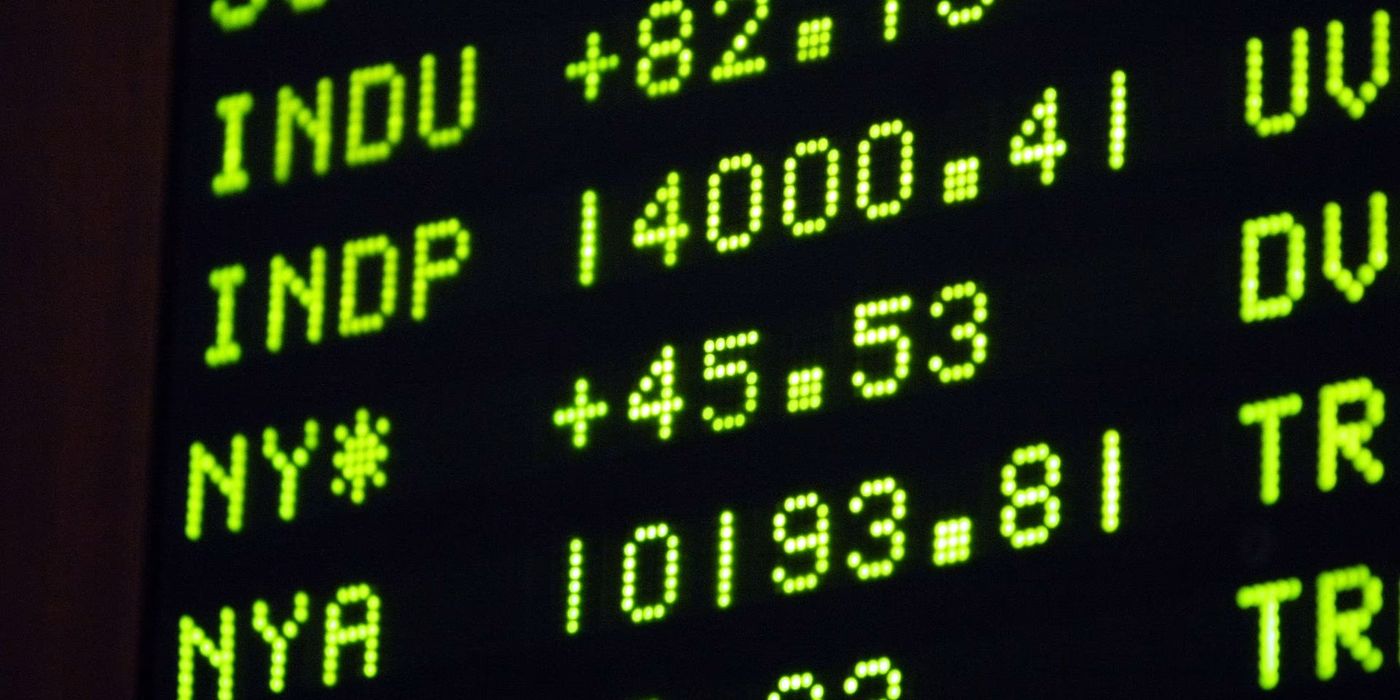
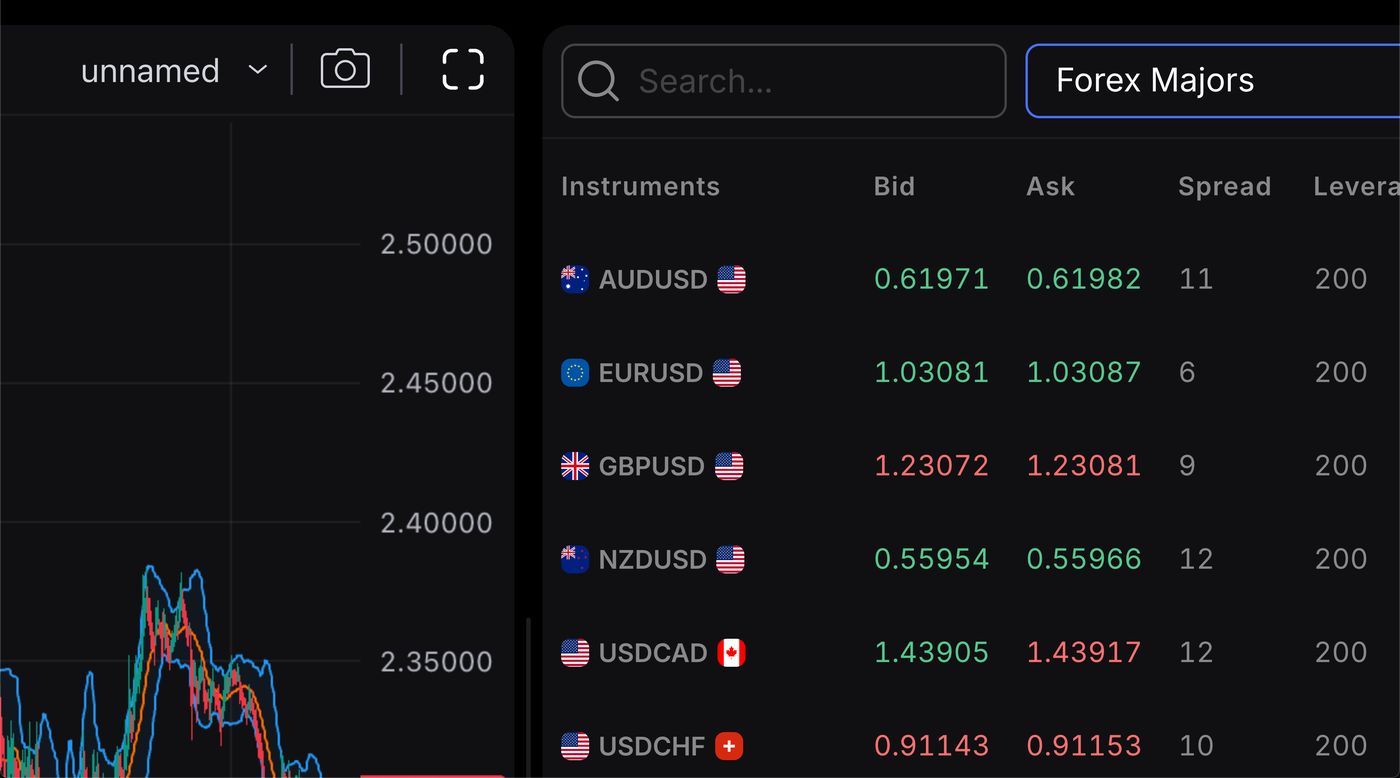
Symbols are also assigned to financial instruments that are not single-company stocks. Stock market indices, which track the performance of a group of securities, are given symbols even though they are not directly tradable. These index symbols are usually distinguished by adding a special character prefix. Common prefixes include a circumflex (^) or a dot (.). For example, the Nasdaq Composite index is listed under the symbol .IXIC on Reuters, and the S&P/TSX Composite is ^GSPTSE. These symbols allow investors to quickly reference and retrieve data on market benchmarks.
Exchange-traded funds (ETFs) and other exchange-traded products also have ticker symbols. In Canada, ETFs listed on the TSX can have symbols of three or four characters. The Canadian Securities Exchange listed its inaugural ETF, the Caldwell-Lazard CorePlus Infrastructure Fund, demonstrating the growth of this product category. Other instruments like exchange-traded options and warrants have longer symbol conventions, often extending to six characters, which may include numbers to specify series or expiry details. Understanding the symbol convention for each instrument type is crucial for accurate trading.
Rules, Changes, and Notable Symbol Practices
The assignment and management of ticker symbols are governed by the rules of each stock exchange. Symbols can change due to corporate events such as mergers, spin-offs, or rebranding. As previously noted, Exxon changed from XON to XOM after merging with Mobil. Sometimes, a company changes its name to match its symbol, as Tricon Global did when it became Yum! Brands after adopting the symbol YUM. Symbols are also reused. When a company delists, its symbol may become available for another firm, a practice especially noted with coveted single-letter symbols on the NYSE.
In the United States, single-letter symbols are highly prized as vanity symbols. The NYSE has a limited set of these, and their assignment history shows frequent reuse. For instance, the symbol V was used by Vivendi before being taken by Visa Inc. in 2008. As of recent data, single-letter symbols on the Nasdaq are largely unassigned except for Z, used by Zillow. The table below lists examples of currently assigned single-letter symbols on the NYSE and notable previous holders, illustrating this dynamic history of symbol reuse.
| Symbol | Current Holder (NYSE) |
|---|---|
| A | Agilent Technologies |
| B | Barrick Mining Corporation |
| C | Citigroup |
| F | Ford |
| K | Unassigned (was Kellanova) |
| T | AT&T |
| V | Visa |
| X | Unassigned (was US Steel) |
For investors, a key consideration is that a ticker symbol alone does not always specify the trading venue, especially with cross-listings. A company like CA Technologies moved from the NYSE to the Nasdaq in 2008 and kept its two-letter symbol CA. Therefore, modern trading and data systems often require both a symbol and a market identifier code to pinpoint the exact security. This is essential for avoiding errors in order placement, particularly for Canadian companies that may also be listed on U.S. exchanges.
Frequently asked questions
What is a ticker symbol?
A ticker symbol is a unique abbreviation used to identify a publicly traded security on a specific stock exchange. It consists of letters, numbers, or a combination, providing a shorthand for investors to reference and trade stocks. The first ticker symbol was used in 1867 for the Union Pacific Railroad. In Canada, symbols are used on exchanges like the TSX and TSXV, and they are a fundamental part of market infrastructure for clear communication and data processing.
How are ticker symbols different in Canada?
Canadian ticker symbols are used on domestic exchanges including the Toronto Stock Exchange (TSX), TSX Venture Exchange (TSXV), Canadian Securities Exchange (CSE), and NEO Exchange. The TSX and TSXV often append special codes after the ticker symbol to indicate share class or other features. The S&P/TSX Composite Index, a major Canadian benchmark, has the symbol ^GSPTSE. Canadian investors use these symbols to access real-time data and trade on fully electronic platforms operated by TMX Group.
Can a company have the same ticker symbol on different exchanges?
A company can have the same or a similar ticker symbol on different exchanges, but it is not guaranteed. For example, HSBC uses HSBC on the New York Stock Exchange and HSBA in London. However, the same security will have a single International Securities Identifying Number (ISIN) globally. To uniquely identify a security for trading, both the ticker symbol and the exchange must be specified, as the symbol alone may not be sufficient due to cross-listings and symbol reuse.
What is an ISIN and how is it different from a ticker symbol?
An International Securities Identifying Number (ISIN) is a 12-character alphanumeric code that uniquely identifies a specific security like a stock or bond globally for settlement purposes. Unlike a ticker symbol, an ISIN is not exchange-dependent and does not change with listing venue. A single security, like Mercedes-Benz Group stock, has one ISIN but can have multiple ticker symbols on different exchanges. The ISIN is used for clearing and settlement, while the ticker symbol is used for quoting and trading on a specific market.
Why do some ticker symbols use numbers?
Numerical ticker symbols are common in many Asian markets, such as China, Hong Kong, and Japan. They are used to avoid complications with non-Latin scripts and to facilitate international trade by providing a uniform system easily understood across language barriers. For instance, Taiwan Semiconductor Manufacturing is 2330 in Taiwan, and Industrial and Commercial Bank of China is 601398 in Shanghai. This convention allows for clear communication and efficient data processing in global financial workplaces.
What happens to a ticker symbol after a merger?
Ticker symbols often change after a corporate merger to reflect the new entity. For example, Exxon used the symbol XON before merging with Mobil in 1999, after which the combined company adopted the symbol XOM. Hewlett-Packard's symbol changed to HPQ after its merger with Compaq. Sometimes the symbol is retained, especially if it is well-known, as when SBC purchased AT&T and kept the single-letter T symbol. Symbols from delisted companies are frequently reused by other firms on the exchange.
Sources and further reading
- Ticker symbol (Wikipedia) en.wikipedia.org
- The Canadian Securities Exchange (CSE) thecse.com
This article explains how things work and is not financial, tax or legal advice. Rules, limits and rates change, so check the current figures with the Canada Revenue Agency, your province or your financial institution before you act.