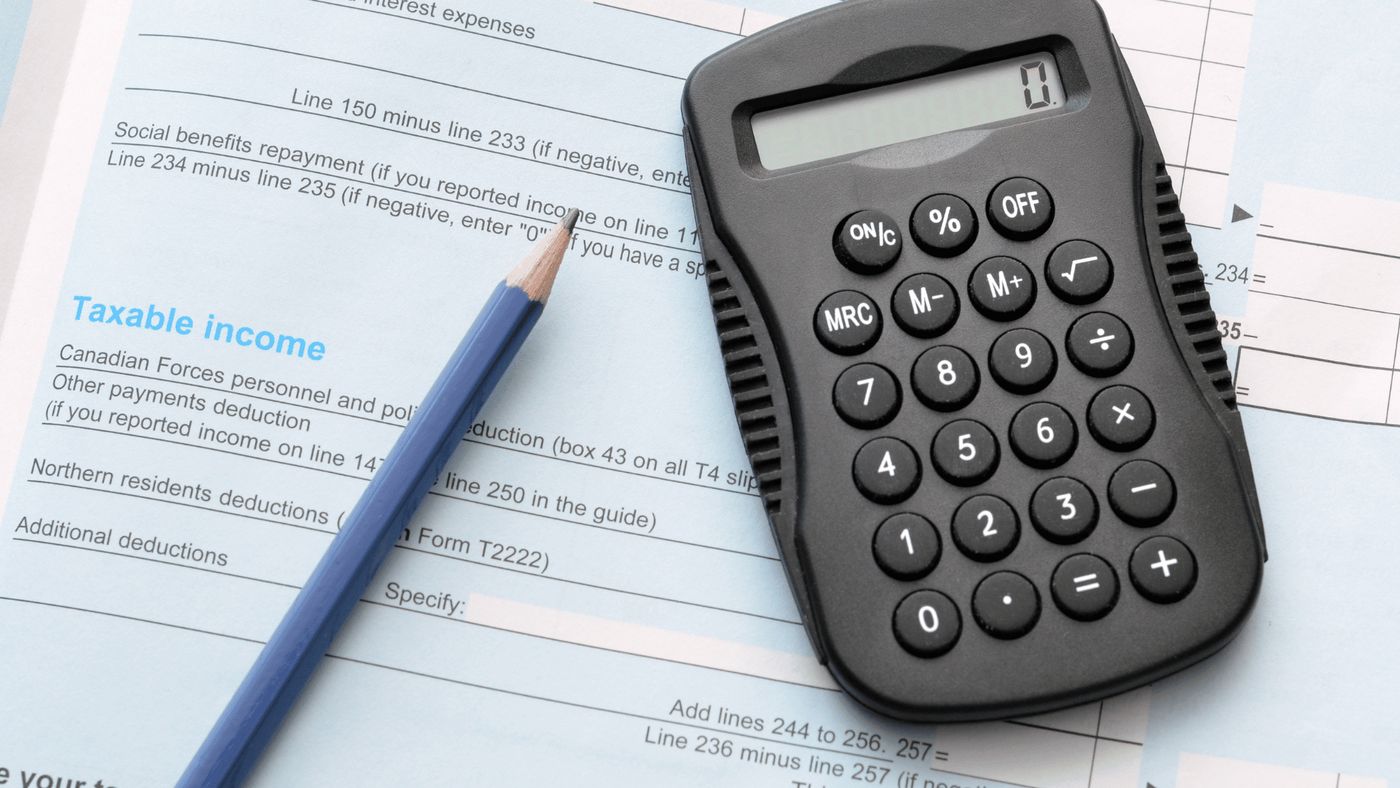
A tax return in Canada is a declaration filed with the Canada Revenue Agency (CRA) to report income and calculate tax liability. It is a mandatory process for most individuals and corporations earning income in the country. Filing a return determines whether you owe additional tax or are due a refund from amounts already withheld. Completing a tax return is also essential for accessing federal and provincial benefits and credits, such as the Canada Child Benefit and the GST/HST credit.
What is a Tax Return
A tax return is a form on which a person or organization presents an account of income and circumstances, used by tax authorities to determine liability for tax. In Canada, it is a declaration filed by an individual or corporation with the Canada Revenue Agency reporting information used to calculate the income tax they owe. The return reports all taxable income earned during the calendar year, along with deductions, credits, and tax payments already made. The CRA processes the return to calculate the final tax obligation, which may result in a payment to the government or a refund to the taxpayer. For most individuals outside Quebec, a single return filed with the CRA covers both federal and provincial or territorial income tax calculations. The return is not necessarily the final calculation, as the CRA may review and adjust it after filing, issuing a notice of assessment with their determination.
Who Must File a Tax Return in Canada
Filing an income tax return is required if you are a resident of Canada for any part of the year and are earning income, whether that is employment, self-employment, investment or other income. There are no exemptions based on age or occupation. You become a resident for tax purposes when you establish significant residential ties in Canada, such as a home, a spouse or common-law partner, or dependants, usually on the date you arrive in the country. International students who live in Canada for 183 days or more during a tax year are also considered deemed residents and must file. Even individuals with no income are strongly advised to file a return to receive benefit payments like the Canada Child Benefit, the Canada Groceries and Essentials Benefit, and the Canada Carbon Rebate. Non-residents with certain types of Canadian-source income, such as rental income from Canadian properties, may also have filing obligations. The legal representative for a deceased person must file a final return on their behalf. Factual residents of Canada, such as those on a temporary work assignment outside the country, are still considered residents for income tax purposes and must file.
Key Components and Documents for a Canadian Tax Return
A Canadian tax return consists of several key components that together determine your tax liability or refund. Income includes all taxable earnings such as wages, salaries, investment dividends, interest, business profits, and capital gains. Line 15000 on the return is where you report your total income before any deductions, which is the sum from all sources. Deductions are amounts subtracted from your total income to arrive at your taxable income, thereby reducing the amount of tax you owe. Common deductions include contributions to a Registered Retirement Savings Plan (RRSP) and certain employment expenses, and you can choose between taking the standard deduction or itemizing specific expenses. Tax credits directly reduce the amount of tax you owe dollar for dollar and are more impactful than deductions. Examples include credits for medical expenses or charitable donations, and some are refundable, meaning you can receive a payment even if you owe no tax. Payments and refunds account for tax already withheld from your paycheque or paid as instalments, with any overpayment resulting in a refund. The final calculation reconciles your total tax liability with the total credits and payments to find your balance owing or refund due.
Essential documents and information needed to complete your return include your Social Insurance Number (SIN), which is a nine-digit number distinct from a temporary tax number. You will need all T4 slips from employers detailing income, CPP/QPP contributions, EI premiums, and income tax withheld. Investment income slips like T5 and T3 must be included. Details for dependants such as a spouse, children, or elderly parents are required to claim applicable credits. You must report all foreign income from any source and report foreign assets worth $100,000 or more on Form T1135. If self-employed, you need business receipts and invoices to report income and claim deductions accurately. Childcare receipts are necessary to claim the childcare expense deduction. You should also have records of any RRSP contributions, charitable donations, and medical expenses for the year.

How to File: Methods and Payment Options
Canadians have several options for filing their income tax return, ranging from fully automated to professional assistance. You can use NETFILE-certified tax preparation software to complete and submit your return electronically directly to the CRA, and the CRA website maintains a list of available certified software. This software typically includes a tax return calculator that tallies your refund or balance owing as you proceed through the prompts. You can fill out the paper income tax package and mail it to the CRA at the address specified for your province. Individuals with a modest income and a simple tax situation may be invited to use the CRA's SimpleFile service to file by phone, online, or on paper. Free tax clinics through the Community Volunteer Income Tax Program are available for those with a modest income and simple situation, where a volunteer can file your return for free. You can hire a professional tax preparer, such as an accountant, who will typically file using the CRA's EFILE system for a fee, and they can also provide advice on deductions and credits.
If you have an amount owing, you must pay it by the April 30 deadline to avoid interest and penalties, even if you are self-employed and your filing deadline is June 15. Payment can be made online through the CRA's My Payment portal, which is a dedicated online payment service. You can set up a pre-authorized debit agreement using CRA My Account to have funds withdrawn directly. Third-party service providers also allow payment via credit card, e-transfer, or PayPal. It is recommended to prepare and file your return well in advance of the deadline if you have self-employment income to ensure you know the amount owing and can pay by April 30.
Deadlines, Processing Timelines and Record Keeping
The standard deadline to file your personal income tax return is April 30 for the previous calendar year. For the 2025 tax year, the filing deadline in 2026 is midnight on April 30. If you or your spouse or common-law partner are self-employed, the filing deadline is extended to June 15. It is crucial to note that any balance of tax owing must still be paid by April 30 to avoid late-payment interest charges and penalties, regardless of the June filing deadline for the self-employed. The CRA's goal is to issue a notice of assessment and any refund within two weeks if the return is filed electronically via NETFILE. For paper returns sent by mail, the processing time is typically eight weeks after the CRA or Revenu Quebec receives the return. These timelines apply only to returns that are received on or before the due date. Some tax preparation services offer options for faster access to refund amounts, but the official CRA processing times are as stated.
The CRA requires by law that you keep your tax records, including receipts, slips, and all supporting documents, for a minimum of six years from the end of the tax year to which they relate. If you file a return late, you must keep your records for six years from the date you file that late return. Since you can ask to change or amend your tax return for up to ten previous years, it is a good practice to maintain these records for a full decade. This long-term retention is important if the CRA reviews your return or if you discover an error or missed deduction from a prior year. Proper record keeping involves organizing documents related to income, deductions, and credits for each tax year separately.

Federal and Provincial Tax Calculation for 2025
Canadian income tax uses a progressive bracket system at both the federal and provincial levels, where higher rates apply only to income within each successive bracket. Your taxable income is calculated by subtracting the Basic Personal Amount (BPA) and other deductions from your total income reported on Line 15000. The 2025 federal Basic Personal Amount is $16,129, which is a non-refundable tax credit everyone can claim. The federal government collects tax for all provinces and territories except Quebec, where residents must file a separate provincial return with Revenu Québec. For other provinces, your single CRA return calculates both federal and provincial tax. Provincial and territorial governments have their own tax brackets, rates, and credits, which are applied after the federal calculation. Your total tax payable is the sum of your calculated federal tax and your provincial or territorial tax, minus any applicable tax credits. To interpret the table, each tax rate is applied only to the income within its specific bracket. The same logic applies to provincial tax brackets, which vary significantly across the country. Alberta, British Columbia, Manitoba, Ontario, Saskatchewan, and all other provinces and territories each publish their own annual brackets and rates, which can be found on the Government of Canada website.
Technology, AI and Global Trends in Tax Filing
The process of preparing and filing tax returns has been transformed by technology, making it more efficient for both taxpayers and authorities. Electronic filing through NETFILE for individuals and EFILE for professionals is now commonplace, allowing for faster processing, direct deposit of refunds, and a secure digital record of filing history. Many taxpayers use certified tax software that guides them through the process, performs calculations automatically, and helps identify potential deductions and credits they might have missed. The use of generative artificial intelligence has been explored as a tool for assisting with tax return preparation on a global scale. AI-based systems can support complex tasks such as organizing financial data, identifying applicable deductions, and completing tax forms by parsing relevant information. A study conducted in Germany in January 2026 involving over 1,000 participants reported that 47 percent of respondents were open to using AI-based tools such as ChatGPT instead of a human tax advisor for tax return preparation. Acceptance of AI-assisted tax filing was higher among younger respondents and individuals with higher incomes, indicating a potential future shift in how tax advice is delivered.
Globally, some governments have moved towards prefilled return systems to reduce the burden on citizens. Within several European nations such as Denmark and Sweden, tax authorities provide citizens with prefilled return forms based on data they have collected from employers and financial institutions. In 1999, 97 percent of Danish taxpayers and 74 percent of Swedish taxpayers had their forms prefilled by authorities. The citizen would sign the form if accurate, or fix any errors themselves. The world average time to complete a tax return is almost 232 hours, though this varies greatly by country and system complexity. While prefilled returns are not standard in Canada, the CRA's move towards digital services and data integration continues to streamline the filing process for Canadians.
Common Deductions and Credits for Canadian Taxpayers
Understanding available deductions and credits is crucial for minimizing tax liability and maximizing potential refunds. Deductions reduce your taxable income, meaning they lower the amount of income that is subject to tax. A primary deduction for many Canadians is contributions to a Registered Retirement Savings Plan (RRSP), which have an annual limit based on your prior year's income. Other common deductions include carrying charges for investments, child care expenses for eligible children, and certain employment expenses that are not reimbursed by your employer. If you are self-employed, most expenses specifically identified with business tasks are deductible, such as home office expenses, supplies, and vehicle costs. You generally choose between taking the total of your itemized deductions or a standard deduction, selecting the larger amount to minimize tax.
Tax credits are more impactful as they directly reduce the amount of tax you owe on a dollar-for-dollar basis. Non-refundable credits, like the Basic Personal Amount, can reduce your tax to zero but not create a refund. Refundable credits can result in a payment to you even if you owe no tax. Key credits include the Canada Employment Credit, the Medical Expense Tax Credit for eligible expenses exceeding a threshold, and the Charitable Donations Tax Credit. There are also specific credits for students, caregivers, and for public transit passes. The dividend tax credit is available for individuals who receive eligible dividends from Canadian corporations, reducing the tax payable on that income. Uncovering and correctly claiming these deductions and credits is a central part of effective tax return preparation.
Frequently asked questions
When is the tax return deadline in Canada?
The standard deadline to file your personal income tax return is April 30 for the previous tax year. For the 2025 tax year, the deadline is April 30, 2026. If you or your spouse or common-law partner are self-employed, the filing deadline is extended to June 15, 2026. However, any amount you owe to the CRA must still be paid by April 30 to avoid late-payment interest and penalties, making it critical to complete your calculations by the earlier date.
How long does it take to get a tax refund in Canada?
If you file your return electronically using NETFILE, the CRA aims to send your notice of assessment and any refund within two weeks. For paper returns sent by mail, the processing time is typically eight weeks after the CRA or Revenu Quebec receives the return. These timelines apply only if your return is received on or before the filing deadline. Some tax preparation services offer options for faster access to refund amounts, but the official government processing times are as stated.
What is the difference between a tax deduction and a tax credit?
A tax deduction reduces your taxable income, which indirectly lowers the amount of tax you owe based on your marginal tax rate. Examples include RRSP contributions and certain employment expenses. A tax credit directly reduces the amount of tax you owe, dollar for dollar, making it more impactful. Common credits include the medical expense tax credit and the charitable donations tax credit. Credits can be non-refundable, only reducing tax to zero, or refundable, potentially resulting in a payment to you.
Can I file my tax return for free in Canada?
Yes, there are several free filing options available. If you have a modest income and a simple tax situation, you can visit a free tax clinic run by the Community Volunteer Income Tax Program where a volunteer will prepare your return. The CRA also offers its SimpleFile service by invitation to eligible individuals with straightforward returns. Additionally, you can always complete and mail a paper return yourself at no cost, or use some basic versions of certified software, though electronic filing is faster and more secure.
Does everyone in Canada need to file a tax return?
No, not everyone in Canada is required to file a tax return, but the obligation is broad. You must file if you are a resident of Canada for any part of the year and are earning any income, with no exemptions for age or occupation. Filing is also necessary for individuals deemed residents, such as international students residing in Canada for 183 days or more during the tax year. Furthermore, factual residents of Canada on a temporary work assignment outside the country must file. It is strongly recommended to file even with no income to receive benefits like the Canada Child Benefit and the Canada Carbon Rebate. Non-residents with specific Canadian income, such as rental income, also have filing obligations.
How long should I keep my tax records?
You must keep your income tax records for a minimum of six years by law, as required by the Canada Revenue Agency. This period is measured from the end of the tax year to which the records relate. If you file an income tax return late, you must keep your records for six years from the date you file that late return. Since you can ask to change your tax return for up to ten years, it is considered a good idea to maintain your records for that full decade. These records include all supporting documents like receipts and slips needed to substantiate your return.
Sources and further reading
- Tax return (Wikipedia) en.wikipedia.org
- 2025-26 Canada Income Tax Calculator turbotax.intuit.ca
- How to file taxes in Canada: basics and checklist guide wealthsimple.com
- Canadian Tax Information, OGS, Canada international.northeastern.edu
- 2025 Canadian Income Tax Calculator hrblock.ca
- New to Canada? Here's how to file your first tax return | Posts scotiabank.com
This article explains how things work and is not financial, tax or legal advice. Rules, limits and rates change, so check the current figures with the Canada Revenue Agency, your province or your financial institution before you act.