The Swiss franc (CHF) is the official currency of Switzerland and Liechtenstein, and is also legal tender in the Italian exclave of Campione d'Italia. Known globally as a safe-haven currency, the franc is issued by the Swiss National Bank and is divided into 100 subunits called rappen, centimes, centesimi, or raps depending on the language region. For Canadians, the Swiss franc is a significant foreign currency, with the exchange rate fluctuating based on global economic conditions and central bank policies. Understanding the franc's history, its current value against the Canadian dollar, and the factors that influence it is important for investors, travellers, and businesses engaged in international trade.
What Is the Swiss Franc?
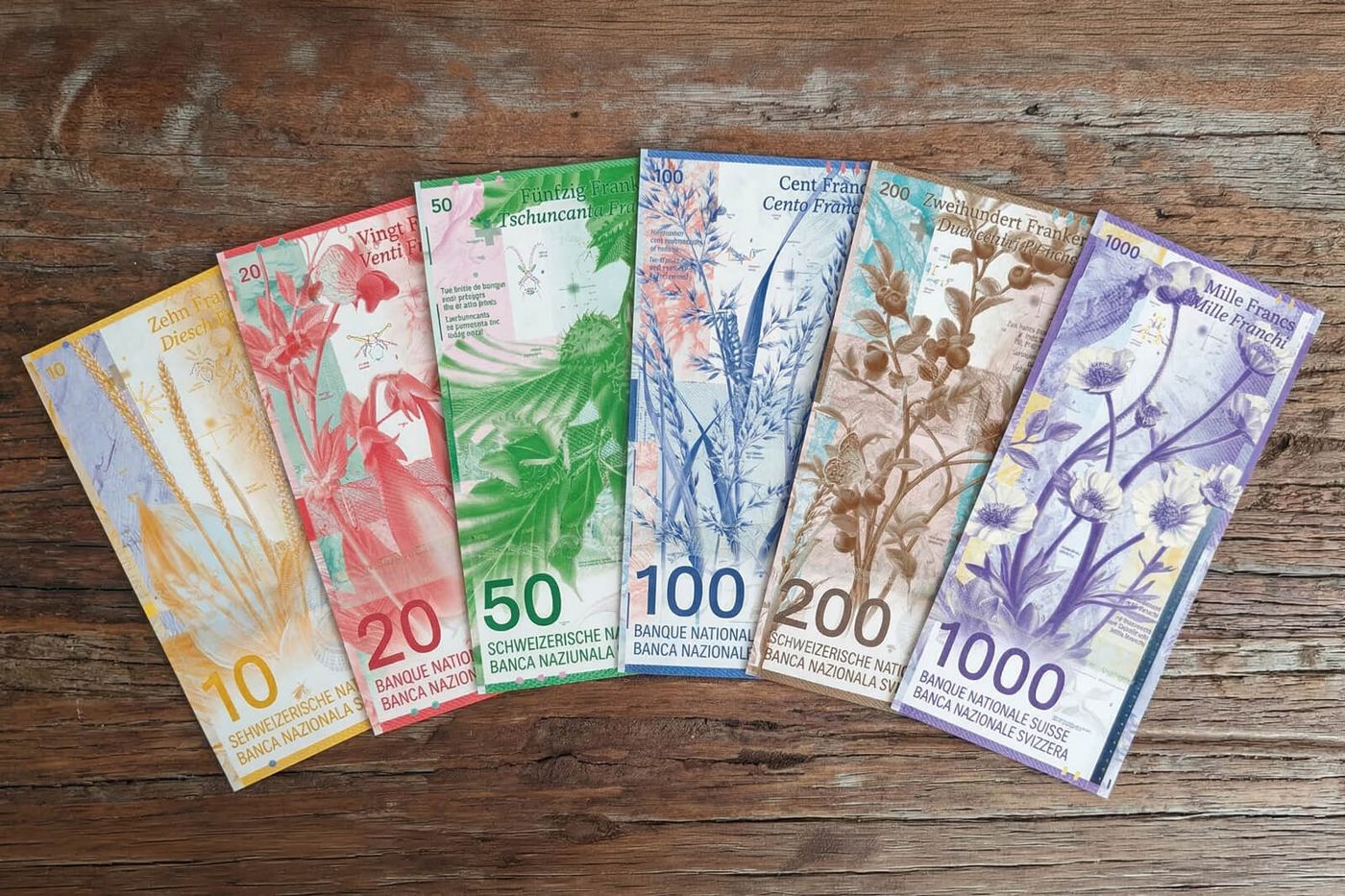
The Swiss franc is the monetary unit of Switzerland and is one of the world's major currencies. Its ISO 4217 code, CHF, is derived from the Latin name for Switzerland, Confoederatio Helvetica, reflecting the country's multilingual nature. The franc is subdivided into one hundred parts, which are known by different names in Switzerland's national languages: Rappen (Rp.) in German, centime (c.) in French, centesimo (ct.) in Italian, and rap (rp.) in Romansh. While the symbols Fr. and fr. are widely used in domestic commerce, the official international abbreviation is CHF. The Swiss National Bank is responsible for issuing banknotes, while the federal mint, Swissmint, produces coins. The currency is also used in Liechtenstein and the Italian territory of Campione d'Italia, which is surrounded by Swiss land.
Historical Development of the Franc
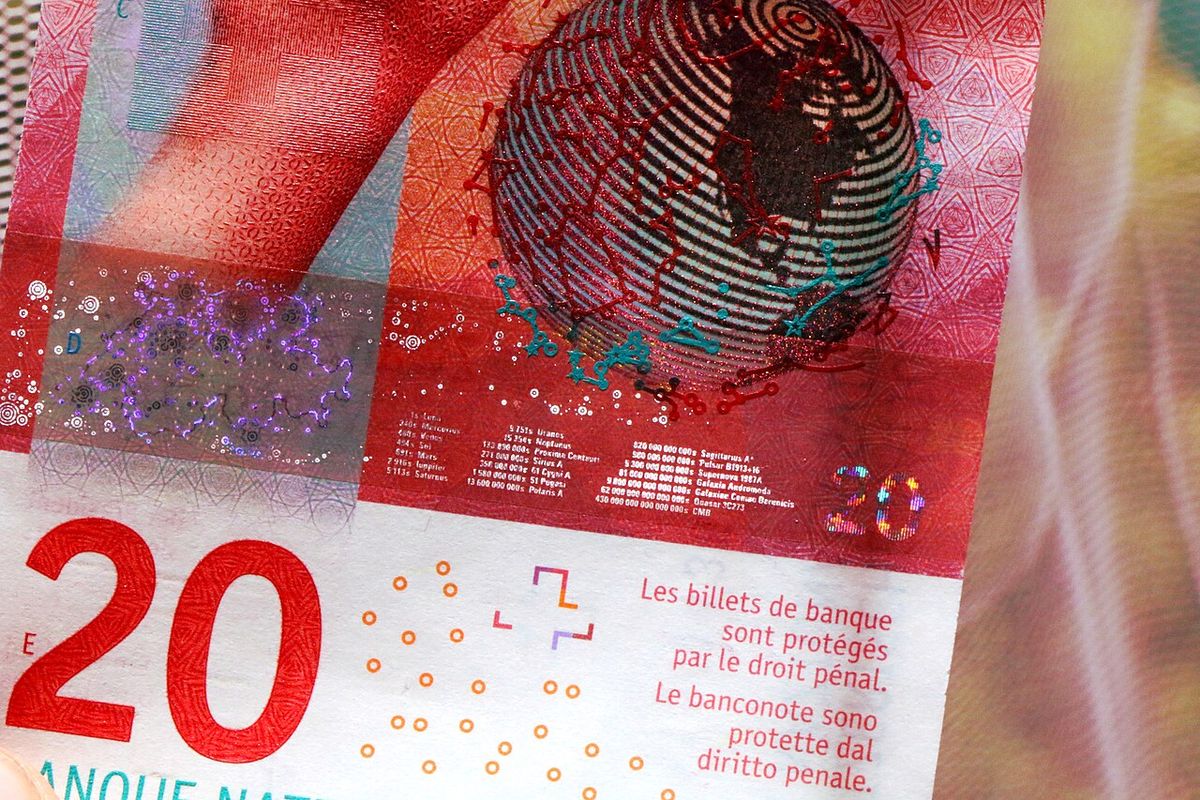
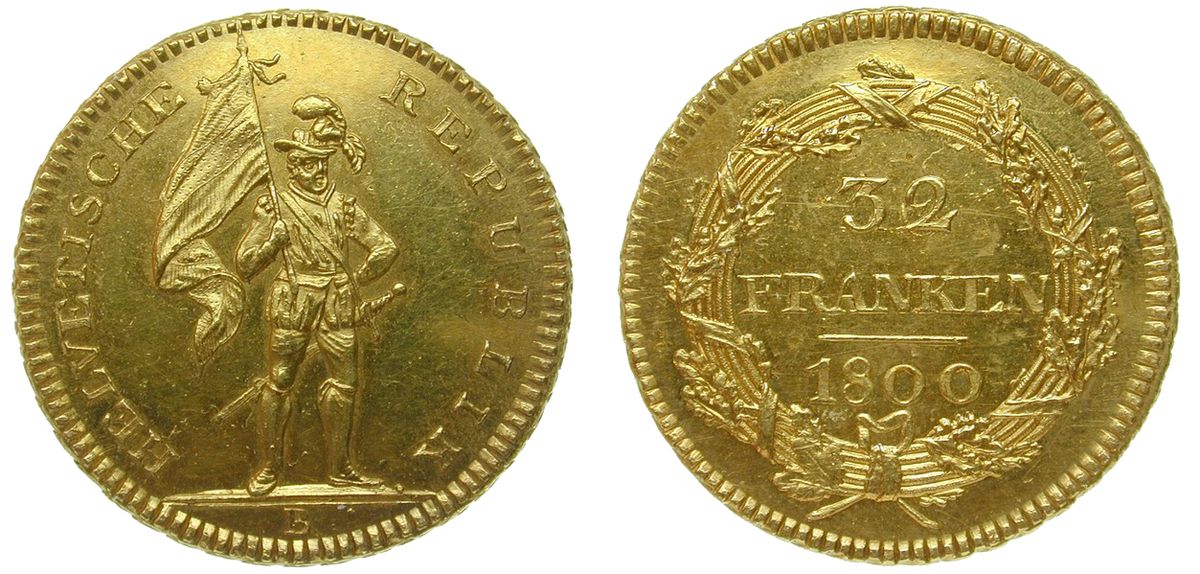
Before the modern Swiss franc was established, Switzerland's monetary system was extraordinarily fragmented. Prior to 1798, approximately 75 different entities including cantons, cities, and abbeys issued coinage, resulting in about 860 distinct coins in circulation. These currencies were largely based on either the French livre tournois or the South German gulden. This coin served as the model for various cantonal currencies issued during the Mediation period from 1803 to 1814. By 1820, an estimated 8,000 different coins were in use across the confederacy, creating significant complexity for commerce and trade.
The modern Swiss franc was born with the Federal Coinage Act of 7 May 1850, following the new federal constitution of 1848 which gave the central government the sole right to issue money. The new franc was introduced at par with the French franc, defined as containing 4.5 grams of fine silver or 0.29032 grams of fine gold. In 1865, Switzerland joined France, Belgium, and Italy in forming the Latin Monetary Union, which standardized coinage based on the same silver and gold specifications. The Swiss franc remained on this metallic standard until 27 September 1936, when it was devalued by 30% during the Great Depression, its sole devaluation. A legal requirement for a minimum 40% gold backing, introduced in the 1920s, was terminated by referendum on 1 May 2000, making the franc a fiat currency.
Modern Monetary Policy and Market Interventions
The Swiss franc's reputation as a safe-haven currency was starkly demonstrated during the European sovereign debt crisis. From March to August 2011, the franc appreciated strongly against the US dollar, rising from about CHF 0.91 per USD to CHF 0.769 per USD. This rapid appreciation threatened the Swiss export economy, prompting the Swiss National Bank to take unprecedented action. On 6 September 2011, the SNB announced it would enforce a minimum exchange rate of 1.20 Swiss francs to the euro, committing to buy foreign currency in unlimited quantities to maintain this cap. The announcement caused the franc to plunge against major currencies in its largest single-day drop against the euro. The SNB supported this policy with negative interest rates, introduced in December 2014.
The currency cap was maintained until 15 January 2015, when the SNB unexpectedly abandoned it. The immediate result was a rapid 30% appreciation of the franc against the euro, though part of this gain was reversed within minutes. By the close of trading that day, the franc was up 23% against the euro and 21% against the US dollar. This sudden move, dubbed 'Francogeddon', caused turmoil in financial markets and led to significant losses for some currency trading firms. The SNB simultaneously lowered its key interest rate from -0.25% to -0.75%. More recently, the franc has shown strength, gaining 12.7% against the US dollar in 2025 and a further 3.5% in early 2026, reaching an 11-year high against the dollar amid global geopolitical and trade uncertainties.
Swiss Franc Coins and Banknotes
When the Swiss Confederation introduced its franc in 1850, a full range of coins was minted. Initial denominations included 1, 2, 5, 10, and 20 centime pieces, along with 1/2 franc, 1 franc, 2 franc, and 5 franc coins. The smaller centime coins were struck in bronze or billon, while the franc denominations were made of .900 fine silver. Gold 10, 20, and 100 franc coins, known as Vreneli, circulated until 1936. Over time, compositions changed. Billon was replaced by cupronickel and nickel in the late 19th century, and the silver content of the 5 franc coin was reduced in 1931. The 1 centime coin, whose production costs had long exceeded its face value, was officially withdrawn from circulation on 1 January 2007, while the 2 centime coin was demonetized in 1978.
Swiss coin designs have remained remarkably consistent since 1879, with changes primarily reflecting political developments like the creation of the Canton of Jura in 1979, which increased the number of stars on some coins from 22 to 23. The 10 centime coin issued from 1879 onward, with consistent design and composition, holds the Guinness World Record as the oldest original currency still in circulation. All Swiss coins are language-neutral, featuring only numerals, the abbreviation 'Fr.', and Latin inscriptions such as Helvetia or Confœderatio Helvetica. This design philosophy ensures the coinage is acceptable across all of Switzerland's linguistic regions without favouring one language over another.
The Swiss Franc and the Canadian Dollar (CHF/CAD)
The exchange rate between the Swiss franc and the Canadian dollar is a key financial metric for cross-border transactions between the two countries. As of recent data, the mid-market exchange rate approximates 1 Swiss franc to 1.70 Canadian dollars, meaning 1 Canadian dollar is worth about 0.58 Swiss francs. It is crucial to understand that the mid-market rate is the real benchmark rate between the two currencies, but consumers and businesses typically receive a different rate when exchanging money through banks or providers, who add a margin or fee. The CHF/CAD rate is influenced by a variety of global and domestic economic factors, leading to constant fluctuation throughout trading hours.
The performance of the franc against the Canadian dollar can be analyzed over different timeframes. Over a 30-day period, the rate has moved between a high of 1.7212 and a low of 1.7012, with an average of 1.7113. Over 90 days, the range widens, with a high of 1.7388 and a low of 1.6947, averaging 1.7148. These movements, while often appearing small as percentages, can translate into significant sums when converting large amounts of money. The Swiss franc is often sought as a safe-haven asset during global uncertainty, while the Canadian dollar is closely tied to commodity prices, particularly oil, creating a dynamic and sometimes inverse relationship between the two currencies.
Exchanging and Transferring Swiss Francs in Canada
For Canadians looking to exchange Swiss francs or send money to Switzerland, several practical considerations come into play. The process typically involves comparing exchange rates and fees from different providers, which can include banks, specialized currency exchange services, and online money transfer platforms. A key point for consumers is that the advertised mid-market rate is rarely the rate they receive. Financial institutions apply a spread between the buy and sell prices, and may charge additional transfer fees. For larger transfers, it is often possible to secure a more competitive rate by using a foreign exchange specialist rather than a standard retail bank. These specialists often cater to transactions for purposes like property purchases, business payments, or large personal transfers.
Transfer times for moving funds from Canadian dollars to Swiss francs can vary. Typical transfers take 1 to 2 business days, though priority SWIFT transfers initiated before cut-off times can sometimes be delivered on the same day. The actual delivery time depends on the provider's processes, verification requirements, and the operating hours of banking systems in both countries. When selecting a service, it is important to verify that the provider is regulated by appropriate authorities, such as the Financial Consumer Agency of Canada (FCAC) for domestic entities or the UK's Financial Conduct Authority (FCA) for international services. Reputable providers will hold client funds in segregated accounts and provide full transparency on all fees and the final exchange rate before a transaction is confirmed.
- Compare exchange rates and total fees from multiple providers before committing to a transfer.
- Be aware that the mid-market rate is a benchmark. The rate you get will include a provider's margin.
- Check the provider's regulatory status and security measures for holding client funds.
- Understand the typical transfer timeline, which is usually 1-2 business days but can vary.
- Ensure you have the necessary identification and source-of-funds documentation ready, as required for anti-money laundering compliance.
Factors Influencing the CHF/CAD Exchange Rate
The value of the Swiss franc against the Canadian dollar is determined by the continuous interaction of supply and demand in the global foreign exchange market. As major global currencies, both the CHF and CAD have floating exchange rates, meaning their values are not fixed by governments but instead fluctuate based on market forces. One of the primary drivers is the monetary policy divergence between the Swiss National Bank and the Bank of Canada. Decisions on interest rates, quantitative easing, and forward guidance from these central banks can cause immediate and significant shifts in the exchange rate. For example, if the SNB signals a more hawkish stance while the Bank of Canada holds steady, the franc would likely appreciate against the Canadian dollar.
Broader economic fundamentals also play a critical role. The Swiss franc's status as a safe-haven currency means it often strengthens during periods of global geopolitical tension, economic uncertainty, or financial market volatility. In contrast, the Canadian dollar is a commodity currency, heavily influenced by the global price of oil and other natural resources that Canada exports. Therefore, a surge in oil prices might strengthen the CAD relative to the CHF, all else being equal. Other influential factors include relative inflation rates, GDP growth data, trade balances, and political stability in both countries. Traders and algorithms react swiftly to economic data releases, such as employment reports or inflation figures, causing the CHF/CAD rate to change every second during active market hours.
Historical CHF to CAD Exchange Rate Trends
Analyzing historical exchange rate data helps illustrate the relationship between the Swiss franc and the Canadian dollar over time. The table below shows a snapshot of recent average exchange rates and volatility over different periods, based on available data. These figures demonstrate that while the average rate may seem stable, the currency pair experiences constant movement within a range. Historical context is vital for understanding long-term trends, such as the franc's sharp appreciation in early 2015 following the end of the euro cap, which would have been clearly visible in historical CHF/CAD charts. Similarly, periods of sustained high oil prices might show a period of relative Canadian dollar strength.
| Time Period | Average Rate (CHF/CAD) | High | Low | Volatility |
|---|---|---|---|---|
| Last 7 Days | 1.7117 | 1.7161 | 1.7058 | 0.26% |
| Last 30 Days | 1.7107 | 1.7212 | 1.7009 | 0.25% |
| Last 90 Days | 1.7148 | 1.7388 | 1.6947 | 0.26% |
When planning a currency exchange, reviewing historical data can help identify patterns, though past performance does not guarantee future movement. Many financial platforms offer tools to view daily, monthly, or yearly trends. Some platforms allow users to see the exact exchange rate on a specific past date. This can be useful for accounting, tax purposes, or analyzing the timing of previous transactions. The rates in such tables are typically mid-market rates. These mid-market rates differ from the official reference rates published by central banks for tax filings and customs valuations.
Frequently asked questions
What does CHF stand for?
CHF is the ISO 4217 currency code for the Swiss franc. The code is derived from the Latin name for Switzerland, Confoederatio Helvetica. The 'CH' represents Confoederatio Helvetica, and the 'F' stands for franc. This Latin-based code is used internationally instead of a language-specific symbol to accommodate Switzerland's multilingual society.
Why is the Swiss franc considered a safe-haven currency?
The Swiss franc has historically been considered a safe-haven currency. This perception is supported by a legal requirement that a minimum of 40 percent of the currency be backed by gold reserves, a rule dating from the 1920s. The Swiss National Bank's actions, such as intervening to counter the franc's overvaluation during the European debt crisis, also reflect its role as a stable currency. Furthermore, during periods of global economic uncertainty, strong demand for francs and franc-denominated assets has been observed.
What is the best way to convert CHF to CAD in Canada?
The best method depends on the amount and urgency. For small amounts, comparing rates at local currency exchange kiosks or banks may suffice. For larger transfers, using a specialized foreign exchange provider or online money transfer service often yields better rates and lower fees than traditional banks. It is always advisable to compare the total cost, including all fees and the exchange rate margin, and to use regulated providers. Setting a rate alert can help you exchange money when the market rate is favourable.
Did the Swiss franc used to be backed by gold?
Yes, the Swiss franc had a legal requirement that a minimum of 40 percent be backed by gold reserves. This link to gold dated from the 1920s. This requirement was terminated on 1 May 2000 following a referendum, making the franc fiat money. A later referendum in November 2014, which proposed a restoration of 20 percent gold backing for the Swiss franc, was voted down.
How much is 1 Swiss franc in Canadian dollars?
Therefore, a factual answer cannot be provided from the given information. The notes focus on the historical and institutional details of the Swiss franc itself, such as its issuance by the Swiss National Bank and its status as legal tender. They cover its complex pre unification history, its establishment in 1850, and its role in events like the Latin Monetary Union. However, current or historical CHF to CAD conversion rates are not included in the provided source material.
Can I use Swiss francs in Liechtenstein?
Yes, you can use Swiss francs in Liechtenstein. The Swiss franc is the currency and legal tender of both Switzerland and Liechtenstein. It is also legal tender in the Italian exclave of Campione d'Italia, which is surrounded by Swiss territory. The banknotes are issued by the Swiss National Bank, and the coins are issued by the federal mint Swissmint. This arrangement means the franc is the official and accepted currency for all transactions within Liechtenstein, just as it is in Switzerland.
Sources and further reading
- Swiss franc (Wikipedia) en.wikipedia.org
- 1 CHF to CAD, Swiss Francs to Canadian Dollars ... xe.com
- Swiss francs to Canadian dollars Exchange Rate. Convert ... wise.com
- CHF to CAD Historical Exchange Rates mtfxgroup.com
- CHF to CAD: Convert Swiss Franc to Canadian Dollar currencytransfer.com
- Swiss francs to Canadian dollars today | CHF/CAD allratestoday.com
This article explains how things work and is not financial, tax or legal advice. Rules, limits and rates change, so check the current figures with the Canada Revenue Agency, your province or your financial institution before you act.