The Swedish krona (SEK), often called the Swedish crown, is the official currency of Sweden and one of the world's most traded currencies. For Canadians, the krona is relevant for travel, business, and international money transfers to and from Sweden. The exchange rate between the krona and the Canadian dollar fluctuates based on global market conditions, with the krona historically being a G10 currency. Understanding its value, history, and how to exchange it is important for anyone dealing with Swedish financial matters.
What is the Swedish Krona?
The Swedish krona is the national currency of Sweden, with the ISO code SEK and the symbol kr. In English, it is sometimes referred to as the Swedish crown, a direct translation of krona. It is subdivided into 100 öre, though öre coins are no longer minted or used in cash transactions. The krona is issued by the Sveriges Riksbank, Sweden's central bank. It holds a significant position in global finance as the ninth-most traded currency in the world by value. The krona is also classified as one of the world's G10 currencies, a group of major currencies used in international trade and finance. Within Europe, it is the fourth-most traded currency after the euro, the British pound sterling, and the Swiss franc.
History of the Krona
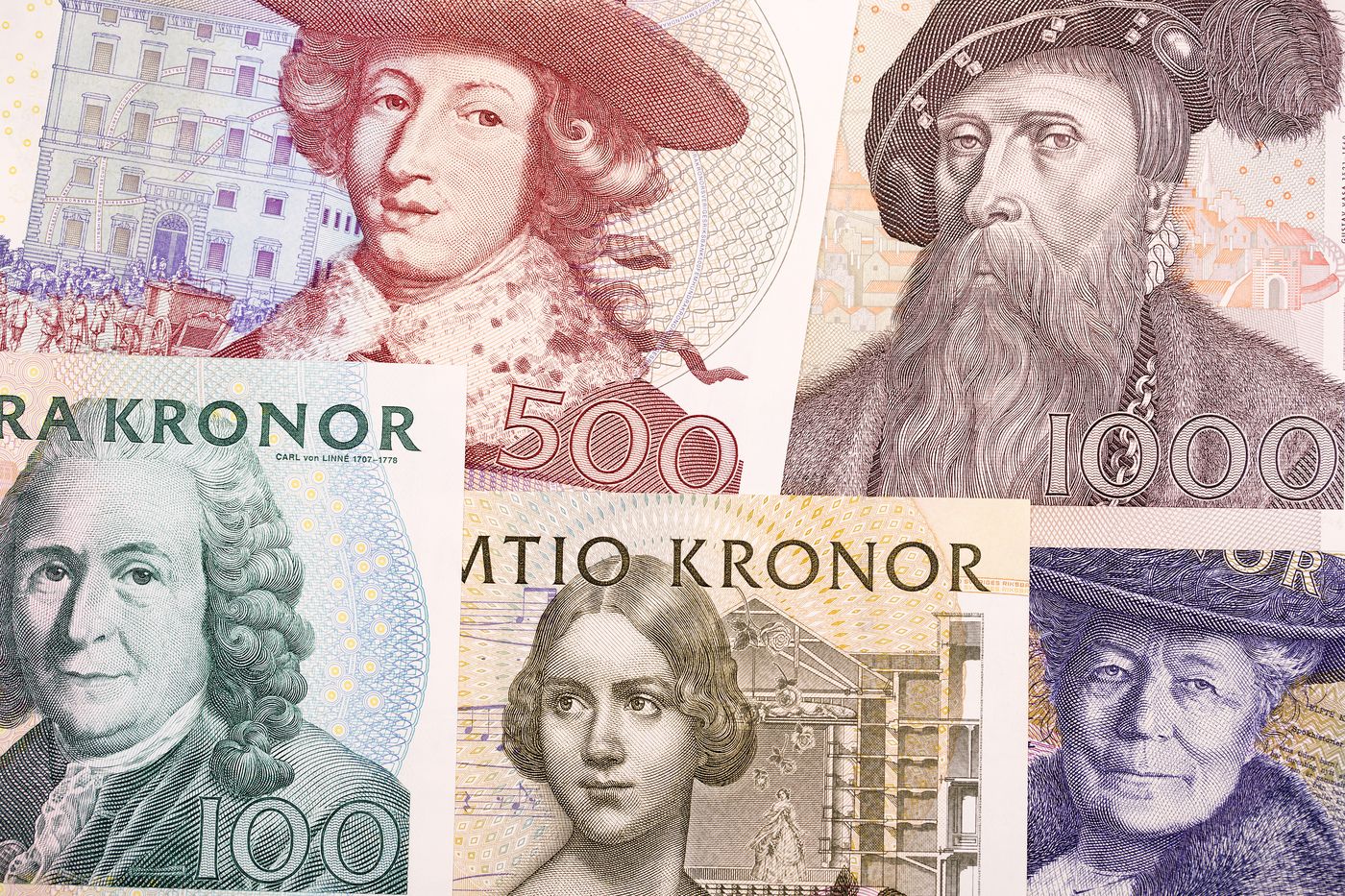
The krona was introduced in 1876 as a result of the Scandinavian Monetary Union, which included Sweden, Denmark, and Norway. This union replaced the previous Swedish currency, the riksdaler, at par. The name krona, meaning crown, was used in Sweden while Denmark and Norway used krone. All three currencies were placed on the gold standard, with the krona defined as 1/2480 of a kilogram of pure gold. The mutual equivalence of the three currencies ended with the outbreak of World War I when their convertibility to gold was suspended. While gold parities remained during most of the interwar period, the currencies traded at varying market rates. The krona is one of the six currencies included in the US Dollar Index, reflecting its importance in global currency markets.
The history of Swedish coinage reflects economic changes and metal shortages. Due to metal shortages during World War I, iron replaced bronze in some coins between 1917 and 1919. Metal shortages due to World War II again led to changes in Swedish coinage. Nickel-bronze replaced silver in some coins in 1920, with silver returning in 1927. In 1962, cupronickel replaced silver in some coins. In 1968, the 2-kronor coin switched to cupronickel and the 1-krona switched to cupronickel-clad copper.
- 1873 to 1876: Introduction of coins in bronze (1, 2, 5 öre), silver (10, 25, 50 öre, 1, 2 kronor), and gold (10, 20 kronor).
- 1902: Production of gold coins ceased, briefly restarted in 1920 and 1925.
- World War I (1917 to 1919): Iron replaced bronze due to metal shortages.
- 1920: Nickel-bronze replaced silver in 10, 25, and 50 öre coins.
- World War II (1940 to 1947): Nickel-bronze coins issued again, iron replaced bronze until 1952, and silver content in other coins was reduced.
- 1962: Cupronickel replaced silver in 10, 25, and 50 öre coins.
- 1968: The 2-kronor coin switched to cupronickel and the 1-krona to cupronickel-clad copper.
- 2010: The final öre coin (50 öre) was phased out.
All old kronor coins from before the 2016 series were declared invalid in 2017. They cannot be used for payments, nor can they be exchanged for legal tender at any bank. The last coin smaller than 1 krona was discontinued in 2010. The 2-kronor coin was reintroduced in the 2016 series after a long hiatus, as it had not been issued since 1971.
Banknotes and Coins in Circulation
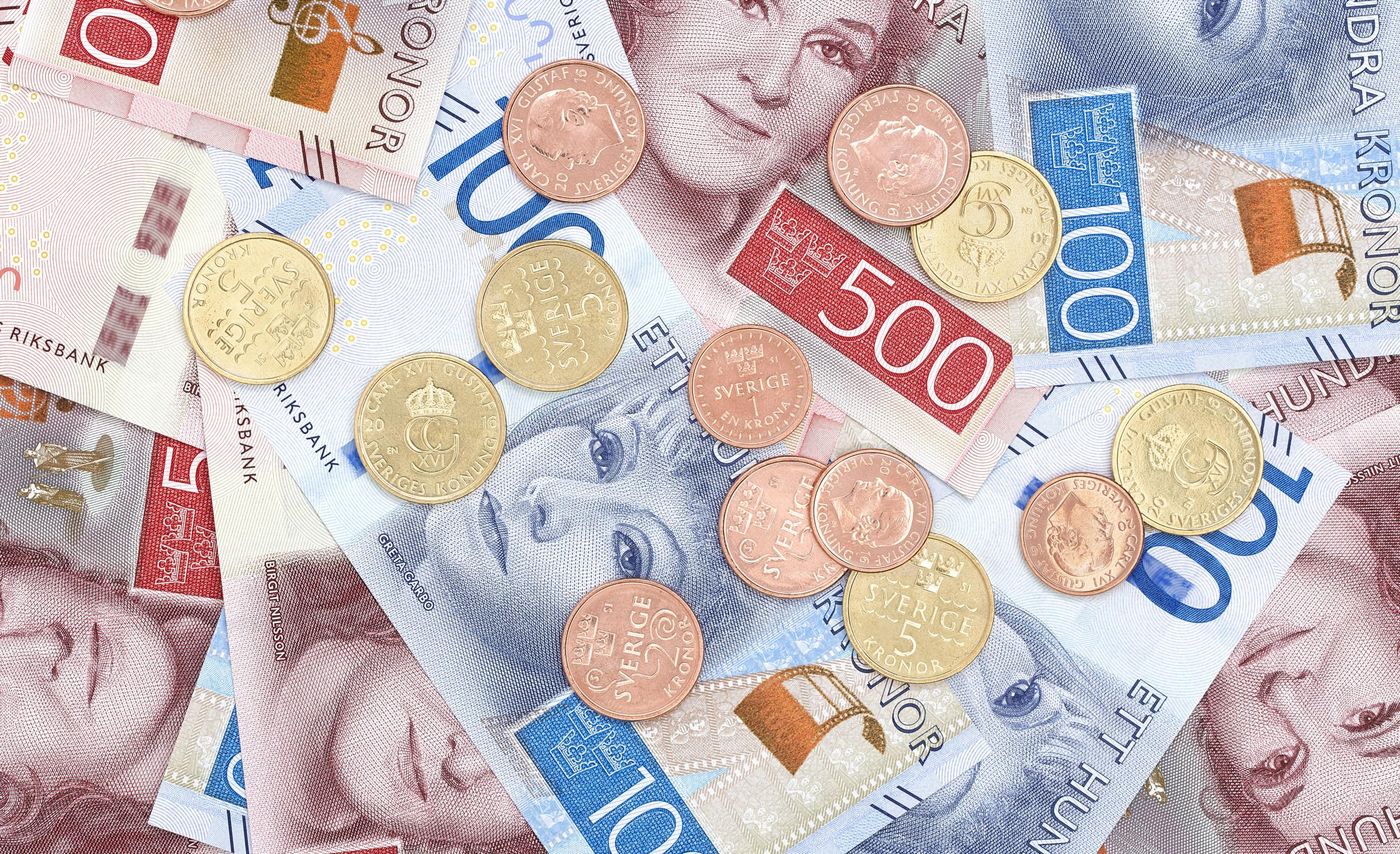
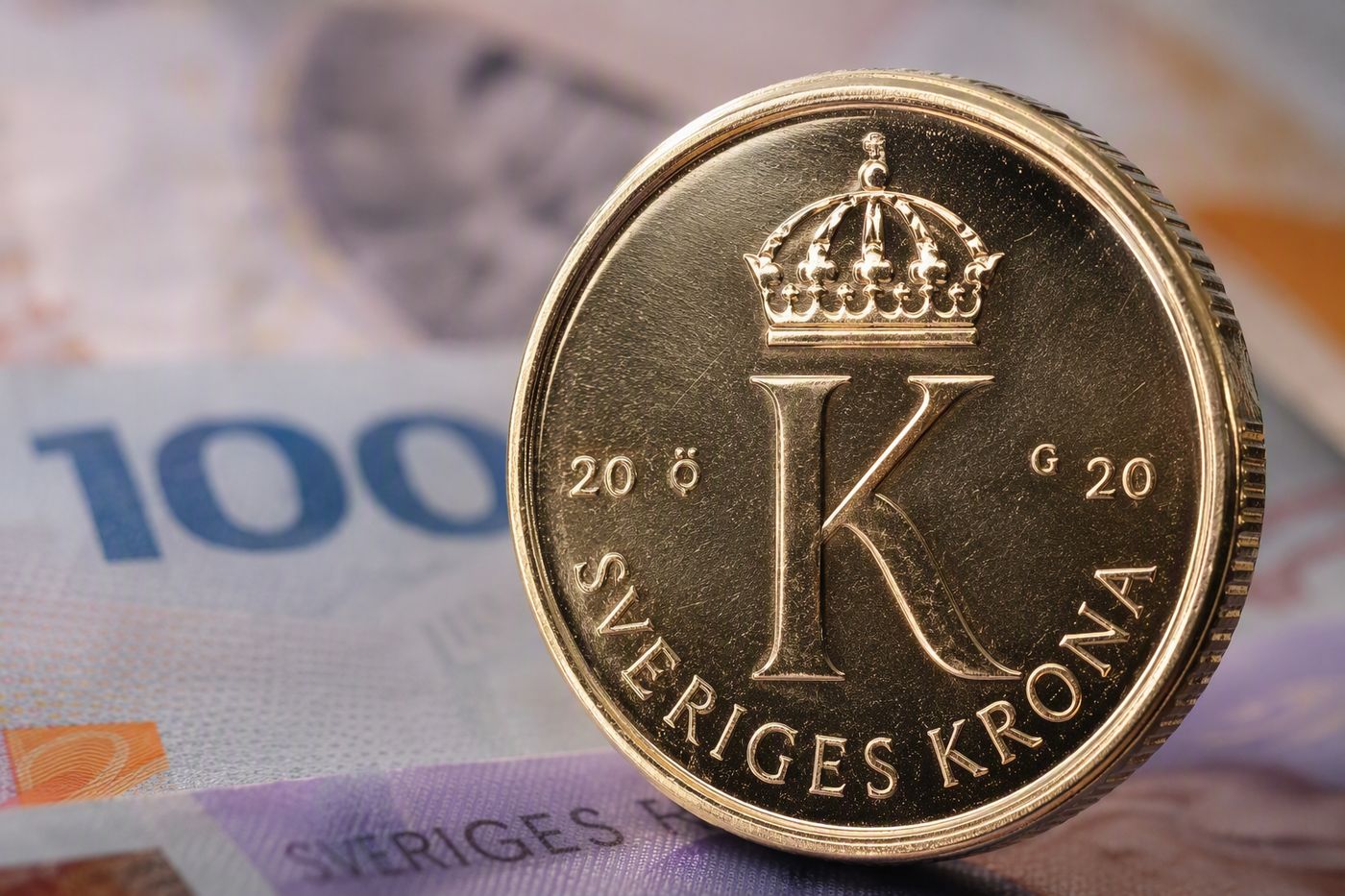
Sweden currently uses banknotes and coins issued in a series introduced between 2015 and 2016. The banknotes feature prominent Swedish cultural figures and have distinct colours. The current denominations are 20 kronor (purple, Astrid Lindgren), 50 kronor (orange, Evert Taube), 100 kronor (blue, Greta Garbo), 200 kronor (green, Ingmar Bergman), 500 kronor (red, Birgit Nilsson), and 1,000 kronor (brown, Dag Hammarskjöld). The current coin series, introduced in October 2016, includes 1, 2, 5, and 10 kronor coins with designs themed around the elements sun, wind, and water. This series also reintroduced the 2-kronor coin, which had not been issued since 1971. A key reason for the new coin series was to eliminate nickel due to allergy concerns. Vending machines and parking meters in Sweden have to a fairly high degree stopped accepting coins and now only accept bank cards or mobile phone payments.
Sweden has a policy of declaring older series of banknotes invalid, unlike the United States. Invalid banknotes can be redeemed at the Riksbank, but an administration fee of 200 kronor is charged. The phase-out of smaller denominations has been systematic. The timeline for cash rounding, where physical change is rounded to the nearest unit, is as follows.
- 1971: 1- and 2-öre phased out. Change rounded to nearest 5 öre.
- 1984: 5- and 25-öre phased out. Change rounded to nearest 10 öre.
- 1991: 10-öre phased out. Change rounded to nearest 50 öre.
- 2010: 50-öre phased out. Change rounded to nearest 1 krona.
Goods can still be priced in öre, but all sums are rounded to the nearest krona when paying with cash. The word öre is ultimately derived from the Latin word for gold, aurum. The first banknotes in the new series, the 20, 50, 200, and 1,000 krona, were issued on 1 October 2015. The other two notes, the 100 and 500 krona, followed on 3 October 2016.
The Krona and the Euro
According to Sweden's 1994 accession treaty to the European Union, the country is technically required to adopt the euro once convergence criteria are met. However, a consultative referendum held on 14 September 2003 resulted in 56 percent of voters opposing euro adoption, out of an overall turnout of 82.6 percent. The Swedish government has since utilized a formal loophole by not joining the European Exchange Rate Mechanism II, a two-year membership of which is a requirement for eurozone entry. Major Swedish political parties have pledged to abide by the referendum result, and public support for joining the euro has remained low. In a poll from May 2007, only 33.3 percent were in favour while 53.8 percent were against and 13.0 percent were uncertain. By September 2013, support had fallen as low as 9 percent. As of 2015, the only party in the Riksdag supporting Swedish entry into the euro was the Liberal Party. Prime Minister Fredrik Reinfeldt stated in February 2009 that a new referendum would not be held until support was gained from the people and all major parties, and the timing was at the discretion of the Social Democrats.
Exchange Rate and Value
The exchange rate of the Swedish krona against other currencies, including the Canadian dollar, is determined by a managed float regimen maintained since the Swedish banking rescue. The value fluctuates based on monetary policy and global market conditions. Historically, the krona has experienced significant swings against the euro. The weakest the krona has been relative to the euro was on 6 March 2009 when one euro bought 11.6465 SEK. The strongest was on 13 August 2012 when one euro bought 8.2065 SEK. The weakness in the euro in 2012 was due to the debt crisis in Greece and fears of it spreading to Italy and Spain. The average exchange rate between the introduction of euro banknotes and coins in 2002 and 1 March 2017 was 9.2884 SEK per euro. The exchange rate between the krona and the Canadian dollar is constantly changing. Recent data shows the SEK to CAD rate moving within a range, with the mid-market rate serving as a key benchmark for conversions.
The following table shows recent performance ranges for the SEK to CAD exchange rate based on market data. The exchange rate of the Swedish krona against other currencies has historically been dependent on the monetary policy pursued by Sweden. Since the Swedish banking rescue, a managed float regimen has been upheld. The Swedish krona is the ninth-most traded currency in the world by value.
| Time Period | High | Low | Average |
|---|---|---|---|
| Last 7 Days | 0.1426 | 0.1421 | 0.1424 |
| Last 30 Days | 0.1430 | 0.1416 | 0.1424 |
| Last 90 Days | 0.1478 | 0.1416 | 0.1442 |
The mid-market rate is the midpoint between buy and sell prices in global currency markets. It is often used as a reference point, though consumers typically receive a different rate when exchanging money through banks or services. The performance of SEK to CAD in the last 30 days saw a 30 day high of 0.1430 and a 30 day low of 0.1416. The average over the last 30 days was 0.1424 with a change of -0.45 percent. Over the last 90 days, the average was 0.1442 with a change of -1.61 percent.
Exchanging SEK in Canada
For Canadians looking to acquire or send Swedish kronor, several options exist through banks, currency exchange services, and specialized international money transfer providers. The exchange rate offered will vary between institutions, and it is common for them to apply a margin above or below the mid-market rate. When sending money from SEK to CAD, the total cost includes the exchange rate margin and any transaction fees. Transfer times for SEK to CAD typically range from one to two business days, depending on the provider and payment method. Priority SWIFT transfers can sometimes arrive on the same day if submitted before cut-off times. It is essential for individuals to compare exchange rates and fees, as differences can significantly impact the amount of Canadian dollars received. Many providers now offer online platforms where customers can see the exact exchange rate and all fees upfront before confirming a transfer.
Regulatory considerations are also important for larger transfers. International money transfers may require identity verification and documentation regarding the source of funds. In Canada and Sweden, providers are often regulated by financial authorities, such as the Financial Consumer Agency of Canada and Sweden's Finansinspektionen. Funds for transfers are typically held in segregated client accounts throughout the transfer process for security. For those receiving or holding physical Swedish kronor in Canada, it is important to note that only the current series of banknotes and coins are valid. Older Swedish banknotes and coins are not legal tender and cannot be used for payments or exchanged at regular Canadian banks. They would need to be sent to the Sveriges Riksbank for redemption, subject to an administration fee of 200 kronor. The Riksbank became the first central bank in the world to use the MOTION security feature, a moving image in a striped band, on its 1,000-kronor banknote in 2006.
Controversies and Debates
The Swedish krona and its symbols have not been without controversy. The design of the 500-kronor banknote in the current series, featuring opera singer Birgit Nilsson, attracted criticism. Opera singer Malena Ernman criticized the Riksbank for depicting Nilsson performing Richard Wagner's Die Walküre, noting Wagner's music was associated with Nazi Germany and that this was inappropriate in a time of increasing antisemitism in Sweden. The Riksbank replied that it was unfortunate the choice was seen as negative but stated the design would not be changed. Further criticism came from journalist Björn Wiman, who condemned the selection of Nilsson altogether, citing an example from her autobiography where she described a Decca record executive using antisemitic jokes. Another historical controversy involved a 500-kronor banknote from 1985 featuring King Charles XI, which was controversial because of the king's order to execute Snapphane guerrilla warriors.
The broader debate around the krona centres on Sweden's relationship with the European Union and the euro. The 2003 referendum decisively rejected euro adoption, but the technical requirement to join remains in the accession treaty. This creates an ongoing political discussion about national sovereignty, economic policy, and the benefits of currency union. Proponents argue that joining the eurozone would reduce transaction costs and exchange rate risk for trade, while opponents value the monetary policy independence provided by retaining the krona. The debate is largely dormant among major parties but remains a point of principle for some political groups. The use of cash in Sweden has also declined significantly, with the value of banknotes and coins per capita falling as systems like the Swish mobile payment app, established in 2012, have become popular alternatives. From 2001 to 2008, the value of cash in circulation was around 12,000 kronor per capita, but this has decreased with the rise of digital payments.
Frequently asked questions
What is the Swedish krona to Canadian dollar exchange rate?
The exchange rate between the Swedish krona (SEK) and the Canadian dollar (CAD) fluctuates constantly. As of recent data, the mid-market exchange rate is approximately 1 SEK = 0.14 CAD. This means one Swedish krona is worth about fourteen Canadian cents. The actual rate you receive when exchanging money through a bank or service will differ from this mid-market rate due to margins and fees. It is important to check live rates before making a transaction.
Can I use old Swedish kronor coins and banknotes in Canada?
No, you cannot use old Swedish kronor coins and banknotes as payment in Canada or anywhere else. Sweden regularly declares older series invalid. All kronor coins from before the 2016 series became invalid in 2017 and cannot be exchanged at banks. Older Swedish banknotes also have expiry dates after which they are no longer legal tender. Invalid banknotes can only be redeemed at the Sveriges Riksbank in Sweden, subject to an administration fee of 200 kronor.
Why does Sweden not use the euro?
Sweden is technically obligated to adopt the euro under its EU accession treaty but has chosen not to meet the prerequisite of joining the Exchange Rate Mechanism II. A national referendum held in 2003 rejected euro adoption, with 56 percent of voters opposed. Swedish political parties have largely respected this result, and public support for the euro remains low. This allows Sweden to maintain its independent monetary policy and control over the krona.
What are the denominations of Swedish krona banknotes?
Current Swedish krona banknotes come in denominations of 20, 50, 100, 200, 500, and 1,000 kronor. They feature cultural icons like author Astrid Lindgren on the 20-kronor note and filmmaker Ingmar Bergman on the 200-kronor note. Each denomination has a distinct colour. These notes are from the series introduced in 2015 and 2016, which replaced all previous designs.
How do I send money from Sweden to Canada?
To send money from Sweden to Canada, you can use banks, currency exchange services, or specialized international money transfer providers. You will convert Swedish kronor (SEK) to Canadian dollars (CAD). It is crucial to compare exchange rates and fees, as these vary significantly. Transfers typically take one to two business days, though some services offer faster options. Ensure you use a provider that is regulated and transparent about all costs upfront.
What is cash rounding in Sweden?
Cash rounding, or Swedish rounding, is a system where the final cash payment is rounded to the nearest unit of physical currency. Since the 50 öre coin was phased out in 2010, all cash transactions are rounded to the nearest whole krona. Goods can still be priced in öre for electronic payments, but the total is adjusted when paying with coins or banknotes. This system was implemented in stages as smaller öre coins were removed from circulation.
Sources and further reading
- Swedish krona (Wikipedia) en.wikipedia.org
- Swedish kronor to Canadian dollars Exchange Rate. ... wise.com
- 1 SEK to CAD, Swedish Kronor to Canadian Dollars ... xe.com
- SEK to CAD: Convert Swedish Krona to Canadian Dollar currencytransfer.com
- Convert Swedish Krona to Canadian Dollars | SEK to CAD currency.me.uk
- 1 Swedish Krona (SEK) to Canadian Dollar (CAD) remitbee.com
This article explains how things work and is not financial, tax or legal advice. Rules, limits and rates change, so check the current figures with the Canada Revenue Agency, your province or your financial institution before you act.