A Survivor Benefit Plan is a financial provision that provides income to the eligible spouse, common-law partner, or dependent children of a deceased individual. In Canada, these plans are a key component of both public programs like the Canada Pension Plan and employer-sponsored pension plans. They are designed to offer financial stability to survivors following a death. Understanding the different types, eligibility rules, and payment structures is crucial for Canadian families planning their financial security.
Types of Survivor Benefit Plans in Canada
Survivor benefit plans in Canada are primarily offered through two main channels: government-administered social insurance programs and employer-sponsored pension plans. The Canada Pension Plan provides a foundational layer of survivor benefits to most working Canadians and their families. These CPP benefits include a one-time death benefit, a monthly survivor's pension for the spouse or partner, and a children's benefit for dependent children. Employer-sponsored plans, such as those under the Public Service Superannuation Act or the Canada Post Pension Plan, provide additional, often more substantial, benefits based on the deceased's pensionable earnings and service. Many of these employer plans also allow survivors to continue health and dental coverage, such as the Public Service Health Care Plan, by having premiums deducted from their survivor pension cheque. The specific benefits and rules can vary significantly between different pension plans and sectors of employment.
Canada Pension Plan Survivor Benefits
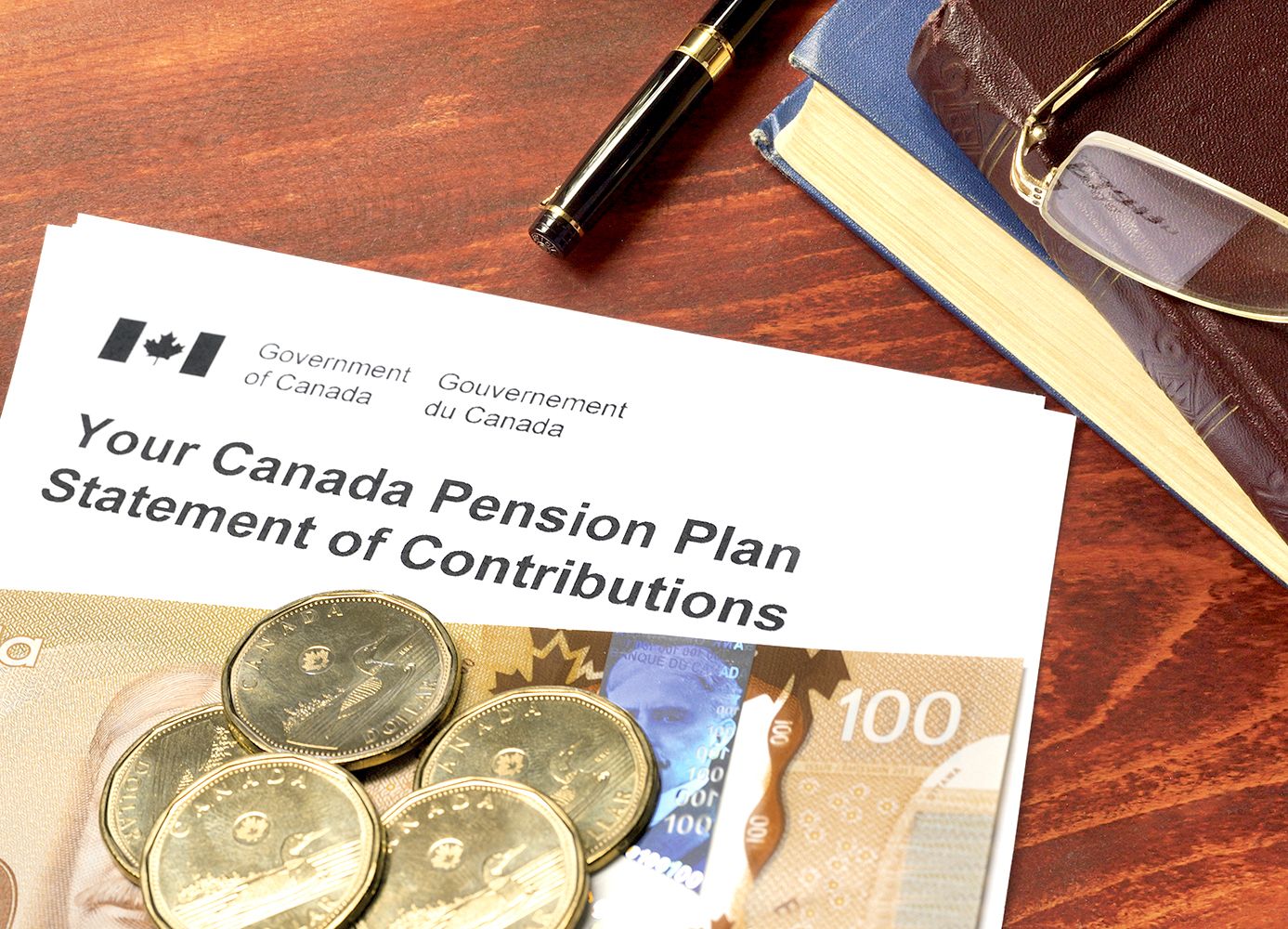
The Canada Pension Plan survivor benefits are available to the estate, spouse, and children of a deceased contributor. To qualify for the CPP Death Benefit, the deceased must have made CPP contributions for at least 10 years or for at least one-third of the calendar years in their contributory period for the base CPP. This one-time payment of $2,500 is made to the estate or another eligible individual. The CPP Survivor's Pension is a monthly payment made to the legal spouse or common-law partner who was also a CPP contributor at the time of the death. The amount depends on the survivor's age and the deceased's contributions, but the combined CPP retirement and survivor benefit cannot exceed the maximum CPP retirement pension amount, which was $1,364.60 per month at age 65 in 2024. The CPP Children's Benefit is a monthly flat-rate payment, set at $294.12 for 2024, paid to dependent children under 18, or under 25 if in full-time attendance at a recognized school or university.
Applications for CPP survivor benefits can be made online through a My Service Canada Account or by submitting a paper application. For the Death Benefit, an executor should apply within the first 60 days after death if there is a will. It is important to note that the CPP Death Benefit is typically included in the estate and taxed accordingly. The survivor's pension and children's benefits provide ongoing monthly support, which is adjusted annually. These benefits form a critical part of the social safety net for Canadian families experiencing loss.
Public Service and Federal Employee Plans
Federal public service employees are covered under plans like the Public Service Superannuation Act, which provides specific survivor benefits. The PSSA provides a survivor benefit equal to one-half the basic accrued superannuation entitlement of a deceased contributor with at least two years of pensionable service. This calculation is made without regard to Canada or Quebec Pension Plan integration or any reduction for an early retirement allowance. For example, the survivor benefit for a contributor who died at age 45 with 25 years of service and highest average earnings of $45,000 would be $11,250 per year. Benefits are payable immediately to the survivor and eligible children upon the contributor's death.
Eligibility rules under the PSSA are specific. In the event of death within one year of marriage, no survivor benefit is payable unless proof is provided that the contributor's health at the time of marriage was such that they were expected to live at least one year. For common-law partners, documentary evidence must prove a continuous conjugal relationship for at least one year prior to and including the date of death. If a contributor has both a legal spouse and an eligible common-law partner, the survivor benefit is apportioned between them based on the length of cohabitation. Survivors also have the option, within three months of notice, to waive entitlement if it results in a more favourable minimum benefit or child's allowance payment.
- Service requirement: Minimum 2 years of pensionable service.
- Marriage rule: No benefit if death within one year of marriage without health proof.
- Common-law proof: Continuous conjugal relationship for one year prior to death.
- Apportionment: Benefit split between legal spouse and common-law partner if both exist.
- Waiver option: Survivor can waive entitlement within 3 months for a minimum benefit.
Benefits for Children and Dependants
Most survivor benefit plans include provisions for dependent children of the deceased. Under the PSSA, a child includes a natural child, stepchild, or adopted child who is either under 18, or between 18 and 25 and in full-time attendance at a school or university without substantial interruption since turning 18 or the contributor's death. Each eligible child is entitled to an immediate allowance equal to one-tenth of the deceased contributor's basic accrued superannuation entitlement. If there is no surviving spouse or partner, each child's entitlement increases to one-fifth of that basic amount. The maximum combined amount of child allowances payable is four-fifths of the survivor benefit, or four-fifths of the basic entitlement if there is no survivor. If there are more than four children, this maximum amount is divided among them.
Children's allowances are normally paid directly to the survivor if the children reside with them. If children do not live with the survivor, payments go to the person with custody and control. Children over 18 typically receive payments directly. Under the Public Service Health Care Plan, dependants between 21 and 25 who are in full-time post-secondary studies can apply for coverage in their own right or be listed on the surviving spouse's application. For CPP, the children's benefit is a universal flat rate, not tied to the contributor's earnings, and ceases at age 25. These structures ensure that minor and student dependants receive continued financial support.
Application Process and Timelines
Applying for survivor benefits requires prompt action and specific documentation. For CPP benefits, application can be made online via My Service Canada or with paper forms such as the Application for a CPP Death Benefit or the CPP Survivor's Pension and Children's Benefits form. For employer plans like the PSHCP, surviving dependants must complete a Pensioner Application Form, obtainable from the Compensation Advisor or pension office. This PSHCP application must be submitted within 60 days of the plan member's death for coverage to start the first day of the following month. If submitted after 60 days, a three-month waiting period applies before coverage takes effect.
Required documents commonly include the original death certificate, a copy of the will, proof of the executor's appointment, and the employee identification number of the deceased. For common-law relationships, extensive proof such as statutory declarations from disinterested persons, joint bills, leases, or bank accounts is required. Survivors of public service employees should contact the Pension Centre, while survivors of active employees are directed to AccessHR. Monthly contributions for continued health coverage are deducted directly from the survivor's pension benefit cheque. Understanding and meeting these procedural requirements is essential to accessing benefits without delay.

Special Cases and Plan Specifics
Certain situations and specific pension plans have unique survivor benefit rules. For veterans receiving a disability pension, the survivor continues to receive that pension for one full year after the death, after which they automatically receive a survivor's pension. The amount of the veteran survivor's pension depends on the assessed level of the disability pension. If it was 48 percent or greater, the survivor gets a full pension, while an assessment between 5 and 47 percent yields one-half the amount. If the disability assessment was 5 percent or less, which was paid as a lump sum, no survivor amount is typically payable, though a posthumous claim can be made. The Canada Post Pension Plan provides that a survivor post-retirement will receive a monthly pension.
Pre-retirement, depending on years of service, a survivor may receive either a monthly pension or a lump-sum payment. The plan establishes a minimum death benefit, and if total survivor payments do not meet this minimum after all survivors cease to be eligible, a lump-sum top-up is paid to the beneficiary or estate. Children born after the member's retirement are not eligible unless named as a beneficiary. Under many plans, if a pensioner dies after age 65, any amount paid to a pension partner or beneficiary may be reduced as of the date the deceased would have reached 65. These specific provisions highlight the importance of reviewing the exact terms of an individual's pension plan.
Payment Structures and Tax Considerations
Survivor benefits are paid according to the rules of the specific plan. Monthly pension payments from plans like Canada Post are made through a trustee, such as RBC Investor Services Trust, with deposit confirmations provided via Electronic Funds Transfer notifications. Survivors receive an annual EFT notification with their December payment detailing year-to-date values and deductions. The CPP Survivor's Pension is a monthly payment, and its amount is subject to a maximum when combined with the survivor's own CPP retirement pension. The CPP Death Benefit is a single taxable lump sum paid to the estate.
Benefit payments are generally considered taxable income. Survivors can change the amount of federal tax withheld by submitting a completed TD1 form to the plan trustee or the Canada Revenue Agency. For employer health plans like the PSHCP, monthly contributions are deducted directly from the survivor's pension cheque. Payments to beneficiaries under age 18 are made to the person with care and custody. It is important for survivors to promptly update their address or banking information with the relevant pension centre to ensure uninterrupted payments and correct tax documentation.
Historical Context and Plan Evolution
Survivor benefit plans in Canada have evolved alongside the country's pension system. Employer-sponsored plans, particularly in the public sector like the PSSA, have developed more detailed provisions over time, often providing benefits that supplement the CPP. These plans have increasingly recognized common-law relationships, though with specific evidentiary requirements. The integration of health care coverage for survivors, as seen with the PSHCP, reflects a broader understanding of the needs of surviving families beyond pure income replacement.
If a contributor has both a legal spouse and an eligible survivor from a conjugal relationship, the survivor benefit is apportioned between them based on the length of cohabitation. In the event of a death where there is no eligible survivor or children, a minimum benefit is payable to the named beneficiary. Dependent children over 18 but under 25 who are in full-time attendance at a school or university are eligible for a surviving child allowance. To provide financial stability, a veteran's disability pension continues for a full year for the survivor before converting to a survivor's pension. The primary goal of these plans is to provide long-term financial security to the families of contributors.
Frequently asked questions
What is a Survivor Benefit Plan?
A Survivor Benefit Plan is a financial arrangement that provides ongoing income or a lump-sum payment to the eligible survivors of a deceased person. In Canada, this most commonly refers to benefits under the Canada Pension Plan or employer pension plans like the Public Service Superannuation Act. These plans typically pay a monthly pension to a legal spouse or common-law partner and may also provide benefits for dependent children. They are designed to offer financial support after the death of a contributor or pension plan member.
Who is eligible for the CPP Survivor's Pension?
To be eligible for the CPP Survivor's Pension, you must be the legal spouse or common-law partner of the deceased at the time of their death. The deceased must have been a contributor to the Canada Pension Plan. The surviving spouse or partner must also have been a CPP contributor themselves. The amount of the monthly pension depends on the survivor's age and the deceased's contribution history, but the total combined with the survivor's own CPP retirement pension cannot exceed the maximum CPP retirement pension amount.
How much is the CPP Death Benefit?
The CPP Death Benefit is a one-time, lump-sum payment of $2,500. It is paid to the estate of the deceased contributor or to another eligible individual. To qualify, the deceased must have made CPP contributions for at least 10 years or for at least one-third of the calendar years in their contributory period for the base CPP. This benefit is typically included in the estate and is subject to taxation. An executor should apply within 60 days of death if there is a will.
What benefits are available for children?
Dependent children of a deceased contributor may be eligible for the CPP Children's Benefit, a monthly flat-rate payment of $294.12 as of 2024. The child must be under 18, or under 25 and attending a recognized school or university full-time. Under employer plans like the PSSA, each eligible child receives an allowance equal to a fraction of the deceased's pension entitlement, with the total for all children capped. These benefits are paid until the child reaches the limiting age or leaves full-time study.
Can a common-law partner receive survivor benefits?
Yes, common-law partners are generally eligible for survivor benefits if they meet specific criteria. Under plans like the PSSA, documentary evidence must prove a continuous conjugal relationship for at least one year prior to and including the date of the contributor's death. Proof can include statutory declarations from disinterested persons, joint bills, leases, or bank accounts. If a contributor has both a legal spouse and an eligible common-law partner, the survivor benefit is apportioned between them based on the length of cohabitation.
How do I apply for survivor benefits?
For CPP benefits, you can apply online through your My Service Canada Account or by mailing a paper application form. For employer-sponsored plans like the Public Service Health Care Plan, survivors must obtain and submit a Pensioner Application Form, ideally within 60 days of death to avoid a coverage waiting period. Required documents usually include the original death certificate, a copy of the will, and proof of executor appointment. Survivors of public service employees should contact the Pension Centre, while those of active employees contact AccessHR for guidance.
Sources and further reading
- Survivor Benefits psacunion.ca
- Survivor Benefits pshcp.ca
- CPP Survivor Benefits edwardjones.ca
- Survivor's pension veterans.gc.ca
- Defined Benefit | For survivors, Pension cpcpension.com
This article explains how things work and is not financial, tax or legal advice. Rules, limits and rates change, so check the current figures with the Canada Revenue Agency, your province or your financial institution before you act.