The Singapore dollar (SGD) is the official currency of the Republic of Singapore and one of the world's most traded currencies. For Canadians, the SGD is relevant for travel, business, and investment in Southeast Asia, and it maintains a unique interchangeability agreement with the Brunei dollar. The Monetary Authority of Singapore (MAS) manages the currency, which has evolved from a sterling peg to a managed float system. Understanding the SGD's history, current exchange dynamics, and how to convert it to Canadian dollars (CAD) is useful for financial planning.
What Is the Singapore Dollar?
The Singapore dollar is the legal tender of Singapore, abbreviated as SGD or S$ to distinguish it from other dollar-denominated currencies like the Canadian or US dollar. Each dollar is subdivided into 100 cents, which are known as sen in Malay, fēn in Chinese, and kācu in Tamil. The Monetary Authority of Singapore (MAS) has the sole authority to issue banknotes and coins. As of 2024, the SGD ranks as the 13th most traded currency in the world by value, reflecting Singapore's significant role in global finance and trade. A distinctive feature is the Currency Interchangeability Agreement with Brunei, which allows the Singapore dollar to be accepted as customary tender in Brunei at a 1:1 parity, and vice versa. All currency in circulation is fully backed by external assets, which historically were held in a dedicated Currency Fund but are now backed by the full financial strength of the MAS. The external assets that back the currency can include gold and silver, foreign exchange deposits and securities, equities, corporate bonds, currency futures, and any other asset approved by the President of Singapore. In 2017, the government announced the merger of the Currency Fund with other MAS funds, as the MAS's total assets of S$395 billion were more than seven times larger than the Currency Fund's S$55 billion, ensuring the currency is backed by the central bank's full balance sheet.
Historical Development of the SGD
The Singapore dollar's origins trace back to the silver trade dollars used in Asia from the 16th to 19th centuries. Modern issuance began after Singapore's independence. The Straits dollar was used in the region from 1845 to 1945, followed by the Malayan dollar and then the Malaya and British Borneo dollar. Singapore used this common currency even after gaining independence in 1965. The formal monetary union with Malaysia and Brunei ended in 1967, prompting Singapore to establish its own currency board. Singapore issued its first coins and notes under the Board of Commissioners of Currency, Singapore (BCCS) on 7 April 1967. Initially, the SGD was pegged to the British pound sterling at a rate of £1 = S$8.57, and then briefly to the US dollar at a rate of US$1 = S$3.06 following the pound's devaluation. From 1973 to 1985, Singapore pegged its currency to a fixed but undisclosed trade-weighted basket of currencies. Since 1985, the MAS has managed the SGD within a monitoring band, allowing it to float within an undisclosed range against a concealed basket of currencies from Singapore's major trading partners. This policy aims to control imported inflation and maintain export competitiveness. The BCCS merged with the MAS on 1 October 2002, consolidating all currency issuance functions under the central bank. The MAS was formed on 1 January 1971 after the passing of the Monetary Authority of Singapore Act in 1970, which gave it authority over monetary, banking, and financial policy.
Key historical dates for the Singapore dollar include its establishment in 1967 when Singapore issued its first coins and notes. The currency was initially pegged to the pound sterling and then to the US dollar at a rate of US$1 = S$3.06. From 1973 to 1985, Singapore moved to peg its currency against a fixed and undisclosed trade-weighted basket of currencies. Since 1985, Singapore has adopted a market-oriented exchange regime where the Singapore dollar is allowed to float within an undisclosed bandwidth.
- 7 April 1967: First Singapore dollar coins and notes issued by the BCCS.
- 8 May 1973: End of interchangeability at par with the Malaysian ringgit.
- 1 January 1971: Formation of the Monetary Authority of Singapore.
- 1985: Shift to a managed float exchange rate regime.
- 1 October 2002: Merger of BCCS with the MAS.
- 1 October 2014: Cessation of printing for the S$10,000 banknote.
- 1 January 2021: Cessation of printing for the S$1,000 banknote.
Banknotes and Coins in Circulation
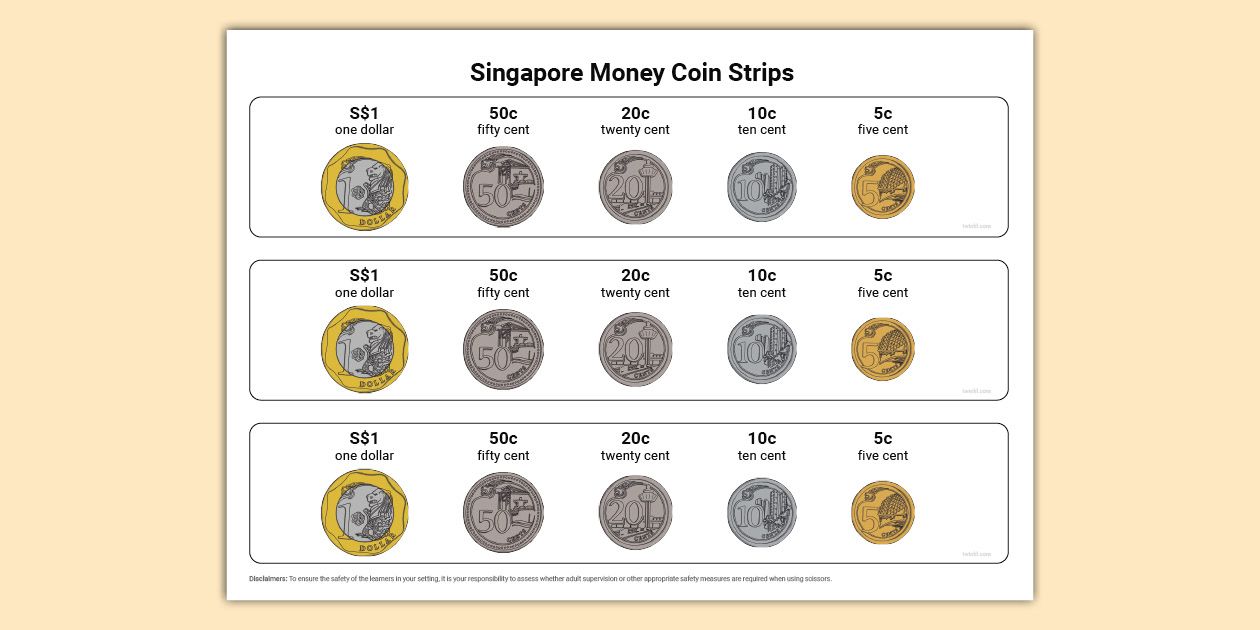
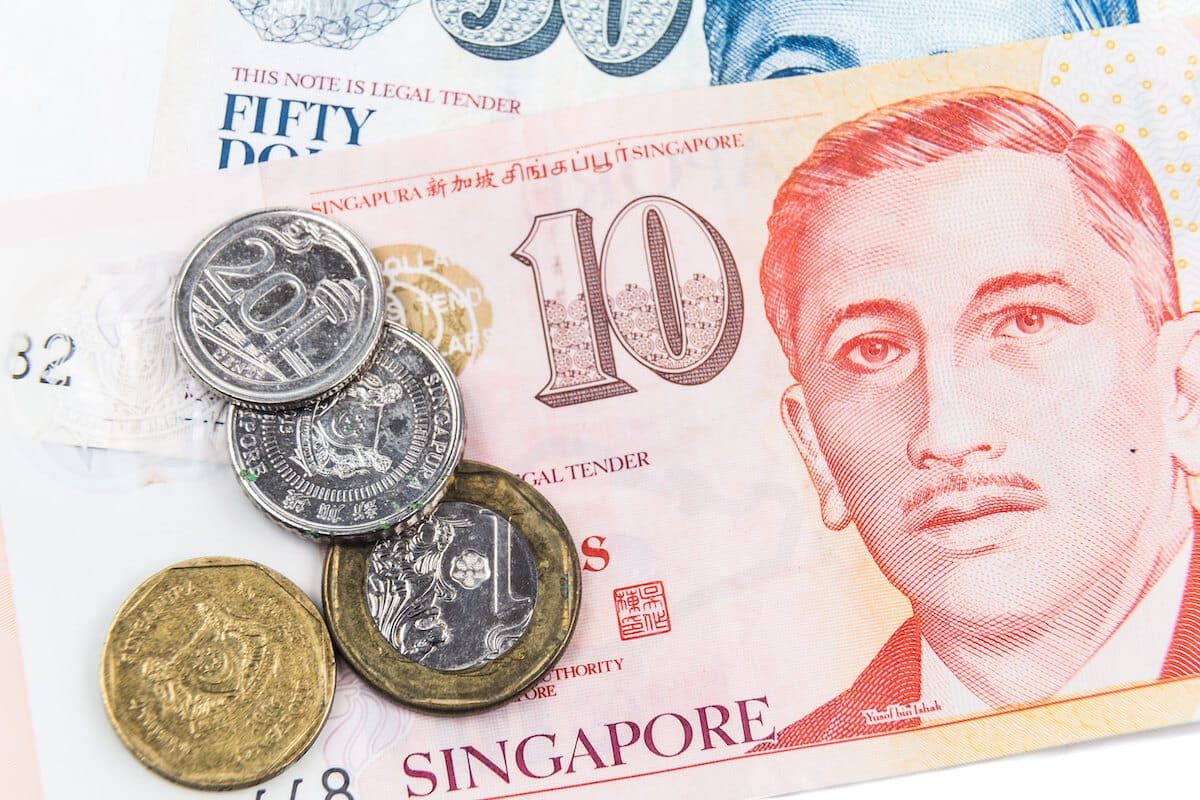
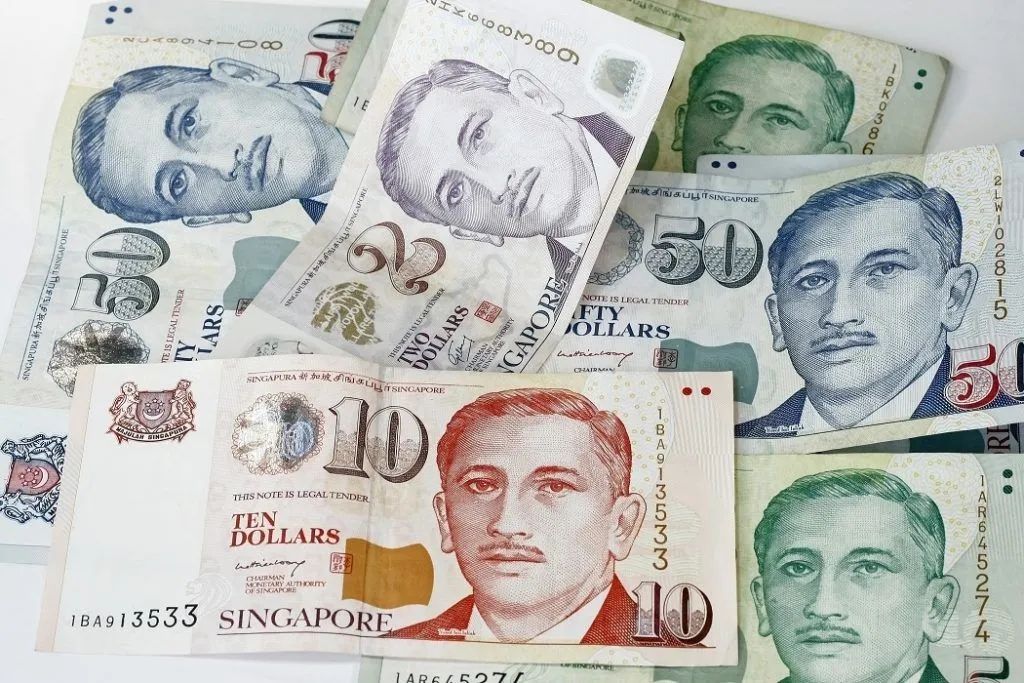
Singapore has issued several series of banknotes and coins since 1967. The current banknote series is the Portrait series, introduced in 1999, which features the face of Yusof bin Ishak, Singapore's first president, on the obverse. The reverse depicts a feature of civic virtue. These notes come in denominations of S$2, S$5, S$10, S$50, and S$100, and are issued in both paper and polymer, with polymer notes gradually replacing paper. Polymer notes have a slightly slippery feel and include a small transparent window design in the corner for security, and all notes in this series have Braille patterns at the top right-hand corner. Higher denominations like the S$1,000 and S$10,000 notes are no longer printed to mitigate money laundering risks but remain legal tender. The S$10,000 note was historically among the world's most valuable banknotes in circulation, worth over seven times the next most valuable, the 1,000-Swiss franc note, as of 2011. Commemorative banknotes are periodically issued for events like national anniversaries. The coin series has also evolved. The first Marine series (1967) featured wildlife and was designed by Stuart Devlin, with coins in denominations of 1, 5, 10, 20, 50 cents and 1 dollar. The second Floral series (1985) introduced smaller coins with a floral theme designed by Christopher Ironside, and the one-dollar banknote was replaced by an aluminium-bronze coin. The current coin series, introduced in 2013, is the third series and presents national symbols on multi-ply plated-steel planchets supplied by the Royal Canadian Mint. The one-dollar coin is bi-metallic and features the Merlion, the fifty-cent coin features the Port of Singapore, the twenty-cent coin depicts Changi International Airport, the ten-cent coin features public housing and the five-cent coin features the Esplanade. The one-cent coin was removed from circulation in 2002.
Detailed History of Banknote Series
Each series of Singapore banknotes reflects a distinct theme and period in the nation's development. The Orchid Series, issued from 1967 to 1976, was the first and included nine denominations from $1 to $10,000, each with a central orchid design and a varying scene of Singapore on the back. The Bird Series followed from 1976 to 1984, also with nine denominations but replacing the $25 note with a $20 note, each featuring a different bird on the front to symbolize a young nation ready to take flight. The Ship Series was issued from 1984 to 1999, adopting a maritime theme with different types of ships on the front and scenes of Singapore's achievements on the back, and it introduced the $2 note while removing the $20. The current Portrait series, launched in 1999, omitted the one-dollar and 500-dollar denominations and standardized the portrait of President Yusof bin Ishak. A key security feature across all series has been a vertically embedded security thread, with higher-value notes sometimes having two threads. The production of the highest-value notes has been halted as an anti-money laundering measure, following a global trend that includes the European Central Bank's discontinuation of the 500-euro note and Brunei's halt of its B$10,000 note in 2020.
Singapore Dollar Exchange Rates and the Canadian Dollar
The exchange rate between the Singapore dollar and the Canadian dollar fluctuates based on global financial markets. The mid-market rate is the benchmark midpoint between buy and sell prices in the wholesale currency market. For personal transfers, providers apply a margin to this rate, so the actual rate Canadians receive will differ. The rate is influenced by factors including interest rate differentials, economic performance, trade flows, and geopolitical events. Canadians looking to convert funds should monitor live rates, as they can change frequently throughout the trading day. Historical data shows the SGD to CAD rate has experienced typical volatility, with 30-day averages around 1.1088 and 90-day averages around 1.0969 in recent periods. The performance over the last 7 days has seen rates move between 1.1022 and 1.1149 with an average of 1.1069. Providers like Wise and Xe use the real mid-market rate for their currency converters for informational purposes, but the rate for sending money includes a margin. It is common for money transfer services to show the total cost upfront, including any transfer fee and the applied exchange rate, before a transaction is confirmed. The volatility over the last 30 days was measured at 0.20 percent, indicating moderate daily fluctuations in the value.
Recent performance metrics for the SGD to CAD exchange rate can be tracked using live mid-market rates. For example, one source indicated a rate of S$1 = $1.1005 CAD. Interactive charts allow users to view historical exchange rate data for the Singapore dollar against the Canadian dollar. These tools help in understanding currency fluctuations over time, including up to the last five years.
| Time Period | High | Low | Average |
|---|---|---|---|
| Last 30 Days | 1.1150 | 1.0997 | 1.1088 |
| Last 90 Days | 1.1150 | 1.0839 | 1.0969 |
| Last 7 Days | 1.1149 | 1.1022 | 1.1069 |
Converting SGD to CAD in Canada
Canadians can convert Singapore dollars to Canadian dollars through various channels including banks, online money transfer specialists, and currency exchange bureaus. The process typically involves checking the live exchange rate, understanding the total cost which includes any transfer fees or exchange rate margins, and then initiating the transaction. Online platforms and apps often provide real-time quotes and allow users to lock in a rate. It is important to compare the total amount of CAD received after all fees, not just the advertised exchange rate. Providers like Western Union, Wise, and OFX offer services where you can send money from Canada to Singapore or convert currencies. These services may offer different payout options such as bank deposits or cash pickup. Security measures like encryption and fraud prevention are standard, and transfers can usually be tracked using a reference number like an MTCN. When converting large amounts, using a specialist foreign exchange provider can sometimes offer better rates than traditional banks due to lower margins. For example, some specialists advertise savings of up to 4% compared to bank rates when converting SGD to CAD. The exchange rate shown on general search engines like Google is usually the mid-market rate, which does not include the margin applied by transfer services, so the final rate will be different. Money transfer fees can vary depending on the amount sent, payment method, destination, and the specific exchange rate at the time of the transfer.
Key Considerations and Risks for Canadians
When dealing with the Singapore dollar, Canadians should be aware of several practical and financial considerations. Exchange rate risk is primary, as the value of SGD relative to CAD can move unfavourably between the time a transaction is agreed and completed. Using rate alert tools can help time conversions. Fees and margins vary significantly between providers, with banks often including wider spreads in their exchange rates. Transparency in pricing is crucial, so always review the total cost upfront. The interchangeability with the Brunei dollar is a unique feature, but it primarily applies within Singapore and Brunei, not in Canada. While high-denomination Singapore banknotes like the S$1,000 and S$10,000 are legal tender, their issuance has stopped, and they may be difficult to exchange outside of Singapore. For travel, carrying a mix of payment methods such as a travel-friendly credit card that does not charge foreign transaction fees and a small amount of local cash is often advisable. For business or investment, understanding Singapore's managed float exchange rate policy can provide context for longer-term currency trends. Another consideration is that some payment methods, like credit cards, may incur cash advance fees and associated interest charges when used for currency transfers, so using a debit card or bank account may be preferable to avoid extra charges. Canadians should also be aware that the MAS's foreign reserves officially stood at over US$288.2 billion as of July 2022, which supports the strength and stability of the Singapore dollar.
Commemorative and Special Edition Currency
The Monetary Authority of Singapore has issued several commemorative banknotes to mark significant national events. These are legal tender but are often collected for their numismatic value. The first commemorative was a S$50 polymer note in 1990 for Singapore's 25th independence anniversary, of which 300,000 had an overprint of the date 9 August 1990. In 1999, three million S$2 millennium notes were circulated with the serial number prefix replaced by a Millennium 2000 logo. A joint S$20 note with Brunei was issued in 2007 to celebrate 40 years of their currency agreement, with a back design identical to the Bruneian note. For Singapore's Golden Jubilee in 2015, a set of six commemorative notes was launched, including five S$10 polymer notes and a S$50 note featuring historical motifs like the late Prime Minister Lee Kuan Yew shouting Merdeka. The S$50 note made distinctive use of the colour gold for the jubilee. In 2017, another S$50 polymer note commemorated the 50th anniversary of the Brunei-Singapore Currency Interchangeability Agreement. A S$20 note for the Singapore Bicentennial was issued in 2019. These special issues highlight Singapore's history and achievements but are typically released in limited quantities and can sometimes be exchanged at banks with limits, such as two pieces per transaction for the 2007 commemorative. The 2015 set of S$10 notes had varying back designs depicting themes like 'Caring Community' and 'Safe and Secure' as part of the 'Lively Nation, Endearing Home' concept.
Security Features and Anti-Counterfeiting
Singapore dollar banknotes incorporate multiple security features to prevent counterfeiting. Standard features across series include the national Coat of Arms, a lion head watermark, and the signature of the Minister for Finance and chairman of the currency board on the front. A vertically embedded security thread is present in all notes, with higher denominations like the S$10,000 note in the Orchid Series having two threads. The current Portrait series polymer notes include a small transparent window design in the corner and have a distinct, slightly slippery feel compared to paper notes. The polymer notes also feature Braille patterns at the top right-hand corner of the front design to aid the visually impaired. Coins from the current third series, introduced in 2013, are struck on multi-ply plated-steel planchets from the Royal Canadian Mint and include enhanced features to differentiate them from fakes. The second and third series of coins have a medallic orientation. The MAS's move to cease production of the S$10,000 and S$1,000 notes was also partly a security and anti-money laundering measure, reducing the risk of large-value illicit transactions, aligning with actions taken by other jurisdictions like Brunei and the European Union. All issued currency remains fully backed by assets, and the merger of the Currency Fund with the MAS's other funds further consolidates the financial backing for these security features and the currency's overall integrity.
Frequently asked questions
Are old Singapore dollar notes still valid?
All previously issued Singapore dollar notes from the Orchid, Bird, Ship, and Portrait series remain legal tender. However, the issuance of very high-value notes has ceased. The printing of the S$10,000 note stopped in October 2014, and the S$1,000 note stopped in January 2021 to combat money laundering. Existing notes of these denominations are still legal tender but banks may not recirculate the S$10,000 note.
What is the Singapore dollar code and symbol?
The Singapore dollar's international currency code is SGD and its symbol is $. It is normally abbreviated with the dollar sign $, or S$ to distinguish it from other dollar-denominated currencies. Each Singapore dollar is divided into 100 cents, which are known as 'sen' in Malay, 'fēn' in Chinese, and 'kācu' in Tamil. The currency is the official tender of the Republic of Singapore and is issued by the Monetary Authority of Singapore (MAS). As of 2024, it holds the position of the 13th most traded currency in the world, reflecting its significant role in global finance.
Can I use Singapore dollars in Brunei?
Yes, the Singapore dollar is customarily accepted as tender in Brunei according to the Currency Interchangeability Agreement between the Monetary Authority of Singapore and the Autoriti Monetari Brunei Darussalam. This agreement, established when Singapore began issuing its own currency in 1967, allows for interchangeability at par, meaning one Singapore dollar equals one Brunei dollar. Likewise, the Brunei dollar is also customarily accepted in Singapore. The longevity of this agreement was commemorated with special banknotes issued jointly by both nations in 2007 and again in 2017.
What is the current SGD to CAD exchange rate?
The Singapore dollar to Canadian dollar exchange rate fluctuates constantly based on global currency markets. The mid market rate, which is the midpoint between buy and sell prices in wholesale markets, is a common benchmark. For example, one recent mid market rate showed S$1 was equivalent to approximately CAD $1.1005. It is important to note that the rate you receive for a personal money transfer will differ, as banks and currency services apply their own margin or service fee on top of the market rate. Therefore, the actual amount received will vary by provider.
How can I convert Canadian dollars to Singapore dollars?
You can convert Canadian dollars to Singapore dollars through various financial service providers such as banks, online currency converters, and specialized money transfer companies. The process typically involves entering the amount of CAD you wish to send, selecting SGD as the target currency, and receiving a real time quote for the exchange rate and any applicable fees. You can then choose a delivery method, such as a bank deposit or cash pickup at an agent location in Singapore. It is advisable to compare the total cost, including the exchange rate margin and transfer fees, across different services before proceeding.
Who issues and manages the Singapore dollar?
The Monetary Authority of Singapore (MAS) issues and manages the Singapore dollar. Formed on 1 January 1971 under the Monetary Authority of Singapore Act, the MAS acts as Singapore's central bank and regulates all monetary, banking, and financial aspects. It took over full responsibility for banknote issuance from the Board of Commissioners of Currency, Singapore (BCCS) on 1 October 2002. The MAS manages the currency's value through a market oriented exchange regime, allowing the Singapore dollar to float within an undisclosed bandwidth against a concealed basket of currencies from Singapore's major trading partners. This policy helps control imported inflation and maintain export competitiveness.
Sources and further reading
- Singapore dollar (Wikipedia) en.wikipedia.org
- CAD to SGD | Convert Canadian Dollar to Singapore Dollar westernunion.com
- Singapore dollars to Canadian dollars Exchange Rate. ... wise.com
- 1 SGD to CAD, Convert Singapore Dollars to Canadian ... xe.com
- Convert Singapore Dollars to Canadian Dollars | SGD to ... currency.me.uk
- Convert SGD to CAD, Singapore Dollar to Canadian Dollar mtfxgroup.com
This article explains how things work and is not financial, tax or legal advice. Rules, limits and rates change, so check the current figures with the Canada Revenue Agency, your province or your financial institution before you act.