The Silver Maple Leaf is a one troy ounce silver bullion coin issued annually by the Government of Canada and produced by the Royal Canadian Mint. First introduced in 1988, it is legal tender with a face value of five Canadian dollars, though its market value is primarily determined by the fluctuating spot price of silver. The coin is renowned worldwide for its 99.99% purity, making it among the finest official silver bullion coins available. For Canadian investors and collectors, the Silver Maple Leaf represents a government-backed, secure, and highly liquid form of tangible silver.
Coin Design and Specifications
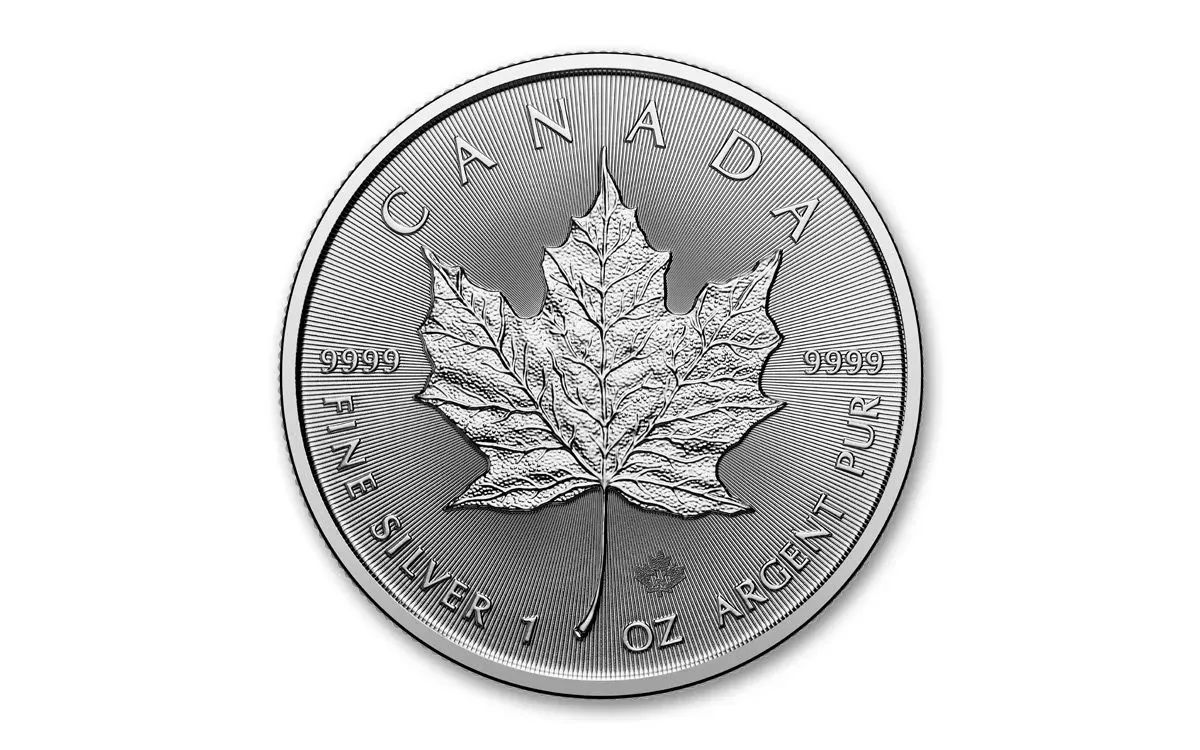
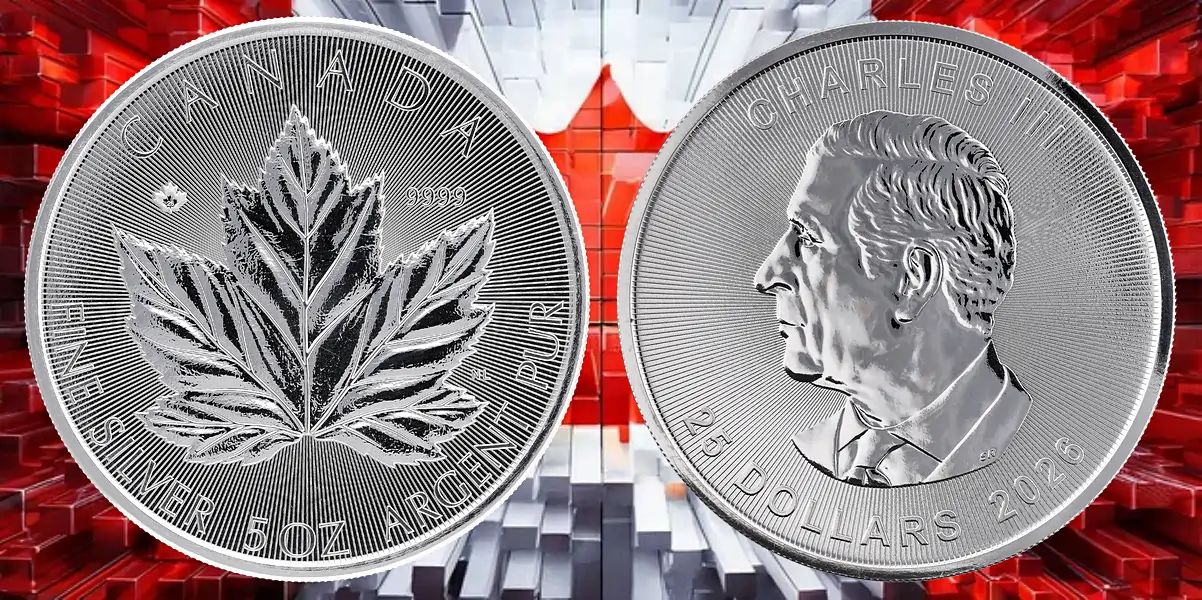
The Silver Maple Leaf features a classic and consistent design that emphasizes its Canadian identity. The obverse of the coin has always borne the profile of the reigning monarch. From its inception in 1988 until 2023, this was Queen Elizabeth II, with her portrait evolving through designs by Arnold Machin (1988 to 1989), Dora de Pédery-Hunt (1990 to 2003), and Susanna Blunt (2004 to 2023). Coins released starting in 2024 now feature a new obverse portrait of King Charles III, designed by Steven Rosati. The reverse of the coin displays a single, detailed maple leaf, a design that has remained fundamentally unchanged since 1988. The universal inscriptions on the coin include the word CANADA and the French phrase FINE SILVER 1 OZ ARGENT PUR, which denotes its weight and purity.
The coin's technical specifications are standardized to ensure global recognition and trust. Every standard Silver Maple Leaf contains one troy ounce of 99.99% pure silver, a fineness that places it at the top tier of global bullion coins. This purity and weight are guaranteed by the Royal Canadian Mint. While its legal tender face value is five dollars, the coin's actual market value is dictated by the daily spot price of silver, which typically far exceeds its nominal value. This combination of high purity, consistent weight, and government backing is what makes the coin a fundamental part of the precious metals market.
History and Evolution of the Series
The Silver Maple Leaf program was launched by the Royal Canadian Mint in 1988, expanding the successful Maple Leaf bullion family that began with gold. It was created to provide investors with a sovereign silver product that matched the high standards of its gold counterpart. The series has seen several important developments over its history, primarily related to its design and production quality. The most significant change to the coin's physical appearance came in 2014 when the Royal Canadian Mint introduced advanced security features to combat counterfeiting. These features include radial lines on the reverse and a micro-engraved laser mark, which also affected the obverse design.
Another notable issue in the coin's history was the occurrence of a milky-white surface blemish, commonly referred to as a milk spot. This imperfection resulted from cleaning detergent residue left on the planchets before they entered the annealing furnace. In response to market feedback, the Royal Canadian Mint addressed this quality concern in 2018 with the introduction of MINTSHIELD surface protection technology. This innovation was designed specifically to prevent the formation of milk spots, thereby preserving the coin's aesthetic appeal and lustre. The packaging of the coins has also evolved, moving from boPET wrapping to semi-transparent tubes with a yellow lid bearing the RCM logo since 2009, due to increasing global demand.
- 1988: The Silver Maple Leaf is first issued by the Royal Canadian Mint.
- 1999: Coins feature a privy mark for the 20th anniversary of the Maple Leaf Program.
- 2000: The year's issue bears a Fireworks privy mark to commemorate the millennium.
- 2014: Radial lines and a micro-engraved laser mark are added as security features.
- 2018: MINTSHIELD technology is introduced to prevent milk spot blemishes.
- 2023: The final year featuring Queen Elizabeth II's portrait on the obverse.
- 2024: Coins begin featuring the new obverse portrait of King Charles III.
Special Editions and Privy Marks
Beyond the standard annual bullion issue, the Royal Canadian Mint has released a wide array of special edition Silver Maple Leaf coins. These editions often commemorate specific events, anniversaries, or themes and are highly sought after by collectors. A common feature on many special editions is a privy mark, which is a small, unique symbol stamped onto the coin. For instance, in 1999, coins were issued with a privy mark to celebrate the 20th anniversary of the RCM Maple Leaf Program. The following year, a fireworks privy mark alongside the number 2000 was featured on coins to commemorate the new millennium, with some versions being double-dated 1999 and 2000.
The Mint has produced several themed series using the Silver Maple Leaf platform. These include extended runs like the Zodiac series, which spanned from 1998 to 2009 and was revived in 2012. Other popular nature-themed series have celebrated Canadian wildlife, such as the Canadian Wildlife Series, Birds of Prey Series, and Predator Series. Special fractional sets, hologram versions, and coins commemorating events like the Olympic Games have also been released. These special editions maintain the same one-ounce weight and 99.99% purity as the standard bullion coin but offer additional collectible value due to their unique designs and limited mintages.
- Zodiac Series: Ran from 1998 to 2009, and again from 2012 onward.
- Canadian Wildlife Series: Features designs of Canadian animals.
- Birds of Prey Series: Presents designs of predatory birds.
- Predator Series: Includes designs of other Canadian predator species.
- Anniversary Editions: Such as the 1999 20th-anniversary privy mark coin.
- Millennium Edition: The 2000 coin with a Fireworks privy mark.
- Olympic Maple Leaf: Commemorative coins for Olympic Games.
- Hologram Silver Maple Leaf: Coins featuring advanced holographic designs.
How the Silver Maple Leaf Works in Canada
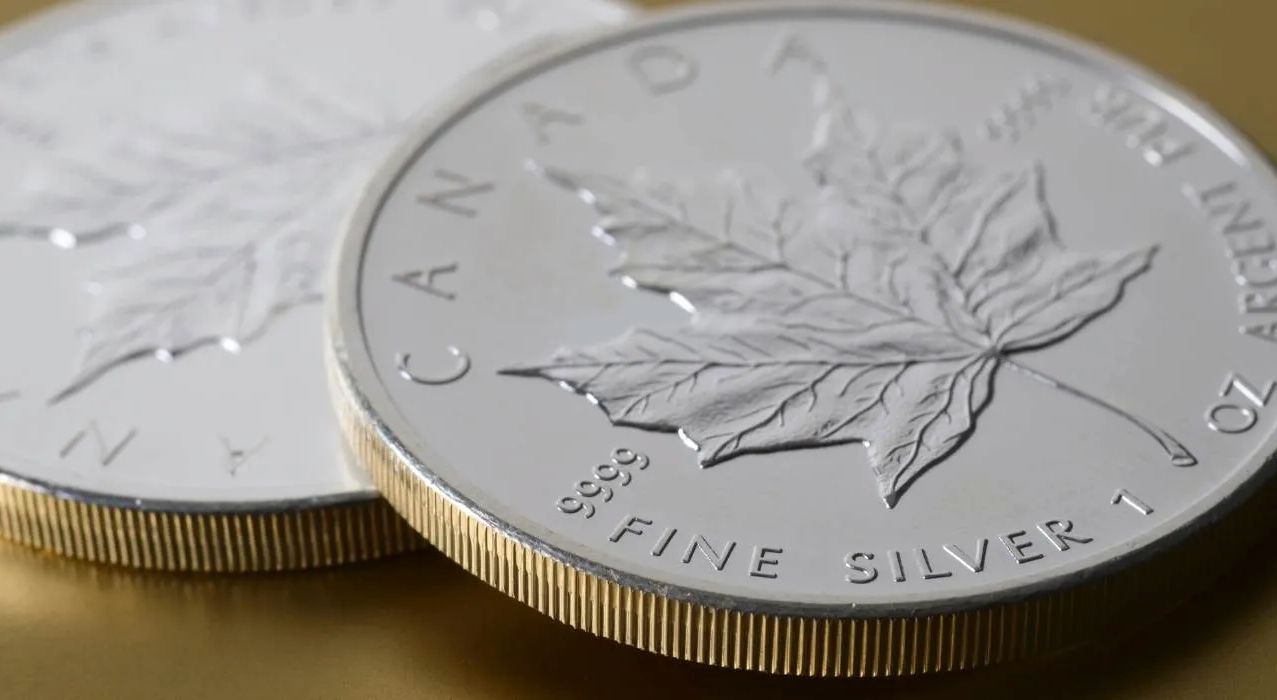
In Canada, the Silver Maple Leaf functions both as an investment vehicle and as official legal tender. Its status as legal tender means it can technically be used to settle debts, though its precious metal content makes this impractical. The coin is primarily traded based on its silver content plus a premium that covers minting, distribution, and a small dealer margin. This premium fluctuates based on supply, demand, and the specific version of the coin, with special editions often commanding higher premiums over the spot price of silver. Investors can purchase the coins directly from the Royal Canadian Mint, through authorized dealers, banks, and bullion retailers across the country.
The coins are typically sold in standard quantities that facilitate bulk trading and storage. The most common commercial unit is a tube containing 25 one-ounce Silver Maple Leaf coins. This standardized packaging simplifies inventory management for dealers and storage for investors. When selling the coins, owners can usually liquidate them quickly through the same network of dealers, with the buy-back price being closely tied to the current spot price of silver, minus a small spread. The coin's high recognition and liquidity make it one of the easiest silver products to buy and sell in the Canadian market.
Key Figures and Annual Mintage
The annual mintage figures for the standard Silver Maple Leaf bullion coin are not fixed in advance, unlike some collectible proof coins. Instead, the Royal Canadian Mint produces coins based on market demand, which can lead to significant yearly variations. Mintages can range from a few hundred thousand coins in slower years to several million in years of high investor interest in silver. This responsive production model means the coin's availability directly reflects global appetite for physical silver bullion. The year 2000 issue holds a particular note as it was sold as an uncirculated bulk coin but bears the Fireworks privy mark, making it a hybrid between the standard bullion series and a special commemorative issue.
The market price for a Silver Maple Leaf is a function of two main components: the underlying spot price of silver and the dealer's premium. The spot price is set by global commodities markets and changes continuously throughout the trading day. The premium covers costs such as minting, distribution, dealer profit, and reflects the coin's collectible or numismatic value, especially for special editions. Premiums for the standard bullion coin are generally lower than for collector versions. It is common for the premium percentage to decrease when purchasing larger quantities, such as full tubes or boxes, due to economies of scale in handling and transaction costs.
Rules, Security, and Authenticity
The Silver Maple Leaf is governed by the Royal Canadian Mint Act, which authorizes the Mint to produce coins on behalf of the Government of Canada. This legal framework provides the coin with its status as legal tender and guarantees its weight and purity. To maintain trust in the series, the Royal Canadian Mint has implemented several security measures. The most visible of these are the radial lines and the micro-engraved laser mark added to all coins since 2014. These features are extremely difficult for counterfeiters to replicate accurately and provide a straightforward method for buyers and dealers to verify a coin's authenticity with magnification.
Potential buyers should be aware of several important considerations. First, while the coin is legal tender, its five-dollar face value is symbolic and does not represent its actual worth. Second, the market value is volatile and tied to the commodities market, meaning the price can rise or fall significantly. Third, although the MINTSHIELD technology has reduced the issue, older coins or coins from other mints may still exhibit milk spots, which can affect their aesthetic appeal to some collectors but typically do not impact the pure metal value. Finally, when purchasing, it is crucial to buy from reputable, authorized dealers to ensure you receive genuine products and fair pricing based on transparent premiums over the spot price.
- Legal Basis: Authorized under the Royal Canadian Mint Act.
- Face Value: Symbolic five-dollar Canadian legal tender status.
- Security Features: Radial lines and a micro-engraved laser mark (post-2014).
- Quality Control: MINTSHIELD technology used to prevent milk spots (since 2018).
- Authenticity Check: Verify weight (31.1g), security features, and purchase from authorized dealers.
- Market Risk: Price is volatile and tied to silver spot prices.
- Storage: Coins should be kept securely to prevent physical damage or loss.
Main Debates and Market Risks
The primary debate surrounding bullion coins like the Silver Maple Leaf concerns their role in an investment portfolio. Proponents view physical silver as a tangible hedge against inflation, currency devaluation, and financial system instability. They argue that government-backed coins offer superior liquidity and recognizability compared to generic bars or rounds. Critics, however, point out that physical precious metals generate no income, incur storage and insurance costs, and can be subject to significant price volatility driven by macroeconomic factors beyond an investor's control. The performance of silver is also influenced by industrial demand, which adds another layer of complexity compared to purely monetary metals like gold.
Investors face several specific risks when holding Silver Maple Leafs. Market risk is the most direct, as the value of the coin fluctuates with the spot price of silver, which can be influenced by interest rates, mining output, and global economic sentiment. Liquidity risk is generally low for the standard bullion coin but can be higher for special edition versions, especially if they carry high premiums that may not be fully recoverable upon resale. Counterfeit risk, while mitigated by modern security features, remains a concern in the secondary market, emphasizing the need to deal with trusted parties. There is also the risk of physical damage or loss if coins are not stored securely, though this is a consideration for any physical asset.
Comparison with Other Major Silver Coins
The Silver Maple Leaf is one of several major government-issued silver bullion coins traded globally. Its main competitors include the American Silver Eagle, the Australian Silver Kangaroo, and the British Silver Britannia. Each of these coins shares similar core characteristics: a one-ounce weight, high purity (typically .999 fine or better), legal tender status in their country of origin, and a recognizable national design. The Silver Maple Leaf distinguishes itself with its 99.99% purity, which is higher than the .999 fineness of the American Silver Eagle. It also features advanced security elements like radial lines, which are not present on all competitor coins.
The choice between these coins often comes down to investor preference, regional availability, and small differences in the premium charged over spot price. Some investors prefer coins from their own country for familiarity and ease of liquidation, while others shop globally for the most competitive price. The Silver Maple Leaf's reputation for quality and the Royal Canadian Mint's innovation, such as the introduction of MINTSHIELD, have helped it maintain a strong position in this competitive market. Its status as a Canadian product also makes it a natural first choice for many investors within Canada, due to its widespread recognition and distribution network across the country.
Frequently asked questions
What is the face value of a Silver Maple Leaf?
The Silver Maple Leaf has a face value of five Canadian dollars, as authorized by the Government of Canada. This nominal value grants the coin its status as legal tender. However, the actual market value of the coin is determined by its silver content and the current spot price, which is almost always significantly higher than five dollars. The face value is largely symbolic and represents the sovereign guarantee behind the coin's weight and purity.
When did the Silver Maple Leaf first come out?
The Silver Maple Leaf was first issued in 1988 by the Royal Canadian Mint. It was introduced as a silver counterpart to the already successful Gold Maple Leaf program. The original obverse featured a portrait of Queen Elizabeth II by Arnold Machin. Since its launch, the coin has been produced annually, with the design of the monarch's portrait updating over time, and a new portrait of King Charles III appearing on coins released from 2024 onward.
What are milk spots on Silver Maple Leafs?
Milk spots are milky-white surface blemishes that could appear on some Silver Maple Leaf coins, caused by residual cleaning detergent on the planchets before annealing. They are a cosmetic issue and do not affect the coin's silver content, weight, or purity. In 2018, the Royal Canadian Mint introduced MINTSHIELD surface protection technology specifically to prevent the formation of these milk spots. While this has greatly reduced the occurrence, older coins in the secondary market may still exhibit this characteristic.
Are Silver Maple Leafs a good investment?
Silver Maple Leafs are a widely recognized and liquid form of physical silver investment, backed by the Canadian government. Their value is tied to the price of silver, which can act as a hedge against inflation and currency fluctuations. However, like all commodity investments, the price is volatile and can go down as well as up. They do not generate income and may involve costs for secure storage and insurance. Their suitability depends on an individual's investment goals, risk tolerance, and desire for tangible assets.
How can I tell if my Silver Maple Leaf is real?
Authentic Silver Maple Leafs, especially those minted from 2014 onward, feature specific security elements including radial lines on the reverse and a micro-engraved laser mark. These are difficult to counterfeit accurately. The coin should also have the correct weight of one troy ounce (31.1 grams) and the proper dimensions. Purchasing from the Royal Canadian Mint or an authorized dealer is the best way to ensure authenticity. For coins already in possession, having them examined and verified by a reputable coin dealer or using a precious metals verifier can provide assurance.
How pure is the silver in a Canadian Silver Maple Leaf?
The Canadian Silver Maple Leaf is struck in 99.99% fine silver, which is among the highest purities available for any official bullion coin worldwide. This high purity level is a key selling point and is prominently displayed on the coin itself with the inscription FINE SILVER 1 OZ ARGENT PUR. The Royal Canadian Mint guarantees this purity and the coin's one troy ounce weight. The 99.99% silver content makes the coin one of the finest official bullion coins globally.
Sources and further reading
- Silver Maple Leaf (Wikipedia) en.wikipedia.org
- Maple Leaf Bullion Coins mint.ca
- 1 oz Canadian Silver Maple Leaf Coins online.kitco.com
This article explains how things work and is not financial, tax or legal advice. Rules, limits and rates change, so check the current figures with the Canada Revenue Agency, your province or your financial institution before you act.