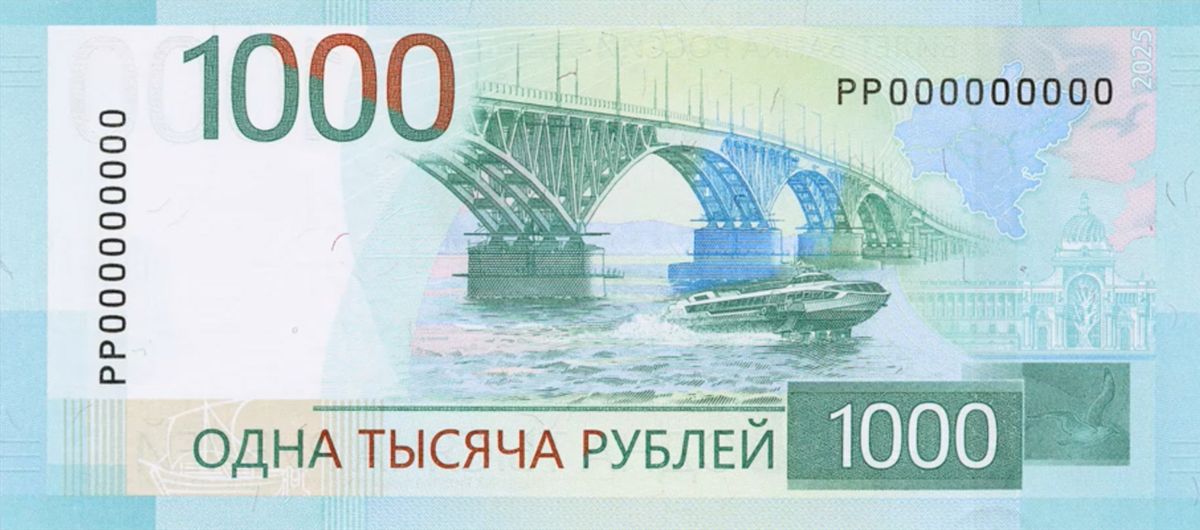
The Russian ruble is the official currency of the Russian Federation, issued by the Central Bank of Russia. It is the second-oldest currency in continuous use after British sterling and was the world's first decimal currency. For Canadians, the ruble is relevant for understanding global markets, historical currency developments, and the financial implications of international events. Its exchange rate with the Canadian dollar fluctuates based on economic conditions and geopolitical factors.
What Is the Russian Ruble?
The ruble, also spelled rouble, is the legal tender of the Russian Federation. Banknotes and coins are produced and issued by the Central Bank of Russia, which operates as an independent monetary authority. The currency is technically subdivided into 100 kopeyka, though kopeck coins are now rarely used in everyday transactions due to inflation. The ruble is a free-floating currency, meaning its value is determined by foreign exchange markets. In 2023, Russia introduced a digital version of the ruble. Beyond Russia's borders, the ruble also serves as a de facto legal tender in the Baikonur Cosmodrome territory in Kazakhstan, Abkhazia, and South Ossetia.
Etymology and Spelling Conventions
The origin of the word ruble is debated. One common theory suggests it derives from the Russian verb 'rubit', meaning to cut or chop, referring to cut pieces of a silver grivna, an ancient monetary weight. Another version posits it comes from the noun 'rubets', meaning the seam left on a silver ingot after casting. Historically, the ruble was equivalent to the mark, a medieval weight for precious metals. In English, both spellings ruble and rouble are used. American and some Canadian authors tend to use ruble, while other English-speaking authors often use rouble, a form preferred by the Oxford English Dictionary and likely derived from French transliteration used by the Tsarist aristocracy. The plural forms in Russian change based on grammatical rules, with endings for рубль, рубля, and рублей. In several languages spoken in Russia and the former Soviet Union, the currency has different names, such as som or manat, which have no etymological relation to ruble.
Historical Development of the Ruble
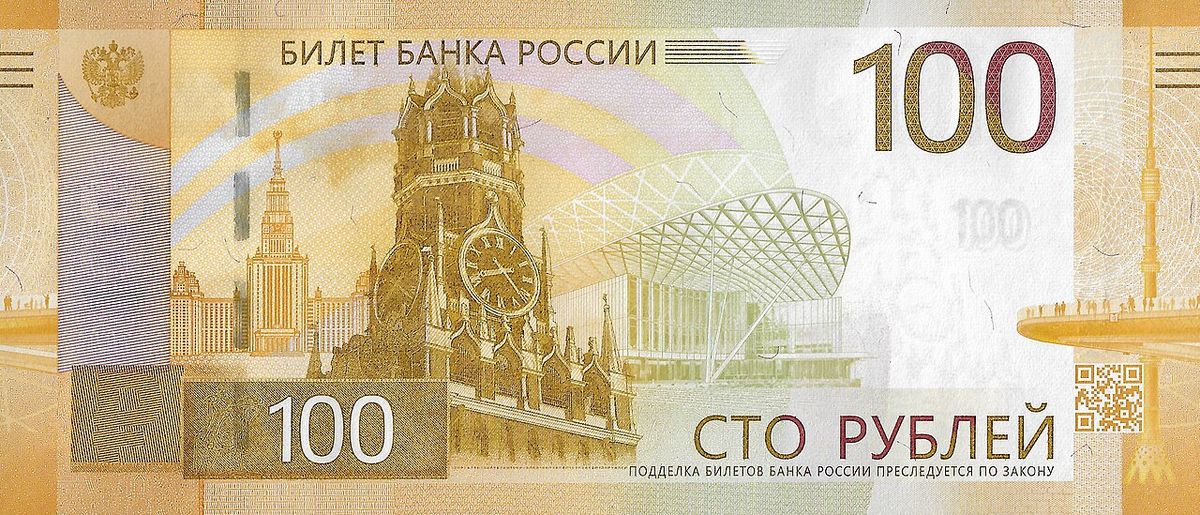
The ruble's history spans from medieval times to the modern Russian Federation. It first appeared as an accounting unit in Russian chronicles in 1316. The coinage system was originally tied to weights, with the grivna as a basic unit. By the 14th and 15th centuries, the ruble replaced the grivna as the primary unit. A significant reform occurred in 1704 under Peter the Great, who minted a silver ruble coin subdivided into 100 copper kopecks, making it the first decimal currency in Europe. The Imperial ruble, based on silver and later gold, lasted until the Russian Revolution. The Soviet ruble (SUR) replaced it in 1922 and was the sole currency of the USSR until its dissolution. In 1992, the Russian Federation introduced the Russian ruble (RUR) at par with the Soviet ruble. This currency was used in a post-Soviet ruble zone until 1993. A major redenomination occurred in 1998, creating the current ruble (RUB) at a rate of 1 new ruble equalling 1,000 old rubles.
Key Historical Periods and Redenominations
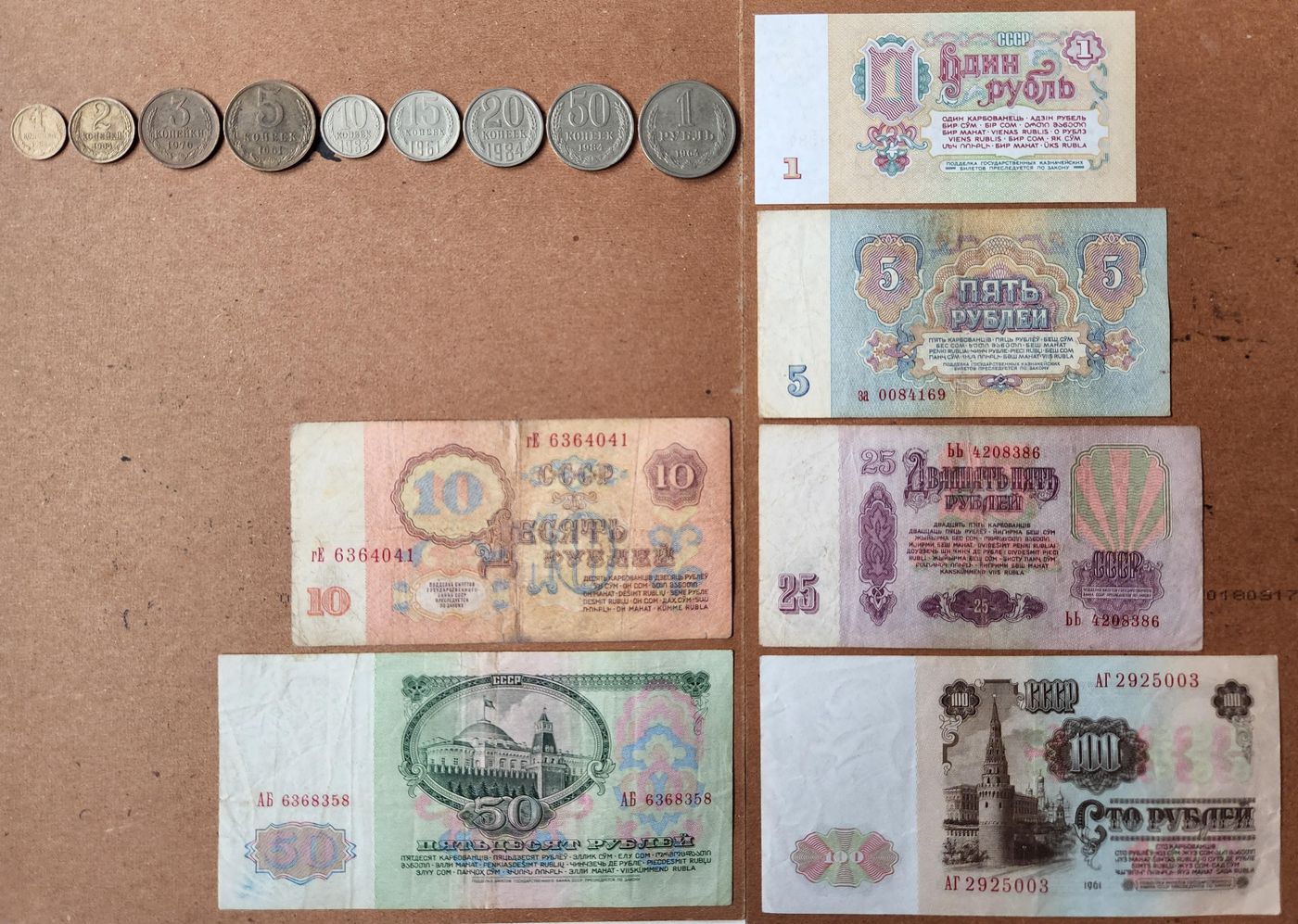
The ruble has undergone several major transformations through Russia's political changes. Its value and form have been repeatedly altered by reforms, wars, and economic crises. The 1998 redenomination was an administrative effort to simplify the currency but coincided with the onset of a severe financial crisis that saw the ruble's value plummet from about 6 per US dollar to roughly 20 per dollar within six months. The redenomination exchanged 1,000 old rubles (RUR) for 1 new ruble (RUB) and qualified all Soviet coins from 1961 to 1991 and pre-1961 1-3 kopeck coins for exchange.
- Medieval Origins (1316 onwards): First chronicle mention as an accounting unit. Tied to the weight of silver grivnas.
- Peter the Great's Reform (1704): Introduction of a minted silver ruble coin and the world's first decimal system with 100 kopecks.
- Imperial Standard (1885 to 1897): Gold standard adopted, pegging the ruble to the French franc at 1 ruble = 4 francs, later revised to 1 ruble = 2 2/3 francs.
- Soviet Ruble (1922 to 1991): Currency of the USSR, replacing the Imperial ruble. Banknotes had values printed in the languages of all 15 Soviet republics.
- Post-Soviet Ruble (RUR) (1992 to 1998): Introduced after USSR dissolution. Hyperinflation led to high-denomination notes up to 500,000 rubles in 1997.
- Modern Redenomination (1998): Introduction of current RUB, exchanging 1,000 RUR for 1 RUB.
- Recent Developments (2023): Launch of the digital ruble by the Central Bank of Russia.
Imperial and Soviet Ruble Details
Under the Imperial system, the ruble was a coin-based currency. The silver ruble coin introduced in 1704 weighed 28.1 grams and was 72% fine, containing 20.22 grams of pure silver. Gold and platinum coins were also minted for higher values. Banknotes entered circulation in 1769 under Catherine the Great as Assignation rubles. These were later replaced by state credit notes in 1843. The Soviet ruble era saw the currency managed by the State Bank of the USSR. Following the dissolution of the Soviet Union in 1991, the Soviet ruble remained in use in Russia until 1992 and in other post-Soviet states for varying periods, forming a ruble zone. The Central Bank of Russia ended this zone by restricting credit flows in 1992 and exchanging banknotes on Russian territory at the end of 1993, effectively pushing other countries out. The RUR ruble used in this zone depreciated from about 125 per US dollar in July 1992 to approximately 6,000 per dollar by 1998.
Modern Ruble Exchange Rate History and Volatility
The value of the Russian ruble has been highly volatile, influenced by domestic policy, commodity prices, and international events. Following the 1998 redenomination, the ruble immediately faced a crisis, losing about 70% of its value against the US dollar within six months, falling from roughly 6 rubles per dollar to around 20. It then stabilized at approximately 30 rubles per dollar from 2001 to 2013. A period of depreciation began in 2014, driven by the annexation of Crimea and a global oil glut, pushing the exchange rate to a range of 60 to 80 rubles per dollar through 2021. The 2022 Russian invasion of Ukraine triggered further decline due to international sanctions, with the rate falling to around 110 rubles per dollar. The ruble experienced sharp fluctuations in 2022, briefly falling to 150 per dollar in early March before recovering above its pre-invasion level in April, followed by a steady decline through mid-2023. The RUR ruble preceding the 1998 reform also depreciated massively, from about 125 per US dollar in July 1992 to approximately 6,000 per dollar by 1998.
The Ruble and the Canadian Dollar (RUB/CAD)
For Canadians, the exchange rate between the Russian ruble and the Canadian dollar is a practical consideration for money transfers, investment analysis, or historical comparison. The rate fluctuates constantly. Financial services that facilitate transfers from Canada to Russia allow conversions from CAD to RUB. These services often promote real-time mid-market exchange rates and low fees for international money transfers. The performance of the RUB/CAD pair shows significant variation over short periods, with 30-day averages and changes being commonly tracked by currency platforms. For example, recent performance data showed a 30-day high of 0.0171 and a low of 0.0166 for the RUB/CAD rate, with a 30-day average of 0.0169. Over 90 days, the high was 0.0182 and the low was 0.0159, with an average of 0.0168.
Current Exchange Rate Context for Canadians
Canadians looking to convert currency can use online platforms or money transfer services that support the CAD to RUB pair. These services typically allow users to send money online or via mobile apps, with options for cash pickup or bank delivery in Russia. It is important for users to compare exchange rates and be aware of potential fees, such as those associated with credit card cash advances, to understand the total cost of a transfer. Many services advertise moving money from Canada to over 200 countries, including Russia, and emphasize the use of the mid-market exchange rate without hidden markups. They also provide tools like historical charts and rate alerts to help users track performance over time.
| Metric | Value |
|---|---|
| 1 RUB to CAD (approx.) | 0.017 |
| 30-day average RUB/CAD | 0.0169 |
| 30-day high RUB/CAD | 0.0171 |
| 30-day low RUB/CAD | 0.0166 |
| 90-day average RUB/CAD | 0.0168 |
| 90-day high RUB/CAD | 0.0182 |
| 90-day low RUB/CAD | 0.0159 |
Risks and Considerations for the Ruble
The Russian ruble faces several ongoing risks and debates that impact its stability and perception. Its value is heavily influenced by geopolitical tensions and international sanctions, as seen following the 2022 invasion of Ukraine. The currency's free-floating status means it is susceptible to sharp volatility based on market sentiment and capital flows. The introduction of a digital ruble in 2023 represents a significant modernisation of the monetary system but also raises questions about financial control and privacy. Furthermore, the ruble's use outside Russia is limited, and its acceptance in global trade has been constrained by economic isolation measures. These factors combine to make the ruble a currency subject to high political and economic risk. The ruble's banknotes and coins have also been notable for their lack of portraits since the Soviet Union's dissolution, a break from Tsarist and Communist traditions, though recent high-denomination notes feature statues of historical figures like Peter the Great.
Frequently asked questions
What is the Russian ruble?
The Russian ruble is the official currency of the Russian Federation, issued by the Central Bank of Russia. It is subdivided into 100 kopecks, though kopeck coins are now rarely used due to inflation. The ruble is the second oldest currency in continuous use, after British sterling, and was the world's first decimal currency, decimalised in 1704. Historically, it served as the currency of the Russian Empire and later the Soviet Union. Today, it is a free floating currency and is also used as de facto legal tender in Baikonur, Abkhazia, and South Ossetia.
What happened to the ruble in 1998?
In 1998, the Russian ruble was redenominated. The old ruble, coded RUR, was replaced by a new ruble, coded RUB, at a rate of 1 new ruble for every 1000 old rubles. This administrative step reduced the unwieldiness of the old currency. However, it occurred on the brink of the 1998 Russian financial crisis. Following that crisis, the ruble lost 70% of its value against the US dollar within six months, plummeting from about 6 rubles per dollar to approximately 20 rubles per dollar.
Why is the ruble considered a high risk currency?
The ruble is considered high risk due to its history of severe volatility and devaluation during economic crises. It suffered hyperinflation in the early 1920s and again after the Soviet Union's dissolution, when its exchange rate fell from 125 RUR per US dollar in 1992 to about 6000 RUR per dollar by 1998. More recently, its value has been highly sensitive to geopolitical events and sanctions, such as the sharp decline following the 2022 invasion of Ukraine. Its value is also closely tied to commodity prices like oil, contributing to its instability.
Is there a digital Russian ruble?
Yes, a digital ruble was introduced by the Central Bank of Russia in 2023. This initiative represents the creation of a central bank digital currency for the Russian Federation. The digital ruble is part of a modernisation effort for the national financial system. It exists alongside the physical banknotes and coins issued by the central bank, which remains Russia's independent monetary authority.
What was the Soviet ruble?
The Soviet ruble, with the ISO code SUR, was the official currency of the Union of Soviet Socialist Republics from 1922 until the state's dissolution in 1991. It replaced the Imperial ruble and was the sole currency across the Soviet Union, issued by the State Bank of the USSR. Following the breakup, it continued to be used in 15 post Soviet states until being replaced by new national currencies by the end of 1992. In Russia, it was replaced at par by the Russian ruble, coded RUR, in 1992.
Sources and further reading
- Russian ruble (Wikipedia) en.wikipedia.org
- Russian rubles to Canadian dollars today wise.com
- CAD to RUB | Convert Canadian Dollar to Russian Rouble westernunion.com
- Calculate Russian Ruble to Canadian Dollar exchange rate alanchand.com
- Convert Russian Roubles to Canadian Dollars | RUB to CAD currency.me.uk
- Convert Canadian Dollar to Russian Ruble instarem.com
This article explains how things work and is not financial, tax or legal advice. Rules, limits and rates change, so check the current figures with the Canada Revenue Agency, your province or your financial institution before you act.