The pound sterling, symbolized by £ and coded as GBP, is the official currency of the United Kingdom and several of its territories. It is the world's oldest currency still in continuous use and ranks as the fourth-most-traded currency globally. For Canadians, the pound sterling is a significant foreign currency, with exchange rates influencing travel, trade, and investment decisions. Understanding its value against the Canadian dollar is essential for financial planning and international transactions.
What Is the Pound Sterling?
The pound sterling is the official currency of the United Kingdom, its Crown Dependencies, and some British Overseas Territories. Its base unit is the pound, which is subdivided into 100 pence. The currency's symbol is £, derived from the Latin 'libra' for pound weight, and its international currency code is GBP. Sterling holds a unique position as the world's oldest currency still in continuous use, a status it has maintained since its inception in Anglo-Saxon England. As of 2025, it was the fourth-most-traded currency in the foreign exchange market, following the US dollar, the euro, and the Japanese yen. Alongside those currencies and the Chinese renminbi, it forms the basket used to calculate the value of the International Monetary Fund's special drawing rights.
The Bank of England serves as the central bank for sterling, issuing banknotes for use in England and Wales. It also regulates the issuance of banknotes by private banks in Scotland and Northern Ireland, such as the Bank of Scotland and Danske Bank. Sterling banknotes issued by other jurisdictions, like the Crown Dependencies, are not regulated by the Bank of England but are guaranteed by their respective governments to be convertible at par. Historically, sterling was used across the British Empire, influencing monetary systems in many former colonies. The currency's slang term, 'quid', is used for both singular and plural amounts, while the exchange rate against the US dollar is known in wholesale markets as 'cable', a term originating from 19th-century transatlantic telegraph cables.
History and Evolution of Sterling
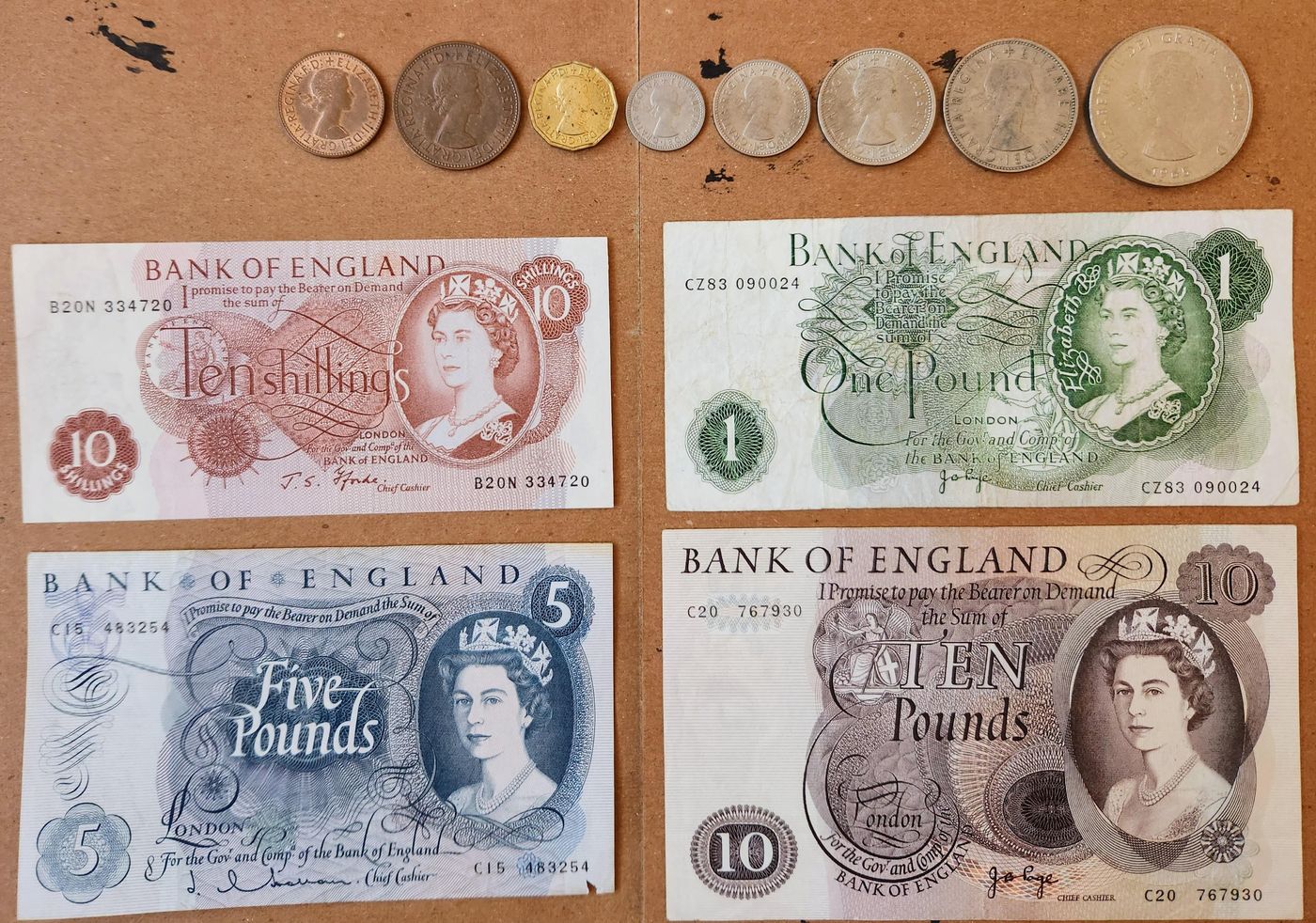
The pound sterling's origins trace back to the reign of King Offa of Mercia in the 8th century, who introduced a silver 'sterling' coin. The system was based on a Tower Pound of silver divided into 240 parts, creating the basis for the pounds, shillings, and pence system. The term 'sterling' likely derives from the Old English 'steorling', meaning 'coin with a star', though other theories suggest it meant 'strong'. The accounting system of 12 pence to a shilling and 20 shillings to a pound was adopted from the Carolingian monetary system introduced by Charlemagne. For centuries, the English penny, made of sterling silver, remained a stable exception to the coinage debasements common in Europe.
Significant changes occurred over the centuries, often driven by war and economic pressure. During the Hundred Years' War, King Edward III introduced gold coins, unsettling the currency for 200 years. The Great Debasement of the 16th century under King Henry VIII saw a one-third reduction in the silver content of the pound. The gold guinea, introduced in 1663, was eventually fixed at a value of 21 shillings in 1717. The pre-decimal system of pounds, shillings, and pence, with its many denominations like farthings, florins, and crowns, persisted until 1971. Decimalisation on Decimal Day in 1971 simplified the currency, dividing the pound into 100 new pence, a system that remains today.
- c. 800: Adoption of Carolingian monetary system in England.
- 1158: King Henry II introduces the Tealby penny, defining sterling silver.
- 1351: King Edward III introduces gold nobles, creating a gold-silver standard.
- 1551: The Great Debasement reduces silver content by one-third.
- 1663: Introduction of the gold guinea.
- 1717: Gold guinea fixed at 21 shillings.
- 1816: Introduction of the formal Gold Standard.
- 1971: Decimalisation: pound divided into 100 new pence.
The Pound Sterling in Canada
While Canada now uses the Canadian dollar, the pound sterling has historical ties to the country. The pound currency, also symbolized by £, was the unit of account in the French colony of Canada while under British military governorship and in the Province of Quebec. Today, the relationship is defined by the foreign exchange market, where the GBP to CAD rate is a key financial indicator for cross-border trade, investment, and travel. Canadians converting currency for trips to the UK, receiving payments from British businesses, or investing in UK assets must closely monitor this exchange rate. The performance of the pound against the Canadian dollar fluctuates based on economic conditions in both countries and global market sentiment.
Financial institutions and money transfer services in Canada offer currency conversion and international transfer services for GBP. When converting funds, consumers encounter the mid-market rate, which is the midpoint between global buy and sell prices. For example, a recent mid-market rate showed £1 equal to C$1.8808. However, the rate offered to consumers typically includes a margin or service fee, making the actual cost different from the pure mid-market rate. It is crucial for Canadians to compare total costs, including fees and the applied exchange rate margin, when choosing a service provider for converting or sending pounds sterling.
Current GBP to CAD Exchange Rates and Trends
The exchange rate between the British pound and the Canadian dollar is dynamic, changing throughout the day based on global financial markets. Recent data provides insight into short-term trends and volatility. Over a 30-day period, the GBP to CAD rate moved between a high of 1.8885 and a low of 1.8672, with an average of 1.8812. The change over that period was 0.24 percent. Looking at a 90-day window, the rate saw a high of 1.8919 and a low of 1.8656, with an average of 1.8794 and a total change of 0.30 percent. These figures illustrate the moderate volatility typical of this major currency pair, influenced by factors like interest rate decisions, economic data releases, and geopolitical events.
For Canadians planning transactions, understanding these trends is important. The mid-market rate serves as a benchmark, but the actual rate received will depend on the provider. Banks and money transfer services apply their own margins to the mid-market rate, which can significantly affect the final amount received. It is advisable to check live rates and fees immediately before conducting a transaction, as they can change rapidly. Many services allow users to set up rate alerts to be notified when the pound reaches a desired level against the Canadian dollar, helping to lock in a favourable rate.
| Time Period | High Rate | Low Rate | Average Rate | Change |
|---|---|---|---|---|
| Last 30 Days | 1.8885 | 1.8672 | 1.8812 | 0.24% |
| Last 90 Days | 1.8919 | 1.8656 | 1.8794 | 0.30% |
| Last 7 Days | 1.8864 | 1.8775 | 1.8832 | 0.16% volatility |
How Canadians Can Exchange and Transfer Pounds
Canadians have several options for obtaining pounds sterling or sending money to the United Kingdom. These include banks, dedicated foreign exchange brokers, online transfer specialists, and postal services. Each provider has its own fee structure and exchange rate margin, which together determine the total cost. The mid-market rate, such as £1 = C$1.8807, is a reference point but is not the rate consumers receive. Providers build a profit margin into the rate they offer, so the consumer rate will be less favourable. It is essential to look at the total amount of Canadian dollars required to receive a specific amount in pounds, as this incorporates all costs.
Common methods include ordering currency online for branch pickup or home delivery, using a prepaid travel money card loaded with pounds, or conducting an international bank transfer. For larger transfers, specialized currency brokers often offer more competitive rates than traditional banks. When sending money, key details to review include the exchange rate applied, any flat transfer fees, the estimated delivery time, and the payout method for the recipient. Many services allow you to see a full cost breakdown before confirming the transaction. Security measures, such as encryption and fraud monitoring, are standard for reputable providers to protect international money transfers.
- Compare total costs (exchange rate margin + fees) across providers.
- Check if the service offers rate alerts to lock in a desired rate.
- Review delivery options: bank deposit, cash pickup, or card load.
- Ensure the provider uses security measures like encryption.
- Use the mid-market rate as a benchmark, not an expectation.
- Confirm all recipient details are correct before sending.
Key Considerations and Risks for Canadians
The primary consideration for Canadians dealing with pound sterling is exchange rate risk. The value of the pound fluctuates against the Canadian dollar, meaning the cost of a future payment or the value of an investment can change unexpectedly. This volatility is evident in the daily, weekly, and monthly movements recorded in the foreign exchange market. Economic announcements from the Bank of England or the Bank of Canada, political events, and shifts in global commodity prices can all cause rapid changes in the GBP/CAD rate. Individuals and businesses must decide whether to accept this risk or use financial tools to hedge against it.
Another important factor is the cost structure of currency exchange services. The difference between the advertised mid-market rate and the rate actually offered can represent a significant hidden cost. Some providers charge low or no upfront fees but apply a large margin to the exchange rate. Others may have a higher fixed fee but a more competitive rate. Canadians should always calculate the final amount of Canadian dollars required to obtain a set amount of pounds to make an accurate comparison. Furthermore, when travelling, using Canadian dollars directly in the UK is generally not accepted, so obtaining pounds beforehand or using a card that does not charge foreign transaction fees is advisable to avoid poor exchange rates at airports or tourist locations.
Frequently asked questions
What is the current British pound to Canadian dollar exchange rate?
The exchange rate fluctuates constantly. A recent mid-market rate, which is the benchmark midpoint between global buy and sell prices, was £1 = C$1.8808. However, the rate you receive from a bank or money transfer service will include a margin, so the actual rate will be different. It is best to check a reliable financial source or your service provider for a live quote before making a transaction.
What does the mid-market rate mean?
The mid-market rate is the midpoint between the buy and sell prices for a currency pair in the global interbank market. It is the purest reflection of a currency's value at any given moment and is often used as a benchmark. However, consumers do not receive this rate when exchanging money commercially. Banks and currency services add a margin to this rate to generate revenue, so the rate you are offered will be less favourable.
Are there fees for sending money from Canada to the UK?
Yes, there are almost always costs involved. Fees can vary significantly depending on the provider, the amount sent, the payment method, and the chosen delivery speed. Costs may be presented as a flat transfer fee, a percentage of the amount sent, or built into the exchange rate margin. Reputable providers will show you the total cost, including all fees and the final exchange rate, upfront before you confirm the transaction.
Can I use Canadian dollars in the United Kingdom?
No, Canadian dollars are not accepted as currency in the United Kingdom. You will need to exchange your Canadian dollars for British pounds sterling before your trip or upon arrival. It is generally more cost-effective to obtain pounds before travelling, as exchange rates at airports or hotels are often less favourable. Using a Canadian credit or debit card is possible, but be aware of potential foreign transaction fees applied by your card issuer.
How can I convert Canadian dollars to British pounds?
You can convert Canadian dollars to British pounds using various financial services. The mid-market exchange rate is the benchmark, such as £1 equalling $1.8808 CAD as of a recent check. Specific providers like Western Union offer currency converters to check live rates and manage transfers, while postal services may allow you to order physical currency for travel. The process generally involves comparing the offered rate against the mid-market rate, accounting for any fees, and choosing to receive cash, a prepaid card, or a bank transfer.
Why does the GBP to CAD exchange rate change?
The GBP to CAD exchange rate fluctuates due to trading in the global foreign exchange market, where sterling is the fourth-most-traded currency. Rates change based on supply and demand dynamics influenced by economic data, interest rate decisions from the Bank of England and the Bank of Canada, and relative economic performance. This results in a constantly moving rate, with observed 30-day highs and lows, such as a recent range between 1.8672 and 1.8885 CAD for one pound. Market sentiment and geopolitical events also contribute to these daily changes.
Sources and further reading
- Pound sterling (Wikipedia) en.wikipedia.org
- British pounds sterling to Canadian dollars today wise.com
- 1 GBP to CAD, Convert British Pounds to Canadian Dollars xe.com
- CAD to GBP | Convert Canadian Dollar to British Pound westernunion.com
- Pounds GBP to Canadian dollars CAD exchange rate postoffice.co.uk
This article explains how things work and is not financial, tax or legal advice. Rules, limits and rates change, so check the current figures with the Canada Revenue Agency, your province or your financial institution before you act.