The Polish złoty is the official currency of Poland, subdivided into 100 groszy. It is the most-traded currency in Central and Eastern Europe and ranks 20th in the global foreign exchange market. For Canadians, the złoty is relevant for travel, remittances, and business with Poland, with exchange rates fluctuating based on market conditions. Understanding its history, current form, and how to obtain it in Canada can help manage costs and transfers effectively.
What Is the Polish Złoty?
The Polish złoty is the sole legal tender of Poland, with the currency code PLN. Its name translates to 'golden', a legacy from historical gold coins used in the region. The currency is subdivided into 100 groszy, a shift from the traditional 30 groszy subdivision used before 1924. The official symbol is zł, composed of the lowercase letters z and ł. The National Bank of Poland oversees monetary policy, while physical banknotes and coins are produced exclusively by the Polish Security Printing Works, founded in Warsaw on 25 January 1919, and Mennica Polska, the mint founded in Warsaw on 10 February 1766. The złoty is a freely convertible currency and is the most actively traded in Central and Eastern Europe, holding the 20th position globally in foreign exchange market turnover. The subunit, the grosz, has a symbol represented by lowercase gr and its name is cognate to the English word groat.
Historical Development: From Ducats to Modern PLN
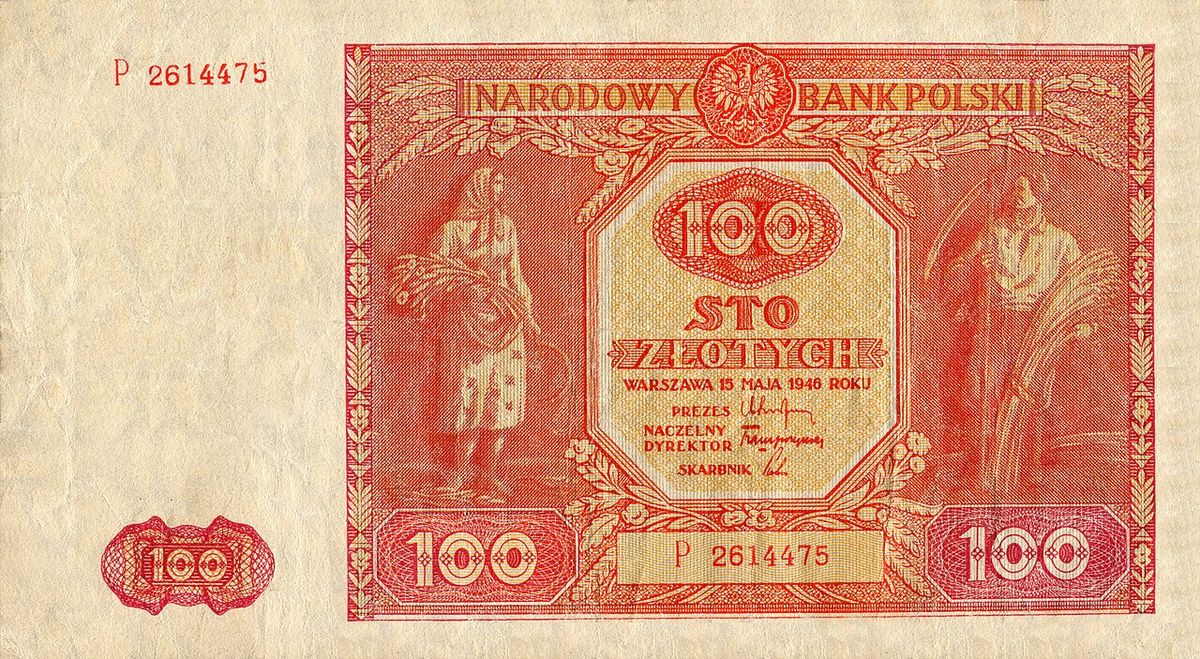
The concept of the złoty dates back to the 14th and 15th centuries when the term was used for foreign gold coins like Venetian ducats, florins, and guldens. In 1496, the Sejm parliament approved the złoty as a domestic unit of account, setting an exchange rate of 30 grosz for one gold piece. It became formal legal tender through a minting ordinance on 16 February 1528, following monetary reforms proposed by Nicolaus Copernicus and Justus Decius. For centuries, the Polish monetary system was complex, using various units until a reform by King Stanisław II Augustus standardized the złoty, dividing it into 30 groszy and linking it to the Conventionsthaler at a rate of 8 złoty to 23.3856 grams of fine silver. The first Polish banknotes were issued on 13 August 1794 during the Kościuszko Uprising, as the insurrectionist government needed a substitute for scarce coinage to finance defense.
After the Partitions of Poland, the currency persisted in some regions. The Duchy of Warsaw under Napoleon issued coins in grosz, złoty, and talars. Following the 1815 Congress of Vienna, the złoty remained in use in the Austrian and Russian sectors of partitioned Poland. In the Russian sector, Congress Poland pegged the złoty at 15 kopecks (0.15 Imperial roubles) in 1815, and silver coins from 1 to 10 złotych were minted until 1855. After the 1830 November Uprising, insurrectionists issued their own 'rebel money', including golden ducats and silver 2 and 5 złoty coins. The Russian ruble eventually became the sole legal tender in Congress Poland from 1842, although złoty-marked coins minted in Warsaw remained legal until 1890. During World War I, the Polish marka, equivalent to the German mark, replaced the rouble and krone, leading to extreme instability and galloping inflation after independence.
The Modern Złoty: Redenomination and Design
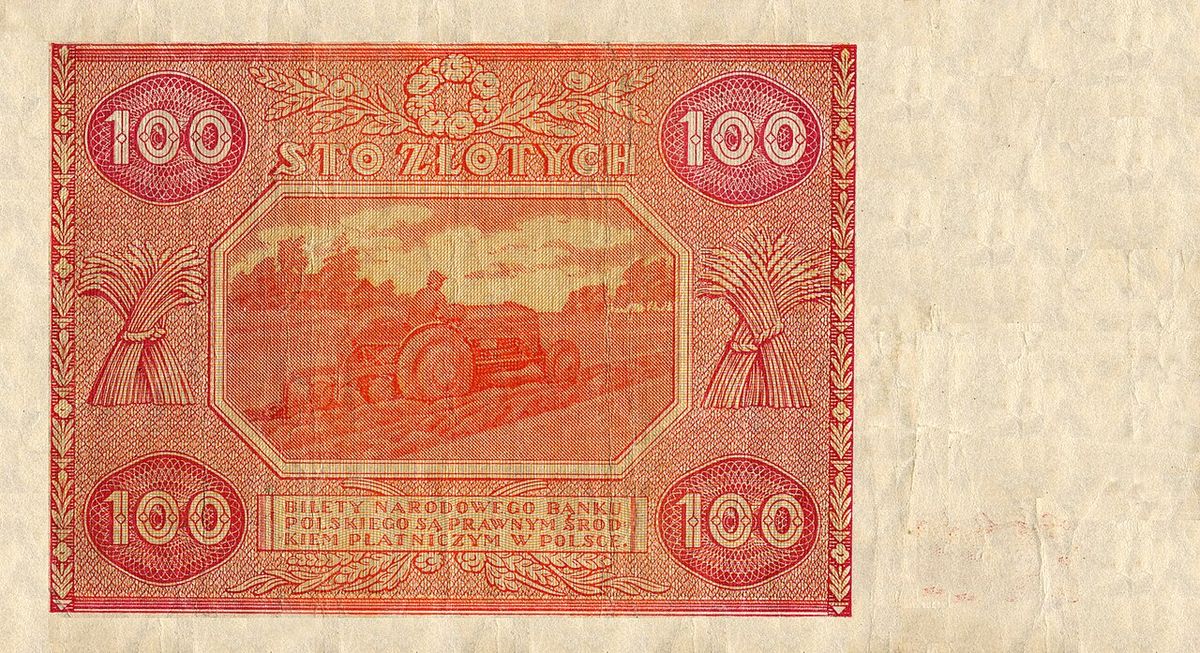
The modern złoty was reintroduced by Finance Minister Władysław Grabski in April 1924, replacing the marka at a rate of 1 złoty to 1,800,000 marks and establishing the 100 groszy subdivision. It was initially pegged to the US dollar via a stabilization loan. After a period of instability, it stabilized in 1926 and was placed on the gold standard until 1933. During World War II, German occupation authorities created an Emissary Bank in Kraków, which started operating on 8 April 1940, overstamping old banknotes from 1924 to 1939 and enforcing a fixed exchange rate of 2 złoty per 1 Reichsmark. After the war, the National Bank of Poland was formed on 15 January 1945, issuing new notes designed by Ryszard Kleczewski and Wacław Borowski.
The third złoty (PLZ) was introduced in 1950, replacing all earlier notes at a rate of one hundred to one, with 1 złoty defined as worth 0.222168 grams of pure gold. Banknotes were issued in denominations from 10 zlotych to 5 million zlotych. Following the fall of communism and hyperinflation in the early 1990s, a major redenomination was enacted. Approved on 11 May 1994 and ratified on 7 July 1994, the fourth złoty (PLN) entered circulation on 1 January 1995, where 1 new złoty equalled 10,000 old złoty (PLZ). New banknotes featuring Polish monarchs were initially printed by De La Rue in London until 1997, then by PWPW in Warsaw. Between 2013 and 2014, the notes received updated security features including a white-coloured field with a watermark and elements of the EURion constellation. A 500-złotych banknote entered circulation on 10 February 2017, and a commemorative 19 złotych note was released on 2 October 2019.
Banknote Specifications and Security
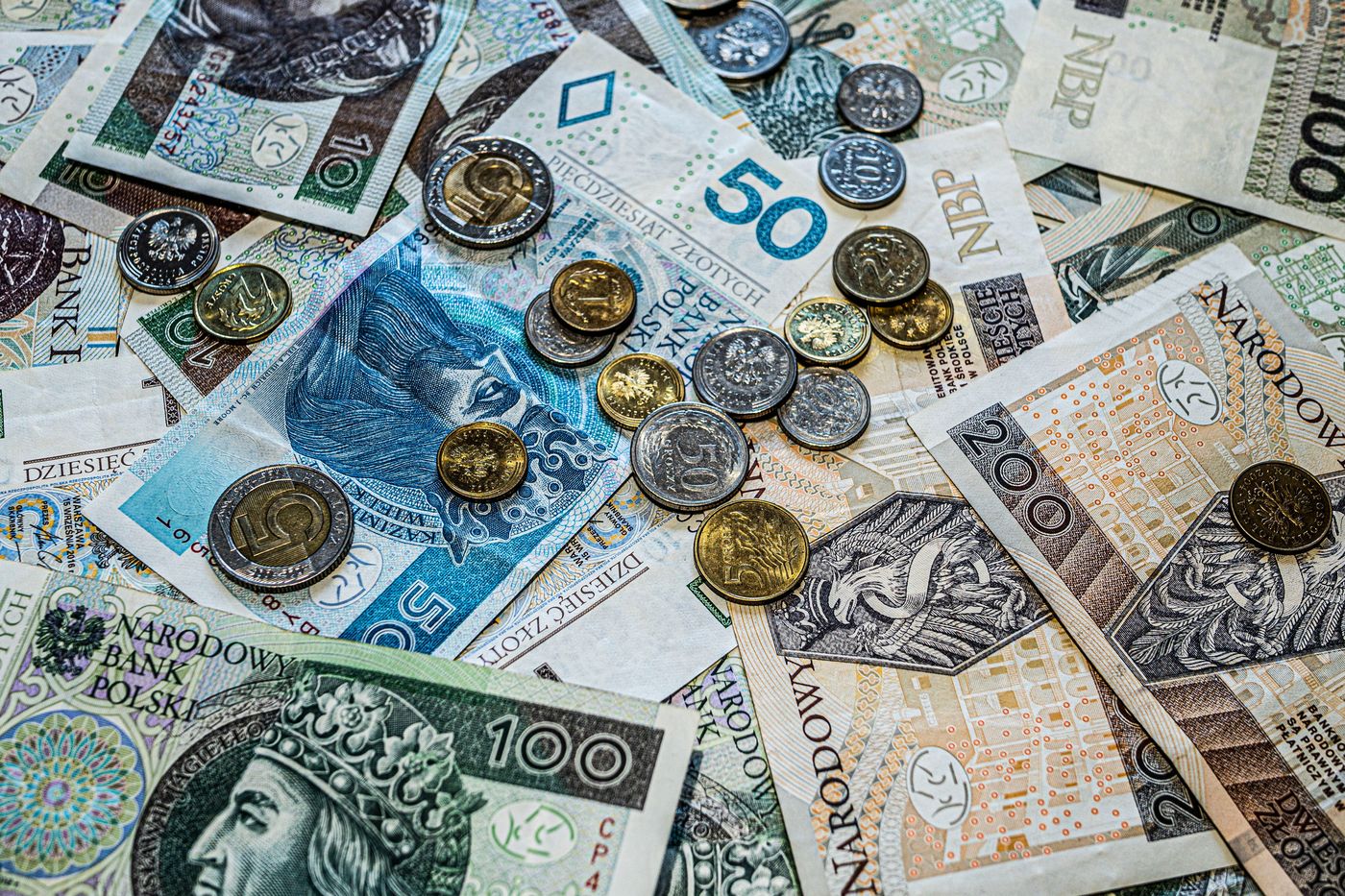
Modern Polish banknotes have precise physical dimensions, ranging from 120 to 150 millimetres in length and 60 to 75 millimetres in width. The length increases by 6mm and the width by 3mm with each higher denomination. The obverse consistently features a left-profile portrait of a Polish monarch in armour or regalia, arranged chronologically by reign. The reverse illustrates important historical landmarks, early coinage, or significant objects. Architectural elements like portals, columns, and windows, along with floral motifs, are integrated into the design on both sides. Predominant colours include shades of brown, pink, purple, blue, green, and gold. The face value is displayed numerically in the upper-left and upper-right corners on the obverse, and in the upper-right corner on the reverse. The written form of the value is embedded vertically on the obverse and horizontally on the reverse. Each note bears the eagle charge from the Polish coat of arms and the signatures of the President and General Treasurer of the National Bank of Poland. The updated security features from 2013 to 2014 include a distinctive white field with a watermark and randomly arranged dotting that is part of the EURion constellation, a pattern used to prevent digital counterfeiting.
Exchange Rates and Converting Złoty in Canada
For Canadians, the exchange rate between the Canadian dollar and the Polish złoty is dynamic and influenced by global financial markets. This rate fluctuates based on factors including relative economic performance, interest rate differentials, and geopolitical events. Historical data shows volatility over different periods. Over a recent 7-day period, the CAD to PLN rate moved between 2.7441 and 2.7624, with an average of 2.7507. Over 30 days, the range was 2.7008 to 2.7624, and over 90 days, it was 2.6487 to 2.7624. The performance of PLN to CAD saw a 30-day high of 0.3702 and a low of 0.3613, with a change of -2.42% over that period. Canadians looking to exchange currency should note that the mid-market rate is a wholesale reference point. Actual rates offered by financial institutions will include a margin or fee, affecting the final cost.
Several methods exist for Canadians to obtain Polish złoty. Specialized currency exchange services allow you to order złoty cash online for home delivery anywhere in Canada, often at rates better than major banks, with delivery typically in two business days via Canada Post. These services often promote having no foreign exchange fees or service charges, contrasting with credit card international transaction fees of 2.5% to 7%. For sending money, international transfer providers like Western Union or Wise enable electronic transfers to Polish bank accounts or for cash pickup at agent locations in Poland. When sending money, it is crucial to review the total cost, which includes the applied exchange rate margin and any transfer fees, as these can vary significantly by provider, payment method, and transfer amount. Providers may offer rewards programs. For example, Western Union offers points that can be redeemed for discounts on transfer fees.
- Order złoty cash online for insured home delivery in Canada within two business days.
- Use international money transfer services to send funds electronically to Polish bank accounts.
- Exchange cash in person at currency exchange bureaus or some bank branches for immediate pickup.
- Use a multi-currency account or card to hold and spend złoty electronically, avoiding repeated conversion fees.
- Compare the total cost, including the exchange rate margin and any transfer fees, before completing a transaction.
- Set up rate alerts through financial apps to be notified when the PLN/CAD rate reaches a desired level.
- For large transfers, services that use the mid-market rate with low transparent fees can offer significant savings.
Poland's Path to the Euro and Public Opinion
As a member of the European Union since May 2004, Poland is legally obliged to adopt the euro once it meets all the economic and legal convergence criteria. These criteria include price stability, sound public finances, exchange rate stability through participation in the European Exchange Rate Mechanism (ERM II) for at least two years, and convergence in long-term interest rates. However, there is no specific deadline for fulfilling these conditions. As of the beginning of 2026, Poland is not a member of ERM II, meaning the formal process for euro adoption has not yet begun. Adopting the euro would require a constitutional amendment, as Article 227 of the Constitution of the Republic of Poland grants the exclusive right to issue money to the National Bank of Poland.
Public opinion in Poland remains a significant barrier to adoption. A public opinion poll conducted on 1 January 2026 found that 72% of respondents disapproved of adopting the euro. This skepticism, combined with the lack of political consensus and the absence of a formal timeline, suggests that the złoty will remain Poland's currency for the foreseeable future. The National Bank of Poland continues to issue new złoty denominations, such as the 500-złotych note in 2017, indicating ongoing commitment to the national currency. Plans for a 1000-złotych note were announced in 2021 but were cancelled in 2024.
Practical Details and Considerations for Users
When dealing with the Polish złoty, users encounter specific linguistic and practical details. The plural forms of the currency in Polish are grammatically complex. The correct forms are: 1 złoty or grosz. Numbers ending in 2, 3, 4 (but not 12, 13, 14) use złote or grosze. And numbers ending in 0, 1, 5-9, and the teens use złotych or groszy. Native English speakers and sources often simplify this, using 'złoty' for all plural amounts, such as 2 złoty or 100 zloty. The symbol zł is not a single character in the Unicode Standard but is composed of the two separate letters. For fractional amounts, the forms złotego and grosza are used, for example, 0.1 złotego.
For Canadians conducting transactions, understanding provider models is key. Traditional banks and credit cards often embed margins in their exchange rates and add international transaction fees. Specialized currency exchangers and international transfer services often advertise using the mid-market rate but may add a margin or a separate fee. It is essential to see the total cost upfront, which includes both the rate and any fees, before confirming a transfer or exchange. Security is also important. Reputable services use encryption and fraud prevention measures, and it is advised to only send money to trusted recipients and keep tracking numbers private.
| Service Type | Typical Features &. Providers | Key Considerations for Canadians |
|---|---|---|
| Online Currency Order | Interchange Financial: Home delivery, Best Rate Guarantee™, payment via Interac e-Transfer. | Delivery takes ~2 business days. Rates often better than banks, with no added service fees. |
| International Money Transfer | Western Union, Wise, Xe: Send online or via app for bank deposit or cash pickup in Poland. | Compare the total cost (rate + fee). Rates differ from the Google mid-market rate due to margins. Track transfers with an MTCN. |
| In-Person Cash Exchange | Currency exchange bureaus, some bank branches. | Immediate pickup, but rates and fees vary by location. Convenient for last-minute needs. |
| Multi-Currency Accounts/Cards | Wise, others: Hold PLN electronically, convert at live rates, spend abroad. | Useful for frequent transactions, travel, or managing FX risk. Avoids dynamic currency conversion fees. |
Frequently asked questions
What is the Polish złoty (PLN)?
The Polish złoty is the official currency of Poland, with the currency code PLN. It is subdivided into 100 groszy. The name means 'golden', reflecting its historical origins in gold coins like ducats. It is the most-traded currency in Central and Eastern Europe and is managed by the National Bank of Poland, with notes printed by the Polish Security Printing Works and coins minted by Mennica Polska.
How can I get Polish złoty in Canada?
You can order Polish złoty cash online from specialized currency exchange services for insured home delivery anywhere in Canada. You can also visit physical currency exchange bureaus or some bank branches for immediate cash. For sending money, you can use international transfer services to convert Canadian dollars to Polish złoty for electronic deposit into a Polish bank account. These services also allow for cash pickup at thousands of agent locations in Poland.
Did the Polish złoty undergo a redenomination?
Yes, it has been redenominated twice in modern times. In 1950, the third złoty (PLZ) replaced earlier notes at a rate of 100 to one. To combat hyperinflation in the 1990s, a major redenomination occurred on 1 January 1995, where 10,000 old złoty (PLZ) were replaced by 1 new złoty (PLN). All modern Polish banknotes and coins are denominated in the new złoty (PLN).
Will Poland switch to the euro soon?
Poland is required to adopt the euro as an EU member, but only after meeting specific economic convergence criteria and participating in the ERM II mechanism for at least two years. There is no set deadline. As of early 2026, Poland has not begun this formal process, is not in ERM II, and public opinion is strongly opposed, with a January 2026 poll showing 72% disapproval. The złoty remains the national currency.
What are the security features on modern złoty banknotes?
Modern złoty notes, updated between 2013 and 2014, have several security features. These include a distinctive white-coloured field on the obverse containing a watermark, and randomly arranged dotting that forms part of the EURion constellation to prevent digital copying. The notes also have raised print, holographic strips, and colour-shifting ink depending on the denomination. The designs feature detailed portraits of monarchs and historical landmarks.
How much is 1 Polish złoty in Canadian dollars?
As of late 2026, the mid-market exchange rate is approximately 1 Polish złoty (PLN) equals 0.3620 Canadian dollars (CAD). Exchange rates fluctuate constantly, and over a recent 90-day period, the PLN to CAD rate saw a high of 0.3775 and a low of 0.3613. The actual rate offered by banks or currency exchange services will include a margin or fee, so the final conversion amount will differ from the mid-market rate. The Polish złoty is the official currency of Poland and is the most-traded currency in Central and Eastern Europe.
Sources and further reading
- Polish złoty (Wikipedia) en.wikipedia.org
- Polish zloty to Canadian dollars Exchange Rate. Convert ... wise.com
- CAD to PLN | Convert Canadian Dollar to Polish Zloty westernunion.com
- 1 CAD to PLN, Canadian Dollars to Polish Zlotych ... xe.com
- Buy Polish Zloty Online - (PLN) interchangefinancial.com
- Convert Polish Zloty to Canadian Dollars | PLN to CAD currency.me.uk
This article explains how things work and is not financial, tax or legal advice. Rules, limits and rates change, so check the current figures with the Canada Revenue Agency, your province or your financial institution before you act.