The Philippine peso is the official currency of the Philippines, with the currency code PHP and the symbol ₱. It is subdivided into 100 sentimo, also known as centavos. For Canadians, the peso is a significant currency due to the large Filipino diaspora in Canada and the frequent need for remittances, travel, and business transactions. Understanding its history, how it is managed, and how to exchange it for Canadian dollars is essential for anyone sending money or traveling between the two countries.
What Is the Philippine Peso?
The Philippine peso is the legal tender of the Republic of the Philippines. Its standard abbreviation is PHP, and it is commonly represented by the symbol ₱, which was introduced during the period of American administration. Alternative symbols include PHP, PhP, Php, or simply P. The currency is issued and its monetary policy is managed by the Bangko Sentral ng Pilipinas, the country's central bank established in 1949. The BSP produces the nation's banknotes and coins at its Security Plant Complex, which is slated to relocate to New Clark City in Capas, Tarlac. The peso's historical roots are deeply tied to the Spanish silver dollar, or peso, which circulated widely via the Manila galleons from the 16th to the 19th centuries. This lineage connects it to other global currencies like the US dollar, the Hong Kong dollar, and the Mexican peso. From the same Spanish peso is also derived the Chinese yuan and the Japanese yen, illustrating its broad historical influence across Asia and the Americas.
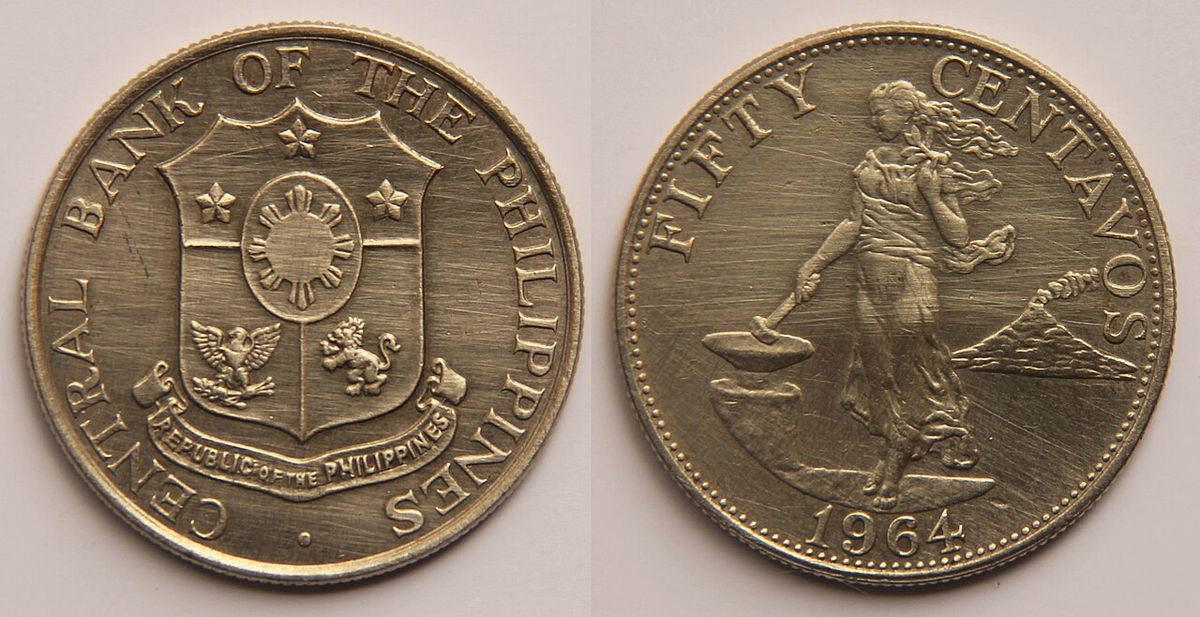
Historical Development of the Peso
The monetary history of the Philippines is long and complex, beginning with pre-colonial barter and gold objects like Piloncitos, which are considered the earliest coins of the ancient peoples. The Spanish colonial period, starting in 1565, saw the introduction of the Spanish silver dollar, or pieces of eight, brought over in large quantities by the Manila galleons from Spanish America. Fractional currency was created by cutting these dollars into eight wedges, each worth one real, and locally produced crude copper or bronze coins called cuartos or barrillas also circulated, giving rise to the Tagalog words kwarta for money and barya for coin or loose change. The 19th century featured a bimetallic standard where the peso was valued at either a silver Mexican peso or one-sixteenth of a gold onza, with a gold-silver ratio of 16. This system led to monetary instability as international gold and silver prices fluctuated, triggering outflows of silver in the 1850s and a shift toward a fiduciary standard after 1875 when the importation of Mexican pesos was restricted. The first paper money, the Philippine peso fuerte, was issued in 1851 by El Banco Español Filipino de Isabel II, convertible to either silver pesos or gold onzas, though its volume was small compared to the silver pesos in circulation.
During the short-lived Philippine Republic after the 1898 declaration of independence, revolutionary coinage was issued using the term centavo instead of céntimo for the subdivision of the peso. Following the United States' assumption of control, the Philippine Coinage Act of 1903 established a new theoretical gold peso consisting of 12.9 grains of gold 0.900 fine, which was equivalent to exactly half the value of a US dollar, pegging the exchange rate at two pesos to one US dollar. This peg was maintained until independence in 1946, though the gold content link was severed when the US reduced the gold content of the dollar in 1934. The currency saw significant turmoil during the Second World War, including the dumping of an estimated 15 million pesos worth of silver pesos into Caballo Bay to prevent their capture by Japanese forces and the issuance of fiat notes by Japanese occupiers and emergency guerrilla pesos by local authorities. After the war, the Central Bank of the Philippines was created in 1949 to manage the currency, taking over the power of note issue from commercial banks. It initially maintained a fixed exchange rate of ₱2 per US dollar, but this led to a black market where dollars traded above ₱3 and was eventually abandoned for a decontrol era that saw a free-market rate of ₱3.90 per dollar by 1965. Key historical periods and changes include:
- Pre-colonial era: Barter and gold objects like Piloncitos and gold barter rings used.
- Spanish colonial period (1565 onward): Introduction of the Spanish silver dollar and crude macuquinas, later replaced by Columnarios or pillar dollars.
- 1851: First paper money (peso fuerte) issued by El Banco Español Filipino de Isabel II.
- 1857: Casa de Moneda de Manila established, minting gold and silver coins from 1861.
- 1903: US administration establishes peso pegged at ₱2 per US dollar via the Philippine Coinage Act.
- 1942: Wartime disposal of silver pesos and issuance of occupation and guerrilla currency.
- 1949: Central Bank of the Philippines (CBP) established.
- 1962 to 1970: Decontrol era dismantles exchange restrictions, leading to rate adjustments.
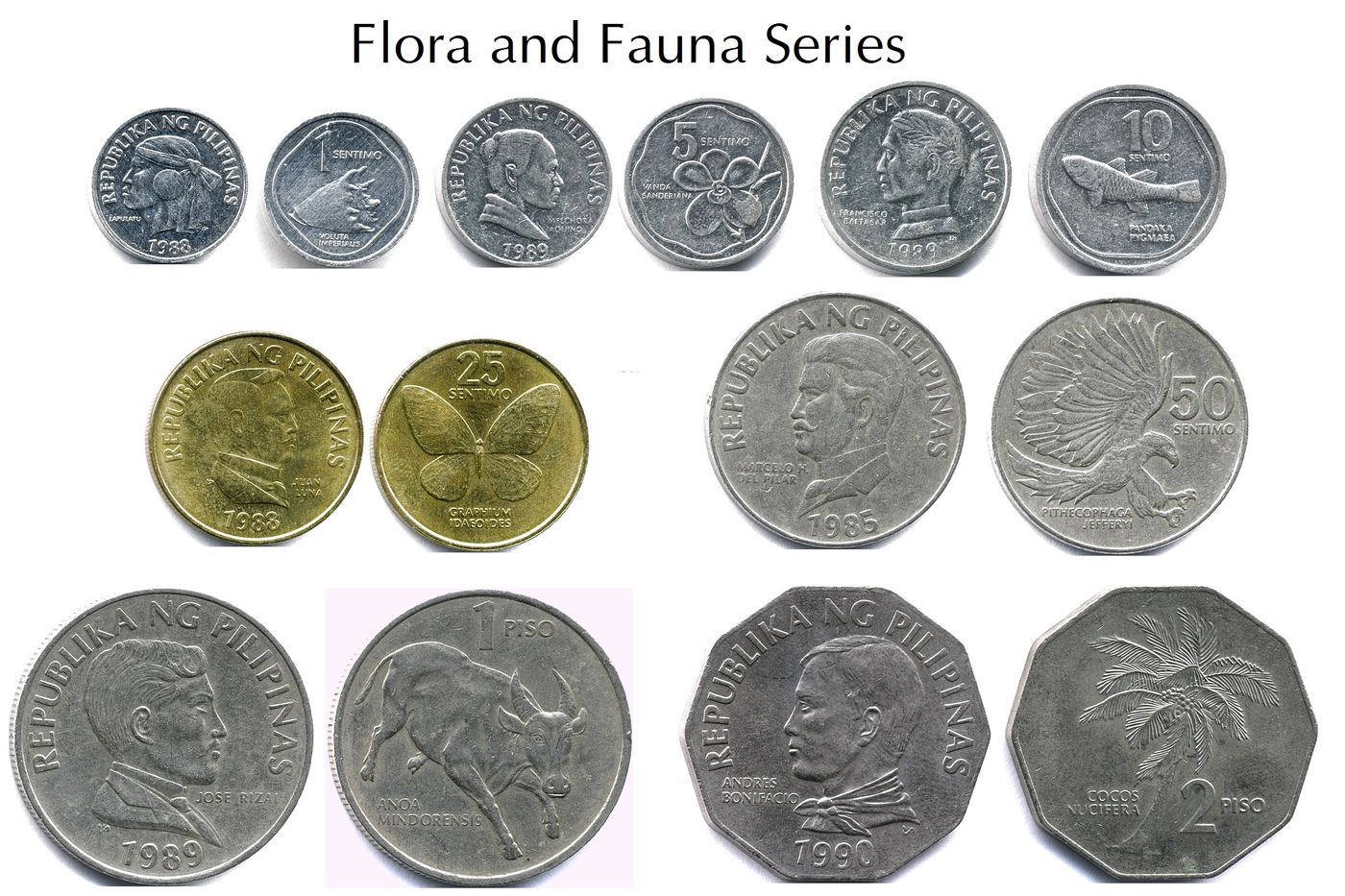
- 1967/1969: Currency names change from English to Filipino on coins and notes.
- 1993: Bangko Sentral ng Pilipinas (BSP) replaces the CBP under the New Central Bank Act, mandating price stability and a floating exchange rate.
The modern Bangko Sentral ng Pilipinas was established in 1993. It operates under a floating exchange rate regime focused on maintaining price stability. The central bank enjoys fiscal and administrative autonomy. Since 1993, the Philippine peso has traded in various ranges against the US dollar.
Currency Denominations and Terminology
The Philippine peso is divided into 100 subunits. In English, this subunit is called a centavo, derived from Spanish. However, in everyday speech across the Philippines, centavo remains the more commonly used word. The term is adapted into various Philippine languages, such as Abaknon, Bikol, Cebuano, Cuyonon, Ilocano, and Waray, and is called céns in Chavacano. Historically, specific Tagalog names existed for different coin denominations, though their use has declined with the decreased circulation of small-value coins. For example, the half-centavo coin was called a kusing, and the one-centavo coin was called isang pera or sampera. The word pera itself, now a general term for money in Filipino, has debated origins, potentially from Malay perak (silver) or from Spanish coins nicknamed perra gorda and perra chica which circulated in the Philippines as 2 and 1 céntimo de peso coins. The term salapi, another word for money, is thought to derive from isa (one) and rupya, reflecting earlier Indian and Indonesian trade influences, or possibly from Arabic asrafi or sarf.
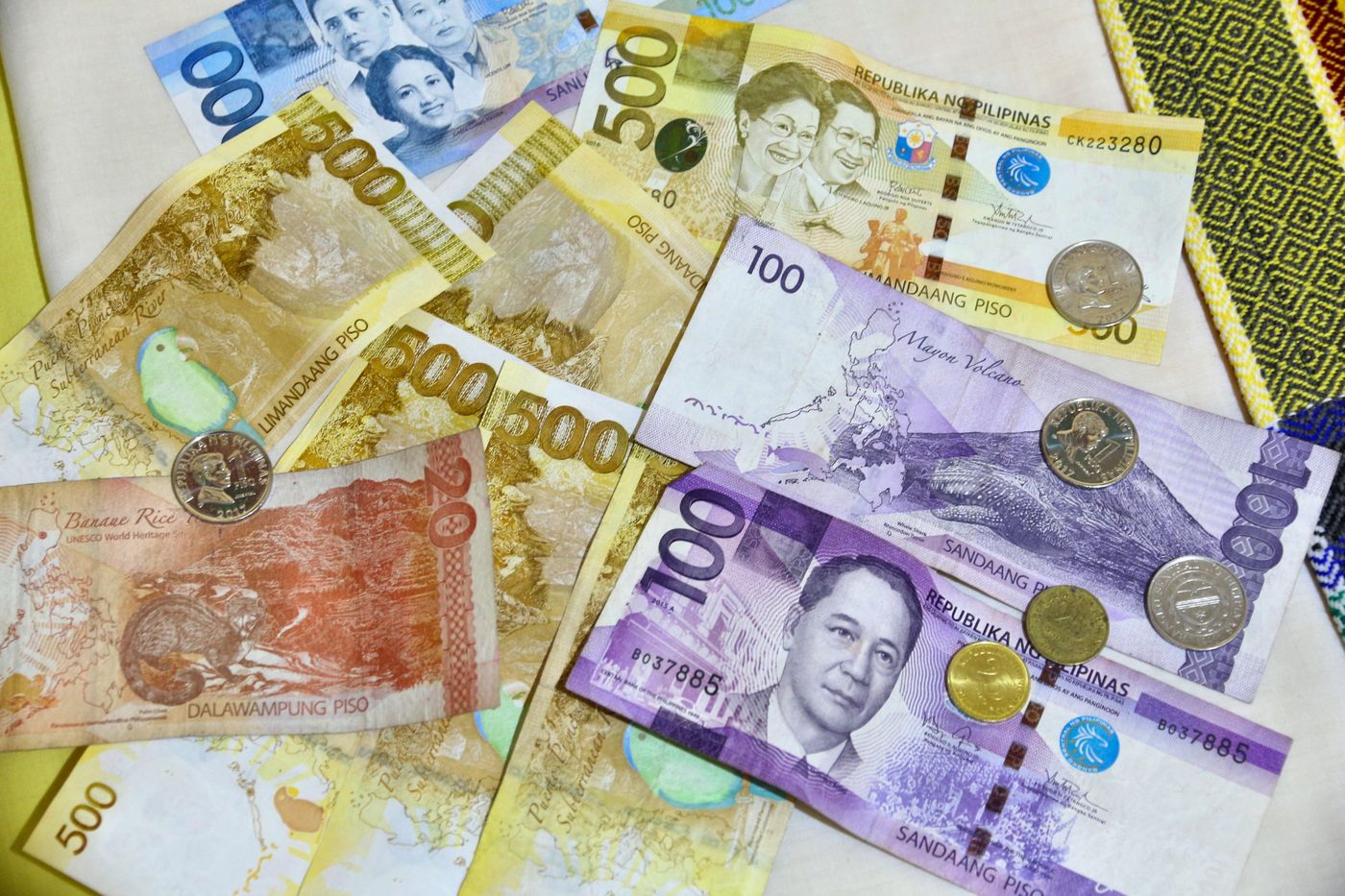
Exchanging Philippine Pesos in Canada
For Canadians, converting funds between the Canadian dollar and the Philippine peso is a common necessity, driven by remittances, travel, and commerce. The exchange rate between the two currencies is dynamic and set by the global foreign exchange market. The mid-market rate is the benchmark rate between buyers and sellers and serves as a reference point. It is crucial to understand that the rate offered by money transfer services or banks will typically differ from this pure mid-market rate, as they add a margin or fee for the service. Several companies specialize in international transfers from Canada to the Philippines, including Wise, Western Union, OFX, WorldRemit, and Remitly. These services allow individuals to send money online, via mobile apps, or in person at agent locations for cash pickup in the Philippines. Western Union, for example, enables payments via bank account, credit or debit card, or cash in-store, and transfers can be tracked using a Money Transfer Control Number (MTCN).
When choosing a service, Canadians should compare the total cost, which includes both the exchange rate applied and any transfer fees. Some providers advertise promotional rates, such as 45.42 PHP for 1 CAD. The actual rate and fees can vary based on the transfer amount, payment method, payout option, destination, and timing. For instance, using a credit card may incur cash advance fees and interest charges from the card issuer. It is advisable to review the complete quote, including the estimated amount in pesos the recipient will receive, before confirming any transaction. Security is also a priority, and reputable providers use encryption and fraud prevention measures. Customers should track transfers using provided reference numbers and only send money to people they know and trust, being alert to potential scams. The exchange rate seen on general search engines is often the mid-market rate, but money transfer providers apply their own margin, so the final consumer rate will be different.
Current Exchange Rate Trends and Data
The CAD to PHP exchange rate fluctuates continuously based on global financial market conditions. Factors influencing the rate include relative economic performance, interest rate differentials, political stability, and trade flows between Canada and the Philippines. Historical data shows the volatility and range of this currency pair over different periods. For instance, over a recent 90-day period, the CAD to PHP rate saw a high of 45.3661 and a low of 43.3283, with an average around 44.3876 and a total change of 2.93 percent. Similarly, the PHP to CAD rate moved between 0.0220 and 0.0230 during the same timeframe, with an average of 0.0225. Over the last 30 days, the CAD to PHP rate had a high of 45.1245 and a low of 43.8632, with an average of 44.2390 and a change of 0.90 percent. Monitoring these trends can help individuals decide when to convert their money. Many currency converter tools and financial websites provide live charts and historical data, allowing users to analyze rate movements over periods such as the last 7, 30, or 90 days. Some services also offer rate alerts, notifying users when the exchange rate reaches a desired level, which can be set up on provider websites or within mobile applications.
| Time Period | CAD to PHP High | CAD to PHP Low | Average Rate |
|---|---|---|---|
| Last 30 Days | 45.1245 | 43.8632 | 44.2390 |
| Last 90 Days | 45.3661 | 43.3283 | 44.3876 |
| PHP to CAD (90 Days) | 0.0230 | 0.0220 | 0.0225 |
This table illustrates the recent performance of the Canadian dollar against the Philippine peso. The figures demonstrate the typical range and movement of the exchange rate. This information is important for anyone planning a significant transfer or conversion. The volatility over these periods indicates the degree of daily fluctuation one might expect.
Risks and Considerations for Canadians
Engaging in currency exchange and international money transfers involves several risks and important considerations. The primary risk is exchange rate volatility, where the value of the peso against the Canadian dollar can change between the time a transfer is initiated and when it is completed, potentially affecting the final amount received. While modern floating exchange rates under the Bangko Sentral ng Pilipinas have eliminated the black markets of the past, the official market rates can still move significantly based on factors like inflation management, international reserve levels, and global investor sentiment. Another key consideration is the total cost of the transfer. The advertised exchange rate often includes a margin above or below the mid-market rate, and additional fixed fees may apply, which can vary by provider, payment method, and transfer amount. Canadians should always look for the total cost of sending a specific amount, not just the headline rate, and be aware that promotional offers may have specific conditions. Security is paramount, and it is essential to use licensed and reputable money transfer operators that employ encryption and fraud prevention. Customers should safeguard their transaction details, keep their MTCN private, and be wary of unsolicited requests for money. Furthermore, while the Bangko Sentral ng Pilipinas maintains a policy of price stability, external economic shocks or domestic policy changes can impact the peso's value, affecting the purchasing power of remittances sent from Canada. Historical episodes, such as the capital flight crisis between 1983 and 1986 that saw the peso drop from ₱11 to ₱20 per US dollar, underscore the potential for sharp currency depreciation under certain conditions, although the modern independent central bank is designed to mitigate such extremes.
The Philippine Peso in the Global Context
The Philippine peso occupies a specific niche in the global foreign exchange landscape. Its value is primarily influenced by the economic relationship between the Philippines and its major partners, including the United States, China, and Japan, as well as by the vast overseas Filipino worker community whose remittances are a critical source of foreign currency. The currency's historical journey from a Spanish-American silver coin to a US-pegged currency and finally to an independently floating fiat currency mirrors the Philippines' own political and economic evolution. For global investors and Canadians looking at the Philippine market, understanding the peso's trajectory is key. The Bangko Sentral ng Pilipinas' commitment to price stability since 1993 has aimed to reduce the high inflation episodes that plagued the currency in the latter half of the 20th century. The peso's performance against the US dollar in recent decades, trading within bands like ₱40–56 in the 2000s, reflects a period of managed volatility. In comparison to the Canadian dollar, the peso is a lower-value unit, with one Canadian dollar commanding dozens of pesos, which affects the psychology and mechanics of cross-border transactions. The efficiency and cost of converting between these two currencies are therefore of direct importance to the hundreds of thousands of Canadians with financial ties to the Philippines.
Frequently asked questions
What is the current exchange rate from Canadian dollars to Philippine pesos?
Exchange rates fluctuate constantly. The mid-market rate, which is the benchmark rate between global buyers and sellers, recently stood at approximately ₱1 = CAD 0.0222. The actual rate you receive from a bank or money transfer service will include a margin, so the final amount of pesos you get for your Canadian dollars will be slightly less. It is best to check a live currency converter for the most up-to-date rate.
How can I send money from Canada to the Philippines?
Canadians can send money to the Philippines through various specialized money transfer services. These include online platforms and apps from companies like Wise, Western Union, OFX, WorldRemit, and Remitly. You can initiate transfers online, through a mobile app, or in person at an agent location. The process typically involves entering the amount, choosing a payout method (such as bank deposit or cash pickup), and paying with a Canadian bank account, debit card, or credit card. You will receive a tracking number to monitor the transfer.
What factors affect the CAD to PHP exchange rate?
The exchange rate between the Canadian dollar and the Philippine peso is influenced by several economic and market factors. These include the relative economic performance and interest rates in Canada versus the Philippines. Political stability in both countries and trade and investment flows also play a role. Broader global market sentiment towards risk is another influencing factor.
How many centavos are in one Philippine peso?
One Philippine peso is subdivided into 100 centavos. The subunit is also officially referred to by its Filipino name, sentimo. This terminology change from the English centavo to the Filipino sentimo was formally adopted on coinage in 1967 and on banknotes in 1969. Despite this official change, the term centavo remains the most widespread and commonly used term in everyday speech across various Philippine languages, including Tagalog, Cebuano, and Ilocano.
Is there a black market for exchanging Philippine pesos?
Historically, a black market for foreign exchange involving the Philippine peso did exist. During the 1950s, when the Central Bank of the Philippines maintained a fixed exchange rate of ₱2 per US dollar and rationed dollar allocations, a black market emerged where dollars traded above ₱3. This was driven by exchange controls and limited access to official channels. However, since the establishment of the new Bangko Sentral ng Pilipinas in 1993 and the adoption of a fully floating exchange rate system, such black markets have become nonexistent as official markets now accurately reflect underlying supply and demand.
Sources and further reading
- Philippine peso (Wikipedia) en.wikipedia.org
- Canadian dollars to Philippine pesos today wise.com
- CAD to PHP | Convert Canadian Dollar to Philippine Peso westernunion.com
- 1 PHP to CAD, Philippine Pesos to Canadian Dollars ... xe.com
This article explains how things work and is not financial, tax or legal advice. Rules, limits and rates change, so check the current figures with the Canada Revenue Agency, your province or your financial institution before you act.