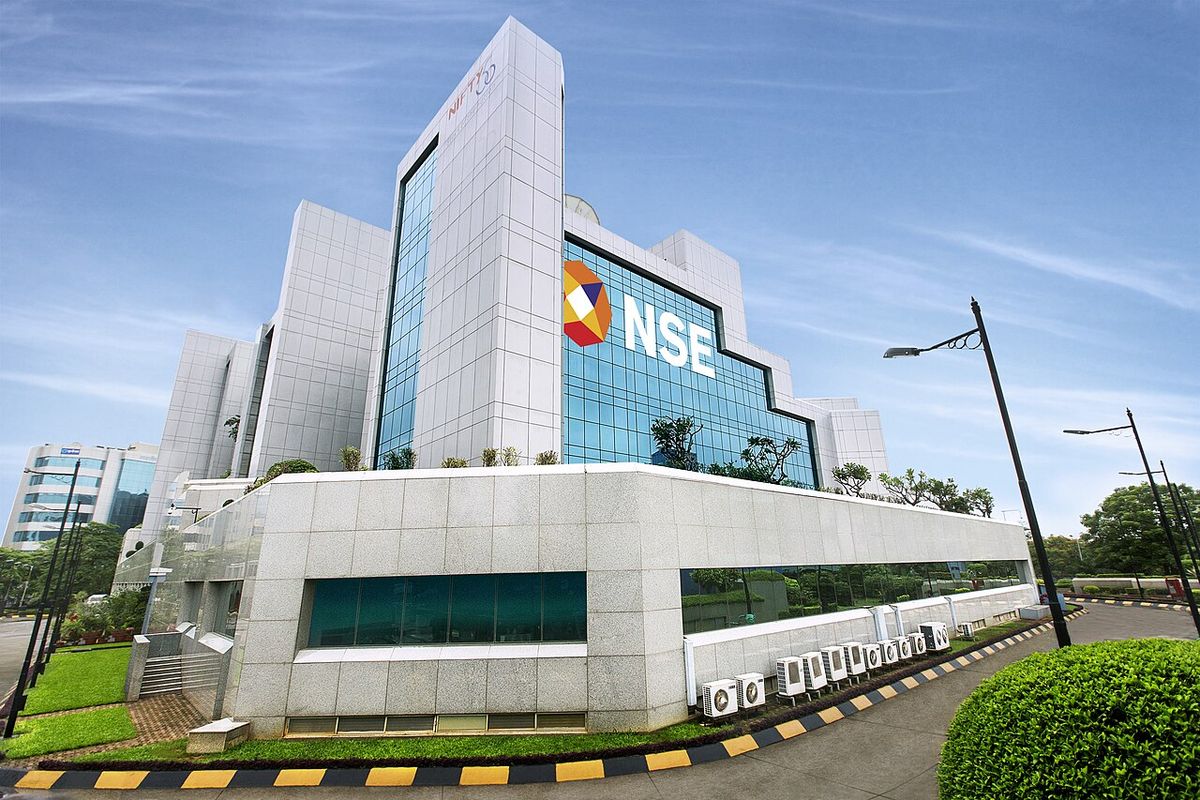
The National Stock Exchange of India Limited, known as the National Stock Exchange (NSE), is an Indian stock exchange based in Mumbai. It is the fifth largest stock exchange in the world by total market capitalization, exceeding $5 trillion in May 2024. As of 2024, it is the world's largest derivatives exchange by number of contracts traded and the third largest in cash equities by number of trades for the calendar year 2023. In Canada, the term National Stock Exchange historically refers to the Canadian Securities Exchange (CSE), which was designated as a stock exchange on 14 December 2007.
What is the National Stock Exchange of India
The National Stock Exchange of India Limited, commonly called NSE, is a leading Indian stock exchange headquartered in Mumbai. It was established to bring transparency and modern electronic trading to the Indian equity markets. The exchange is owned by a consortium of financial institutions including public sector banks and insurance companies. As of 2024, it holds the distinction of being the world's largest derivatives exchange by the number of contracts traded. For the calendar year 2023, it was the third largest exchange globally in cash equities by number of trades. Its total market capitalization exceeded $5 trillion in May 2024, cementing its position among the world's top financial marketplaces.
History and Development of the NSE
The National Stock Exchange was incorporated in 1992 following recommendations from the Pherwani committee and a blueprint prepared by a dedicated team. It was created as a joint venture involving public sector undertakings at the request of the Government of India. A key innovation was opening trading membership to any qualified and experienced entity that met financial requirements, moving beyond a closed group of brokers. Trading began on 30 June 1994 with the wholesale debt market segment, followed by the equities segment on 3 November 1994. The NSE was the first exchange in India to introduce fully electronic trading. Its daily turnover surpassed that of the older Bombay Stock Exchange within its first year of operation.
The exchange expanded its product offerings significantly over the following decades. The derivatives segment launched on 12 June 2000, and currency derivatives were introduced in August 2008. To support smaller businesses, the NSE EMERGE platform for listing small and medium sized enterprises started in 2012. The exchange also launched India's first dedicated debt trading platform in May 2013. Its international footprint grew with the establishment of the NSE International Exchange in GIFT City in June 2017. More recent initiatives include the launch of a Social Stock Exchange in 2023 and an Electronic Gold Receipts segment for digital gold trading in May 2026. The NSE itself became a publicly listed company via a major initial public offering on the Bombay Stock Exchange in September 2026.
Trading and Listings on the NSE
As of December 2024, the National Stock Exchange had 2,671 companies listed on its platforms. This total includes 2,084 companies on its mainboard and 587 companies on its NSE EMERGE SME platform. The combined market capitalization of all NSE listed companies was ₹438.9 lakh crore, equivalent to US$5.13 trillion. The exchange also lists a wide range of exchange traded funds, with 190 ETFs listed as of December 2023 covering equity, debt and commodity asset classes. The first infrastructure investment trust listed on the NSE in 2017, and the first real estate investment trust followed in 2019. By January 2025, the NSE had over 11 crore unique registered investors participating in its markets.
The NIFTY 50, the exchange's flagship index, was launched on 22 April 1996. It had a base value of 1,000 set on 3 November 1995. The derivatives market on the NSE is extensive, allowing trading in futures and options contracts on both indices and single stocks. The exchange has also facilitated cross border derivative products, launching futures and options on the UK's FTSE 100 index in May 2012. In January 2013, it signed a letter of intent with the Japan Exchange Group to list NIFTY 50 index futures on the Osaka Securities Exchange.
The National Stock Exchange in a Canadian Context
In Canada, the term National Stock Exchange historically refers to the Canadian Securities Exchange, which operated under that name before a rebranding. The Canadian Securities Exchange was officially designated as a stock exchange by Canadian regulators on 14 December 2007. It operates as a regulated Canadian stock exchange providing a marketplace for trading listed securities, with a focus on micro cap and emerging companies. The CSE is considered one of Canada's four major stock exchanges, alongside the Toronto Stock Exchange, the TSX Venture Exchange, and the Cboe Canada exchange. Together, these Canadian exchanges account for approximately three percent of the world's equity market, representing over $3.5 trillion USD in value. The Canadian Securities Exchange is designed to meet the needs of emerging public companies with less demanding listing requirements compared to larger exchanges.
It provides a modern and efficient alternative for companies looking to access Canadian public capital markets. The CSE lists a variety of securities and has expanded into new products, including its inaugural exchange traded fund listing. It serves as a platform for entrepreneurs, innovators and disruptors, with a particular appeal to fintech companies and businesses in emerging markets. The exchange streamlines issuer regulation through enhanced disclosure, practical oversight, and modern technology to lower costs and reduce complexity for listed companies.
Structure and Ownership of the NSE
As of March 2025, the National Stock Exchange of India is 36 percent owned by public sector undertakings. Major stakeholders include the Life Insurance Corporation of India with a 10.7 percent stake, the State Bank of India with 3.23 percent, and SBI Caps with 4.33 percent. Other significant public sector owners are the New India Assurance Company, National Insurance Company, Oriental Insurance Company, and the Stock Holding Corporation of India Limited. Several other public sector banks such as Bank of Baroda, IDBI Bank, Punjab National Bank and Indian Bank also hold stakes. Private equity investors in the NSE include Aranda Investments Mauritius, PI Opportunities Fund I, and MS Strategic Mauritius, which are linked to Temasek Holdings, PremjiInvest, and Morgan Stanley respectively. The Government of India has permitted several major public sector undertakings, including SBI, IDBI and Bank of Baroda, to sell their entire stakes in the NSE through its initial public offering.
The National Stock Exchange of India operates through several subsidiaries. These include NSE Indices Limited, which manages the exchange's indices. Another subsidiary is NSE International Exchange (NSE IX), which is a universal multi assets exchange headquartered in GIFT City. Other key subsidiaries are NSE Clearing Limited, NSEIT Limited, and NSE Infotech Services Limited. The exchange also has subsidiaries such as NSE Cogencis Information Services Limited, NSE IFSC Clearing Corporation Limited, NSE Investments Limited, NSE Data & Analytics Limited, and NSE Academy Limited.

Financial Literacy and Education Initiatives
The National Stock Exchange of India runs extensive financial literacy and education programs. It has collaborated with numerous universities across India to offer MBA and BBA courses in finance. Partner institutions include the Gokhale Institute of Politics and Economics in Pune, Bharati Vidyapeeth Deemed University in Pune, Guru Gobind Singh Indraprastha University in Delhi, RV University in Bangalore, Ravenshaw University in Cuttack, and Punjabi University in Patiala. To provide practical experience, the NSE has developed a mock market simulation software called NSE Learn to Trade. This software closely mirrors the tools used by professional traders and helps students develop investment, trading and portfolio management skills.
The exchange also administers a certification program called the NSE Certification in Financial Markets. As of the latest information, certifications are available in 46 different modules covering various sectors of the financial and capital markets at both beginner and advanced levels. Since August 2009, the NSE has also offered a short term course called the NSE Certified Capital Market Professional. The NSE Academy Limited was established specifically to further the exchange's financial literacy mission.
Comparison of Major Canadian Stock Exchanges
Canada's equity markets are served by four primary exchanges, each with distinct roles and clienteles. The Toronto Stock Exchange is the largest and most significant, handling the majority of the country's trading volume. It lists well established, large cap companies across sectors like finance, energy and mining, and has the strictest listing requirements. The TSX is a fully electronic exchange trading in Canadian dollars and ranks as the tenth largest stock exchange globally. The TSX Venture Exchange acts as a launchpad for smaller, early stage companies, particularly in mining and technology. Companies can graduate from the TSXV to the TSX upon meeting higher standards for size and governance.
The Cboe Canada exchange, formerly the NEO Exchange, is the third most active market in Canada, accounting for nearly 15 percent of all trading volume in Canadian listed securities. It focuses on equity and ETF trading and offers innovative products like Canadian Depository Receipts for investing in U.S. companies in Canadian dollars. The Canadian Securities Exchange serves as an alternative market tailored to emerging and entrepreneurial companies. Its less demanding listing requirements make it appealing to early stage enterprises, especially in the fintech sector and emerging markets.
| Exchange | Primary Focus | Key Feature |
|---|---|---|
| Toronto Stock Exchange (TSX) | Large cap, established companies | Largest Canadian exchange, strict listing rules |
| TSX Venture Exchange (TSXV) | Smaller, early stage companies | Pathway to graduate to TSX |
| Cboe Canada | Mid sized companies, ETFs, CDRs | ~15% of Canadian trading volume |
| Canadian Securities Exchange (CSE) | Emerging, micro cap companies | Streamlined listing for entrepreneurs |
Controversies and Market Integrity
The National Stock Exchange of India has faced scrutiny over market manipulation scandals during its history. One notable instance involved co location manipulation, where certain traders were alleged to have gained unfair speed advantages. The Securities and Exchange Board of India, which regulates the Indian markets, has at times barred individuals and entities from trading on the exchange for violations including insider trading and stock manipulation. These activities have particularly involved illiquid small cap and penny stocks. Such incidents highlight the ongoing challenges of maintaining market integrity in a large and rapidly growing financial marketplace.
Frequently asked questions
What is the National Stock Exchange?
The National Stock Exchange is an Indian stock exchange based in Mumbai. It was incorporated in 1992 to bring transparency to the Indian equity markets and commenced operations in 1994. It is the fifth largest stock exchange in the world by total market capitalization, exceeding $5 trillion in May 2024. As of the 2023 calendar year, it is also the world's largest derivatives exchange by number of contracts traded. The exchange was the first in India to introduce an electronic trading facility.
Is there a National Stock Exchange in Canada?
In Canada, the term National Stock Exchange historically referred to what is now the Canadian Securities Exchange. The Canadian Securities Exchange was designated as a stock exchange on 14 December 2007. It operates as a regulated Canadian stock exchange focused on micro cap and emerging companies. It is one of Canada's four major stock exchanges, alongside the Toronto Stock Exchange, the TSX Venture Exchange, and the Cboe Canada exchange.
What is the NIFTY 50 index?
The NIFTY 50 is the flagship index of the National Stock Exchange of India. It was launched on 22 April 1996, with a base value of 1,000 set on the base date of 3 November 1995. The index is operated by NSE Indices Limited, a subsidiary of the NSE. It is a broad based index that serves as a key benchmark for the performance of the Indian equity market.
When was the National Stock Exchange of India founded and when did it start trading?
The National Stock Exchange of India was incorporated in 1992 based on government recommendations to bring transparency to the Indian equity markets. It commenced operations on 30 June 1994, starting with the wholesale debt market segment. The exchange launched its equities segment shortly after on 3 November 1994. A key innovation was that the NSE was the first exchange in India to introduce an electronic trading facility.
How many companies are listed on the National Stock Exchange of India and what are its investor numbers?
As of December 2024, the National Stock Exchange has a total of 2,671 companies listed. This includes 2,084 companies on its mainboard and 587 companies on its SME platform, NSE EMERGE. Regarding investor participation, as of January 2025, the NSE has over 11 crore unique registered investors. The exchange also listed 190 exchange traded funds as of December 2023.
What major financial literacy initiatives does the National Stock Exchange of India offer?
The National Stock Exchange promotes financial literacy through several initiatives. It collaborates with universities to offer MBA and BBA courses and provides mock market simulation software called NSE Learn to Trade. The exchange also runs the Certification in Financial Markets program, which offers certifications in 46 modules, and a short term course called NSE Certified Capital Market Professional. These educational efforts are coordinated through its subsidiary, NSE Academy Limited.
Sources and further reading
- National Stock Exchange of India (Wikipedia) en.wikipedia.org
- The Canadian Securities Exchange (CSE) thecse.com
- What are the different Canadian stock markets and ... nbc.ca
This article explains how things work and is not financial, tax or legal advice. Rules, limits and rates change, so check the current figures with the Canada Revenue Agency, your province or your financial institution before you act.