The Mexican peso (MXN) is the official currency of Mexico and a significant currency in the Americas. For Canadians, the peso is relevant for travel, trade, and investment, with its exchange rate against the Canadian dollar subject to economic factors in both nations. The peso has a long history rooted in Spanish colonial silver and has undergone significant reforms, including a major revaluation in 1993. Understanding the peso's value and history helps Canadians manage financial interactions with one of North America's key economic partners.
What Is the Mexican Peso?
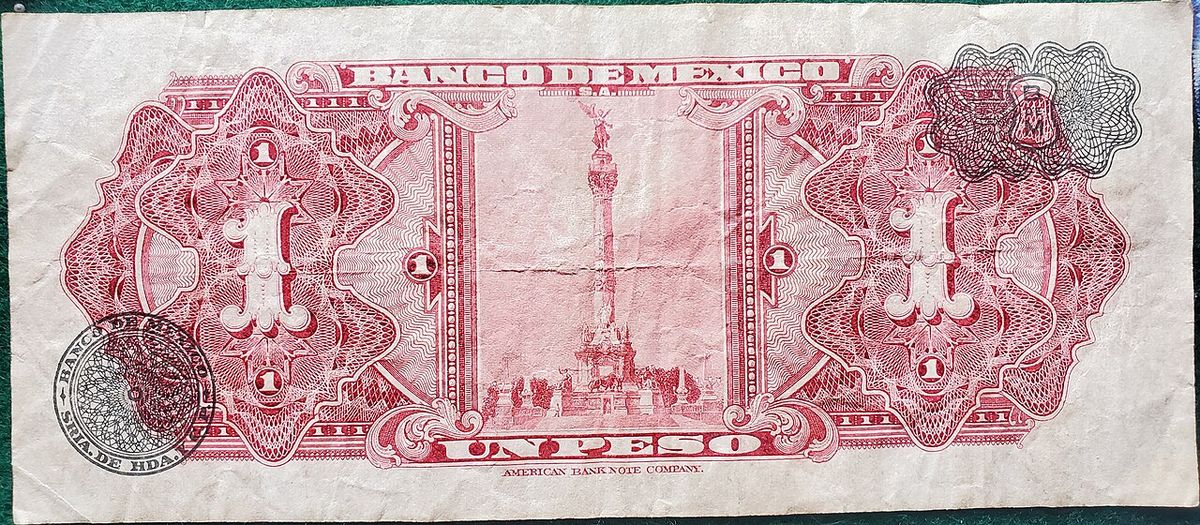
The Mexican peso is the official legal tender of Mexico, issued by the Bank of Mexico. Its currency code is MXN, and it is commonly symbolized by $, often written as Mex$ to distinguish it from other dollar-denominated currencies like the Canadian and US dollars. Each peso is subdivided into 100 centavos. Modern Mexican banknotes feature distinct colours and imagery depicting the nation's culture, history, and prominent figures. The peso shares a common historical origin with the US and Canadian dollars in the Spanish dollar, a silver coin that circulated widely in the Americas and Asia from the 16th to 19th centuries. Today, the Mexican peso is the 16th most traded currency in the world, the third most traded in the Americas after the US and Canadian dollars, and the most traded currency in Latin America.
Historical Origins and Global Influence
The peso's history is deeply tied to silver mining and global trade. The name 'peso' comes from the Spanish word for 'weight', referring originally to pesos de oro (gold weights) or pesos de plata (silver weights). The currency system in Spanish America from the 16th to 19th centuries was based on silver reales and gold escudos. The famous eight-real silver coin, weighing 24.44 grams of fine silver, was widely known as a peso in the Americas and a dollar in the British Empire. These coins, minted from Mexican and Bolivian silver, served as a global silver standard and reserve currency. They were legal tender in the United States until 1857 and in China until 1935, directly influencing the development of currencies like the US dollar, Chinese yuan, and Japanese yen. The first Mexican mint was established in 1535, but the modern peso divided into 100 centavos was not introduced until 1863 under Emperor Maximilian of the Second Mexican Empire.
After independence, Mexico initially retained the eight-reales system. The post-independence silver peso contained 27.07 grams of 90.3% fine silver. A major shift occurred in 1905 when the peso was officially defined solely in terms of gold, at 0.75 grams of fine gold. Throughout most of the 20th century, the Mexican peso was considered one of the more stable currencies in Latin America, avoiding the hyperinflation seen elsewhere in the region. However, this stability was challenged by significant devaluations in the latter half of the century, leading to a fundamental reform of the currency in the 1990s.
The 1993 New Peso Reformation and Economic Crises
High inflation and economic instability in the 1980s necessitated a dramatic currency reform. On January 1, 1993, the Bank of Mexico introduced the nuevo peso (new peso), with the ISO code changing from MXP to MXN. One new peso (N$1.00) was equal to 1,000 of the old MXP pesos. The transition was managed by issuing new Series B banknotes with designs identical to old high-denomination notes but with values reduced by a factor of 1,000. For example, an old MXP$20,000 note was replaced by a new MXN$20 note with the same design. Old and new pesos circulated together until 1995, after which the old Series A notes were demonetized. In 1996, the word 'nuevo' was dropped, and the currency was again simply called the peso, with Series D notes issued.
This reform was soon tested by the Mexican peso crisis of 1994. Following the ratification of NAFTA and political shocks like the assassination of presidential candidate Luis Donaldo Colosio, investor confidence collapsed. The peso sharply depreciated from about MXN$3.4 per US dollar to MXN$7.2 in 1995. The crisis caused severe economic hardship, with Mexico's GNP falling by 9.2% in 1995 and the peso depreciating against the US dollar by 82.9%. Unemployment rose significantly, leading to increased emigration from Mexico and a notable decline in household spending on non-essential goods. The government eventually stabilized the economy through banking rescue packages and regained growth by the turn of the millennium.
Modern Exchange Rate History and Trends
Following the 1993 revaluation, the official exchange rate was initially set at MXN$3 per US dollar. The 1994 crisis caused a sharp devaluation, and the peso traded between MXN$8 and MXN$11 per US dollar from 1998 to 2008. It depreciated further to MXN$15.56 in March 2009 during the global financial crisis before appreciating to a range of MXN$12 to MXN$14 in the early 2010s. Another period of depreciation saw the rate move from MXN$14.78 in 2014 to around MXN$17 in 2015. Since 2016, the peso has generally traded between MXN$17 and MXN$21 per US dollar, though it reached an all-time low of MXN$25 per dollar during the market turmoil of the COVID-19 pandemic. From 2020 to 2024, the peso appreciated by over 30%, reaching a near nine-year high of MXN$16.31 per US dollar in April 2024. This recent strength has been attributed to factors including growth in 'near-shoring' strategies, increased foreign investment, and strict monetary policy by the Bank of Mexico. The exchange rate between the Canadian dollar and Mexican peso fluctuates based on these and other global factors. The mid-market rate, which is the midpoint between global buy and sell prices, is a key benchmark for currency conversion.
| Period | Approximate MXN/USD Exchange Rate Range | Key Event or Context |
|---|---|---|
| 1993 (Post-Revaluation) | MXN$3 | Introduction of the new peso (MXN). |
| 1995 | MXN$3.4 to MXN$7.2 | Mexican peso crisis and devaluation. |
| 1998 to 2008 | MXN$8 to MXN$11 | Period of relative stability. |
| March 2009 | MXN$15.56 | Impact of the global financial crisis. |
| Early 2010s | MXN$12 to MXN$14 | Post-crisis recovery and appreciation. |
| 2014 to 2015 | MXN$14.78 to ~MXN$17 | Period of depreciation. |
| 2016 to 2020 (Typical Range) | MXN$17 to MXN$21 | General trading band. |
| COVID-19 Pandemic | MXN$25 (all-time low) | Market stress amid global pandemic. |
| April 2024 | MXN$16.31 (nine-year high) | Appreciation due to near-shoring and investment. |
Coins and Banknotes in Circulation
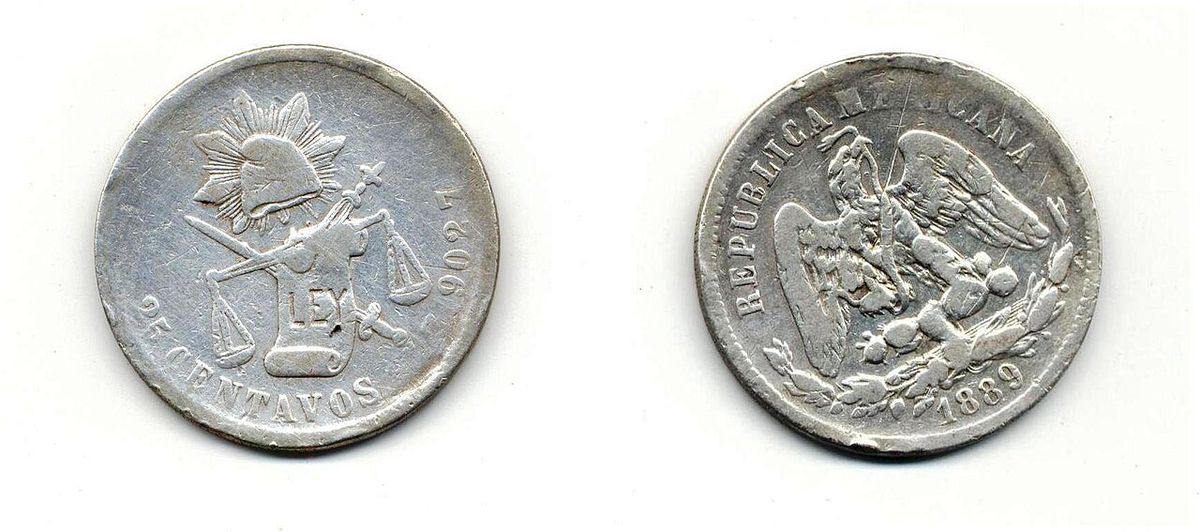
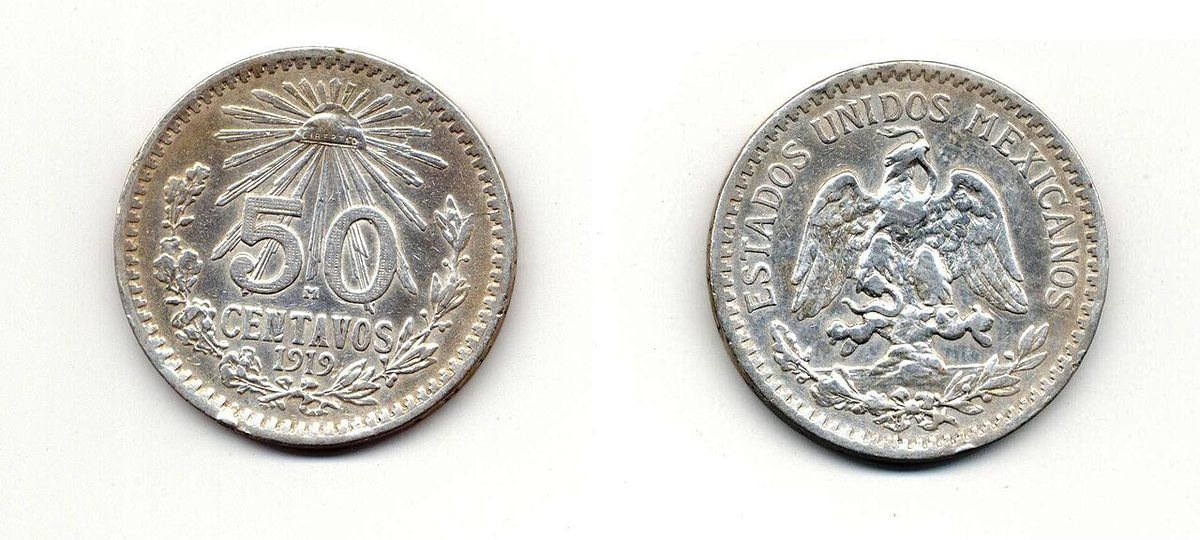
The evolution of Mexican coinage reflects its economic history. Early coins included gold escudos and silver reales, with the widely recognized 'cap and ray' design on eight-reales coins used for international trade in the 19th century. The 20th century saw a reduction in silver content, culminating in the last silver circulation coins minted in 1979. The 1993 revaluation introduced a new series of coins. Modern circulating coins, from the Series C and D issues, include denominations from 5 centavos up to 20 pesos. The most commonly used coins today are MXN$10 and below. Similarly, banknotes have progressed through several series. The current Series F and G banknotes are the most common, with denominations of MXN$20 and above widely used. Older series notes, such as Series B, C, D, and D1, remain legal tender but are being gradually withdrawn from circulation by commercial banks.
- Common Modern Coins: 5¢, 10¢, 20¢, 50¢, MXN$1, MXN$2, MXN$5, MXN$10, MXN$20.
- Common Modern Banknotes: MXN$20, MXN$50, MXN$100, MXN$200, MXN$500, MXN$1000.
- 1993 Transition: Series B 'nuevo peso' notes had values 1/1000th of old Series A notes (e.g., MXP$50,000 became MXN$50).
- Demonetization: Series A and AA banknotes were demonetized on January 1, 1996.
- Withdrawal: Series B, C, D, and D1 notes are in the process of being withdrawn, as is the MXN$1000 Series F note.
The Mexican Peso for Canadians: Exchange and Transfers
For Canadians, interacting with the Mexican peso typically involves currency exchange for travel, sending remittances, or conducting business. The exchange rate between the Canadian dollar (CAD) and the Mexican peso (MXN) fluctuates constantly. As of recent data, the mid-market rate is approximately 1 CAD = 13.1 MXN, meaning one Canadian dollar buys about thirteen Mexican pesos. Canadians looking to obtain pesos can use various services, including banks, online currency specialists, and physical exchange bureaus. Some Canadian financial service providers offer online ordering for Mexican peso banknotes with home delivery across Canada, often promoting better exchange rates than traditional banks and no foreign exchange fees. When sending money to Mexico, options include international transfer services which allow conversion from CAD to MXN, with funds delivered to bank accounts or for cash pickup. It is important for users to compare the total cost of transactions, as providers may apply fees or margins on the exchange rate that differ from the published mid-market rate.
Risks and Economic Debates
The Mexican peso's value is influenced by domestic and international factors, leading to debates about its stability and management. Historically, its vulnerability to sudden devaluation has been a major risk, as seen in the crises of 1976, 1982, and most notably 1994. These events were triggered by combinations of external debt, capital flight, political instability, and shifts in investor confidence. A key debate surrounds the role of monetary policy and information transparency. During the 1994 crisis, the Bank of Mexico's practice of releasing reserve information only three times a year was criticized for exacerbating investor uncertainty. The peso's recent strength from 2020 to 2024 highlights a different set of factors and debates. Its appreciation has been linked to 'near-shoring', where companies relocate supply chains closer to the US market, boosting foreign investment in Mexico. The Bank of Mexico's strict monetary policy to curb inflation has also supported the currency. However, this strength can be a double-edged sword, potentially making Mexican exports more expensive and affecting trade competitiveness. For Canadians holding pesos or conducting transactions, these economic dynamics mean the exchange rate can be volatile, influenced by global risk sentiment, commodity prices, and the relative monetary policies of Mexico, Canada, and the United States.
Frequently asked questions
How can I buy Mexican pesos in Canada?
Canadians can purchase Mexican pesos through banks, credit unions, dedicated currency exchange offices, and online foreign exchange services. Some providers offer online ordering with home delivery anywhere in Canada, often within two business days, and may advertise better rates than traditional banks. Payment is typically made in Canadian dollars via Interac e Transfer or online banking. Always compare the final exchange rate and any fees charged by the provider.
What happened in the 1994 Mexican peso crisis?
The 1994 Mexican peso crisis was a severe economic downturn triggered by a sudden devaluation of the peso in December 1994. Contributing factors included political instability, a rapid depletion of foreign exchange reserves, and investor panic following the ratification of NAFTA. The peso's value against the US dollar fell from about MXN$3.4 to MXN$7.2 in 1995, causing a deep recession, soaring interest rates, high unemployment, and increased emigration from Mexico. The crisis required a major international bailout and led to significant banking reforms.
Are old Mexican pesos still valid?
No, the old Mexican pesos (MXP) that circulated before 1993 are no longer legal tender. They were replaced by the new peso (MXN) on January 1, 1993, at a rate of 1 new peso = 1,000 old pesos. The old Series A and AA banknotes were demonetized on January 1, 1996. Some newer series notes (Series B, C, D) remain technically legal tender but are being actively withdrawn from circulation by banks and are rarely seen.
What is the difference between MXN and MXP?
MXN is the current ISO 4217 currency code for the Mexican peso, introduced on January 1, 1993. MXP was the code for the old Mexican peso that was in use before that date. The change accompanied a revaluation where 1 new peso (MXN) was made equal to 1,000 old pesos (MXP). The 'N' in MXN stands for 'nuevo' (new), though that word was officially dropped from the currency's name in 1996.
What is the current exchange rate for Canadian dollars to Mexican pesos?
The exchange rate fluctuates constantly. Based on the provided mid-market rate, one Canadian dollar (CAD) equals approximately 13.1032 Mexican pesos (MXN). Recent data indicates a 30-day average rate of about 12.7628 CAD to MXN, with highs around 13.1162 and lows around 12.2731. For conversions in the opposite direction, one Mexican peso was valued between CAD $0.0761 and CAD $0.0815 over a similar period. These rates are subject to change due to market conditions, and financial institutions may apply different rates for transactions.
Why has the Mexican peso been strong recently?
The Mexican peso appreciated by over 30 percent against the US dollar from 2020 to April 2024, reaching a near nine-year high. This strength is primarily attributed to the growth of 'near-shoring' strategies and increasing foreign investment into Mexico. Furthermore, the Bank of Mexico's strict monetary policy, implemented to curb inflation following the COVID-19 pandemic and the Russian invasion of Ukraine, has supported the currency's value. This appreciation occurred within a broader trading range where the peso has generally traded between MXN$17 and MXN$21 per US dollar since 2016, despite hitting an all-time low during the pandemic.
Sources and further reading
- Mexican peso (Wikipedia) en.wikipedia.org
- 1 CAD to MXN, Canadian Dollars to Mexican Pesos ... xe.com
- Mexican pesos to Canadian dollars Exchange Rate. ... wise.com
- MXN to CAD | Convert Mexican Peso to Canadian Dollar westernunion.com
- Buy Mexican Pesos Online, Mexico (MXN $) interchangefinancial.com
- Convert Mexican Pesos to Canadian Dollars | MXN to CAD currency.me.uk
This article explains how things work and is not financial, tax or legal advice. Rules, limits and rates change, so check the current figures with the Canada Revenue Agency, your province or your financial institution before you act.