The Iranian rial is the official currency of Iran, though its low value means Iranians commonly use the toman, which equals 10,000 rials. The rial's exchange rate has collapsed dramatically in recent decades due to economic mismanagement, international sanctions, and political instability, leading to hyperinflation. For Canadians, the ial is a highly volatile currency, with exchange rates fluctuating daily on a largely unregulated market. Understanding the rial's history and current status is important for anyone conducting business, sending remittances, or analyzing economic conditions involving Iran.
What Is the Iranian Rial?
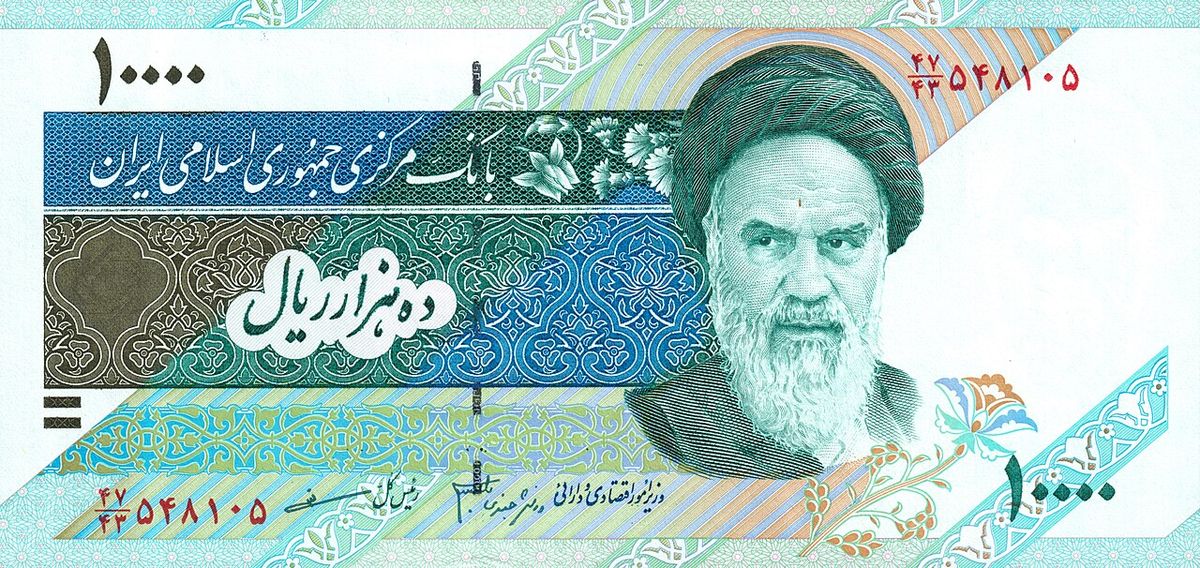
The Iranian rial is the official legal tender of the Islamic Republic of Iran, with its issuance controlled by the Central Bank of Iran. The currency is subdivided into 100 dinars, but the dinar's extremely low value means it has no practical use in everyday transactions. In daily life, Iranians primarily quote prices and conduct business using the toman, a colloquial unit where one toman equals 10 rials. This disconnect between the official currency and common usage has persisted for decades. The rial's symbol is the Unicode character U+FDFC (﷼), known as the Rial Sign, though it is not universally used. Banknotes and coins are denominated in rials, with the highest value legal tender banknote being 100,000 rials. Due to severe inflation, even this high-denomination note had a value of less than one Canadian cent in early 2026.
Historical Development and Devaluation
The rial was first introduced in 1798 as a coin worth 1,250 dinars. It ceased to be issued in 1825, replaced by the qiran, but was reintroduced in 1932, replacing the qiran at par and subdivided into 100 new dinars. Initially, the rial was pegged to sterling, and later to the US dollar at a rate of 32.25 rials per dollar in 1945. The currency maintained relative stability until the 1979 Islamic Revolution, after which capital flight caused its value to plummet. From 70 rials per US dollar in 1979, the unofficial rate fell to 9,430 rials by July 1999. The decline accelerated under the pressure of international sanctions and domestic economic policies. The government has frequently intervened in the foreign exchange market, at times selling hundreds of millions of US dollars daily to keep the rial exchange rate between specific ranges. A major devaluation occurred in 2012 following new sanctions, with the rial losing 50% of its value in a few days. The currency's collapse continued into the mid-2020s, influenced by events like the death of Mahsa Amini in 2022 and the US presidential election in 2024.
Key devaluation events in the 21st century include the rial losing 50% of its value in January 2012 following new international sanctions. In June 2020, the rial had fallen nearly five-fold since the beginning of 2018. After nationwide protests began in September 2022, the rial's exchange rate dropped by 29%. At the end of 2024, the rial reached its lowest value at 820,500 to one US dollar. In December 2025, the rial dropped to a record low of 1.42 million rials to the US dollar.
- 2002: Unified market rate established around 8,200 rials per dollar.
- January 2012: Rate plunges to 17,000 rials per dollar after sanctions.
- 2018 to 2020: Rial falls nearly five-fold, contributing to record inflation.
- September 2022: Rate drops 29% following nationwide protests.
- End of 2024: Rial hits 820,500 per US dollar.
- December 2025: Rate collapses to a record 1.42 million rials per dollar.
- September 2026: Rial falls to 2.5 million per US dollar.
The relentless devaluation has been driven by the government printing money in excess of economic growth. It has also been driven by international sanctions blocking channels for transferring foreign currency to and from Iran. Regional conflicts, such as the government of Israel striking Iran and starting the Twelve-Day War in June 2025, contributed to the decline. The collapse in the exchange rate was one of the causes of the 2025 to 2026 Iranian protests. This collapse led to the resignation of the Governor of the Central Bank of Iran, Mohammad Reza Farzin, on December 29, 2025.
Exchange Rate Systems and Controls
For most of its modern history, Iran operated a multi-tiered exchange rate system that created an unequal competitive environment. Until 2002, state enterprises benefited from a preferred official rate of 1,750 rials per US dollar, while the private sector paid a market rate of around 8,000 rials. An export rate of 3,000 rials per dollar also existed for certain trade transactions. In 1998, the central bank introduced a currency certificate system traded on the Tehran Stock Exchange, creating a floating TSE rate. This became the basis for a unified, market-driven exchange rate regime implemented in March 2002, which abolished the official preferred rate. However, the central bank maintains tight control over the rial's value, managing demand through state ownership of oil revenues and supervision of foreign exchange allocations. The government has launched and cancelled foreign exchange centres aimed at unifying rates and providing cheaper currency for basic goods imports. Multiple currency practices persisted, with the central bank in 2012 categorizing imported goods by priority, with food and medicine receiving foreign exchange at an official rate, while other needs were left to the parallel market. The widening gap between official and unofficial rates, which exceeded 20% in 2011, shows the correlation between foreign currency value and domestic inflation.
Redenomination Plans to the Toman
Due to the rial's low value, redenomination or a change of currency has been proposed since the late 1980s. The primary plan is to remove zeros and reintroduce the toman as the official unit. Early proposals involved cutting three or four zeros. In 2008, the central bank announced plans to slash four zeros and rename the currency the toman, a step previewed on traveller's cheques. A public poll in 2011 suggested cutting four zeros and renaming the currency Parsi. In 2016, the government announced a plan to end the official status of the rial and replace it with the toman. This was approved by the Iranian parliament in May 2020, with one new toman equalling 10,000 old rials, a process estimated to cost $160 million and take up to two years. The most recent legislative action occurred on October 5, 2025, when the Islamic Consultative Assembly voted in favour of a redenomination plan. The new rial would be equal to 10,000 current rials and subdivided into 100 qirans, with both currencies circulating in parallel for three years. Opponents of redenomination have historically feared it could trigger psychological effects leading to more inflation and an increase in the velocity of money, causing further economic instability.
The Rial in the Canadian Context
For Canadians, the Iranian rial is a highly volatile foreign currency with no direct official market in Canada. Exchange rates are determined by the unofficial open market in Iran, and rates quoted by Canadian services reflect these fluctuating prices. As of October 2026, one Canadian dollar was worth approximately 1,914,000 Iranian rials. Obtaining physical rial banknotes in Canada is difficult, as most standard foreign currency exchange places in major cities like Ottawa do not carry it. Canadians needing rials typically rely on specialized international money transfer services or digital platforms that deal with exotic currencies. These services facilitate remittances to Iran, which is a common need within the Iranian-Canadian community. Transactions are subject to the complex web of international sanctions affecting Iranian financial institutions, which can complicate transfers and increase costs. Specialist currency exchanges operating in Canada, such as Million Exchange, provide services for the rial and other currencies globally. These institutions, with branches in Canada, the UK, the UAE, and Turkey, offer money transfer and currency conversion, emphasizing security and efficiency. They operate within the regulatory frameworks of the countries they serve, managing the restrictions imposed on transactions with Iran. For individuals, the primary methods to convert Canadian dollars to rials involve digital platforms that use real-time mid-market exchange rates or through direct transfers to Iranian bank accounts, though the latter can be hindered by banking sanctions.
Banknotes, Coins and Digital Rial
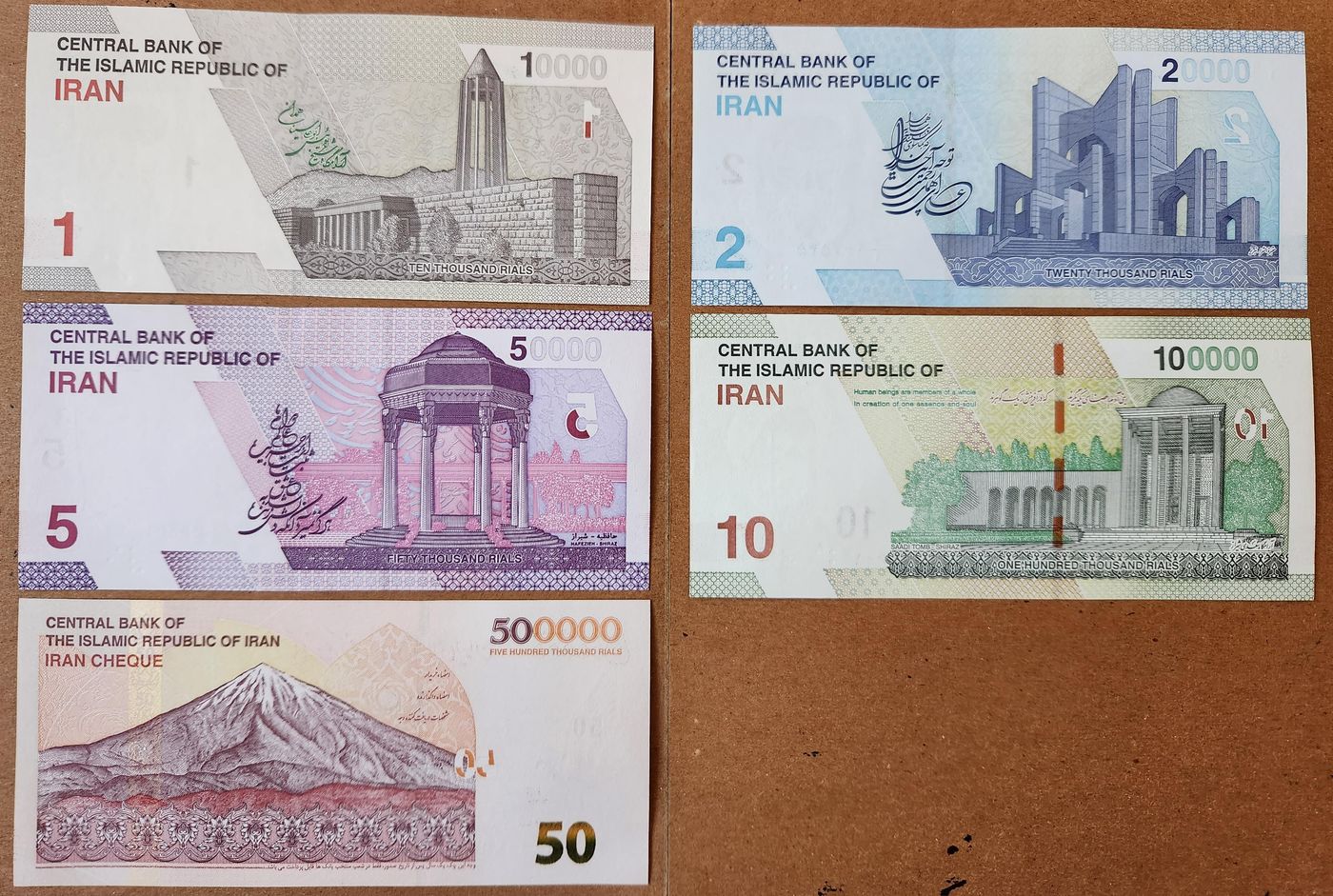
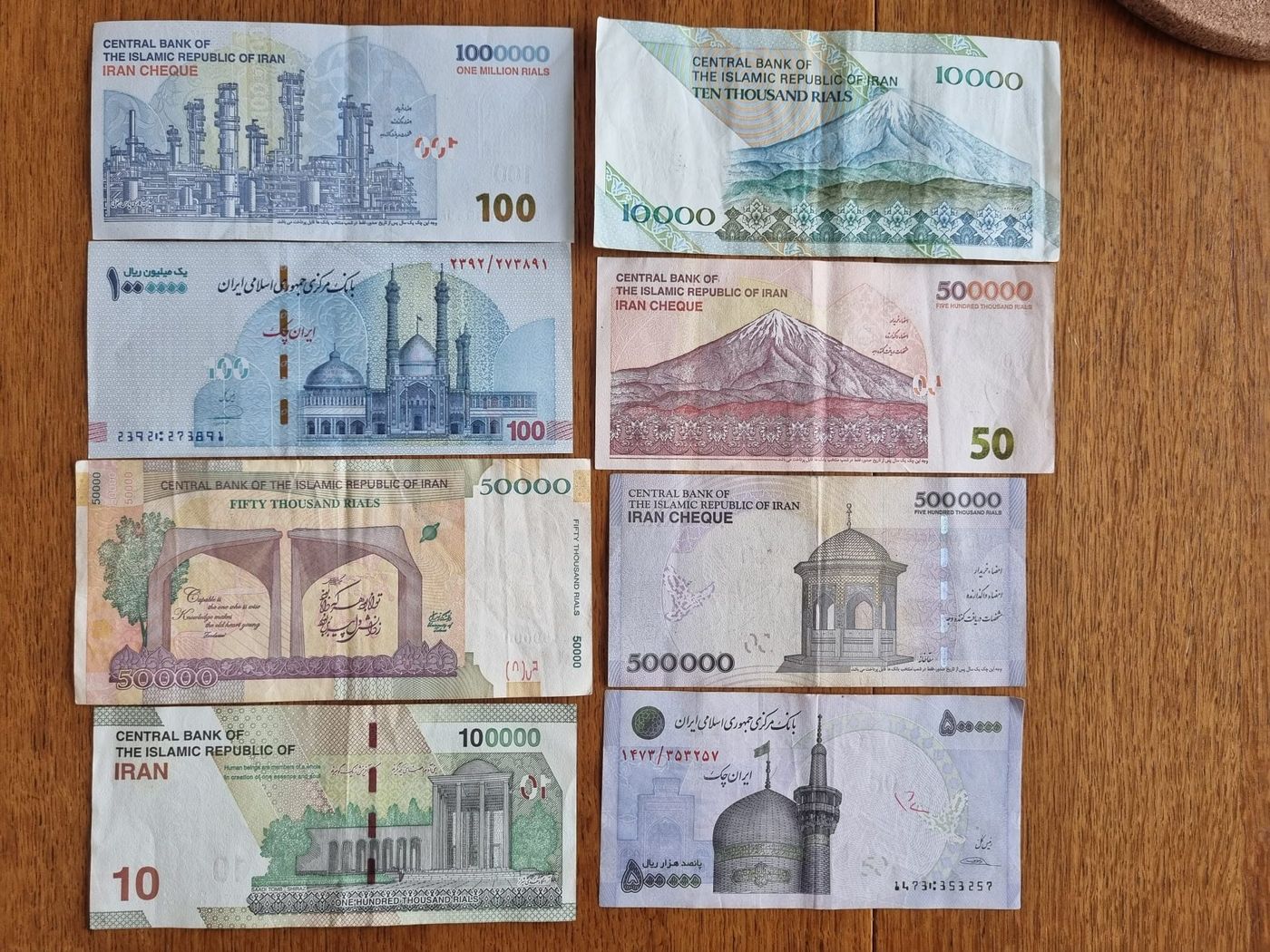
Iranian banknotes are issued by the Central Bank of Iran and bear the signature of its president. Current denominations in circulation include 100, 200, 500, 1,000, 2,000, 5,000, 10,000, 20,000, 50,000 and 100,000 rials. The lower denominations like the 100, 200 and 500 rial notes are increasingly uncommon in daily use, and shopkeepers sometimes give small items like gum instead of 500 rial change. For day-to-day purposes, people carry large bundles of 100,000 rial notes. For many years, the highest note was 10,000 rials, but due to inflation, 20,000 and 50,000 rial notes were introduced in 2005, followed by a 100,000 rial note. Despite this, even the 100,000 rial note had a minuscule value internationally, worth about US$0.074 in early 2026. To cope with cash shortages, the central bank has allowed major state banks to issue 'cash cheques', which are bearer cheques printed like banknotes that circulate freely as cash. Modern coin denominations have included 1, 2, 5, 10, 25, 50, 100, 250, 500, 1,000, 2,000 and 5,000 rials, with sizes reduced over time as metal values rose. In a move towards modernisation, the Central Bank of Iran announced a Digital Rial, also called Crypto Rial or Iran's National Currency, in 2021, though details on its full implementation remain limited. Its release is intended to be based on the existing Modern Rial system.
Economic Impact and Risks
The rial's precipitous decline is both a cause and symptom of Iran's severe economic challenges. This erosion of purchasing power devastates savings and wages, leading to widespread social unrest, such as the protests in 2025 to 2026. The government's reliance on printing money to finance deficits, a phenomenon known as seigniorage, is a primary driver of inflation. International sanctions have exacerbated the problem by blocking normal channels for foreign trade and currency exchange, forcing more activity onto a volatile black market. The economic instability has also led to Dutch disease, where oil export revenues cause the national currency to appreciate in a way that harms non-oil exports, though in Iran's case, managed devaluation has been used to try to support export competitiveness. For any foreign entity or individual dealing with Iran, the primary risks are currency risk, where the value of rial holdings can evaporate overnight, and transaction risk, where sanctions can freeze or block financial transfers entirely. The active black market and the differential between various exchange rates add layers of complexity and potential loss.
Exchange Rate History Against Major Currencies
The rial's exchange rate history illustrates its dramatic long-term devaluation. It was first pegged to sterling in 1932 at a rate of 59.75 rials per pound. In 1945, the rial was pegged to the US dollar at a rate of 32.25 rials. By July 1999, one US dollar equalled 9,430 rials. The value of the rial declined precipitously after the Islamic Revolution because of capital flight from the country. The exchange rate dropped all year in 2025, with the rial starting the year at 817,500 to the US dollar.
| Year | Event or Rate | Rials per US Dollar |
|---|---|---|
| 1932 | Pegged to Sterling | £1 = 59.75 Rls |
| 1945 | Pegged to US Dollar | 32.25 |
| 1973 | Post-devaluation peg | 68.725 |
| 1979 | After Revolution | ~70 |
| July 1999 | Market Rate | 9,430 |
| 2002 | Unified Market Rate | 8,200 |
| Jan 2012 | Post-sanctions low | 17,000 |
| End 2024 | Record low at time | 820,500 |
The rate against the Canadian dollar has followed a similar catastrophic trend. In October 2026, the CAD/IRR rate was approximately 1,914,000, representing a massive increase from historical levels. This means that over the six months prior to that date, the price in rials for one Canadian dollar increased by 67.02%. Such volatility makes the rial one of the world's weakest and most unstable currencies, with profound implications for Iran's economy and its international financial interactions. The rial's exchange rate dropped all through 2025, influenced by factors including the Israeli strike on Iran and the start of the Twelve-Day War in June of that year.
Frequently asked questions
What is the difference between the Iranian rial and the toman?
The Iranian rial is the official currency of Iran, as issued by the Central Bank. The toman is a colloquial and historical unit of account that is widely used in everyday speech and commerce. One toman is equal to 10 rials. Due to the rial's extremely low value, prices are often quoted in tomans, effectively ignoring the last zero. The government has approved plans to officially replace the rial with the toman, making one new toman equal to 10,000 old rials, but this redenomination has been planned for years and is yet to be fully implemented.
Can I buy Iranian rials in Canada?
Obtaining physical Iranian rial banknotes in Canada is challenging. Standard currency exchange offices in major Canadian cities typically do not stock the rial due to low demand and the complexities of dealing with a currency under international sanctions. Canadians seeking rials usually use specialized international money transfer services that operate digitally or have global networks, such as Million Exchange, which has branches in Canada. These services can facilitate transfers of funds to Iran, which are then available in local currency, but they generally do not provide physical rial cash.
Why has the Iranian rial lost so much value?
The Iranian rial has collapsed due to a combination of severe economic mismanagement, international sanctions, and political instability. Key factors include the government financing spending by printing excessive amounts of money, leading to hyperinflation. International sanctions, particularly those targeting the Central Bank of Iran, have blocked normal foreign exchange channels, crippling trade and forcing reliance on a volatile black market. Capital flight, especially after the 1979 revolution, drained foreign reserves. More recently, domestic protests, regional conflicts like the Twelve-Day War, and a loss of public confidence have accelerated the decline.
What is the current exchange rate for Canadian dollars to Iranian rials?
The exchange rate between the Canadian dollar and the Iranian rial is extremely volatile and determined by the unofficial open market in Iran. As of October 2026, one Canadian dollar was worth approximately 1,914,000 Iranian rials. This rate can change significantly within a single day. For example, it rose by 25,000 rials (1.32%) in one day in October 2026. Reliable real-time rates are published by various financial tracking platforms and through channels like the Bonbast Telegram channel, which monitors the Iranian open market.
Are there plans to change the Iranian currency?
Yes, the Iranian government and parliament have repeatedly approved plans to redenominate the currency by removing zeros and reintroducing the toman. The most recent parliamentary vote was on October 5, 2025, which approved a plan where a new rial would equal 10,000 current rials and be subdivided into 100 qirans. The old and new currencies would circulate in parallel for three years. Similar plans have been discussed since the 1980s, and an earlier version to make one toman equal 10,000 rials was approved by parliament in May 2020. The slow implementation is due to cost, logistical complexity, and fears that the change could trigger further inflation.
What are the risks of holding or dealing in Iranian rials?
The primary risk is catastrophic currency devaluation, where the rial's purchasing power can evaporate rapidly due to hyperinflation. There is also significant political and sanctions risk. International sanctions can freeze transactions and make it illegal for certain institutions to deal with Iranian financial entities. The lack of a stable, official exchange rate and reliance on a black market adds uncertainty and potential for fraud. For Canadians sending remittances, transfer times can be lengthy, fees can be high, and there is always a risk that funds may be blocked or delayed due to the complex regulatory environment.
Sources and further reading
- Iranian rial (Wikipedia) en.wikipedia.org
- CAD to IRR Exchange Rate on Wednesday 21 October 2026 alanchand.com
- Canadian dollars to Iranian rial Exchange Rate. Convert ... wise.com
- Live Iranian Rial (IRR) & Toman Rates, Iran Open Market bon-bast.com
- | صرافی میلیون | Million Currency Exchange millionex.ca
This article explains how things work and is not financial, tax or legal advice. Rules, limits and rates change, so check the current figures with the Canada Revenue Agency, your province or your financial institution before you act.