Gross profit is a fundamental financial metric representing the amount a company retains after subtracting the direct costs of producing its goods or services from its revenue. For Canadian businesses, it serves as a primary indicator of production efficiency and pricing strategy before accounting for overheads like administration, marketing, and taxes. Understanding gross profit and its related margin is crucial for benchmarking performance, securing financing, and making strategic operational decisions. This article explains what gross profit is, how to calculate it, and its specific applications and significance within the Canadian economic landscape.
Definition and Core Calculation
Gross profit is defined as the profit a business makes after deducting variable production costs but before accounting for fixed operating costs. It is calculated by subtracting the Cost of Goods Sold (COGS) for product-based businesses, or the Cost of Revenue (COR) for service-based businesses, from total revenue. Revenue, also commonly referred to as sales or turnover in a Canadian context, is the total income generated from a company's primary operations before any deductions. The direct costs included in COGS or COR encompass expenses directly tied to production, such as raw materials, direct labour, and manufacturing overheads. It is technically correct to use the term gross profit when speaking about a monetary amount, while gross margin refers to the resulting percentage. This calculation provides a clear snapshot of the funds remaining to cover operating expenses and generate net profit.
Gross Profit Margin and Its Significance
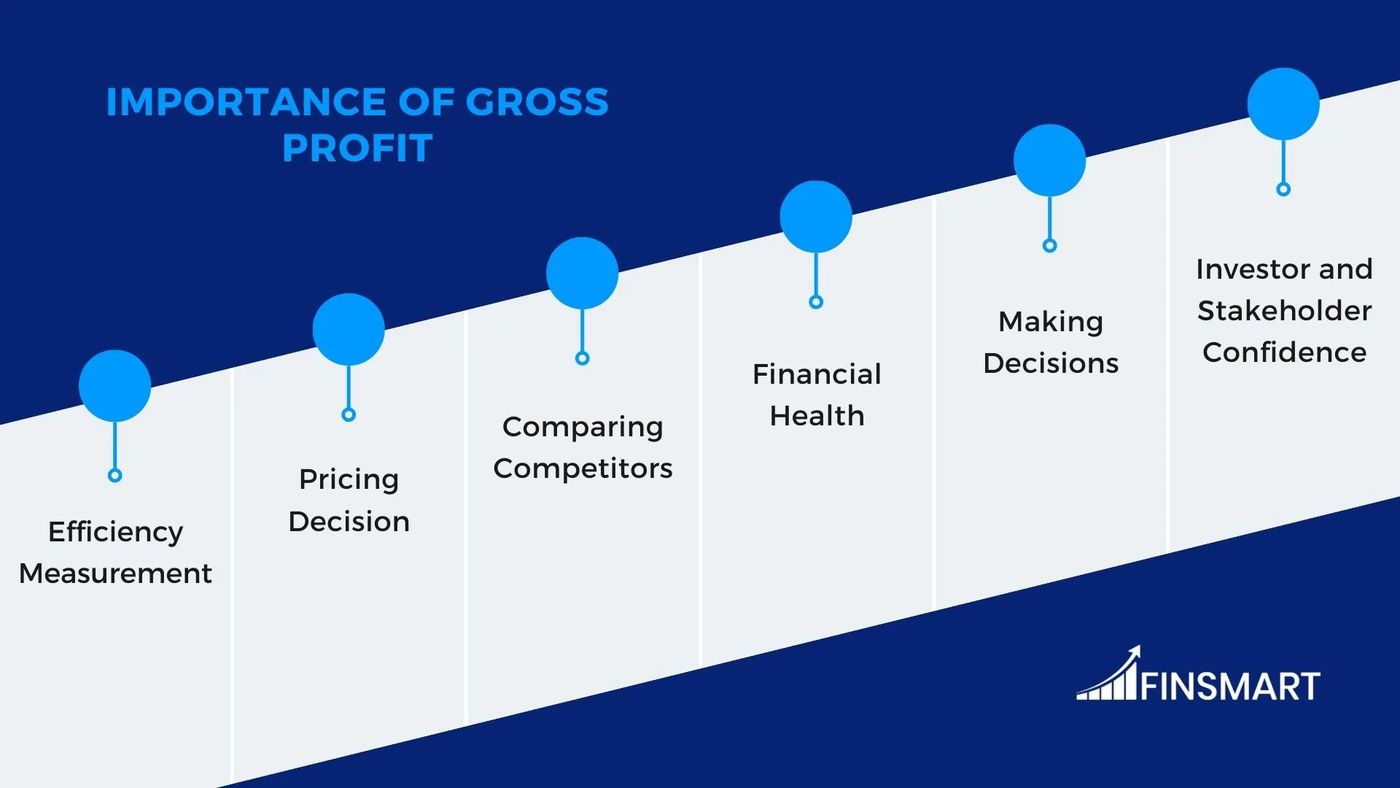
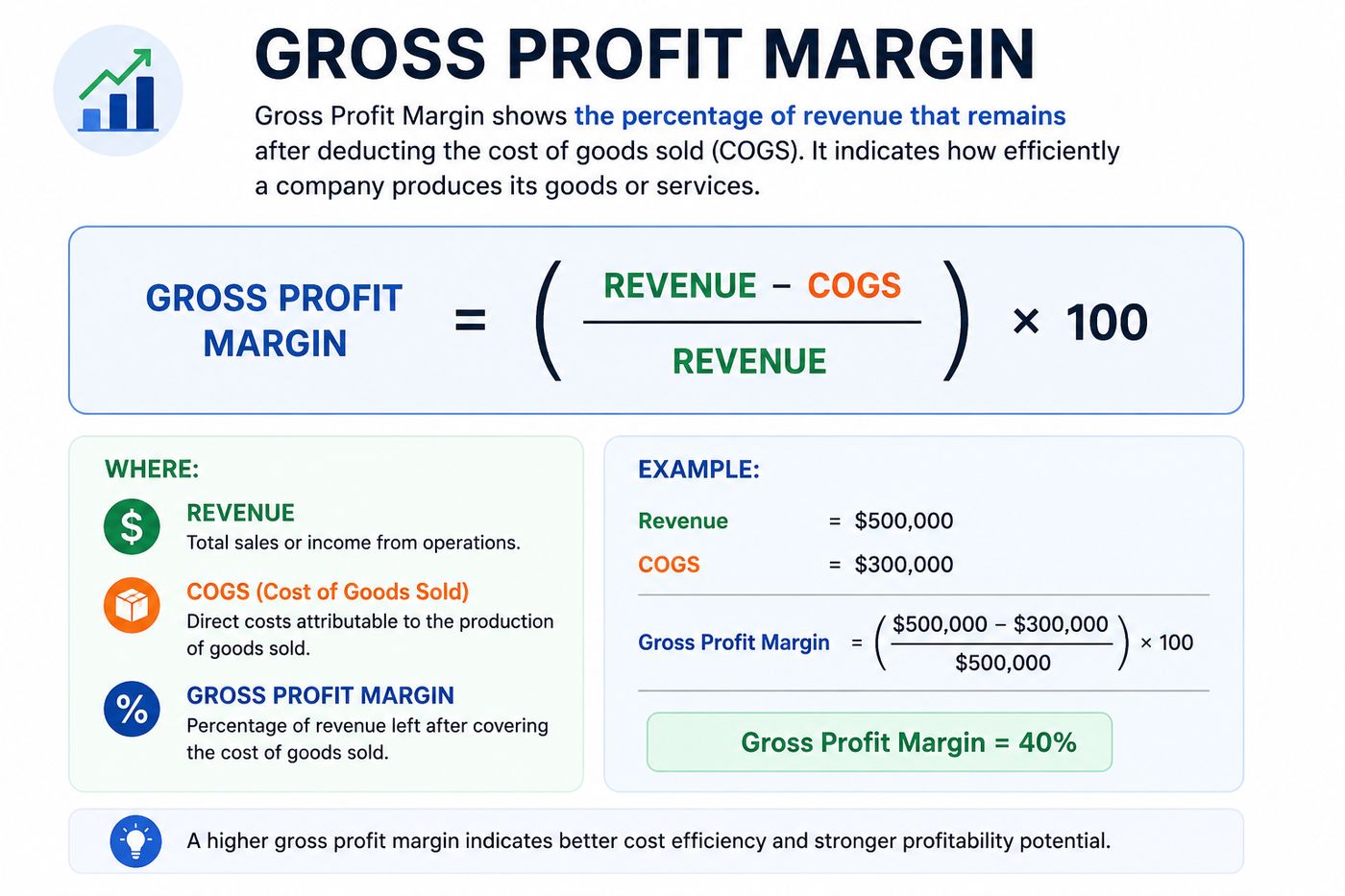
The gross profit margin ratio is a percentage derived from gross profit and is crucial for comparative analysis. The formula is (Gross Profit / Revenue) × 100. This ratio indicates how much of each dollar of revenue is retained as gross profit. For instance, a gross profit margin of 65 percent means that for every dollar of revenue, 65 cents remain after covering direct production costs. This metric is more valuable than the raw gross profit figure for tracking a company's performance over time or comparing it against competitors within the same industry. A healthy margin varies significantly by sector. Service industry firms like law firms or banks often report gross margins in the high-90 percent range due to low production costs. In contrast, retailers or manufacturers operate with lower margins, with clothing retail sometimes ranging from 3 to 13 percent. The margin serves as a key tool for Canadian business owners to assess pricing strategies and operational efficiency.
Business owners can use the gross profit margin to benchmark against industry averages. Setting a goal to meet or exceed the industry benchmark, such as striving for 70 percent when the average is 65 percent, can drive strategic improvements. Monitoring this ratio month-to-month helps identify trends, such as costs rising faster than revenue, which jeopardizes profitability. If the margin falls behind industry standards without a clear external cause, it prompts introspection into operational processes or pricing. Factors affecting this margin include the costs of labour, materials, and other variable production inputs. In a low-margin business, there is less room for error, making efficient cost control paramount.
Gross Profit in the Canadian Business Landscape
In Canada, gross profit analysis is integrated into standard financial reporting and is a critical component for lenders assessing a business's health. Canadian financial institutions and advisors emphasize using gross profit margin for benchmarking against industry peers. For example, data from Statistics Canada's Annual Wholesale Trade Survey provides industry-specific benchmarks. In 2023, for the 'Other miscellaneous merchant wholesalers' industry (NAICS 4189), total operating revenues in Canada were $17.3 billion, generating $1.1 billion in profits. The pre-tax profit margin for this industry was 6.4 percent. Nationally, the cost of goods sold accounted for 77.9 percent of total expenses for wholesalers in 2023. This highlights how a significant portion of revenue is consumed by direct costs, underscoring the importance of managing gross profit.
Canadian business resources, such as those from BDC and Sage, stress that gross profit is a crucial building block for understanding overall financial health. It is the first figure calculated on a profit and loss statement. For small businesses, the term 'sales' is often used instead of 'revenue' or 'turnover,' but the underlying calculation remains the same: money received from customers minus the direct cost of acquiring or producing what was sold. External economic factors like inflation, supply-chain issues, and global economic shifts can cause gross profit to fluctuate. Canadian businesses must therefore be agile, deciding whether to absorb higher costs or pass them to customers, a decision weighed against competitive pressures and consumer affordability during events like a cost-of-living crisis.
Relationship to Other Profit Metrics
Gross profit is the first step in a cascade of profitability measures on an income statement. The progression from revenue to net income follows a standard accounting sequence. Net sales are calculated as gross sales minus customer discounts, returns, and allowances. Gross profit is then net sales minus cost of goods sold. Operating profit, or earnings before interest and taxes (EBIT), is derived by subtracting total operating expenses like rent, salaries, and marketing from gross profit. Finally, net income (net profit) is operating profit minus taxes and interest payments. Each metric serves a distinct purpose. Gross profit isolates production efficiency, operating profit reflects core business operational health, and net profit shows the ultimate bottom-line profitability after all obligations. Understanding these relationships is vital for Canadian business owners. While gross profit indicates how well a company produces its goods, net profit reveals whether the business is sustainably profitable after all costs, including non-core expenses like interest on debt or one-time asset sales. The net profit margin ratio, calculated as (Net Income / Revenue) × 100, provides a comprehensive view of overall financial health but can be influenced by factors outside core operations, such as tax rates or financing decisions.
The standard calculation sequence for key profit metrics begins with net sales. Net sales are derived from gross sales after subtracting customer discounts, returns, and allowances. Gross profit is then calculated by subtracting the cost of goods sold from these net sales. Operating profit is determined by subtracting total operating expenses from the gross profit figure.
- Net Sales = Gross Sales, (Customer Discounts + Returns + Allowances)
- Gross Profit = Net Sales, Cost of Goods Sold
- Gross Margin = [(Net Sales, Cost of Goods Sold) / Net Sales] × 100%
- Operating Profit = Gross Profit, Total Operating Expenses
- Net Income (Net Profit) = Operating Profit, Taxes, Interest
Practical Application and Strategic Use
Calculating gross profit is straightforward, but its strategic application requires deeper analysis. The basic formula is Total Revenue from Sales minus Cost of Goods and Services Sold. For a simple example, a retailer selling cans of cola for $1 each, purchased at $0.50 per can, has a gross profit of $0.50 per unit. If sales prices fall to or below the cost price, gross profit becomes zero or a loss. This figure is the foundation for determining net profit, where indirect costs like rent, utilities, and administrative salaries are further deducted. Business owners use gross profit to quickly assess whether their pricing covers direct production costs and to identify issues like paying too much for materials or not charging enough for finished products. Gross profit margin analysis helps identify operational strengths and weaknesses. If the margin is declining over time while industry benchmarks are stable, it signals that direct costs are rising faster than revenue. This could be due to increased material costs, inefficient labour usage, or supply chain disruptions. In response, businesses must either increase prices or find operational efficiencies, such as investing in automation or renegotiating supplier contracts. For industries with inherently thin margins, like retail or food service, even small increases in COGS can significantly impact viability, making precise cost control essential. The metric also informs lenders. A strong and stable gross margin suggests a business can service debt from its core operations.
Risks, Limitations, and Common Debates
While gross profit is a valuable indicator, it has limitations and is subject to interpretation. A primary risk is relying solely on gross profit to gauge overall business health. A company can have a robust gross profit but still incur net losses if its operating expenses are excessively high. Therefore, it must always be considered alongside operating profit and net profit. Another debate centres on cost allocation methods, particularly the absorption costing method, where a portion of fixed overhead costs is assigned to each unit produced. This can affect the COGS figure and, consequently, the gross profit calculation, making comparisons between companies using different accounting methods less reliable. In the Canadian context, a key discussion involves how businesses respond to rising production costs. During periods of inflation or supply chain stress, companies face the dilemma of absorbing higher costs to maintain customer affordability or passing them on through price increases. Businesses that absorb costs may be praised for social responsibility but risk eroding their gross margin. Those that raise prices may protect profitability but could lose market share in competitive industries. Furthermore, industry benchmarking using gross margin must be done cautiously, as comparing a manufacturer's margin to a software company's is not meaningful due to vastly different cost structures. The metric is best used for tracking a company's own trend over time or comparing direct competitors within the same sector.
Historical and Regulatory Context
The concept of gross profit has been a central part of accounting and taxation systems for a long time. In the United States, the Internal Revenue Code defines gross income broadly as 'all income from whatever source derived,' which serves as the starting point for determining taxable income. While Canadian tax law has its own structure, the fundamental accounting principle that gross profit (revenue minus direct costs) precedes the calculation of taxable income is universally applied. The distinction between gross profit and net profit for tax purposes is critical, as deductions for business expenses are applied after the gross profit figure is established. Historical Supreme Court rulings in the U.S., such as those defining income as 'gain derived from capital, from labor, or from both combined,' have helped form the understanding of income realization used in gross profit calculations. For Canadian businesses, the regulatory context emphasizes accurate financial reporting. Gross profit is a standard line item on income statements prepared according to Generally Accepted Accounting Principles (GAAP) or International Financial Reporting Standards (IFRS). Statistics Canada collects and publishes industry data, including components like cost of goods sold as a percentage of expenses, which informs national economic analysis. Changes in statistical methods, such as those implemented for reference year 2013, can affect the comparability of historical industry data, requiring users to exercise caution. The primary takeaway is that gross profit remains a universally recognized and regulated metric for assessing the initial layer of business profitability before overheads are considered.
Frequently asked questions
What is the gross profit formula?
The gross profit formula is Revenue minus Cost of Goods Sold (COGS). For service-based businesses, Cost of Revenue (COR) is used instead of COGS. Revenue is the total income from sales before any deductions. COGS includes all direct costs associated with producing the goods sold, such as raw materials and direct labour. The result is a monetary value representing profit before overhead expenses.
How do you calculate gross profit margin?
Gross profit margin is calculated by dividing gross profit by revenue and multiplying by 100 to get a percentage. The formula is (Gross Profit / Revenue) × 100%. For example, if a company has $100,000 in revenue and $35,000 in COGS, its gross profit is $65,000. The gross profit margin is ($65,000 / $100,000) × 100% = 65%. This percentage is used for benchmarking and tracking efficiency over time.
What is the difference between gross profit and net profit?
Gross profit is the difference between revenue and the cost of making a product or providing a service. Net profit, also called net income, is operating profit minus taxes and interest. Gross profit is calculated before deducting overheads, payroll, taxation, and interest payments. Net profit represents the final amount of income after all business expenses are met.
What is a good gross profit margin for a Canadian business?
A good gross profit margin varies widely by industry. For service sector businesses like law firms or banks, margins in the high-90% range are typical. For retailers or manufacturers, margins are lower. Clothing retail can range from 3% to 13%, while some fast-food chains may achieve up to 40%. The key is to benchmark against your specific industry average in Canada and aim to meet or exceed it over time.
Why is gross profit important for Canadian small businesses?
Gross profit is important for Canadian small businesses as it is the amount remaining after deducting costs related to manufacturing and selling products and services. It is a key metric for assessing a company's financial health and operational efficiency. Business owners use it to track performance over time and to compare against industry benchmarks. Lenders also use gross income as a baseline for assessing a borrower's repayment capacity.
Can gross profit be negative?
Yes, gross profit can be negative, which indicates a gross loss. This occurs when the direct cost of producing goods or services (COGS) exceeds the revenue generated from selling them. For example, if a product costs $10 to make but sells for only $8, the gross profit is -$2 per unit. This situation is unsustainable and signals urgent problems with pricing, cost control, or both.
Sources and further reading
- Gross profit (Wikipedia) en.wikipedia.org
- What is the gross profit margin bdc.ca
- Other miscellaneous merchant wholesalers - 4189 ised-isde.canada.ca
- What is gross profit? squareup.com
- What is gross profit and how to calculate it, Sage sage.com
- Gross Profit vs. Net Profit: What's the Difference? salesforce.com
This article explains how things work and is not financial, tax or legal advice. Rules, limits and rates change, so check the current figures with the Canada Revenue Agency, your province or your financial institution before you act.