Gross margin, also known as gross profit margin, is a key financial metric that measures the percentage of revenue a company retains after accounting for the direct costs of producing its goods or services. It is calculated by subtracting the cost of goods sold from total revenue and dividing that figure by revenue, expressed as a percentage. For Canadian business owners and investors, understanding gross margin is essential for evaluating operational efficiency, pricing strategies, and overall financial health. This metric serves as the first checkpoint in determining whether a business model is sustainable and profitable.
Definition and Core Calculation
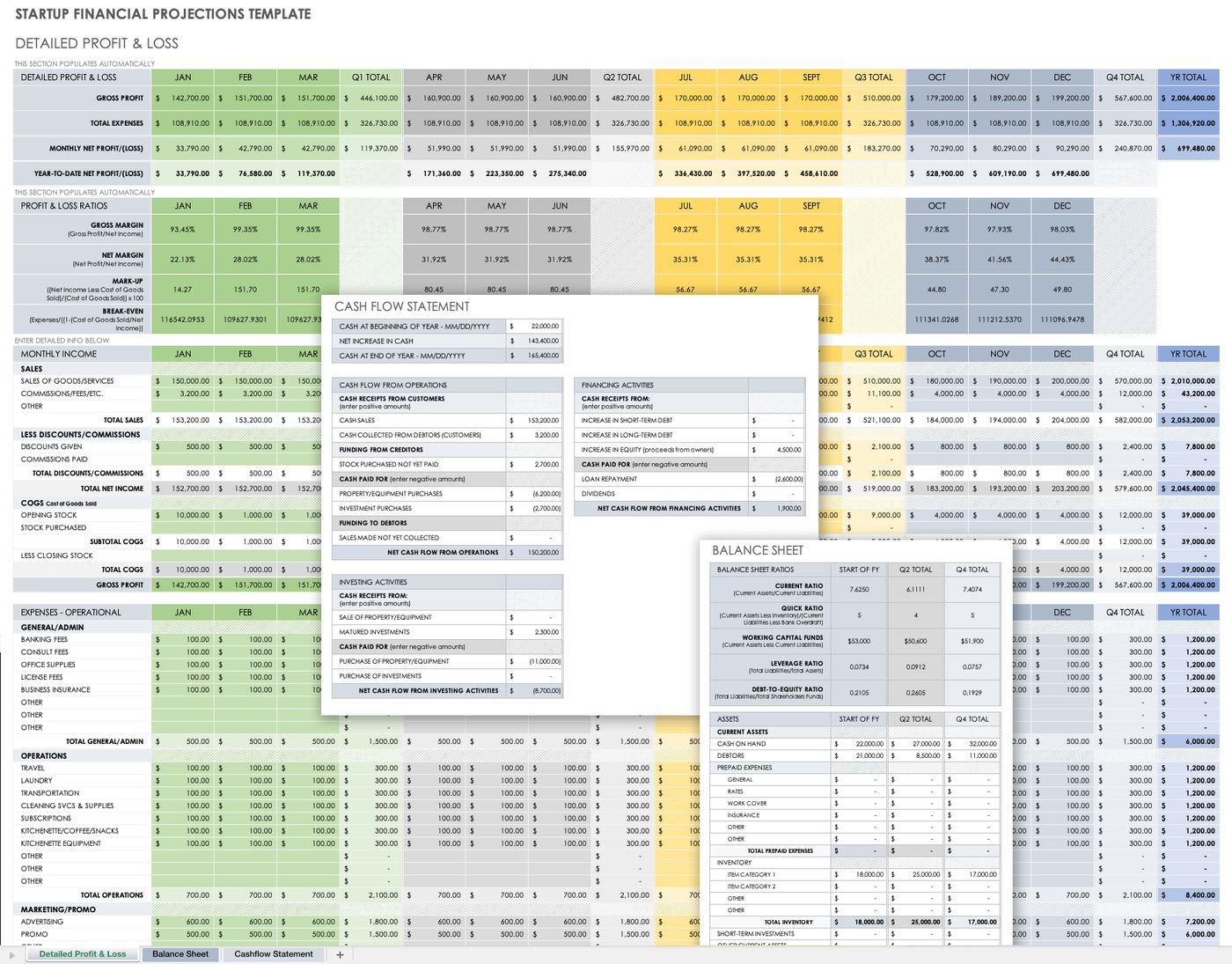
Gross margin is the difference between a company's revenue and its cost of goods sold, divided by its revenue and expressed as a percentage. The cost of goods sold includes all direct, variable costs tied to production or acquisition, such as raw materials, direct labour, and supplier costs. It explicitly excludes indirect fixed costs like office rent, administrative salaries, and utilities. The fundamental formula for gross margin is Gross Margin Percentage = (Revenue, COGS) / Revenue × 100%. For example, if a Canadian company has $800,000 in revenue and $500,000 in COGS, its gross profit is $300,000. The gross margin is then ($300,000 / $800,000) × 100% = 37.5%. This means 37.5 cents of every dollar of revenue remains after covering direct production costs. It is crucial to distinguish gross margin from gross profit, as the latter is the absolute dollar amount ($300,000 in the example), while the former is the percentage ratio. Financial advisors and managers use the percentage to enable comparisons across different time periods and companies of varying sizes.
Unit Margin, Percentage Margin, and Markup
Managers and marketers often work with two related concepts: unit margin and percentage margin. Unit margin is the simple dollar difference between the selling price per unit and the cost per unit. These two perspectives are easily reconciled, and effective managers can switch between them. A survey of nearly 200 senior marketing managers found 78 percent considered the margin percentage metric very useful, while 65 percent found unit margin very useful. Another critical distinction is between margin and markup. Markup expresses profit as a percentage of the cost. Retailers use markup to easily set prices from a known cost, while margin is used to calculate profit directly from total sales revenue.
Converting between markup and gross margin requires specific formulas. To convert a markup to a gross margin, the formula is gross margin = markup / (1 + markup). To convert a gross margin to a markup, the formula is markup = gross margin / (1 - gross margin). Therefore, a 40% gross margin (0.4) converts to a markup of 0.4 / (1 - 0.4) = 0.667 or 66.7%. These conversions are vital for pricing decisions. To calculate a selling price needed to achieve a target gross margin given a known cost, the formula is Selling Price = Cost / (1 - Gross Margin). If a product costs $100 and the target gross margin is 40%, the required selling price is $100 / (1 - 0.4) = $166.67.
Application and Importance for Canadian Businesses
For Canadian entrepreneurs and financial advisors, gross margin is a primary indicator of a company's financial performance and the sustainability of its business model. It represents the first stage of profitability analysis. If a company's gross margin is negative, it is a major red flag, indicating the business spends more to produce its goods or services than it earns in revenue, which is not sustainable. Correctly calculating gross margin requires accurate allocation of expenses to the cost of goods sold. A common error in small businesses is misallocating expenses, such as recording all labour costs under COGS when only the labour directly involved in production should be included. This misallocation understates the gross margin and can lead to poor strategic decisions, like incorrectly targeting cost-cutting measures. Gross margin allows business owners to compare their operational efficiency against industry peers. It also helps in evaluating the potential value of incremental sales and guides critical decisions on pricing, promotions, and marketing spending. Financial advisors use it as a first-pass filter for investment analysis to assess whether a company's core operations are creating value and to spot deteriorating fundamentals early.
In the Canadian context, direct costs are referred to as cost of goods sold for manufacturing companies and cost of sales for retail and wholesale businesses. Analysing gross margin helps answer whether a business is creating economic value, which is necessary to fund growth, hire employees, or invest in new equipment. Experts recommend establishing a simple, consistent process for cost allocation to ensure accurate gross margin calculations without over-burdening small business owners with excessive financial paperwork. The goal is to have good, accurate information to ensure management time and energy are invested in the areas that will most improve performance.
- A negative gross margin is a major red flag for an unsustainable business model.
- A common error is misallocating all labour expenses under COGS, which understates the margin.
- Gross margin is used as a first-pass filter by financial advisors for investment analysis.
- It guides decisions on pricing, promotions, and the value of incremental sales.
- Canadian manufacturers use the term Cost of Goods Sold (COGS) for direct costs.
- Canadian retailers and wholesalers use the term Cost of Sales for direct costs.
- Accurate gross margin calculation helps compare performance against industry peers.
Industry Benchmarks and Variations
Gross margins vary dramatically across different sectors due to the nature of their costs and business models. There is no single good gross margin. What is considered healthy depends entirely on the industry. For example, in the clothing retail industry, gross margins are often expected to be near 40%, as retailers must buy inventory from suppliers before resale. In contrast, software product development can frequently see gross margins higher than 80% because the cost of goods sold for digital products is often very low after initial development. Discount retailers typically operate on much lower gross margins, competing through high volume and operational efficiency instead. In Canadian wholesale trade, preliminary 2023 data for the other miscellaneous merchant wholesalers industry shows a pre-tax profit margin of 6.4%, which is a net margin figure derived after all expenses. This highlights how gross margin, which is higher, is just the first layer of profitability. The agriculture industry, particularly within the European Union, uses a related concept called Standard Gross Margin to assess farm profitability. Retail analysts also use specialized tools based on gross margin, such as GMROII (Gross Margin Return On Inventory Investment), GMROS (Gross Margin Return On Space), and GMROL (Gross Margin Return On Labor), to measure performance.
- Clothing retail margins are often near 40%.
- Software development margins can exceed 80%.
- Discount retailers operate on low gross margins.
- The Canadian wholesale trade pre-tax profit margin was 6.4% in 2023.
- The agriculture industry uses Standard Gross Margin for assessment.
- Retail analysis tools include GMROII, GMROS, and GMROL.
Gross Margin in Canadian Financial Analysis
Understanding gross margin is fundamental for anyone analysing Canadian corporate financial statements or running a business. On an income statement, gross profit is listed as a dollar figure, but the gross margin percentage may not always be explicitly stated, requiring calculation. After gross profit is determined, other expenses are subtracted to arrive at net income. These expenses include selling, general and administrative costs, interest, depreciation, and income taxes. A strong gross margin provides the necessary buffer to cover these subsequent costs and achieve a positive net income. According to Statistics Canada data for wholesale trade, in 2023 the cost of goods sold accounted for 77.9% of total expenses nationally. Total labour remuneration accounted for 6.2% and other operating expenses were 15.8%. This breakdown illustrates how direct costs (COGS) dominate expenses in that sector, making gross margin a particularly sensitive and important metric. For investors, a company's gross margin trend is a key component of fundamental analysis. A declining gross margin over time can signal rising production costs, pricing pressure, or inefficiencies, all of which increase investment risk. Conversely, stable or improving gross margins suggest good cost control and a potentially durable competitive advantage.
Common Pitfalls and Strategic Considerations
Several common pitfalls can undermine the usefulness of gross margin analysis. The most frequent is the misallocation of expenses into the cost of goods sold. For instance, if administrative salaries or marketing expenses are incorrectly recorded under COGS, the gross margin will be artificially low. This could lead a business owner to mistakenly believe their production process is inefficient and make cuts in the wrong areas. Another pitfall is confusing gross margin with net profit margin. Net profit margin accounts for all business expenses, not just direct costs, and is always a lower percentage. A business can have a healthy gross margin but a low or negative net margin if its operating expenses are too high. Strategic use of gross margin involves regular monitoring by month, quarter, and product line to identify trends and anomalies. It is also used to guide pricing decisions, especially when costs change. If raw material costs increase, a business must decide whether to absorb the cost (lowering its gross margin) or raise prices to maintain it. Furthermore, businesses should use gross margin to analyse customer and product profitability, discontinuing lines or services that consistently show poor margins. The ultimate goal is to ensure the core business activity creates enough economic value to sustain and grow the enterprise.
- The most frequent pitfall is misallocating expenses like admin salaries into COGS.
- Confusing gross margin with net profit margin leads to incorrect financial assessment.
- Gross margin should be monitored regularly by month, quarter, and product line.
- It guides pricing decisions when direct costs, like raw materials, change.
- Analysing gross margin by product line helps identify unprofitable offerings.
- A healthy gross margin is necessary but not sufficient for overall net profitability.
Frequently asked questions
What is the gross margin formula?
The gross margin formula is (Revenue, Cost of Goods Sold) / Revenue × 100%. You first subtract the direct costs of production (COGS) from your total revenue to find gross profit. You then divide that gross profit by the total revenue and multiply by 100 to express it as a percentage. For example, with $800,000 in revenue and $500,000 in COGS, the calculation is (300,000 / 800,000) × 100% = 37.5% gross margin.
What is the difference between gross margin and gross profit?
Gross profit is an absolute dollar amount representing revenue minus the cost of goods sold. Gross margin is that same relationship expressed as a percentage of revenue. For instance, a gross profit of $300,000 on $800,000 of revenue is a dollar figure. The gross margin is the 37.5% that the $300,000 represents of the total revenue. Both are important, but the percentage allows for comparison across time and between companies.
What is a good gross margin?
A good gross margin varies significantly by industry. Some industries, like software, can have gross margins over 80%, while retail sectors like clothing may target around 40%. Discount retailers operate on much lower margins. There is no universal good percentage. It must be evaluated against industry benchmarks. A gross margin of 50 to 70 percent might be considered good for many businesses, but the key is that it must be positive and sufficient to cover operating expenses afterwards.
Why is gross margin important for a Canadian small business?
Gross margin is the first checkpoint for a Canadian small business to determine if its core operations are sustainable. It shows whether the business is creating economic value by retaining revenue after direct production costs. A negative gross margin is a major red flag, meaning the business model may be fundamentally flawed. It guides pricing, helps compare performance to industry peers, and identifies which products or services are most profitable. Accurate gross margin calculation is crucial for making sound strategic decisions about cost management and growth investments.
What costs are included in calculating gross margin?
Gross margin includes only direct, variable costs tied to the production or acquisition of goods sold. For a manufacturer, this is the Cost of Goods Sold and includes raw materials, direct labour, and factory overhead. For a retailer, it is the Cost of Sales, primarily the wholesale price paid for inventory. It explicitly excludes all indirect fixed costs such as office rent, administrative salaries, marketing expenses, utilities, and depreciation. Correctly allocating costs is vital for an accurate gross margin figure.
How do you convert markup to gross margin?
To convert a markup percentage to a gross margin percentage, use the formula Gross Margin = Markup / (1 + Markup). First express the markup as a decimal. This conversion is necessary because markup is based on cost while gross margin is based on selling price. Understanding this relationship helps managers switch between different pricing perspectives and guides pricing decisions. The formula is derived from the fundamental definitions of these two metrics.
Sources and further reading
- Gross margin (Wikipedia) en.wikipedia.org
- What is gross margin? bdc.ca
- Other miscellaneous merchant wholesalers - 4189 ised-isde.canada.ca
- Gross Margin wealthprofessional.ca
- What is a gross margin? | Sage Advice Canada sage.com
- Profit Margin Calculator, RBC Royal Bank rbcroyalbank.com
This article explains how things work and is not financial, tax or legal advice. Rules, limits and rates change, so check the current figures with the Canada Revenue Agency, your province or your financial institution before you act.