The Canadian Gold Maple Leaf is a government-issued gold bullion coin produced by the Royal Canadian Mint. First introduced in 1979, it is legal tender in Canada with a face value of 50 dollars for the one-ounce coin. The coin is known for its high purity, typically .9999 fine gold, making it one of the purest bullion coins available globally. Its combination of government backing, high purity, and recognizable maple leaf design has made it a bestselling modern gold bullion coin in North America and a popular choice for investors and collectors.
What Is the Gold Maple Leaf
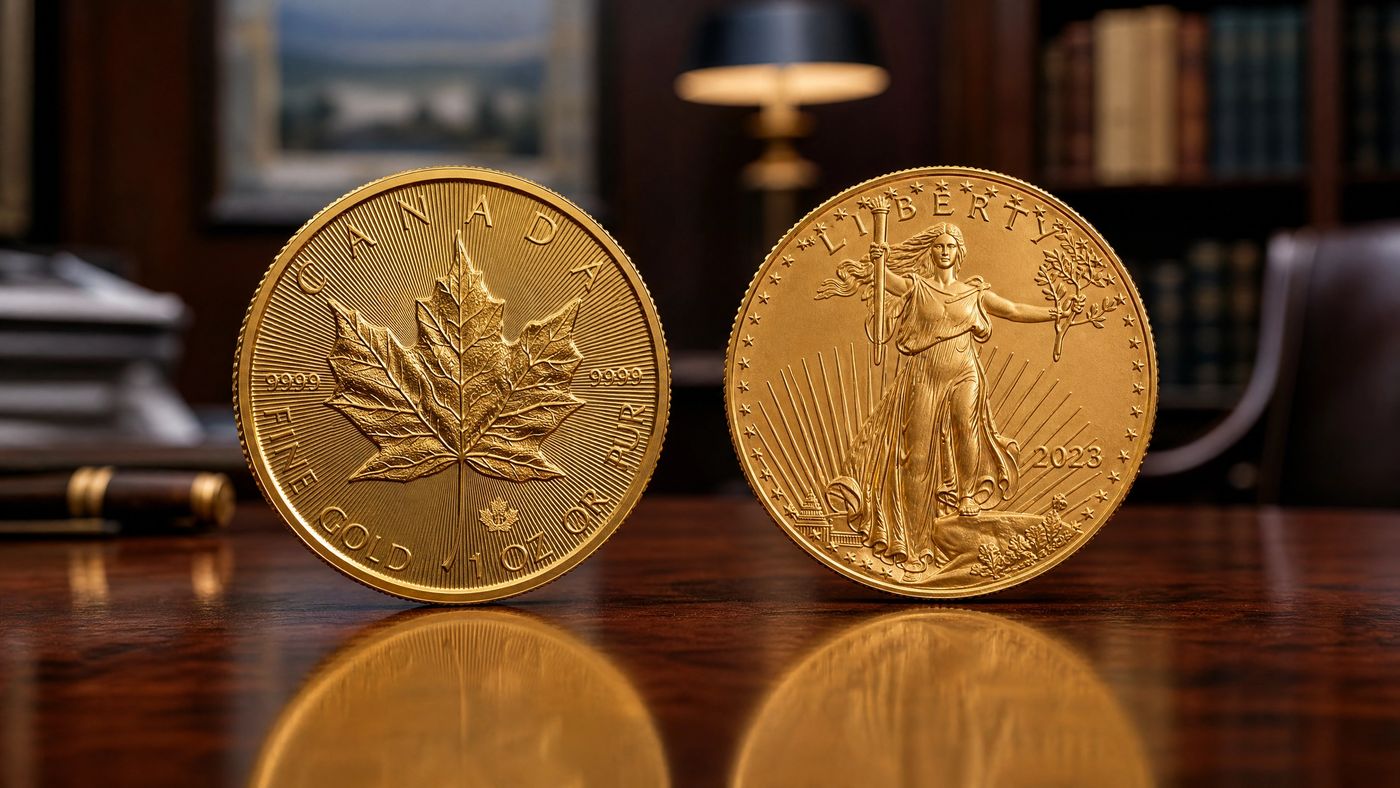
The Canadian Gold Maple Leaf is a physical gold bullion coin minted annually by the Royal Canadian Mint on behalf of the Canadian government. As legal tender, each coin carries a face value denominated in Canadian dollars, which is far below its intrinsic market value based on the prevailing spot price of gold. The primary purpose of the coin is to provide a convenient and trusted vehicle for owning investment-grade gold. Its defining characteristic is its exceptional purity, with the standard version being .9999 fine, equivalent to 24 karats. This high fineness places it among the purest official bullion coins produced anywhere in the world. The coin's design features the profile of the reigning Monarch of Canada on the obverse and a single maple leaf on the reverse, a symbol strongly associated with the nation.
Beyond the standard one-ounce coin, the Royal Canadian Mint produces the Gold Maple Leaf in several smaller fractional sizes to accommodate different investment budgets. These include coins weighing 1/2 ounce, 1/4 ounce, 1/10 ounce, 1/20 ounce, and 1/25 ounce, as well as a one-gram size. Each fractional coin has a corresponding lower face value, such as 20 dollars for the 1/2 ounce coin and 5 dollars for the 1/10 ounce coin. The smallest denomination, the 1/25 ounce coin, carries a face value of 50 cents. The availability of these sizes makes gold ownership accessible to a broader range of individuals. The Gold Maple Leaf is distinct from commemorative or numismatic coins as its value is primarily derived from its gold content rather than its rarity or collectible appeal, though special editions do exist.
History and Development
The Gold Maple Leaf was first minted and released to the public in 1979. Its introduction came at a time when there were very few options for investors seeking modern gold bullion coins. The primary competitor was the South African Krugerrand, but its availability was limited in many markets due to economic boycotts against apartheid-era South Africa. Another existing option was the Austrian 100 Corona gold coin. The Canadian entry into this market provided a politically neutral and highly liquid alternative. The initial coins minted from 1979 through 1982 had a purity of .999 fine gold. In November 1982, the Royal Canadian Mint increased the purity standard to .9999 fine gold, a specification that has defined the brand ever since and set a new benchmark for the industry.
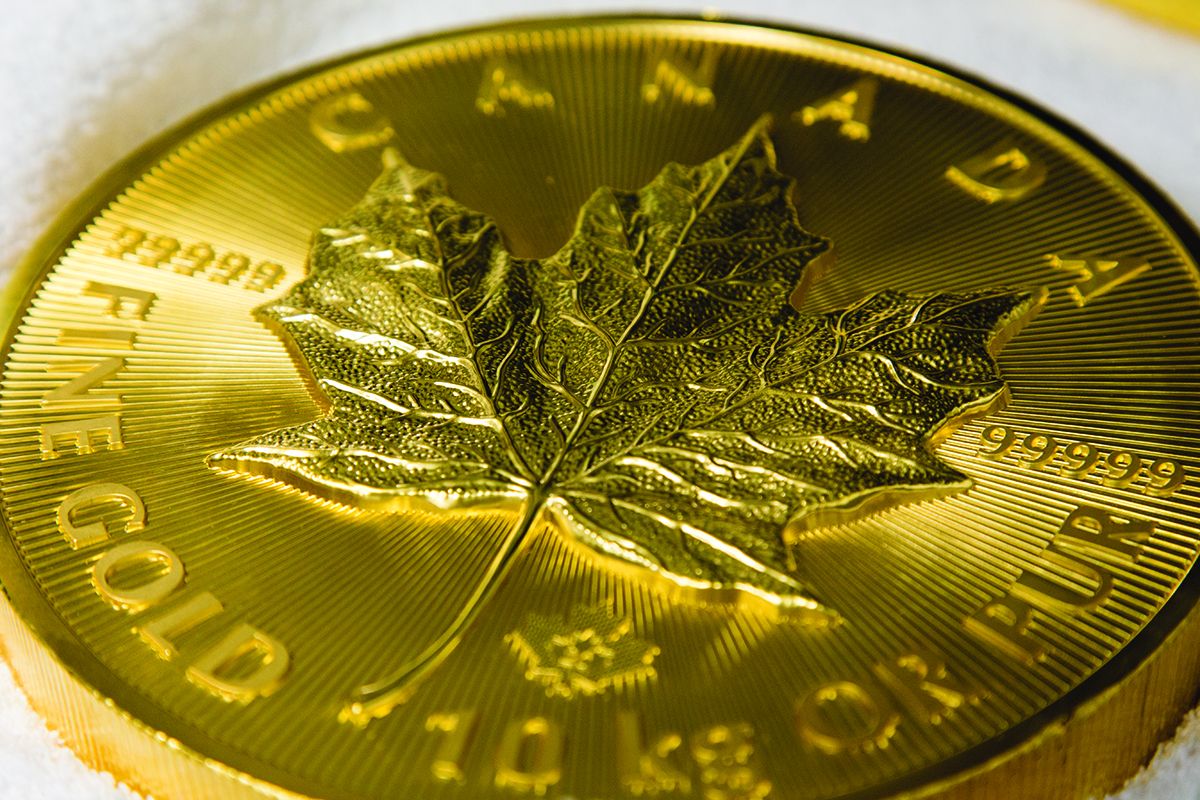
Over the decades, the Mint has introduced several notable editions and security enhancements to the Gold Maple Leaf. In 1999, to celebrate the 20th anniversary of the coin, a special edition was released featuring a hologram struck directly onto the coin's surface. Major security upgrades were implemented in the 2010s to combat counterfeiting. In 2013, a laser-micro-engraved textured maple leaf was added to a small area on the reverse of the coin, with the coin's year of issue visible only under magnification within this mark. Further security was added in 2015 with the introduction of radial lines on the coin's background on both sides. The Mint has also produced special Olympic-themed coins, such as those for the 2010 Winter Games, under an agreement with the International Olympic Committee.
- 1979: Gold Maple Leaf coin first issued with .999 purity.
- 1982: Purity increased to .9999 fine gold.
- 1999: 20th-anniversary coin with surface hologram released.
- 2007: Million-dollar "Big Maple Leaf" (100 kg) unveiled.
- 2013: Laser-micro-engraved security mark introduced.
- 2015: Radial line background added for enhanced security.
One of the most extraordinary versions of the coin was created in 2007. The Royal Canadian Mint unveiled a "Big Maple Leaf" coin with a face value of one million dollars. This colossal coin measured 50 centimetres in diameter, was 3 centimetres thick, and had a mass of 100 kilograms. It was made with an exceptional purity of 99.999% gold. Only six of these coins were produced. One of them was stolen from the Bode Museum in Berlin in March 2017 and, as of 2021, had not been recovered. It is widely assumed that such a distinctive item would have been melted down for its raw gold content. This event highlighted the extreme value and desirability of the Gold Maple Leaf brand, even in its most unconventional form.
Specifications and Special Issues
The standard Gold Maple Leaf coin is specified to have a minimum weight of one troy ounce, which equals 31.1 grams. Its legal tender face value is 50 Canadian dollars, though as a bullion product, its market price fluctuates with the international gold spot price. The coin's diameter and thickness are precisely controlled by the Mint to ensure consistency. While the standard purity is .9999, the Royal Canadian Mint has occasionally issued coins at an even higher purity of .99999, or "five nines" fine gold. This ultra-pure standard is reserved for special editions and does not replace the regular .9999 coin. These special high-purity coins represent the peak of the Mint's refining and minting technology and are often released for commemorative purposes or in limited quantities for collectors.
The Royal Canadian Mint has released numerous special issue Gold Maple Leafs over the years. These include coloured versions, hologram editions, and coins with privy marks. A privy mark is a small symbol or design stamped into the coin, often denoting a special theme or anniversary. For example, a 25th-anniversary bimetallic set was released in 2004, which included a six-coin set featuring a unique bimetallic maple leaf design and a commemorative privy mark on the one-ounce coin. The set, which had a mintage of only 839, also included the first appearance of the 1/25 ounce Maple Leaf denomination. Another category is the Olympic Maple Leaf, struck with the emblems of events like the 2010 Winter Olympics. These special issues cater to the numismatic market while still retaining their core value as gold bullion.
The Gold Maple Leaf in the Canadian Market
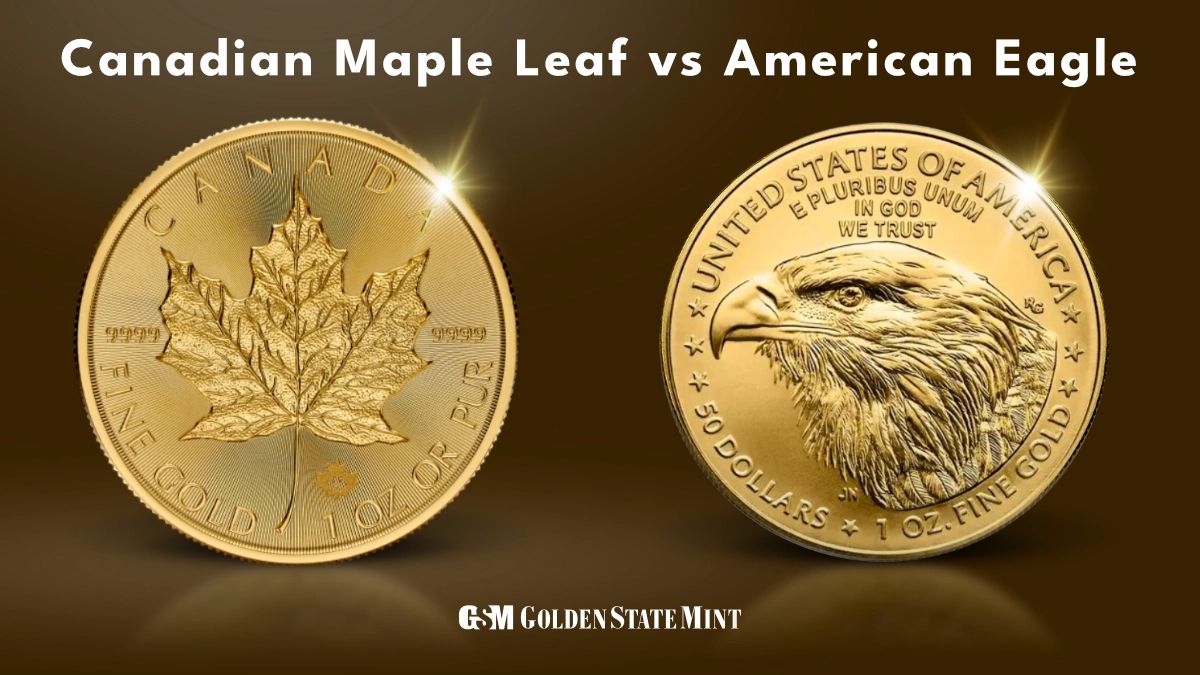
Within Canada, the Gold Maple Leaf holds a privileged position as a government-guaranteed bullion product. It is sold directly by the Royal Canadian Mint and through a network of authorized dealers, bullion retailers, and financial institutions. Major Canadian banks and dedicated precious metals firms offer the coins for sale to the public. The coin's status as legal tender means it is recognized as an official form of money in Canada, though it is almost never used for everyday transactions due to its high commodity value. This legal tender status can have implications for its treatment in certain registered investment plans, as some precious metals Registered Retirement Savings Plans may hold eligible gold bullion coins like the Maple Leaf.
The Gold Maple Leaf is frequently cited as the bestselling modern gold bullion coin in North America. The Royal Canadian Mint has reported selling more than 25 million troy ounces of Gold Maple Leafs since the coin's inception. Its popularity stems from several factors unique to the Canadian context. Investors have a high level of trust in the Royal Canadian Mint and the federal government that stands behind the coin's purity and weight. The widely recognized maple leaf design connects with Canadian national identity. Furthermore, the coin's high purity and the Mint's reputation for quality and innovation make it a preferred choice for both new and experienced precious metals investors. Its liquidity is exceptionally high, meaning it can be easily bought and sold with minimal premium over the spot price of gold at dealers across the country.
Investment Profile and Considerations
As a pure bullion coin, the primary value of a Gold Maple Leaf is its gold content. Its market price is therefore directly tied to the international spot price of gold, which fluctuates based on global economic conditions, currency values, inflation expectations, and geopolitical events. Investors typically purchase Gold Maple Leafs as a hedge against inflation, a safe-haven asset during times of economic uncertainty, or as a way to diversify an investment portfolio. The coin's high liquidity ensures that investors can convert their holdings to cash relatively quickly through bullion dealers. When selling, the price offered will be based on the current gold spot price, minus a small dealer spread or premium.
While the Gold Maple Leaf is a highly standardized product, there are nuances that investors should understand. Coins are often sold in two primary conditions: bullion and numismatic. Standard bullion-grade coins may have minor contact marks from handling and are valued solely for their metal content. Numismatic or proof versions are struck with greater care, have a superior finish, and are often packaged with certificates of authenticity. These command a higher premium over spot price due to their collectible value. Special edition coins with unique features like holograms or privy marks also carry higher premiums. It is important for buyers to be aware that the initial purchase price includes a premium over the melt value to cover minting, distribution, and dealer costs. This premium varies based on coin size, with smaller fractional coins generally carrying a higher premium per ounce of gold compared to the one-ounce size.
| Factor | Consideration for Investors |
|---|---|
| Primary Value Driver | Gold spot price |
| Liquidity | Exceptionally high in Canada and internationally |
| Premium Over Spot | Present on purchase. Varies by coin size and edition |
| Storage & Insurance | Required for physical possession. Adds to holding cost |
| Purity Assurance | Backed by Royal Canadian Mint and Government of Canada |
| Tax Implications | Subject to capital gains tax upon sale for a profit |
Physical possession of gold coins also entails responsibilities such as secure storage and insurance, which represent ongoing costs for the owner. Some investors opt to store their coins in professional, insured vaults offered by banks or specialized depositories. Furthermore, when a Gold Maple Leaf is sold for a profit in Canada, the capital gain is subject to taxation. It is crucial for individuals to maintain accurate records of their purchase and sale transactions for tax purposes. Despite these considerations, the Gold Maple Leaf remains a fundamental product for Canadian precious metals investment due to its simplicity, recognition, and the trust inherent in its government provenance.
Comparison with Other Major Bullion Coins
The Gold Maple Leaf competes in a global market with other major government-issued gold bullion coins. Its key competitors include the American Gold Eagle from the United States, the American Buffalo, the British Britannia coin, and the South African Krugerrand. A primary point of differentiation is purity. The American Buffalo and the Britannia are also .9999 fine, making them direct competitors in terms of purity. The choice between these coins often comes down to investor preference, perceived security features, brand recognition, and the premiums charged in different regional markets.
The Royal Canadian Mint has expanded the Maple Leaf brand beyond gold to include other precious metals, creating a comprehensive family of bullion products. These include the Canadian Silver Maple Leaf, the Canadian Platinum Maple Leaf, and the Canadian Palladium Maple Leaf. This allows investors to gain exposure to a range of precious metals within a trusted and consistent brand framework. The design language across the Maple Leaf series is similar, typically featuring the monarch's profile on the obverse and a maple leaf on the reverse, providing instant recognition. The success of the Gold Maple Leaf has undoubtedly paved the way for and supported the introduction of these sibling products, solidifying the Royal Canadian Mint's position as a global leader in the bullion coin market.
Frequently asked questions
What is the face value of a 1 oz Gold Maple Leaf?
The one troy ounce Canadian Gold Maple Leaf coin has a face value of 50 Canadian dollars as legal tender. This nominal value is stamped on the coin and is recognized by the Canadian government. However, the actual market value of the coin is determined by the prevailing spot price of gold, which is many times higher than the face value. Investors buy and sell the coin based on its gold content, not its denomination.
How pure is the Gold Maple Leaf coin?
The standard Gold Maple Leaf coin is .9999 fine gold, which equates to 24 karats. This means it is 99.99% pure gold. When it was first issued from 1979 to 1982, the purity was .999 fine. The Royal Canadian Mint also produces special edition coins with a purity of .99999, or 99.999% gold, but these are not the standard bullion issue. The high purity is a major selling point and places it among the purest bullion coins available worldwide.
What sizes does the Gold Maple Leaf come in?
The Royal Canadian Mint produces the Gold Maple Leaf in multiple sizes to suit different investment amounts. The standard and most popular size is one troy ounce. It is also available in fractional sizes including 1/2 ounce, 1/4 ounce, 1/10 ounce, 1/20 ounce, and 1/25 ounce. Additionally, a one-gram size is produced. Each size has a corresponding lower face value, such as $20 for the 1/2 oz coin and $5 for the 1/10 oz coin.
Where can I buy a Gold Maple Leaf in Canada?
Gold Maple Leaf coins are widely available for purchase in Canada. They can be bought directly from the Royal Canadian Mint's website, through authorized precious metals dealers, and from the bullion departments of major Canadian banks and financial institutions. Many local coin shops and bullion retailers across the country also stock them. When purchasing, it is important to buy from reputable sources to ensure authenticity and to be aware of the current premium over the gold spot price.
Are Gold Maple Leafs a good investment?
Gold Maple Leafs are a popular vehicle for owning physical gold, which is often considered a store of value and a hedge against inflation and economic uncertainty. Their value fluctuates with the international gold price. They offer high liquidity, meaning they can be easily sold. As with any commodity investment, the price of gold can go down as well as up. The coin's value is primarily in its metal content, and investors should be aware of premiums, storage costs, and potential tax implications on capital gains.
What security features does the Gold Maple Leaf have?
To combat counterfeiting, the Royal Canadian Mint has incorporated advanced security features into the Gold Maple Leaf. Since 2013, a laser-micro-engraved textured maple leaf mark has been added to the reverse side, with the year of issue visible only under magnification. In 2015, radial lines were added to the coin's background on both the obverse and reverse. These features are difficult and expensive to replicate, providing assurance of the coin's authenticity and protecting the integrity of the brand.
Sources and further reading
- Gold Maple Leaf (Wikipedia) en.wikipedia.org
- Maple Leaf Bullion Coins mint.ca
- 1 oz Gold Maple Leaf Coins online.kitco.com
This article explains how things work and is not financial, tax or legal advice. Rules, limits and rates change, so check the current figures with the Canada Revenue Agency, your province or your financial institution before you act.