A cash flow statement is a mandatory financial statement that tracks the actual movement of cash into and out of a Canadian business over a specific period. It breaks down cash flows into three categories: operating, investing, and financing activities. This statement is crucial because it reveals a company's liquidity and ability to pay bills, which can differ significantly from the profits shown on an income statement. For Canadian business owners, investors, and lenders, it is an essential tool for assessing financial health and making informed decisions.
Purpose and Importance of the Cash Flow Statement
The primary purpose of a cash flow statement is to provide a clear picture of a company's ability to generate cash and meet its immediate financial obligations. It serves as a critical indicator of financial health because a company can report a profit on its income statement while simultaneously having insufficient cash to operate. This statement reveals the quality of a company's earnings by showing how much came from actual cash flow versus accounting adjustments. It provides information on a firm's liquidity, solvency, and financial flexibility, which is the ability to change cash flows in future circumstances. The cash flow statement helps predict future cash flows and borrowing needs, and improves the comparability of different firms' operating performance by eliminating the effects of different accounting methods.
In Canada, this statement is a required financial document that shows how much cash moved in and out of a business during a specific time period. It is used by a wide range of stakeholders including accounting personnel, potential lenders or creditors, potential investors, potential employees or contractors, company directors, and shareholders. For small business owners, it helps determine whether the company generates enough cash to meet operating expenses, with those who do not prepare it at risk of running into financial problems. According to industry data, 82 percent of business failures are due to cash flow problems, underscoring its practical importance beyond mere compliance.
The statement differs fundamentally from the balance sheet and income statement because it excludes non-cash transactions required by accrual accounting. It does not include items like depreciation, deferred income taxes, write-offs on bad debts, or sales on credit where receivables have not yet been collected. By focusing solely on cash, it answers the fundamental question of whether a business has the money to cover payroll, pay suppliers, service debt, and invest for the future. For companies planning to sell, cash flow is a key indicator of financial health used in setting valuation, and for those with loans, it may be required as part of financial reporting covenants.
Historical Development and Governing Standards
The concept of tracking cash flows has evolved significantly from early financial reporting practices. Cash basis financial statements were very common before the widespread adoption of accrual basis statements. An early precursor emerged in 1863 when the Dowlais Iron Company's manager created a comparison balance sheet to explain why the company, despite making a profit, had no cash to invest in a new blast furnace. This statement, which highlighted excessive inventory, is considered the genesis of the modern cash flow statement.
The formal standardization of the cash flow statement began in the United States in 1973 when the Financial Accounting Standards Board defined rules mandating reports on sources and uses of funds under US GAAP, though the definition of funds was initially unclear. After discussions from the late 1970s to the mid-1980s on the usefulness of predicting future cash flows, FASB Statement No. 95 mandated that firms provide cash flow statements in 1987. Globally, the International Accounting Standards Board issued International Accounting Standard 7 in 1992, which became effective in 1994, mandating cash flow statements internationally.
In Canada, the preparation of cash flow statements is governed by the Accounting Standards Board. Canadian companies must follow either the Accounting Standards for Private Enterprises, used by the vast majority of small and medium-sized businesses, or the International Financial Reporting Standards, typically used by larger businesses with global market interests. While IAS 7 and US GAAP rules are similar, key differences exist that Canadian companies adhering to IFRS must note. IAS 7 requires the statement to include changes in both cash and cash equivalents, while US GAAP permits using cash alone. IAS 7 allows bank overdrafts in certain countries to be included in cash equivalents, and it permits interest paid to be classified in either operating or financing activities, whereas US GAAP requires interest paid in operating activities.
The Three Categories of Cash Flow Activities
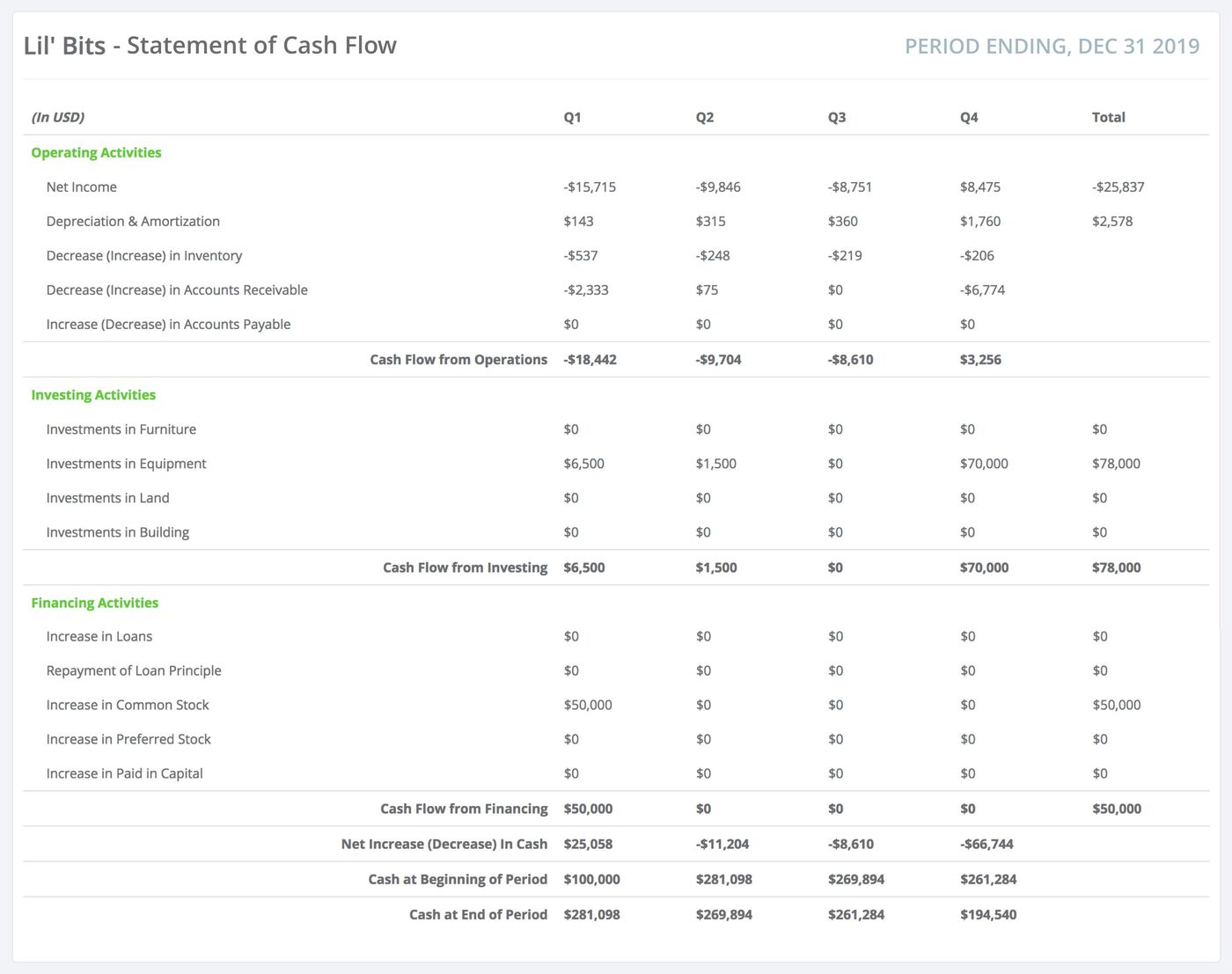
Every cash flow statement organizes transactions into three distinct categories, which together explain the total change in a company's cash position. The first and often most important category is cash flows from operating activities. This section includes the cash effects of transactions that create revenues and expenses, forming the core day-to-day business operations. It encompasses receipts from the sale of goods and services, payments to suppliers for inventory, payments to employees, and interest received or paid. Under the indirect method, which is most commonly used, it starts with net income and adjusts for non-cash items like depreciation and amortization, and changes in working capital accounts such as accounts receivable and accounts payable.
The second category is cash flows from investing activities. This section reports cash used for acquiring long-term assets and cash received from selling them. It provides insight into a company's growth and capital expenditure strategy. Examples include cash payments to purchase property, plant, and equipment, cash receipts from selling equipment or buildings, cash made from loans to suppliers, and payments related to mergers and acquisitions. A company in a growth phase will typically show negative net cash from investing activities as it spends more on assets than it receives from sales.
The third category is cash flows from financing activities. This section details cash movements between the company and its owners and creditors. It includes inflows from issuing debt or equity, and outflows from repaying debt principal, repurchasing shares, and paying dividends. In Canada, the classification of dividends depends on the accounting standard used. Under ASPE, dividends paid are always a financing activity. Under IFRS, a company can choose to classify them as either a financing or an operating activity. This section shows how a company funds its operations and growth, and how it returns value to shareholders.
- Operating Activities: Production, sales, delivery, and payment collection from customers.
- Operating Activities: Payments to suppliers, employees, and for interest.
- Investing Activities: Purchase or sale of long-term assets like property and equipment.
- Investing Activities: Loans made to suppliers or received from others.
- Financing Activities: Proceeds from issuing stock or taking on new debt.
- Financing Activities: Repayment of debt principal and payment of dividends.
- Financing Activities: Repurchase of the company's own shares (treasury stock).
Non cash investing and financing activities are not included in the main body of the cash flow statement. Examples of such activities include leasing to purchase an asset or converting debt to equity. Under International Accounting Standard 7, these significant non cash transactions must be disclosed in the footnotes to the financial statements. This disclosure ensures users of the financial statements have a complete understanding of all commitments and activities that affect the company's financial position. It provides transparency for activities that impact the company even though no cash moved during the reporting period.
Preparation Methods: Direct vs. Indirect
There are two accepted methods for preparing the cash flow statement, primarily affecting the presentation of the operating activities section. The direct method reports major classes of gross cash receipts and cash payments. It directly lists cash received from customers, cash paid to suppliers and employees, interest paid, and taxes paid. This method is considered more transparent and easier for users to understand, as it clearly shows where cash came from and where it went. The International Accounting Standards Committee strongly recommends the direct method, considering the indirect method less clear to users of financial statements.
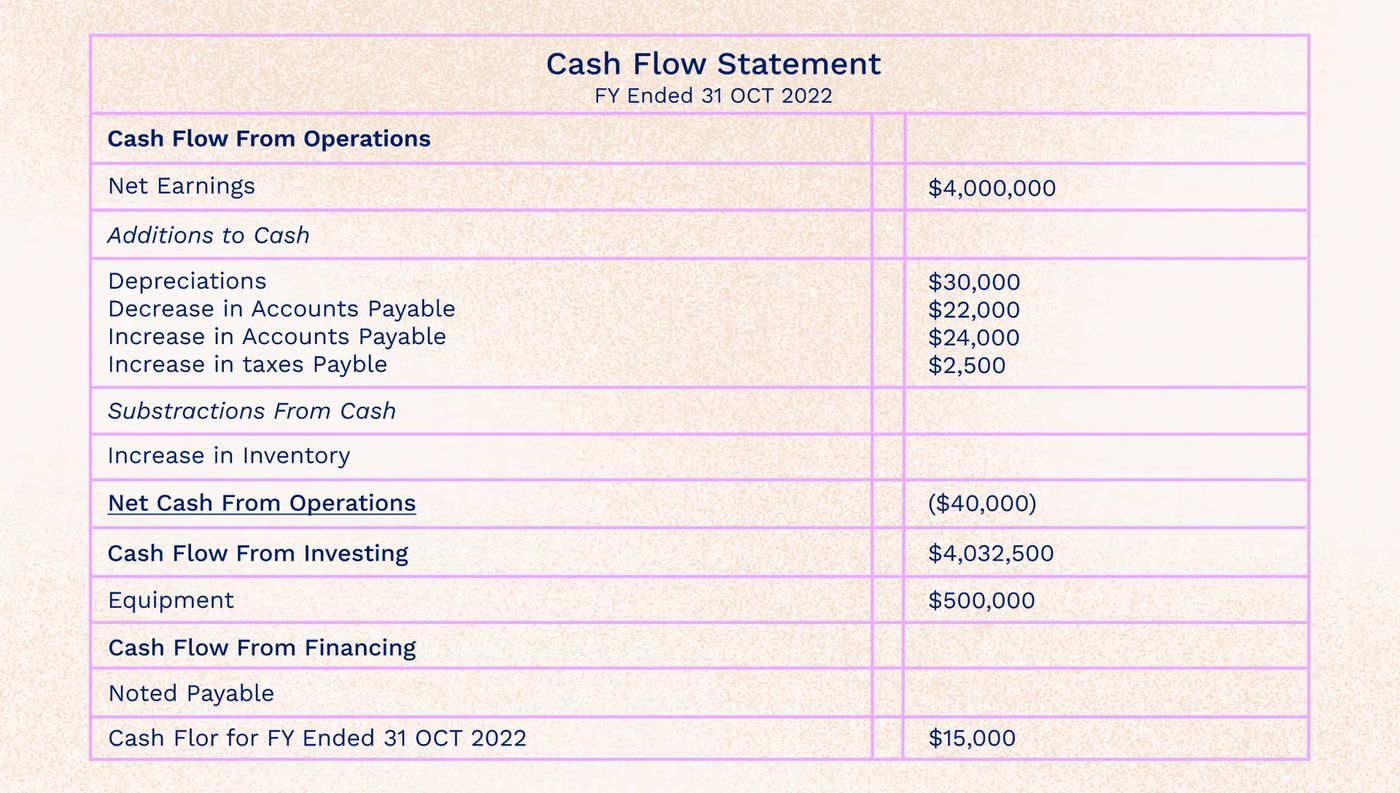
The indirect method is by far the more commonly used approach in practice. It begins with net income from the income statement and adjusts it for non-cash items and changes in balance sheet accounts to arrive at net cash from operating activities. Adjustments include adding back expenses like depreciation and amortization, and accounting for increases or decreases in current assets and liabilities. An increase in accounts receivable is subtracted from net income, while an increase in accounts payable is added back. This method effectively converts accrual-basis net income into a cash basis figure.
The choice of method in Canada depends on the accounting standards followed and practical considerations. A key rule influences this choice under US GAAP, which also affects some Canadian reporting. FAS 95 requires that if a company uses the direct method, it must also provide a supplemental schedule reconciling net income to net cash flow from operations effectively presenting the indirect method as well. This supplementary requirement makes the indirect method more popular due to its simplicity, as it builds directly from the income statement and balance sheet. Regardless of the method chosen, the total cash flow from operating activities, and the cash flows from investing and financing activities, will be identical.
Rules for Calculating Cash Flows in Canada
Preparing a cash flow statement, especially using the indirect method, follows a specific set of adjustment rules to transform net income into operating cash flow. These rules govern how changes in balance sheet accounts are treated. A decrease in a non-cash current asset, such as inventory or accounts receivable, is added back to net income because it implies cash was increased. Conversely, an increase in a non-cash current asset is subtracted from net income, as it represents cash used. For current liabilities, an increase is added to net income, and a decrease is subtracted. Non-cash expenses that reduced net income but did not use cash must be added back, with depreciation and amortization expense being the primary examples.
Similarly, non-operating losses are added back to net income, and non-operating gains are subtracted. The process can be summarized by the concept that net cash flows from operating activities equals net income plus or minus all the rule-based adjustments for non-cash and working capital items. For financing activities, the rules are more intuitive, focusing on actual cash transactions with investors and creditors, such as issuing stock, repaying debt, or paying dividends. The intricacies of these adjustments ensure the statement accurately reflects cash movements, not just accounting profits.
Canadian companies must adhere to classification and disclosure rules set by the AcSB. All material items must be separately reported, while immaterial items can be aggregated. The classification of specific items like interest and dividends has nuances. Under IFRS, interest received can be classified as either operating or investing, and interest paid can be operating or financing. Dividends paid can be operating or financing under IFRS, but are strictly financing under ASPE. Companies must apply their chosen classification consistently from period to period and disclose any changes. The statement must clearly explain the change in cash and cash equivalents during the period, reconciling the opening and closing balances shown on the balance sheet.

Practical Application and Analysis for Canadian Businesses
For a Canadian business owner, the cash flow statement is a vital management tool beyond its compliance function. It helps identify periods of cash shortfalls or surpluses, guiding decisions on spending, investment, and financing. By analyzing historical cash flow, owners can forecast seasonal swings and set aside reserves. The statement is particularly revealing when compared to the income statement. A company might show strong profits but have negative operating cash flow if its customers are slow to pay, leading to a growing accounts receivable balance. This scenario highlights a liquidity risk that the income statement alone would mask.
The end result of the statement is a net increase or decrease in cash for the period. A negative cash balance at the end of a period, as shown in an example where a business had an overdrawn position of $20,000, signals that the business spent more cash than it generated. Improvements in subsequent periods can come from clients paying down invoices, which decreases accounts receivable and adds cash. Delaying payments to suppliers, which increases accounts payable, also temporarily improves cash flow. However, sustainable positive cash flow typically comes from a business model where operating activities consistently generate more cash than they use.
Lenders and investors heavily scrutinize the cash flow statement. They use it to assess a company's ability to service debt, pay dividends, and fund operations without external financing. The statement of cash flows is often required when applying for business loans, seeking new working capital, or during mergers and acquisitions. Tools like cash flow forecast templates help businesses project future surpluses and shortfalls, which is a valuable measure of strength and long-term outlook. Best practices for improving cash flow management include accelerating receivables, delaying payables where feasible, managing inventory levels, and using digital tools for expense management, which can lead to faster cash conversion cycles.
Key Differences Between IFRS and ASPE in Canada
Canadian businesses operate under one of two main accounting frameworks, which leads to differences in how cash flow statements are prepared and presented. The Accounting Standards for Private Enterprises is used by the vast majority of BDC clients and other small to medium-sized private companies. International Financial Reporting Standards are used by publicly accountable enterprises and larger private companies that may have global interests. The most notable difference between the two concerning the cash flow statement is the classification of certain cash flows, particularly dividends and sometimes interest.
Under ASPE, the treatment is generally more prescriptive. Dividends paid are always classified as a cash outflow from financing activities. Interest paid is typically classified as an operating activity, consistent with US GAAP. Under IFRS, companies have more flexibility. IAS 7 permits interest paid to be included in either operating activities or financing activities. Similarly, dividends paid can be classified as either an operating or a financing activity, though they are more commonly shown in financing. This choice must be applied consistently and disclosed.
The definition of cash equivalents may also see subtle differences in application, particularly regarding bank overdrafts. IAS 7 allows bank overdrafts that are repayable on demand to be included as a component of cash and cash equivalents in certain countries, rather than as a financing activity. Both frameworks require the use of either the direct or indirect method for operating activities, though the indirect method is overwhelmingly common under both. Regardless of the framework, the overarching goal remains the same to provide a true and fair view of the company's cash generation and usage to support economic decision-making by users.
| Accounting Framework | Dividends Paid Classification | Interest Paid Classification | Commonly Used Method |
|---|---|---|---|
| ASPE (Accounting Standards for Private Enterprises) | Financing Activity | Operating Activity | Indirect Method |
| IFRS (International Financial Reporting Standards) | Operating or Financing Activity (choice) | Operating or Financing Activity (choice) | Indirect Method |
Frequently asked questions
What is a cash flow statement?
A cash flow statement is a mandatory financial statement that shows how cash moved into and out of a business during a specific period. It breaks down all cash movements into three categories: operating activities, investing activities, and financing activities. Its primary purpose is to reveal a company's liquidity and ability to pay its bills, which can differ from the profits shown on an income statement. In Canada, it is a required document for financial reporting.
Why is a cash flow statement important for a small business in Canada?
It is crucial because it shows whether a business generates enough cash from its operations to meet expenses and obligations. A company can be profitable on paper but run out of cash if customers are slow to pay or inventory builds up. According to industry data, 82 percent of business failures are due to cash flow problems. The statement helps owners identify cash shortfalls, plan for seasonal swings, and make informed decisions about investments or financing.
What is the difference between the direct and indirect method?
The direct method lists actual cash receipts and payments from operating activities, such as cash received from customers and cash paid to suppliers. The indirect method starts with net income and adjusts for non-cash items like depreciation and changes in working capital accounts to arrive at operating cash flow. The indirect method is far more commonly used because it is easier to prepare from existing income statement and balance sheet data. Under US GAAP rules, if a company uses the direct method, it must also supply a reconciliation using the indirect method.
How are dividends treated on a Canadian cash flow statement?
The treatment depends on which Canadian accounting standard the company uses. Under Accounting Standards for Private Enterprises, dividends paid are always classified as a cash outflow from financing activities. Under International Financial Reporting Standards, a company can choose to classify dividends paid as either an operating activity or a financing activity. This choice must be disclosed and applied consistently from year to year.
What are the three main sections of a cash flow statement?
The three sections are operating activities, investing activities, and financing activities. Operating activities include cash from day-to-day business like sales and payments to suppliers. Investing activities include cash used for buying or received from selling long-term assets like equipment. Financing activities include cash from issuing debt or stock, and cash used to repay debt or pay dividends. Together, these sections explain the total change in a company's cash balance.
Is a cash flow statement required for all Canadian businesses?
Yes, a statement of cash flows is a required financial document for Canadian businesses. It is mandated as part of a company's financial reporting to show how cash moved in and out during a specific period. This requirement is governed by Canadian accounting standards such as Accounting Standards for Private Enterprises (ASPE) or International Financial Reporting Standards (IFRS). While it is one of the main financial statements, very small companies may find its preparation challenging. However, it is considered essential for providing a clear picture of a company's liquidity and financial strength, which is demanded by lenders, investors, and other stakeholders.
Sources and further reading
- Cash flow statement (Wikipedia) en.wikipedia.org
- What is a cash flow statement? bdc.ca
- What is a Cash Flow Statement? Definition and Importance concur.ca
- What is a Statement of Cash Flows? td.com
- What is a Statement of Cash Flows in Canada? Full Guide charityaccountingfirm.ca
- The basics of cash flow statements fcc-fac.ca
This article explains how things work and is not financial, tax or legal advice. Rules, limits and rates change, so check the current figures with the Canada Revenue Agency, your province or your financial institution before you act.