The Business Number (BN) is a unique nine-digit identifier issued by the Canada Revenue Agency to businesses and organizations operating in Canada. It serves as a company's primary digital identifier for all federal tax and regulatory interactions. The BN is essential for registering for CRA program accounts such as GST/HST, payroll deductions, corporate income tax, and import-export activities. This single number consolidates a business's dealings with the federal government, simplifying compliance and administrative processes.
What is a Business Number?
A Business Number is a standard nine-digit identifier assigned by the Canada Revenue Agency to every registered business in Canada. It acts as the company's digital identifier for all federal government interactions. The number stays with a business or organization for as long as it is operating, and there are no fees or renewal processes associated with it. The primary purpose of the BN is to consolidate a business's identity across multiple CRA program accounts and other government registrations under a single reference number.
The BN is a foundational element for business administration in Canada. It is required for federal taxes and other government registrations like import-export accounts and payroll deductions. The number itself is unique to each business or legal entity, ensuring no two organizations share the same identifier. This system allows the CRA and other agencies to efficiently track and manage a business's compliance across various programs without creating duplicate records. The BN is sometimes referred to as the CRA BN and is distinct from any provincial business identifiers that may also be required.
Who Needs a Business Number
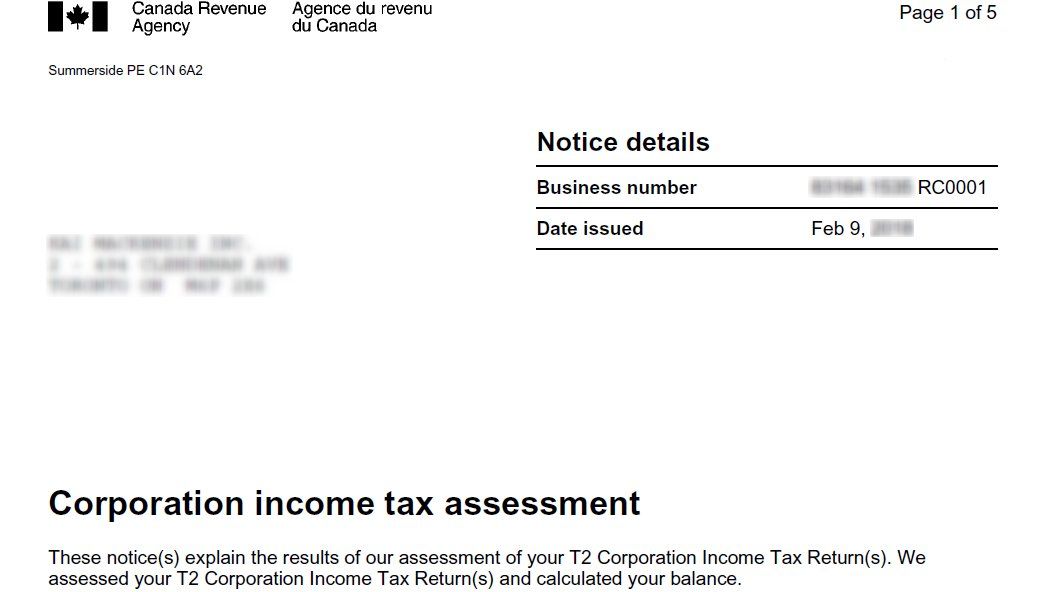
Not every business or self-employed individual in Canada is automatically required to have a Business Number. The need for a BN is typically triggered by specific business activities that require interaction with CRA programs. Corporations incorporated in Canada must have a BN to file their T2 corporate tax return and meet their tax obligations. Any business that hires employees must register for a payroll deductions account, which requires a BN to administer deductions for Employment Insurance and the Canada Pension Plan.
Businesses with annual sales exceeding $30,000 must register for the GST/HST program, which necessitates obtaining a BN. Companies engaged in international trade, such as importing or exporting goods and services, require a BN to open an import-export account and manage customs obligations. Partnerships often need a BN when registering for tax requirements or meeting other CRA obligations. Many non-profit organizations also require a BN for payroll payments or other government programs.
Self-employed individuals and sole proprietors operating under their own personal name are generally not required to obtain a BN unless they need to collect GST/HST or hire employees. A business number is automatically provided to new corporations in some provinces, like British Columbia, as part of the provincial incorporation process. Entities such as trusts, municipalities, and joint ventures are not included in the automatic registration for a business number. The following list details specific situations where a Business Number is required.
- If your business is incorporated and needs to file a corporate income tax (T2) return.
- If your business has taxable sales over the $30,000 small supplier threshold and must register for GST/HST.
- If your business hires employees and must remit payroll deductions (RP).
- If your business imports goods into Canada or exports goods/services abroad and needs an import-export (RM) account.
- If you are in a partnership that requires CRA program accounts.
- If you are a non-profit organization with employees or other CRA obligations.
- If you are a non-resident importer (NRI) conducting business in Canada and required to collect taxes.
Structure and Program Accounts
The core Business Number is a unique nine-digit sequence. When a business registers for specific CRA programs, a program account identifier is appended to the BN. This creates a longer identifier used for that particular program. The full program account number consists of the nine-digit BN, followed by a two-letter program identifier code, and then a four-digit reference number. The reference number allows a business to have more than one account of the same type, such as multiple payroll accounts.
The two-letter program codes designate the type of CRA account. The RT code is used for GST/HST accounts. The RP code identifies payroll deductions accounts. The RC code is for corporation income tax accounts. The RM code is for import-export accounts. For example, a GST/HST program account number would appear as 123456789RT0001, where 123456789 is the BN, RT is the program code, and 0001 is the reference number. A business could have multiple payroll accounts, such as 123456789RP0001 for regular employees and 123456789RP0002 for contract employees.
It is important to distinguish between the BN and a GST number. The nine-digit business number remains constant for the life of the business. A GST/HST number is the business number with the RT program identifier and reference number appended to it. A small business with sales under $30,000 is not required to register for GST/HST and would therefore have a BN but not an RT program account attached to it. The main CRA program accounts that can be linked to a Business Number are listed below.
- GST/HST (RT): For businesses that collect the Goods and Services Tax or Harmonized Sales Tax.
- Payroll Deductions (RP): For businesses that have employees and must remit source deductions.
- Corporation Income Tax (RC): For incorporated businesses to file corporate tax returns.
- Import-Export (RM): For businesses that import goods into Canada or export goods/services.
- Other accounts for filing information returns like T5 or T5013 may also be associated.
How to Register for a Business Number
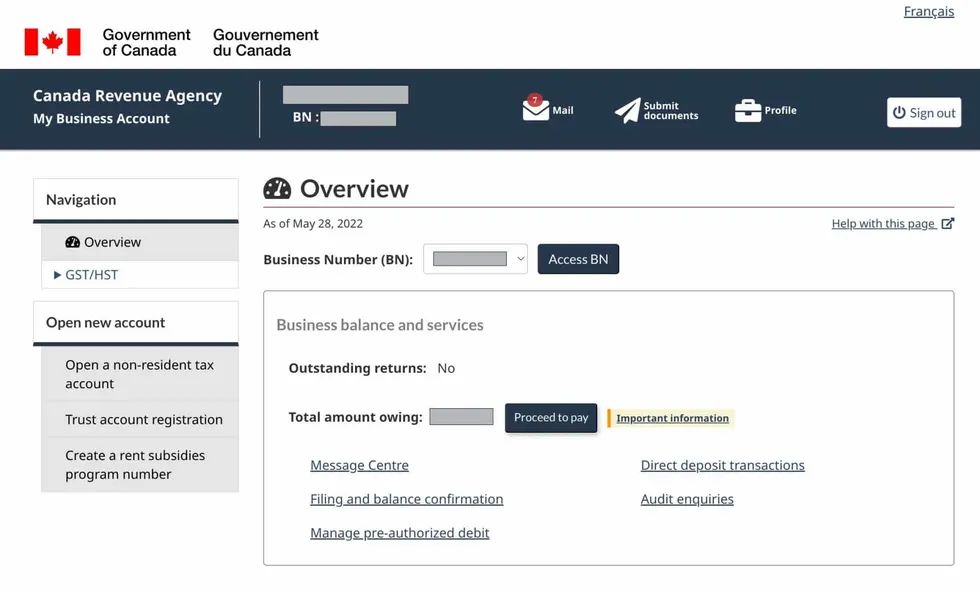
Registration for a Business Number must be completed online through the CRA's Business Registration Online service. As of November 3, 2025, business registration by phone is no longer available. The online process is designed to be user-friendly and is the fastest method to obtain a BN and register for associated program accounts. The information required typically includes the company name, business address, legal structure, names of directors or owners, the date operations commenced, and projected sales figures.
Businesses can also receive a BN automatically through certain actions. Registering for any CRA program account, such as GST/HST or payroll, will generate a BN if one does not already exist. Incorporating or registering a business with specific provincial governments will also trigger an automatic BN registration. For non-resident businesses, meaning those with a physical address outside Canada, the process is more complex. Non-resident importers conducting business in Canada are generally required to register with the CRA to collect and remit applicable taxes, which involves obtaining a BN.
After obtaining a BN, non-resident importers from the United States or Mexico may need to complete Form BSF900, an agreement to maintain records elsewhere than the place of business in Canada. This form requires accompanying documents and its approval can take upwards of 30 days. For all businesses, once the BN is obtained, further steps like CARM registration for importing are mandatory and must be completed through the CARM Client Portal. The key steps to register for a Business Number are outlined in the following sequence.
- Visit the Government of Canada's Business Registration Online (BRO) page.
- Follow the step-by-step prompts, providing required business information.
- Select the CRA program accounts you need to register for (e.g., GST/HST, payroll).
- Submit the registration. The CRA will issue your unique 9-digit Business Number.
- For non-residents, visit the Non-Resident Business Number and Account Registration page and follow its specific prompts.
- After receiving your BN, proceed with any mandatory additional registrations, such as CARM for importers.
Managing Your BN and Business Changes
A business will only ever have one Business Number. If a business already has a BN and later registers for an additional CRA program account, that new account is simply added to the existing BN. The nine-digit core number does not change. However, significant changes to the legal ownership or structure of a business may necessitate registering for a new business number entirely. Businesses are advised to consult CRA guidelines on changes to business structure to determine if a new BN is required.
Finding an existing BN can be done by checking personal records, logging into a CRA business account, or searching online business registries. Provincial registries, like the one in British Columbia, can also provide BN information for businesses incorporated in that province. If the legal details of a business change, it is the business's responsibility to inform the CRA to update its records and ensure ongoing compliance. Failure to manage these changes correctly can lead to administrative problems with tax filings and remittances. Common scenarios that require a new Business Number include changing from a sole proprietorship to an incorporated company or altering the legal ownership in a way that creates a new entity.

Related Requirements for Importers and Security
Obtaining a Business Number is often just the first step in a series of government registrations, especially for businesses involved in trade. The CBSA Assessment and Revenue Management initiative is mandatory for all new importers, and they must be registered through the CARM portal to import goods into Canada. As part of CARM registration, importers must provide verification documents. A key upcoming requirement is the security posting mandate effective April 2025, where importers will need to post security in the form of cash bonds or a written security agreement.
All importers are required to have an active import RM program account to import goods. Exporting goods outside Canada requires an export RM account, which is optional but necessary for those activities. Businesses must also delegate authority to their customs broker within the CARM system before their account is ready for import. For non-resident importers, the process includes filing the BSF900 form and supporting documents when the RM account is requested, adding another layer to the registration procedure. The CARM registration verification process requires specific documents from the business.
The security requirement effective in April 2025 represents a significant change for importers. This mandate will require all importers to post security, which can be a cash deposit or a bond from a financial institution, to cover potential duties and taxes. This measure is designed to ensure revenue collection for the Canada Border Services Agency. The steps involved in the full import registration process after obtaining a BN are numerous and must be completed in sequence through the CARM Client Portal. The following list details the post-BN steps for an importer, particularly highlighting the new security rule.
- Complete CARM Registration through the CARM Client Portal (mandatory for all importers).
- For Non-Resident Importers (NRIs), file Form BSF900 and supporting documents (approval can take 30 days).
- Enrol in an Import RM program account (required to import goods).
- Enrol in an Export RM account if exporting goods (optional but required for export activities).
- Delegate authority to your customs broker within the CARM portal.
- Post Security (Bond or Cash), This becomes mandatory for all importers in April 2025.
Provincial Considerations and Additional Support
While the Business Number is a federal identifier, it interacts with provincial systems. In some provinces, a BN is automatically provided during the provincial incorporation or registration process. For example, new corporations, businesses, or societies in British Columbia receive a BN as part of their provincial registration. The BN is then used by provincial agencies. In B.C., the BN15 identifier is used by WorkSafeBC and the Provincial Sales Tax program. Other provinces may have their own business numbers, such as the Ontario Business Number or the Quebec Enterprise Number (NEQ), which are separate from but may be linked to the federal BN.
Businesses can seek help for BN-related issues from various sources. For provincial registry assistance in B.C., the BC Registries helpdesk is available by phone or email. Service BC locations also offer support with registry filings, though they do not provide legal or financial advice. The CRA business enquiries line at 1-800-959-5525 can assist with federal BN matters, though registration itself must be done online. Having your incorporation documents, business address, and Social Insurance Number ready can expedite any phone enquiries. Professional accountants and bookkeeping services can also help businesses manage BN registration and the ongoing compliance for associated program accounts like GST/HST and payroll.
Frequently asked questions
Is a Business Number the same as a GST number?
No, a Business Number and a GST number are not the same, but they are closely connected. A Business Number is the core nine-digit identifier issued by the CRA. A GST/HST number is your Business Number with the GST program account identifier appended to it. For example, if your BN is 123456789, your GST number would be 123456789RT0001. The BN stays the same, while the GST number is a specific account based on that BN.
Do I need a Business Number if I am a sole proprietor?
As a sole proprietor operating under your own name, you are not automatically required to have a Business Number. You will need one if your business activities trigger the need for a CRA program account. This includes if your annual sales exceed $30,000 and you must register for GST/HST, if you hire employees and need a payroll account, or if you engage in importing or exporting. If none of these apply, you may not need a BN immediately.
How do I find my existing Business Number?
You can find your existing Business Number by checking your personal records, such as incorporation documents or past tax filings. You can also log into your CRA business account online, where your BN will be displayed. Another method is to search online business registries, particularly provincial registries if your business was incorporated at the provincial level. The CRA business enquiries line can also provide assistance.
What happens if I change my business structure?
If you change the legal ownership or structure of your business, you may have to register for a new Business Number. The existing BN is tied to the specific legal entity. Significant changes, such as incorporating a sole proprietorship or changing a partnership into a corporation, can require a new identifier. You should consult CRA guidelines on business changes to determine the correct procedure, as continuing to use an old BN for a new legal entity can cause compliance issues.
What is the cost to get a Business Number?
There is no fee to register for or obtain a Business Number from the Canada Revenue Agency. The CRA assigns the 9 digit BN to identify your business at no cost. This distinct identifier is provided free of charge as part of the business registration process. There are no renewal fees or processes required to maintain the number itself. The BN stays with your business for as long as it operates without any periodic costs from the CRA for the identifier. This applies whether you register online or receive the number automatically upon incorporating in certain provinces like British Columbia.
Can I register for a Business Number by phone?
You cannot register for a Business Number by phone as of the current information. Registration must be completed online through the Government of Canada's Business Registration page or the CRA's Business Registration Online service. The process is designed to be user friendly with step by step prompts to register quickly and efficiently. For general business enquiries, you can call the CRA business enquiries line, but new BN registration is an online procedure. This ensures a faster and more streamlined process for obtaining your unique 9 digit identifier from the Canada Revenue Agency.
Sources and further reading
- How to Obtain a Canadian Business Number ghy.com
- What Is a CRA Business Number (BN) and Who Needs One? turbotax.intuit.ca
- Business numbers, Province of British Columbia www2.gov.bc.ca
- What is a Business Number (BN) in Canada? orbitaccountants.ca
- What is the CRA Business Number (BN) in Canada t2inc.ca
This article explains how things work and is not financial, tax or legal advice. Rules, limits and rates change, so check the current figures with the Canada Revenue Agency, your province or your financial institution before you act.