Bullion refers to precious metals, primarily gold and silver, refined to a high standard of purity and held in bulk forms such as bars, ingots, and coins for investment. In Canada, bullion is a popular asset class for investors seeking a hedge against inflation, currency risk, or economic uncertainty. The market is served by numerous domestic dealers and features prominent products from the Royal Canadian Mint, such as the Gold and Silver Maple Leaf coins. Understanding bullion's characteristics, the Canadian marketplace, and the associated rules is essential for any investor considering physical precious metals.
What Bullion Is and How It Works
Bullion is non-ferrous metal, most commonly gold and silver, that has been refined to a high standard of elemental purity. The term originates from the Anglo-Norman word for a melting-house where metal was refined. Historically, bullion was used to produce coins for general circulation, but today it is primarily held as a physical investment. The specifications for bullion are often regulated by market bodies or legislation. For instance, in the wholesale London bullion market overseen by the London Bullion Market Association (LBMA), the minimum acceptable fineness for gold bars is 99.5% and for silver bars is 99.9%. Bars with purity less than these standards may not be referred to as bullion. Investors purchase physical bullion to attempt to hedge against various financial risks, including currency devaluation, inflation, and geopolitical instability, or simply to add diversification to an investment portfolio.
The assessment of bullion purity employs both ancient and modern techniques. The centuries-old method of fire assay is still used, often in conjunction with modern spectroscopic instrumentation, to accurately determine the quality of gold bullion. Professional market participants such as banks, fabricators, refiners, and vault operators provide the essential infrastructure for the refining, assaying, transporting, trading, and vaulting of gold and silver bullion. Compared to numismatic coins, which carry value from rarity and condition, bullion bars or bullion coins are typically traded with lower price premiums over the fluctuating spot price of the metal itself. Their buy-sell spreads are closer to the intrinsic value of the contained precious metals, making them a more direct play on metal prices.
Bullion Coins Versus Bars and Rounds
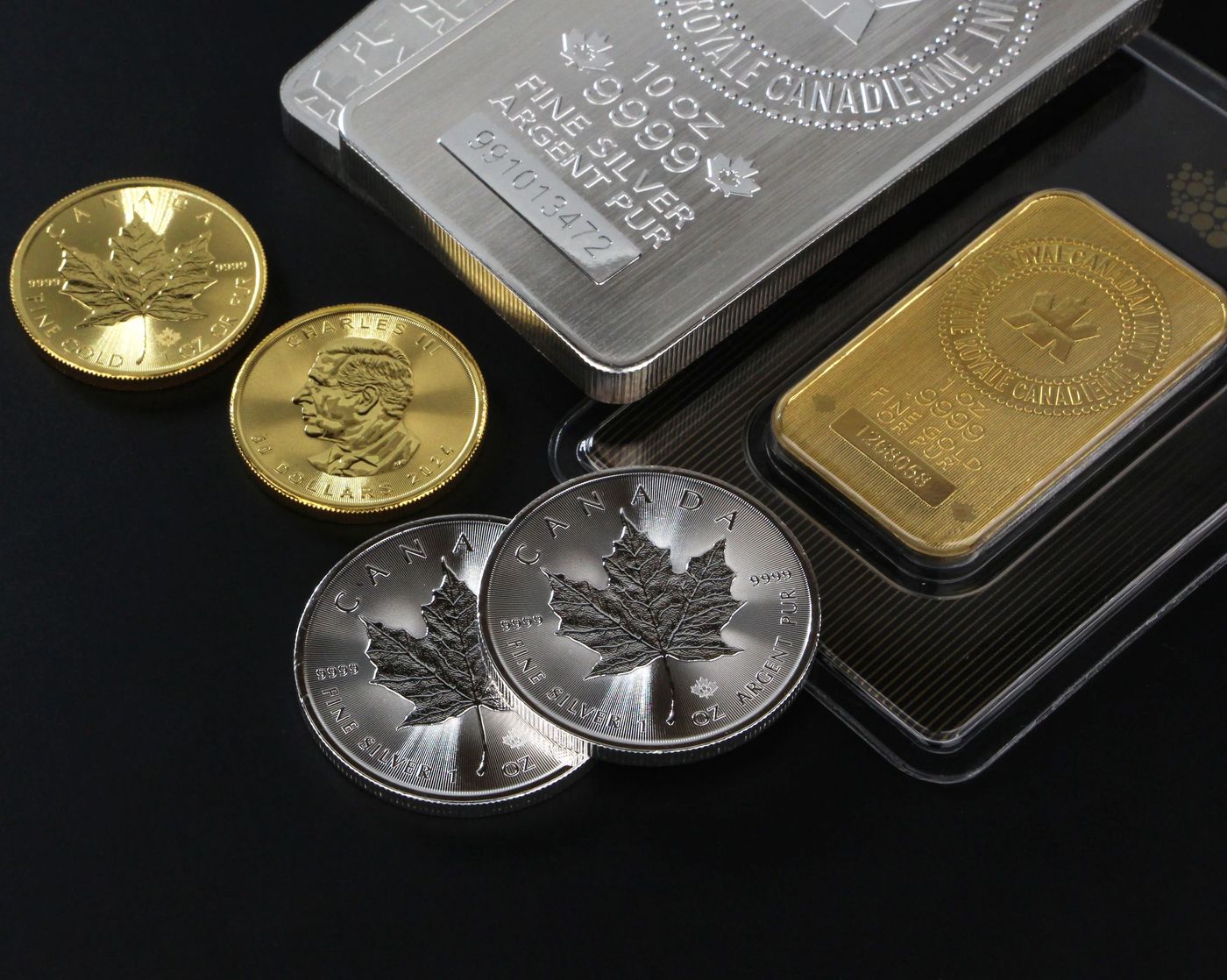
Bullion coins, also known as specie, are coins minted from bullion. Modern bullion coins are produced by official government mints, like the Royal Canadian Mint, primarily for investment purposes. Despite often having legal tender status and a nominal face value, these coins generally do not enter common circulation. Examples include the Canadian Gold Maple Leaf, the American Silver Eagle, and historical coins like the Krugerrand. Some modern bullion coins are produced in both standard business strike versions for investors and collectible proof versions for numismatists, with the latter commanding a significant premium. In contrast, bullion bars or ingots are rectangular blocks of refined metal, typically ranging from small one-ounce bars to large 100-ounce or kilogram bars.
Privately minted items that resemble coins but are not legal tender for any country are called bullion rounds or wafers. These are typically sold at prices slightly above the underlying precious metals spot price. While primarily valued for their metal content, certain privately struck rounds or bars can become collectible based on their grade, mintages, or design, affecting their value beyond mere bullion. In Canada, popular sovereign bullion coins include the Silver Maple Leaf, which is guaranteed to contain one troy ounce of 99.99% fine silver and carries a five-dollar face value. The Royal Canadian Mint also produces Gold Maple Leaf coins in one-ounce and fractional sizes, each consisting of 99.99% gold.
- Bullion Coins: Minted by sovereign mints (e.g., Royal Canadian Mint), have face value, often collectible versions exist.
- Bullion Bars: Rectangular ingots from various refiners, purity typically 99.9%+, traded close to spot price.
- Bullion Rounds: Privately minted, coin-like shapes, not legal tender, usually .999 purity.
- Sovereign Examples: Canadian Gold/Silver Maple Leaf, American Gold/Silver Eagle.
The Bullion Market in Canada
The Canadian bullion market is a robust retail and wholesale ecosystem involving numerous dealers, refiners, and financial institutions. Major Canadian bullion dealers operate both online and through physical storefronts across the country, with concentrations in cities like Toronto, Vancouver, Calgary, and Ottawa. These dealers specialize in buying and selling gold, silver, platinum, and palladium in various forms. They source products not only from the Royal Canadian Mint but also from other esteemed global mints and refiners such as The Royal Mint, Valcambi Suisse, the United States Mint, and Rand Refinery. This allows Canadian investors to build a diversified portfolio of international bullion products.
Canadian dealers often promote competitive pricing, with some advertising margins up to 50% lower than competitors. Many emphasize their credentials as authorized Royal Canadian Mint dealers and highlight ratings from the Better Business Bureau, such as an A+ rating, and strong customer reviews. Beyond sales, many dealers offer additional services like insured storage solutions to eliminate counter-party risk and secure vaulting for physical metal. Customer deposits in such insured storage programs can exceed 150 million dollars. Dealers also provide market analysis and historical data on gold and silver trends to help investors make informed decisions.
| Dealer Service | Typical Limit | Clearing Time | Fee |
|---|---|---|---|
| Bill Payment | Up to $15,000 | 3 Business Days | 0% |
| Interac e-Transfer | Up to $5,000 | Once received | 0% |
| Wire Transfer | $3,000+ | 1–3 Business Days | 0% |
| PayPal | Up to $2,500 | 1–3 Business Days | 5% |
| Credit Card | $300–$800 | 1–3 Business Days | 5% |
| In-Store (Debit/Cash) | Any amount | After payment | 0% |
Buying Bullion in Canada: Process and Security
Purchasing bullion in Canada involves several steps focused on verification and secure payment. Reputable dealers require government-issued photo ID for order verification, often sent via an ID request email. Credit card payments typically require the card to be VBV (Verified by Visa) or MasterCard SecureCode authenticated, and the shipping address must match the confirmed address on the credit card account. Dealers generally do not support pre-paid credit cards or gift cards. Normal credit card transaction limits apply, and conversion charges may be issued by the card provider for transactions in currencies other than Canadian or US dollars. For larger purchases, payment methods like wire transfers, bank drafts, or certified cheques are common, with the sender's name needing to match the order billing details.
Security and anti-counterfeiting are major concerns in the bullion industry. The Royal Canadian Mint has incorporated advanced BULLION DNA anti-counterfeiting technology into its Gold and Silver Maple Leaf coins since 2014 for gold and 2015 for silver. This technology involves an encrypted registration code within a privy mark on the coin, which can be read using a dedicated Royal Canadian Mint DNA Bullion reader to authenticate the piece. This feature is only available through registered BULLION DNA dealers. Dealers also authenticate products through assaying and verification before sale, with some offering uncarded gold bars that are tested but not sealed with an assay card.
Investment Profile and Key Considerations
Bullion is often considered a defensive investment, a store of value, and insurance against economic turmoil or inflation. Investors may choose to own physical bullion outright to minimize inherent counter-party risk associated with financial instruments like exchange-traded funds (ETFs). While shares of gold ETFs like the SPDR Gold Shares represent a derivative that mimics the gold spot price, shareholders in such popular ETFs are almost always unsecured creditors and do not own vaulted gold bullion. The direct ownership of bullion carries its own risks, primarily theft or government confiscation, which is why secure storage solutions are a critical part of the market.
When investing in bullion, investors must consider several factors beyond the spot price. These include the premium over spot charged for fabrication, minting, and dealer margin, which varies between products. Sovereign coins like the Maple Leaf often carry a higher premium than generic bars or rounds. Liquidity is another consideration. Well-recognized products from major mints and refiners in standard sizes, such as one-ounce gold bars or one-ounce silver coins, are typically easier to sell quickly. Investors should also be aware of the buy-sell spread, the difference between the price a dealer will pay to purchase bullion and the price at which they sell it.
- Primary Risks: Theft, confiscation, market price volatility.
- Advantages: Tangible asset, minimal counter-party risk, historical store of value.
- Cost Factors: Premium over spot price, dealer margins, payment method fees.
- Liquidity Factors: Recognized brand (e.g., RCM), standard sizes (1 oz), current market demand.
History and Modern Context
The concept of bullion is deeply rooted in monetary history, originating from the need for standardized, high-purity metal for coinage. The term itself comes from the French bouillon, meaning boiling, referencing the refining process. For centuries, bullion in the form of silver and gold was the primary material for circulating currency. While bullion is no longer used for general circulation coinage, its role evolved into a foundation for investment and a backing for financial systems. The establishment of formal wholesale markets, like the London bullion market, created global standards for purity and trading practices that support the modern market.
In Canada, the modern bullion era is closely tied to the Royal Canadian Mint's introduction of its flagship bullion coins. The Silver Maple Leaf followed later. These products helped democratize access to precious metals for Canadian investors. The development of anti-counterfeiting technologies like DNA marking reflects the ongoing evolution of the market to maintain trust and integrity. Today, Canadian investors can access a wide range of domestic and international bullion products through a mature dealer network, making bullion a standard component of many diversified investment portfolios.
Frequently asked questions
What is bullion?
Bullion is non-ferrous metal refined to a high standard of elemental purity. It is bulk metal, ordinarily applied to precious metals like gold and silver. The term comes from the Anglo-Norman term for a melting-house. Bullion is held as an investment and is kept in forms such as bars, ingots, plates, or bullion coins.
How do I buy bullion in Canada?
Bullion is purchased through authorized dealers across Canada, both online and in physical stores. The process typically requires providing government-issued ID for verification. Payment methods include credit cards (with limits around $300-$800 and a 5% fee), Interac e-Transfer (up to $5,000), wire transfers, bank drafts, and in-store cash or debit. Reputable dealers are often authorized by the Royal Canadian Mint and have strong consumer ratings.
What are the most popular Canadian bullion products?
The most recognized Canadian bullion products are from the Royal Canadian Mint. The Silver Maple Leaf coin contains one ounce of 99.99% fine silver. Since 2014 (gold) and 2015 (silver), these coins have featured DNA anti-counterfeiting technology. The Mint also produces larger format bars in 10-ounce and 100-ounce sizes.
Is bullion a good investment?
Bullion is considered by many as a hedge against inflation, currency devaluation, and economic uncertainty. It offers a tangible asset with minimal counter-party risk compared to paper assets. However, it does not generate income like dividends or interest, and its value fluctuates with market prices. Investors should consider storage costs, insurance, and buy-sell spreads when evaluating bullion as part of a diversified portfolio.
What is the difference between bullion coins and collectible coins?
Bullion coins, also known as specie, are coins made of bullion. They are minted by official agencies primarily for investment purposes. Some bullion coins have been used as currency, such as the Maria Theresa thaler. Modern bullion coins generally do not enter common circulation, while collectible versions are sold at a significant premium over their metal value.
How is bullion purity verified and guaranteed?
Purity is verified through assaying. The centuries-old fire assay method is still used alongside modern spectroscopy. Major market bodies set standards. For example, the London Bullion Market Association requires a minimum of 99.5% purity for gold bars and 99.9% for silver bars to be considered Good Delivery. Sovereign mints like the Royal Canadian Mint guarantee the purity and weight of their products, often enhancing security with features like DNA markers.
Sources and further reading
- Bullion (Wikipedia) en.wikipedia.org
- AU BULLION: Buy Gold, Silver Coins & Bars Online aubullion.ca
- Silver Prices and Rates canadagold.ca
- Bullion Dealers mint.ca
- CanAm Bullion: Buy Gold & Silver Bullion Online | Windsor ... canambullion.ca
This article explains how things work and is not financial, tax or legal advice. Rules, limits and rates change, so check the current figures with the Canada Revenue Agency, your province or your financial institution before you act.