The Toronto-Dominion Bank, commonly known as TD, is one of Canada's largest and most prominent financial institutions. With roots dating back to 1855, it operates a vast network across Canada and the United States through its TD Canada Trust and TD Bank divisions. The bank's stock is a core holding for many Canadian investors, offering exposure to North American retail and commercial banking, wealth management, and capital markets. Understanding its business segments, dividend history, and the tickers under which it trades is essential for investors considering this pillar of the Canadian financial landscape.
Business Operations and Segments
The Toronto-Dominion Bank operates through four main business segments, providing a comprehensive suite of financial services. The Canadian Personal and Commercial Banking segment is the core of its domestic operations, offering deposit accounts, savings products, lending, and cash management services to individuals and businesses through the TD Canada Trust network. This segment also provides financing for automotive and recreational vehicle purchases, and it serves business owners with specialized services for financing, international trade, and day-to-day banking needs. The U.S. Retail segment conducts personal and business banking as well as wealth management through TD Bank, N.A., with a significant branch footprint on the American east coast, serving over 10 million customers.
The Wealth Management and Insurance segment provides investment advice, asset management, and direct investing services to retail clients in Canada. It also offers property, casualty, life, and health insurance products. The Wholesale Banking segment serves corporate, government, and institutional clients globally with capital markets and corporate banking services. This segment provides investment services including underwriting and trading of new debt and equity issues. It also offers advice on strategic acquisitions. A Corporate segment encompasses shared services that support the entire organization. These services include technology solutions, treasury and balance sheet management, and marketing. The segment also includes human resources and risk management functions.
Historical Development and Key Mergers
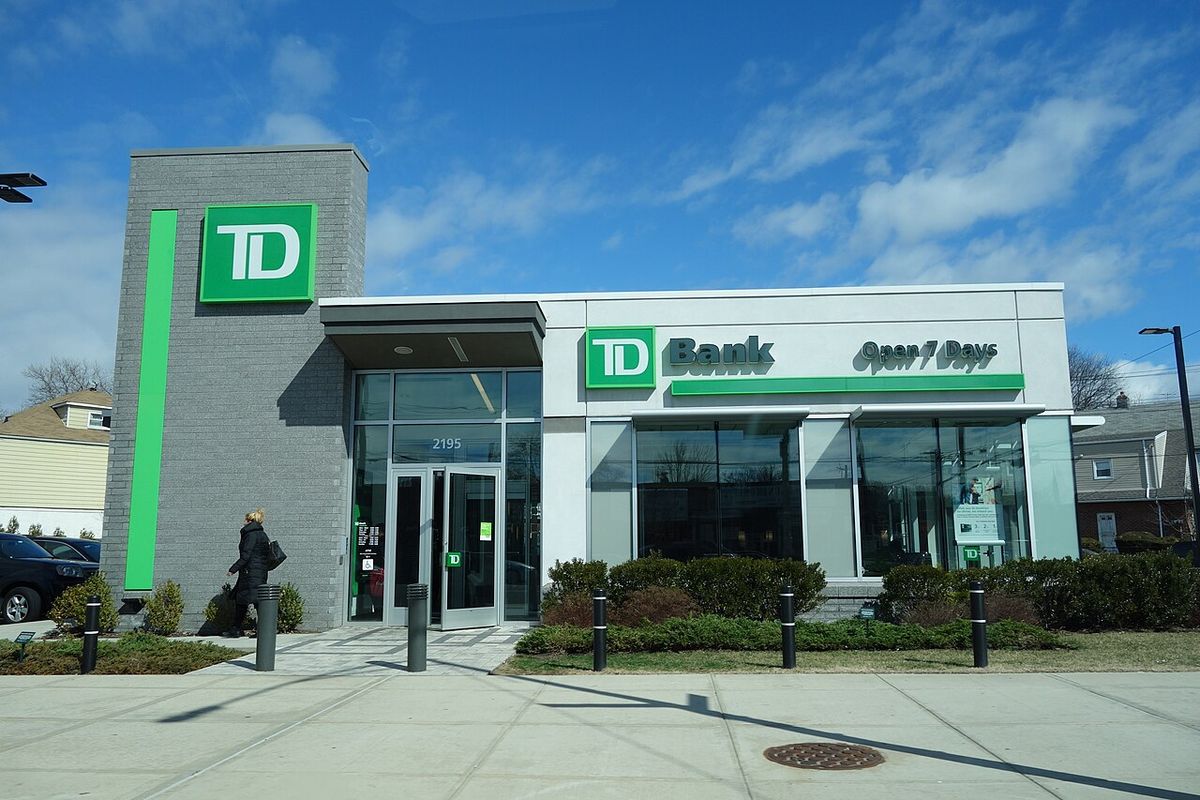
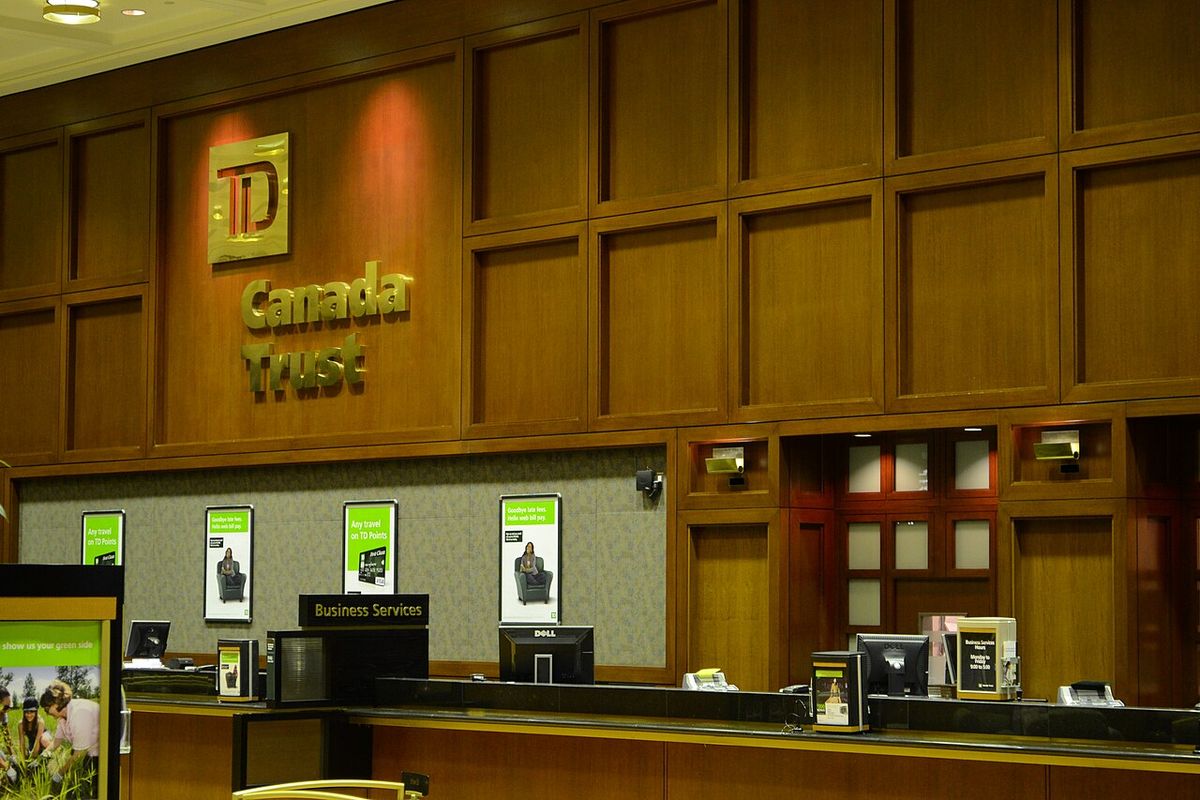
The bank was formed on February 1, 1955, through the merger of two historic institutions, the Bank of Toronto, founded in 1855, and the Dominion Bank, founded in 1869. The combined entity became Canada's fourth-largest bank at the time, with assets of $1.1 billion, created to better compete with larger Canadian banks. A major technological milestone came in 1976 with the pilot of its first automated teller machine, later branded the Green Machine, a name it continues to use. The late 20th century saw significant expansion through acquisitions, including the purchase of Waterhouse Investor Services in 1996 and the landmark acquisition of Canada Trust in 2000, which led to the rebranding of most Canadian commercial banking as TD Canada Trust after regulatory approval with conditions.
The bank's foray into the United States began in earnest in 2004 with the acquisition of a majority stake in Banknorth for US$3.8 billion, which was later fully owned and rebranded as TD Banknorth. In 2007, TD acquired Commerce Bancorp and merged it with TD Banknorth to form TD Bank, N.A. in 2008, creating a major U.S. retail banking presence. Further U.S. acquisitions followed, including Riverside National Bank and the South Financial Group in 2010, and Chrysler Financial, which became TD Auto Finance, in 2011. The bank also acquired MBNA's Canadian credit card business in 2011, expanding its credit card offerings. In 2022, the bank agreed to a US$13.4 billion acquisition of First Horizon Corp., but the deal was terminated in May 2023 due to regulatory uncertainty, which would have been the second-largest U.S. bank deal since the Great Recession.
Key strategic partnerships and joint ventures have also shaped the bank's operations. In 1996, TD partnered with Bank of Montreal and Royal Bank of Canada to create Symcor, a private entity providing transaction services like cheque processing and statement production. In 2011, Symcor was producing close to 675 million statements and processing three billion cheques annually. The bank also partnered with G4S Cash Solutions in 1997 for nationwide ATM cash transport and maintenance, following a pilot project that began in Toronto in 1992.
Stock Listings and Trading Information
The Toronto-Dominion Bank's common shares are listed on the Toronto Stock Exchange under the ticker symbol TD.TO. The stock is also cross-listed on the New York Stock Exchange under the symbol TD, providing access for both Canadian and U.S. investors. Share prices are quoted in Canadian dollars on the TSX and in U.S. dollars on the NYSE, and historical share price data is available from 1973 to the present. The bank has a market capitalization that places it in the mega-capitalization category, above $200 billion, and it was the largest bank in Canada by market capitalization in 2021. The stock is a component of major Canadian market indices and is widely held in both Canadian and U.S. investment portfolios, with the bank's shares having been included in share repurchase programs, such as the plan announced in August 2023 to buy back 90 million shares, representing about 4.9 percent of outstanding shares.
Dividend Record and Financial Performance
TD Bank has a long history of paying dividends to its shareholders, a key feature for income-focused investors. The bank's financial performance is tracked through metrics like total revenue, net income, and earnings per share, which have shown substantial growth in recent reporting periods. For a recent period, net income increased 125.8 percent year-over-year, while earnings per share increased 137.81 percent, and total revenue increased 3.73 percent quarter-over-quarter. These figures demonstrate the bank's earnings capacity, which supports its dividend payments, and investors should consult the company's investor relations materials for the most current dividend declaration dates, amounts, and payment schedules. The bank's financial strength has been recognized by credit rating agencies. During the Great Recession, TD was the only one of Canada's Big Five banks to maintain a top Aaa credit rating from Moody's, while others were downgraded.
How Canadians Can Hold TD Stock
Canadian investors can purchase TD shares through a brokerage account, whether it is with a discount broker or a full-service investment firm. The shares can be held in registered accounts like a Tax-Free Savings Account (TFSA) or a Registered Retirement Savings Plan (RRSP), allowing for tax-advantaged growth or income from dividends and capital gains. For direct trading on the TSX, investors buy the TD.TO ticker in Canadian dollars, while for exposure on the NYSE, investors can buy the TD ticker in U.S. dollars, though this may involve currency exchange considerations. The bank's widespread ownership and liquidity make it a staple holding in many Canadian portfolios, from self-directed investing accounts to managed funds and ETFs, and the bank also offers its own direct investing platform for customers who wish to manage their investments, including TD stock, themselves.
Principal Risks and Regulatory Challenges
Like all major financial institutions, TD Bank faces a range of operational, market, and regulatory risks that can impact its performance and stock price. The bank has encountered significant regulatory challenges, particularly in the United States, where it has faced serious violations relating to anti-money laundering controls and has been criticized for its role in the U.S. opioid epidemic concerning assistance provided to drug traffickers. In 2025, the bank paid a $3.09-billion money-laundering fine to U.S. federal regulators and the Department of Justice, which led to plans to simplify its U.S. operations. These events can lead to substantial financial penalties, increased compliance costs, and reputational damage that affects investor confidence.
The bank faces economic risks from credit losses during downturns and from interest rate fluctuations. It also faces operational risks from cybersecurity threats, which are common across the banking sector. Its expansion in the competitive United States market carries execution and integration risks, as seen with the terminated First Horizon acquisition. The bank has also engaged in branch closures as part of industry trends. Environmental, social, and governance factors are increasingly important. Bloomberg reported that TD Bank added ESG measures to their chief executive officers' compensation plans. The bank has received awards for its sustainability strategy, including being named Best Corporate Sustainability Strategy: Bank at the 2026 ESG Investing Awards.
Past controversies have included sales practice issues. In March 2017, TD Bank employees admitted to increasing customers' lines of credit and Visa credit limits without advising them due to sales pressure. The bank has also been involved in litigation related to fraud cases. In a 2012 Miami federal court case, a jury found TD Bank liable for aiding an alleged Ponzi schemer's fraud. The bank faced scrutiny over account closures affecting Iranian Canadian citizens in 2012. News outlets reported that about 100 personal bank accounts had been closed at that time.
Recent Strategic Moves and Leadership
In recent years, TD has pursued a strategy of simplifying its U.S. operations and returning capital to shareholders through buybacks and strategic divestments. In August 2023, the bank expanded its share repurchase program, planning to buy back 90 million shares, about 4.9 percent of outstanding shares, and in 2022, it agreed to acquire the U.S. brokerage firm Cowen for US$1.3 billion, with the combined business operating as TD Cowen. To fund the Cowen purchase, TD sold over 28 million non-voting common shares of Charles Schwab Corporation, reducing its stake from 13.4 percent to 12 percent. In February 2025, the bank indicated it aimed to sell its remaining 10.1 percent stake in Charles Schwab for about US$14.6 billion, planning to use CAD 8 billion of the proceeds for share buybacks and to invest the rest in growth initiatives.
A leadership transition occurred in 2024 and 2025. Bharat Masrani announced his retirement in September 2024, having been CEO since 2014. In February 2025, Raymond Chun took over as CEO of TD Bank Group. The bank has engaged in branch optimization as part of broader industry trends. In May 2025, TD Bank announced the closure of 38 branches across 10 states and Washington, D.C., effective June 5, 2025. Other recent strategic initiatives include the 2021 acquisition of Headlands Tech Global Markets LLC. Bloomberg reported that TD Bank added ESG measures to their chief executive officers' compensation plans.
Notable Sponsorships and Recognitions
TD Bank holds naming rights to several major sports venues across North America, using sponsorships to build brand visibility in key markets. Its most prominent sponsorship is TD Garden in Boston, home to the Boston Celtics and Boston Bruins, with a naming rights deal originally acquired in 2005 and extended in January 2023 to last until 2045. In Canada, it sponsors TD Place Stadium and Arena in Ottawa, TD Station in Saint John, TD Coliseum in Hamilton, and TD Stadium in London, Ontario, among others, including TD Ballpark in Dunedin, Florida. The bank has received numerous corporate awards, including being named one of Canada's Top 100 Employers and one of Canada's Greenest Employers by Mediacorp Canada in 2025, and it also ranked first in a 2026 J.D. Power study for mobile banking app customer satisfaction in Canada with a score of 690.
The bank's recent awards and recognitions span several categories. These awards highlight its corporate initiatives in innovation, diversity, and sustainability. For example, TD Bank Group was named Best Corporate Sustainability Strategy: Bank at the 2026 ESG Investing Awards. TD was recognized in the Bloomberg Financial Services Gender Equality Index for the ninth consecutive year in 2025. In 2025, Mediacorp Canada named TD one of Canada's Best Diversity Employers. At the 2025 BIG Innovation Awards, TD was recognized in the Organization category for TD Invent.
- In 2025, TD was named one of Canada's Best Diversity Employers by Mediacorp Canada for workplace diversity and inclusion practices.
- TD Bank U.S. and TD Securities U.S. each scored 100 on the Human Rights Campaign Foundation’s 2025 Corporate Equality Index, earning the Equality 100 Award.
- At the 2025 BIG Innovation Awards, TD was recognized in the Organization category for TD Invent and in the Product category for TD Immersive Learning.
- TD received the "Best Responsible AI Programme" award at the 2025 DataIQ Awards North America for its Trustworthy AI initiative.
- In Global Finance’s 2025 AI in Finance Awards, TD was recognized in consumer banking for fraud detection and prevention.
- TD was included in the Bloomberg Financial Services Gender Equality Index for the ninth consecutive year in 2025.
- At the 2026 ESG Investing Awards, TD Bank Group was named "Best Corporate Sustainability Strategy: Bank".
These accolades reflect the bank's focus on innovation, workplace culture, and sustainability. This focus is part of its corporate identity and its response to evolving stakeholder expectations. For instance, TD Bank received the Best Responsible AI Programme award at the 2025 DataIQ Awards North America. In 2025, Mediacorp Canada named TD one of Canada's Top 100 Employers and one of Canada's Greenest Employers. Great Place to Work included TD Bank Group on its 2025 Best Workplaces in Financial Services and Insurance list in Canada. At the 2025 Shorty Impact Awards, an initiative received a Gold Honor in the Financial Services category.
Key Historical Milestones and Events
The bank's history is marked by foundational mergers, technological adoption, and strategic decisions. These events have defined its current structure and North American reach. The bank was created on February 1, 1955, through the merger of the Bank of Toronto and the Dominion Bank. In 1976, TD Bank piloted its first automated teller machine, the TD 360, later renamed the Green Machine. In 2000, TD Bank acquired Canada Trust, rebranding most of its commercial banking operations in Canada as TD Canada Trust. In 2008, Commerce Bancorp was merged with TD Banknorth to form TD Bank, N.A. in the United States.
- 1855 & 1869: Predecessors Bank of Toronto and Dominion Bank are founded.
- February 1, 1955: Official merger creates The Toronto-Dominion Bank, the fourth largest in Canada.
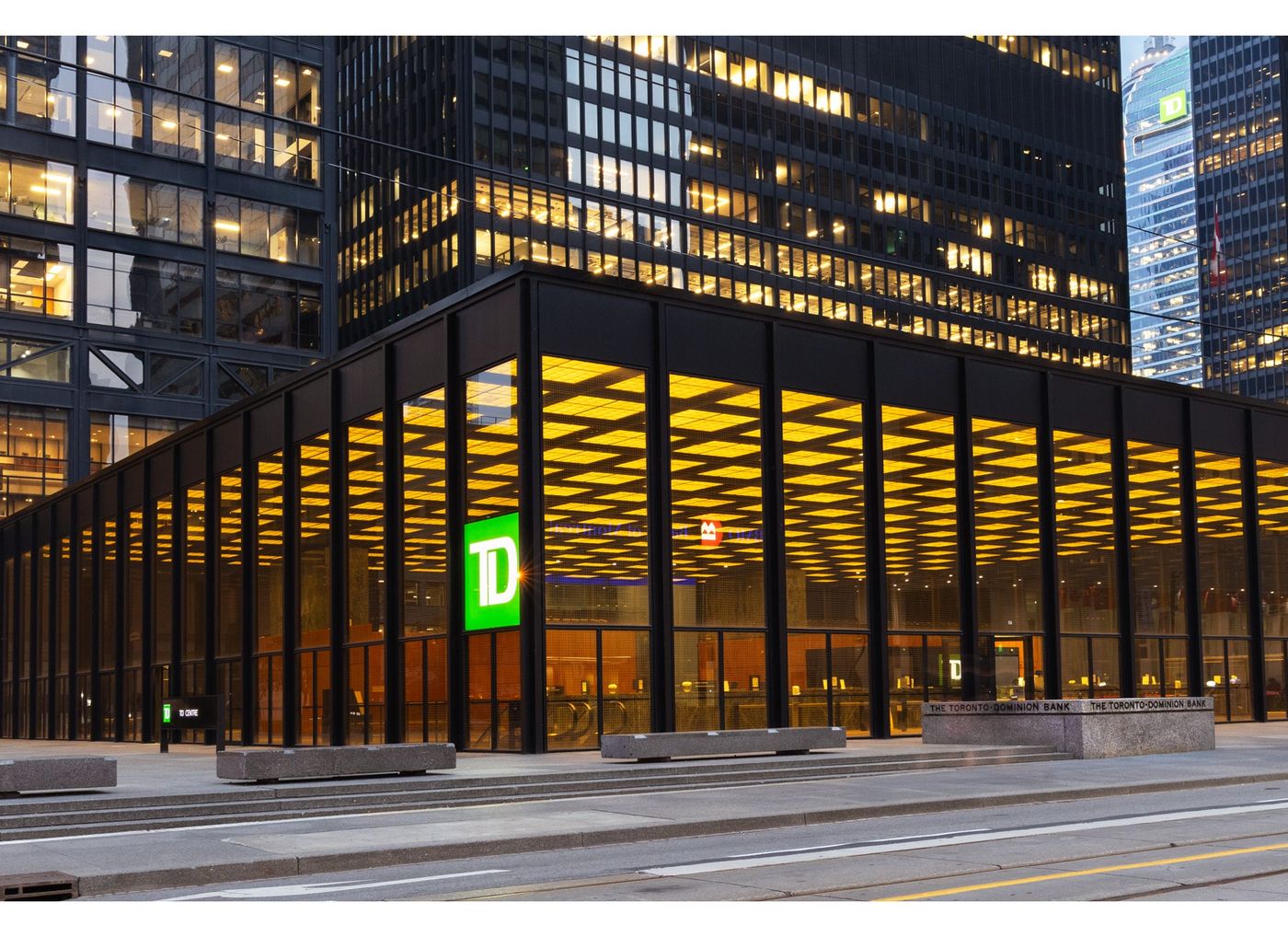
- 1967: Head office opens at the Toronto-Dominion Centre in downtown Toronto.
- 1969: TD Bank shield logo is unveiled to the public.
- 1976: Pilots first ATM, the TD 360, renamed the Green Machine.
- 1992: Acquires assets and branches of Central Guaranty Trust.
- 1996: Acquires Waterhouse Investor Services. Co-founds Symcor with BMO and RBC.
- 2000: Acquires Canada Trust, rebranding Canadian operations as TD Canada Trust after regulatory conditions are met.
- 2005: Completes acquisition of Banknorth, entering U.S. retail banking, and acquires naming rights to TD Garden.
- 2008: Merges TD Banknorth and Commerce Bancorp to form TD Bank, N.A.
- 2011: Acquires Chrysler Financial (TD Auto Finance) and MBNA's Canadian credit card business.
- 2022: Agrees to acquire First Horizon Corp. (deal terminated in 2023) and announces Cowen acquisition.
- 2023: Terminates First Horizon deal. Agrees to acquire Cowen, forming TD Cowen.
- 2025: Announces planned sale of Charles Schwab stake and U.S. branch closures.
These milestones chart the bank's evolution from a domestic Canadian institution to a North American financial services leader. It now has global wholesale operations. This growth reflects its activity in mergers and acquisitions. For example, in 2004, TD Bank entered the American retail banking market by acquiring a majority stake in Banknorth. In 2007, TD Bank acquired Commerce Bancorp. In 2010, the bank acquired the Florida based Riverside National Bank of Fort Pierce and the South Financial Group Inc. In 2022, TD made a US$13.4 billion offer for First Horizon Corp., though the deal did not proceed.
Frequently asked questions
What does TD Bank do?
The Toronto-Dominion Bank is a Canadian multinational banking and financial services corporation headquartered in Toronto, Ontario. It operates through its TD Canada Trust division in Canada, serving approximately 15 million customers through a network of 1,060 branches. In the United States, it operates through its subsidiary TD Bank, N.A., which has over 10 million customers and about 1,100 branches. The bank offers a wide range of products and services including banking accounts, financing, investment solutions, and cash management. It is one of Canada's two largest banks with over CAD 2.1 trillion in assets.
What is the ticker symbol for TD stock in Canada?
On the Toronto Stock Exchange (TSX), the ticker symbol for The Toronto-Dominion Bank is TD.TO. Stock prices are quoted in Canadian dollars, and the bank provides a historical share price record dating back to 1973. The bank is also listed on the New York Stock Exchange under the symbol TD. As of October 21, 2026, the closing price for TD.TO was $175.11 CAD, with a market capitalization of 0.87.
Does TD Bank pay a dividend?
Yes, Toronto Dominion Bank pays a dividend to its shareholders. The bank has a history of returning capital to investors, which includes dividend payments. In August 2023, the bank announced an expansion of its share repurchase program, planning to buy back 90 million shares. Furthermore, in February 2025, the bank indicated plans to use 8 billion CAD from the sale of its Charles Schwab stake for share buybacks, which is a complementary method of returning value to shareholders alongside dividends.
What are the main risks of investing in TD Bank?
Key investment risks include regulatory and legal challenges, notably a $3.09 billion money laundering fine from U.S. regulators in 2025. The bank faces operational risks such as its involvement in past controversies, including a 2017 sales practices scandal and its role as a secured creditor in the Virgin Australia administration. Economic sensitivity affects loan performance, and strategic risks exist, as seen in the failed acquisition of First Horizon Corp. in 2023 due to regulatory uncertainty. The bank is also subject to environmental and social governance pressures.
How large is TD Bank's branch network?
Toronto Dominion Bank operates an extensive branch network across North America. In Canada, it has approximately 1,060 branches under the TD Canada Trust division. In the United States, its subsidiary TD Bank, N.A. operates about 1,100 branches across 15 states and Washington, D.C. However, the bank has been optimizing this network, announcing the closure of 38 branches in the U.S. in May 2025. Worldwide, the bank serves over 28 million customers through its combined operations.
Sources and further reading
- TD Bank Group (Wikipedia) en.wikipedia.org
- The Toronto-Dominion Bank (TD.TO) ca.finance.yahoo.com
- TD Canada Trust, Personal, Small Business Banking & ... td.com
- TD Stock Quote Price and Forecast cnn.com
This article explains how things work and is not financial, tax or legal advice. Rules, limits and rates change, so check the current figures with the Canada Revenue Agency, your province or your financial institution before you act.