The Schwab US Dividend Equity ETF (SCHD) is a popular exchange-traded fund that tracks the Dow Jones U.S. Dividend 100 Index. It focuses on U.S. companies with a strong record of paying dividends, offering investors a blend of yield and dividend growth. For Canadians, SCHD provides exposure to a curated portfolio of large-cap American dividend payers, but it comes with specific tax and currency considerations. Understanding its structure, holdings, and how it fits within Canadian registered accounts is key for investors considering this ETF.
Fund Objective and Index Methodology
The Schwab US Dividend Equity ETF has the investment goal of tracking as closely as possible, before fees and expenses, the total return of the Dow Jones U.S. Dividend 100 Index. This index is specifically designed to measure the performance of high dividend yielding stocks issued by U.S. companies that have a record of consistently paying dividends. The fund uses a full replication strategy to achieve this, meaning it invests in all the securities that compose the index in proportion to their weightings. The index construction methodology looks beyond simple yield, incorporating additional screens for financial quality to build a portfolio of relatively safe, large-cap stocks. Factors like strong returns on equity are evaluated to ensure the selected companies are excellent businesses with demonstrated records of paying increasing dividends over time. The resulting portfolio is often described as being stuffed with the kinds of stocks favoured by dividend growth investors, specifically boring dividend payers from established American firms.
Historical Performance and Total Returns
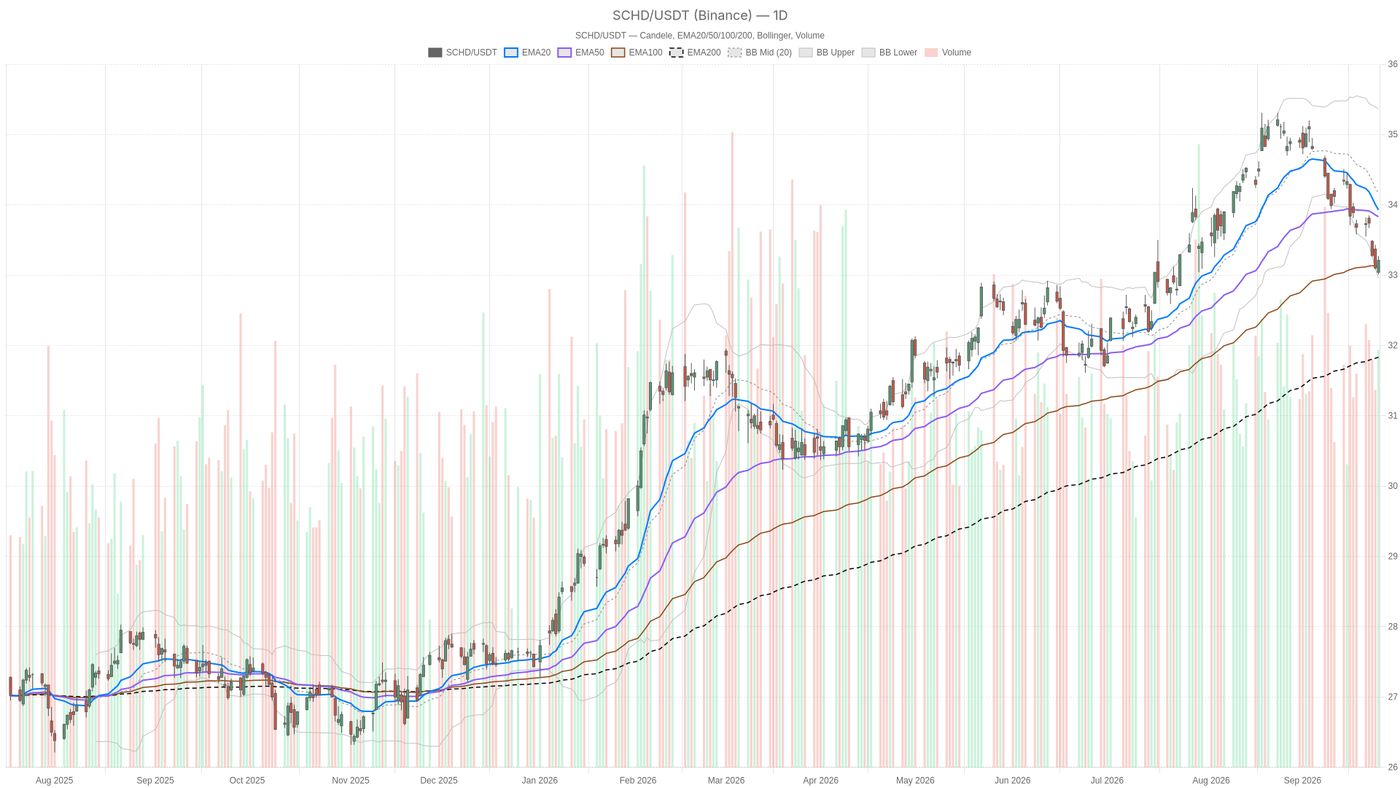
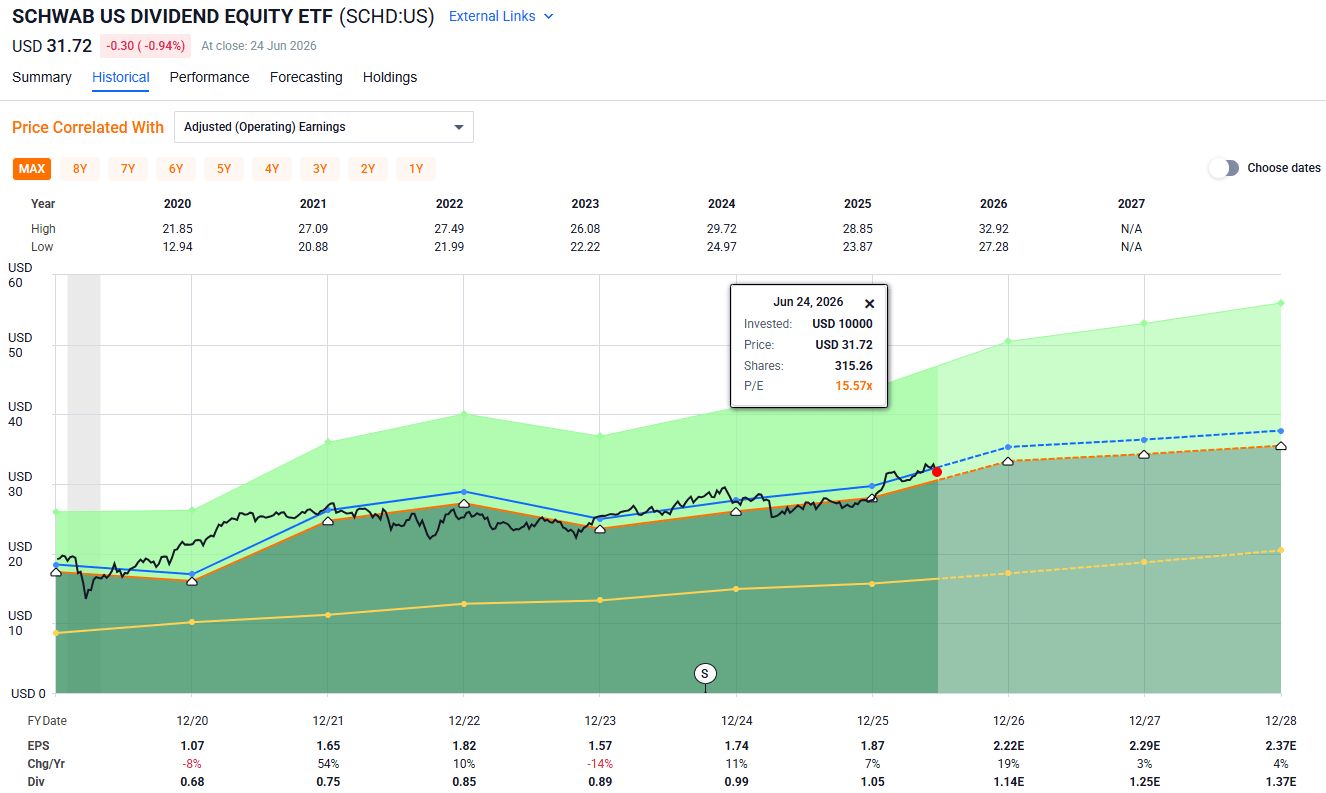
Since its inception in February 2011, SCHD has delivered an annual total return of just over 13 percent when dividends are reinvested, a figure that has drawn significant investor interest. Returns have been solid across various time periods, though comparisons to broader indices like the S&P 500 show variability. A common criticism noted is that SCHD has underperformed the S&P 500 over some timeframes, such as the last five years, a period where U.S. market returns were largely driven by a handful of technology stocks. Defenders of the fund point out that this tech-driven performance may not be sustainable and that SCHD's strategy offers a different risk and return profile. This perspective appeared validated in early 2025, where year-to-date performance showed the S&P 500 down about 4.3 percent while SCHD was up about 1.7 percent, excluding dividends.
Dividend Growth and Yield Characteristics
The combination of a competitive yield and robust dividend growth is a central feature of SCHD's appeal. The fund's current yield has been noted at approximately 3.15 percent to just under 4 percent in recent observations. More impressively, over the five-year period leading up to the note's writing, SCHD raised its dividend at an annual rate of 11.6 percent. This high growth rate is a key metric that distinguishes it from many other income focused funds and aligns with an objective of achieving a 10 percent dividend growth rate or more. The compounding effect of this growth on an investor's yield on cost is substantial. For an investor who purchased shares five years prior, the combination of the starting yield and subsequent growth translated into a return on cost from dividends of nearly 7 percent. This dynamic of a moderate starting yield paired with high growth makes the ETF a candidate for investors seeking a retire-off-the-dividends vehicle, as the income stream has the potential to grow significantly over time.
Portfolio Strategy and Rebalancing Process
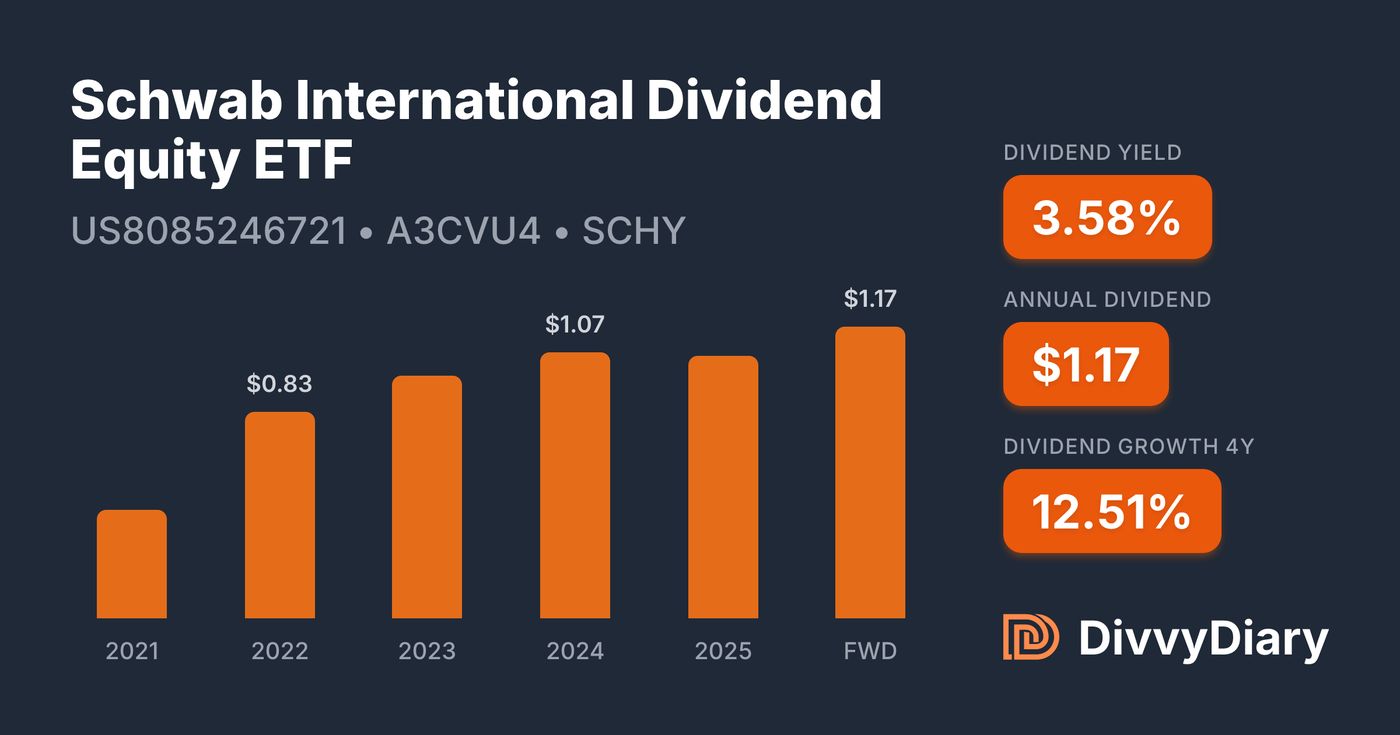
The ETF's portfolio is a direct reflection of the Dow Jones U.S. Dividend 100 Index, which screens for companies with strong dividend histories and financial strength. The selection process places an emphasis on large, relatively safe stocks, aiming to construct a portfolio of high quality, dividend growing businesses. A defining and sometimes debated aspect of the fund's management is its annual rebalancing. The index, and thus the fund, rebalances its holdings periodically to maintain its strict criteria. This process involves selling stocks that no longer meet the index's requirements for dividend consistency, yield, or financial metrics, and purchasing new qualifying stocks. Some investors critique this turnover, noting that the fund punts perfectly good stocks out of the portfolio each year, which conflicts with a buy and hold forever philosophy for winning companies. Consequently, some investors use SCHD not as a permanent holding but as an idea generation tool, mining its portfolio for individual stocks to hold directly in their own accounts. This approach is also applied to its sister ETF, SCHY, which tracks international stocks with similar dividend characteristics.
Trading Details and Canadian Account Structures
SCHD is incorporated in the USA and its primary listing is on the New York Stock Exchange under the ticker symbol SCHD. Canadian investors can purchase shares through any brokerage account that offers access to U.S. equity markets. The fund trades in U.S. dollars, which is a fundamental consideration for Canadian portfolios as it introduces direct currency risk. SCHD can be held within Canadian registered accounts, specifically the Tax Free Savings Account (TFSA) and the Registered Retirement Savings Plan (RRSP). The choice of account has major implications for the tax treatment of the dividends. Under the Canada U.S. tax treaty, U.S. withholding tax on dividends is typically waived for holdings within an RRSP. This makes the RRSP the most tax efficient Canadian account for holding SCHD. Therefore, account placement is a critical decision to optimize after tax returns.
Risks and Considerations for Canadian Portfolios
Investing in SCHD introduces several specific risks that Canadian investors must weigh. The foremost risk is currency exposure, as the fund is denominated and generates dividends in U.S. dollars. If the U.S. dollar weakens against the Canadian dollar going forward, the value of the investment and its income will be worth less in Canadian terms, negatively impacting total returns. There is also concentrated market risk within U.S. equities, though the fund's large cap dividend focus may offer some defensive characteristics during market downturns. Tax efficiency is a crucial practical consideration. As previously detailed, collecting U.S. dividends in a TFSA or non registered account is less tax advantageous than collecting Canadian dividends due to the non recoverable withholding tax, which creates a drag on income. Finally, the fund's systematic rebalancing strategy, while rules based, results in portfolio turnover that may generate capital gains distributions and may not align with an investor's personal conviction to hold companies indefinitely.
Canadian Listed Alternatives and Strategic Comparisons
There is no direct Canadian listed equivalent to SCHD that replicates its specific U.S. focused strategy, dividend yield, and high growth profile. Canadian dividend ETFs typically focus on domestic stocks, which tend to pay higher initial dividends that grow more slowly compared to the SCHD model. Some investors consider U.S. dividend ETFs that are listed on Canadian exchanges and may be currency hedged, such as the iShares U.S. High Dividend Equity Index ETF (CAD Hedged), but these track different indexes like the Morningstar Dividend Yield Focus Index. A Canadian ETF often discussed in the same context for its stability is the BMO Low Volatility Canadian Equity ETF, traded on the TSX under ZLB. It checks boxes for investing in boring, low beta stocks, most of which pay dividends, and has a history of increasing its distribution. However, it serves a different market and objective. The table below compares key attributes based on available information, highlighting the strategic differences.
| Attribute | ZLB (TSX Listed) | iShares U.S. High Div (CAD-Hedged) |
|---|---|---|
| Primary Market Focus | Canadian Low Volatility Equity | U.S. High Dividend Equity (Hedged) |
| Noted Dividend Yield | ~2.3% | Seeks high yield (specific rate not noted) |
| 5-Yr Dividend Growth | Less than half of SCHD's rate | Strategy not specified for growth |
| Key Index Tracked | Solactive Canada Low Volatility | Morningstar Dividend Yield Focus |
| Currency for Investor | Canadian Dollar (CAD) | Canadian Dollar (CAD-Hedged) |
| Management Expense | 0.39% MER | Net of expenses |
This comparison illustrates that Canadian investors seeking the specific blend offered by SCHD must accept the complexities of cross border investing. There is no Canadian listed equivalent that replicates SCHD's specific U.S. strategy and performance profile. Alternatives listed in Canada, such as the BMO Low Volatility Canadian Equity ETF (ZLB), target a different geographic market. These alternatives also offer different yield and growth profiles, as ZLB has a lower dividend yield and growth rate. Some Canadian alternatives may also employ currency hedging, which changes the fund's risk exposure compared to SCHD.
Role in a Diversified Portfolio and Investor Use Cases
For Canadian investors, SCHD can serve multiple roles depending on individual goals and portfolio structure. It can act as a core U.S. equity holding with an income and quality growth tilt, suitable for long term wealth building. Its historical performance, combining capital appreciation with a rapidly growing dividend stream, makes it attractive for both accumulation and retirement income phases. Some investors utilize the fund strictly as a satellite holding to gain targeted exposure to a specific segment of the U.S. market beyond broad market indices. As noted, a segment of investors use SCHD and SCHY purely as screening tools, populating their direct stock portfolios with companies that pass the ETFs' rigorous selection process. Incorporating SCHD successfully requires a deliberate strategy to manage its inherent features. This includes accepting deliberate U.S. dollar exposure as part of a currency diversification plan and optimizing tax efficiency by prioritizing holding it within an RRSP. When combined with Canadian equity holdings and other asset classes, SCHD can be a component of a balanced, globally diversified investment portfolio.
Frequently asked questions
What is the SCHD ETF?
SCHD is the Schwab US Dividend Equity ETF, a U.S. listed exchange traded fund. Its goal is to track the total return of the Dow Jones U.S. Dividend 100 Index. The fund invests in dividend paying stocks of U.S. companies with a record of consistently paying dividends. It focuses on large cap stocks with strong financial metrics like return on equity.
How can Canadians buy SCHD?
Canadian investors can purchase SCHD through a brokerage account that provides access to U.S. markets. It trades on the New York Stock Exchange under the ticker SCHD in U.S. dollars. Canadians can hold it in registered accounts like TFSAs and RRSPs. Holding SCHD in an RRSP is the more tax efficient option for U.S. dividends due to the Canada U.S. tax treaty.
Is there a Canadian equivalent to SCHD?
There is no direct Canadian listed equivalent that replicates SCHD's specific U.S. strategy and performance profile. Some investors consider Canadian listed ETFs like BMO's Low Volatility Canadian Equity ETF (ZLB) as an alternative. However, ZLB focuses on Canadian low volatility stocks and has a different performance profile. It offers a significantly lower dividend yield and dividend growth rate compared to SCHD.
What are the main risks of investing in SCHD for Canadians?
The primary risks include currency risk from the U.S. dollar denominated investment. There is also market risk associated with U.S. equities. The tax treatment is less optimal if SCHD is held outside an RRSP. Additionally, the fund's methodology involves annual rebalancing, which leads to portfolio turnover that may not suit all investment styles.
What is SCHD's dividend yield and growth rate?
The fund has demonstrated strong dividend growth, raising its dividend by 11.6 percent annually over the last five years. This combination of a meaningful yield and high growth rate is a key feature of the ETF. It is designed to track the Dow Jones U.S. Dividend 100 Index, which selects companies with a record of consistently paying dividends. The fund aims for a total return that includes both dividend income and capital appreciation from its portfolio of large, relatively safe U.S. stocks.
What are the tax implications for Canadians holding SCHD?
For Canadian investors, collecting U.S. dividends from SCHD is less tax advantageous than collecting Canadian dividends. This tax is typically waived if the ETF is held within a Registered Retirement Savings Plan (RRSP) due to the Canada U.S. tax treaty. However, if SCHD is held in a Tax Free Savings Account (TFSA) or a non registered account, the withholding tax is applied and cannot be recovered by the investor. This introduces an additional cost and consideration for Canadian portfolios compared to holding Canadian dividend paying investments.
Sources and further reading
- What's Canada's Version of SCHD? canadiandividendinvesting.com
- Schwab US Dividend Equity ETF (SCHD) robinhood.com
This article explains how things work and is not financial, tax or legal advice. Rules, limits and rates change, so check the current figures with the Canada Revenue Agency, your province or your financial institution before you act.