Intel Corporation is a leading global designer and manufacturer of semiconductor chips and computing products. For Canadian investors, the company represents a major holding in the technology sector, with its stock trading primarily on the NASDAQ exchange. Understanding Intel's business segments, its historical role in the industry, and the mechanics of holding its shares in Canadian accounts is essential for informed investment decisions. This article provides a detailed reference on the company, its operations, and key considerations for Canadian shareholders.
Company Operations and Business Segments
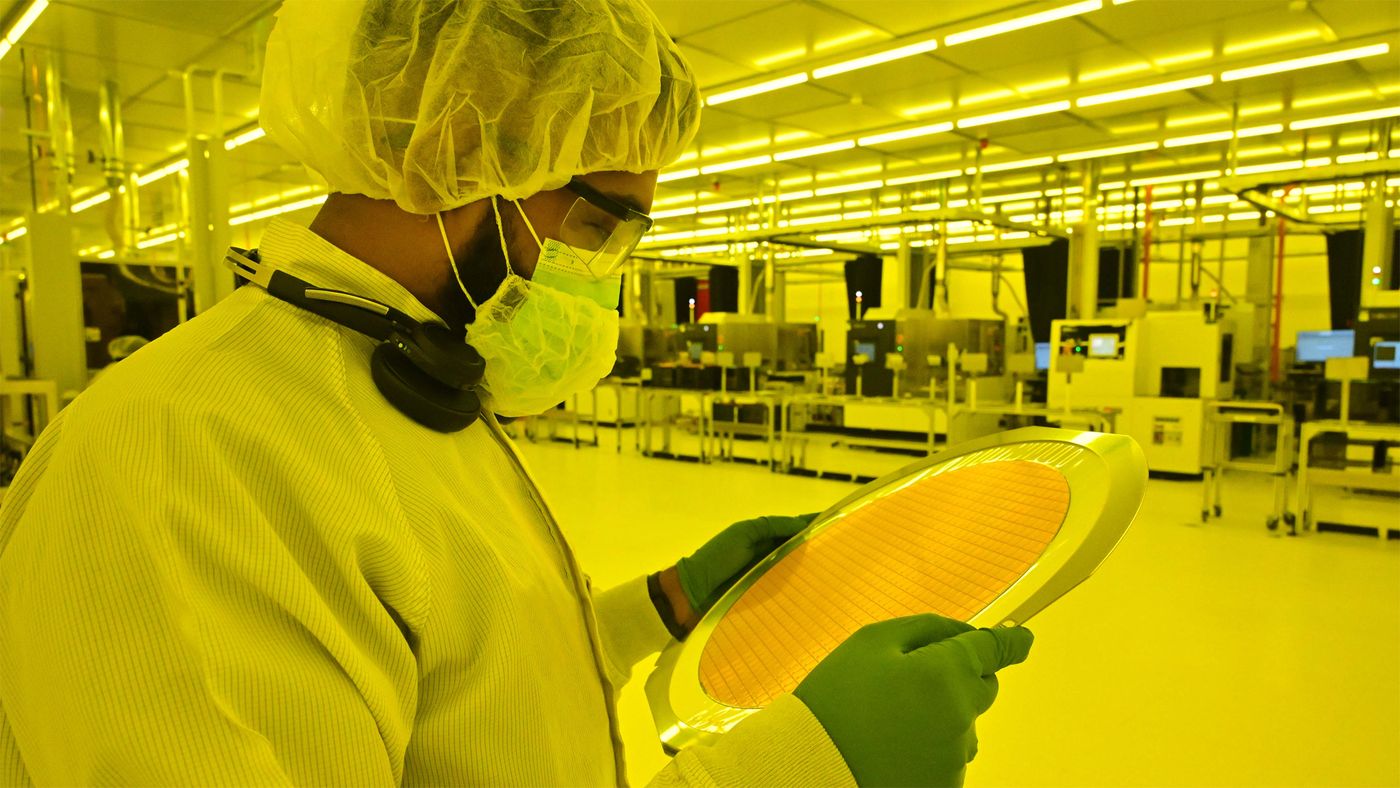
Intel Corporation designs, develops, manufactures, markets, sells, and services computing and related products and services worldwide. The company's operations are structured into three primary reporting segments. The Client Computing Group (CCG) focuses on products for personal computers and edge devices, including client and commercial central processing units (CPUs), discrete client graphics processing units (GPUs), and connectivity products. The Data Center and AI (DCAI) segment is centred on products for server and artificial intelligence infrastructure, offering server CPUs, discrete GPUs, and networking products. The Intel Foundry segment encompasses the company's semiconductor manufacturing services, providing wafer fabrication, substrates, and other related products and services. Beyond these core segments, Intel also develops driving assistance and self-driving solutions through its Mobileye division and manufactures multi-beam mask writing tools used in chip production. The company sells its products through a global network of sales organizations, distributors, resellers, retailers, and original equipment manufacturer (OEM) partners, serving a client base that includes cloud service providers and various manufacturers.
Intel's strategic collaborations are key to its business development. The company has a strategic collaboration with Infosys Limited to develop a multi-layer AI fabric that unifies infrastructure, models, data, applications, and workflows into a composable and agent-ready ecosystem. This partnership aims to create integrated solutions for enterprise AI deployment. The company's product development spans from essential computing components to advanced systems for emerging technologies, and it serves original equipment manufacturers, original design manufacturers, cloud service providers, and other manufacturers and service providers across its global operations.

Corporate History and Strategic Developments
Intel was incorporated in 1968 and established its headquarters in Santa Clara, California. The company played a foundational role in the personal computer revolution, with its x86 microprocessor architecture becoming an industry standard. A notable event in its corporate history was a 2-for-1 stock split executed on July 30, 2000, which increased the number of shares outstanding without changing the total market value held by shareholders. In recent years, Intel has pursued significant strategic initiatives to regain its competitive edge in advanced semiconductor manufacturing and artificial intelligence. The company has been building new chip fabrication plants, including a major facility in Ohio that has been in development for years. A key strategic collaboration involves a partnership with Infosys Limited to develop a multi-layer AI fabric. Furthermore, in October 2026, Intel joined Elon Musk's new Terafab AI chip venture alongside Tesla and SpaceX, indicating a focus on next-generation AI hardware development. The company's history is marked by periods of dominant market leadership followed by intense competitive challenges, shaping its current strategic direction.
Intel Corporation has entered into a strategic collaboration with Infosys Limited to develop a multi-layer AI fabric. The company also joined Elon Musk's new Terafab AI chip venture with Tesla and SpaceX, which was revealed in October 2026. Analysts with JPMorgan Chase upgraded Intel to neutral from underweight on October 19, 2026, citing growing agentic artificial intelligence workloads. The company faces competitors such as Nvidia and Advanced Micro Devices in the technology landscape.
- Incorporation of the company in the year 1968.
- Execution of a 2-for-1 stock split on July 30, 2000.
- Initiation of a new chip fabrication plant project in Ohio.
- Formation of a strategic collaboration with Infosys Limited for AI fabric development.
- Joining Elon Musk's Terafab AI chip venture with Tesla and SpaceX in October 2026.
- Receiving an analyst upgrade from JPMorgan Chase to neutral from underweight on October 19, citing growing agentic artificial intelligence workloads.
Intel Corporation has been building a new chip fabrication plant in Ohio as part of its manufacturing investments. Its strategic moves in AI and foundry services are considered critical to its corporate turnaround strategy. The company operates through business segments that include its Intel Foundry unit for semiconductor manufacturing. These investments and partnerships aim to secure the company's future in competitive sectors.
Stock Listings, Trading and Financial Metrics
Intel's primary listing is on the NASDAQ Global Select Market in the United States under the ticker symbol INTC. All trading on the NASDAQ is conducted in US dollars. For Canadian investors seeking currency-hedged exposure or simplified trading in Canadian dollars, Intel shares are also available on the Toronto Stock Exchange (TSX). This listing trades under the symbol INTC as an Intel CDR (Canadian Depositary Receipt) that is hedged to the Canadian dollar. The stock is not listed directly on the TSX as a common share, meaning the primary liquidity and trading volume are found on the NASDAQ. The average daily trading volume for INTC on the NASDAQ has been reported at approximately 99.36 million shares, indicating high liquidity. Over the past year, the stock's price has experienced significant volatility, trading between a low of $32.89 and a high of $142.35 on the US exchange, which reflects the market's changing assessment of its prospects.
As of recent analysis, Intel is not expected to pay a dividend over the next 12 months. Investors evaluating the stock often examine several key financial metrics. The company's price-to-earnings (P/E) ratio was recently reported at -43.85, a negative figure that typically reflects a period of net losses relative to the share price. The price/earnings-to-growth (PEG) ratio, which factors in expected earnings growth, was approximately 0.5009. Earnings before interest, taxes, depreciation, and amortization (EBITDA) stood at $16.8 billion, providing a view of operational profitability. The company's market capitalization was $491.08 billion based on 5.29 billion shares outstanding. These figures are critical for investors performing fundamental analysis, though they represent a snapshot in time and are subject to change with quarterly financial results and market conditions.
How to Hold Intel Stock in Canadian Investment Accounts
Canadian investors can hold shares of Intel Corporation in registered and non-registered investment accounts. To purchase the US-listed shares (INTC on NASDAQ), an investor must use a Canadian brokerage platform that provides access to US exchanges, such as Questrade or Wealthsimple. These shares can be held directly in a Tax-Free Savings Account (TFSA) or a Registered Retirement Savings Plan (RRSP). When held in an RRSP, US-listed stocks like Intel are eligible for exemption from US withholding tax on dividends under the Canada-US tax treaty, though this is currently not a concern as Intel is not paying a dividend. For those preferring to trade in Canadian dollars without direct currency exchange, the CAD-hedged CDR on the TSX (INTC) is an alternative that can also be held in these accounts. It is important for investors to understand the specific fee structures, currency conversion costs, and account features offered by their chosen brokerage when executing trades.
Canadian investors cannot buy Intel Corporation stock directly on the TSX as it is not listed there. Instead, they can buy Intel stock by opening a trading account with a Canadian brokerage that provides access to the NASDAQ, such as Questrade or Wealthsimple. Investors can purchase the US-listed shares under the symbol INTC or the Canadian Depositary Receipt (CAD Hedged) on the TSX also under INTC. Technical analysis using indicators like moving averages and oscillators is available on some platforms but does not constitute guaranteed investment advice. Investors must also consider Canadian tax implications on any investment income from the stock.
- Open a trading account with a Canadian brokerage that offers access to the NASDAQ exchange, like Questrade or Wealthsimple.
- Decide whether to buy the US-listed INTC shares (in USD) or the Canadian-listed INTC CDR (in CAD).
- Place a trade for the chosen security through your brokerage platform.
- Hold the purchased shares in a selected account type, such as a TFSA, RRSP, or non-registered account.
- Monitor the investment, considering that the US-listed shares in an RRSP are eligible for exemption from US withholding tax on any future dividends.
- Be aware of the tax implications in Canada for any capital gains realized upon selling the shares, especially in a non-registered account.
Primary Risks and Volatility Considerations
Investing in Intel stock carries several notable risks that Canadian investors should consider. The company operates in the highly competitive and cyclical semiconductor industry, facing intense rivalry from firms like NVIDIA and Advanced Micro Devices (AMD), particularly in the growth markets for data center and AI chips. Financial metrics indicate volatility, with the stock's beta measurement of 2.23 signifying it has been significantly more volatile than the broader market, which has a beta of 1. This higher beta suggests the stock price may experience larger swings in response to market movements, representing a higher degree of risk. The company's substantial investments in new manufacturing capacity, such as its Ohio fab project, carry execution risk and require significant capital expenditure. Furthermore, the technological landscape is rapidly evolving, and Intel's success depends on its ability to innovate and execute its foundry and AI strategies effectively amidst shifting industry dynamics.
Specific risk factors for Intel stock include its high volatility, with a beta measurement of 2.23 indicating it is significantly more volatile than the market average. The stock's performance is influenced by broader sector trends, such as a reported fall in AI chip stocks including Intel during premarket trading on a Thursday. Analyst firm Susquehanna lowered its price target on Intel shares in a preview of semiconductor company earnings. Investors must weigh these risks against the company's potential turnaround driven by new ventures and manufacturing investments.
- The stock has a beta of 2.23, indicating it is significantly more volatile than the NASDAQ market average.
- Intel faces direct competition in AI chips from companies like Nvidia (NVDA) and Advanced Micro Devices (AMD).
- Analyst firm Susquehanna lowered its price target on Intel to $105 from $115 while maintaining a Neutral rating in a semiconductor preview.
- The stock's 52-week range on the NASDAQ has been between $32.89 and $142.35, demonstrating extreme price volatility.
- The company's price-to-earnings ratio is negative at -43.85, reflecting recent financial performance challenges.
- Investments in new fabrication plants require successful execution to become profitable assets.
Understanding these detailed risks is crucial for assessing the investment. The stock has shown significant price movement, trading between 32.89 USD and 142.35 USD over the past year. The company operates in a highly competitive semiconductor sector with rivals like Nvidia and AMD. Assessing whether the stock's potential return justifies its volatility and competitive pressures is a key consideration for investors.
Tax Implications for Canadian Shareholders
Canadian residents are required to pay tax on investment income earned from holding stocks, including Intel Corporation shares. The Canada Revenue Agency (CRA) taxes this income based on three main factors. The type of account holding the investment is the first consideration, as gains in a TFSA are tax-free, while those in an RRSP or non-registered account are taxed differently. The second factor is the investor's marginal tax rate, which determines the percentage of tax owed on capital gains or dividend income. The third factor is the type of investment income generated, which for Intel would primarily be capital gains or losses realized upon the sale of shares. Since Intel is not currently paying a dividend, the immediate tax consideration for holders is focused on capital gains taxation in non-registered accounts. It is advisable for investors to consult with a tax professional to understand their specific obligations, as the CRA taxes investment income from stocks in Canada based on these three main factors of account type, marginal rate, and income type.
Comparative Trading Platforms for Canadian Investors
Canadian investors looking to purchase Intel stock need to select a brokerage platform. Platforms are compared based on trading costs, account fees, and investment options, with amounts typically listed in Canadian dollars. Some brokerages generate a Finder Score, a rating out of 10 where a higher score indicates a better overall platform based on weighted factors like costs and features. When choosing a platform, investors should verify access to US markets for buying NASDAQ-listed INTC, check foreign exchange fees for converting CAD to USD, and review any account maintenance or inactivity fees. The availability of registered accounts like TFSAs and RRSPs is also a standard feature to confirm. While specific platform names like Questrade and Wealthsimple are noted as examples, a thorough comparison of current offerings is recommended before opening an account. Investors can also look for platforms that provide detailed analysis and real-time price updates for stocks like Intel Corp (INTC-Q) to aid in their decision-making.
Frequently asked questions
What does Intel Corporation do?
Intel Corporation designs, develops, manufactures, markets, sells, and services computing and related end products and services. It operates through three segments: CCG (Client Computing Group), DCAI (Data Center and AI), and Intel Foundry. The company offers products including client and server CPUs, discrete GPUs, networking products, and semiconductor manufacturing services. It also provides driving assistance and self-driving solutions and develops manufacturing tools for chip production.
What is the ticker symbol for Intel stock and where does it trade?
Intel's primary listing is on the NASDAQ exchange in the United States under the ticker symbol INTC, with all prices listed in US Dollars. For Canadian investors, the stock is accessible through Canadian brokerages offering US market access. It is also available as a Canadian Depositary Receipt (CAD Hedged) on the Toronto Stock Exchange (TSX) under symbols like INTC.TO or INTC.NE, which trade in Canadian dollars. The TSX listed CDR recently closed at a price of $52.03. The company itself is headquartered in Santa Clara, California, and is not directly listed on the TSX as a common share.
Can I hold Intel stock in my TFSA or RRSP?
Yes, Canadian investors can hold Intel Corporation shares in both Tax-Free Savings Accounts (TFSAs) and Registered Retirement Savings Plans (RRSPs). This is accomplished by purchasing the US listed shares (INTC on NASDAQ) through a Canadian brokerage that provides access to US markets, such as Questrade or Wealthsimple. The CAD hedged version trading on the TSX (INTC.TO) is also eligible for registration in these accounts. It is important to be aware of the tax implications for US dividends in registered accounts, though currently no dividend is expected.
What are the main risks of investing in Intel?
Key investment risks for Intel include its high stock price volatility, with a beta of 2.23 indicating it is significantly more volatile than the market average. The stock has experienced a wide 52 week range from $32.89 to $142.35, demonstrating substantial price swings. The company faces intense competition in semiconductors and AI from rivals like Nvidia and Advanced Micro Devices. Execution risks related to its large manufacturing investments and foundry strategy are also present. Furthermore, the broader technology sector is subject to rapid changes and cyclical demand, which can impact Intel's performance.
What was Intel's stock split history?
Intel Corporation executed a 2 for 1 stock split on July 30, 2000. This corporate action meant that for every single share an investor owned prior to the split, they subsequently owned two shares. The share price was adjusted proportionately lower at the time of the split so that the total market value of an investor's holding remained unchanged. This split was implemented to increase the liquidity and affordability of the shares.
Sources and further reading
- Intel Corporation (INTC) Stock Price, News, Quote & History ca.finance.yahoo.com
- Intel: INTC Stock Price Quote & News robinhood.com
- Guide to buying Intel Corporation stock in Canada finder.com
This article explains how things work and is not financial, tax or legal advice. Rules, limits and rates change, so check the current figures with the Canada Revenue Agency, your province or your financial institution before you act.