GameStop Corp. is a specialty retailer of video games, consumer electronics, and pop culture collectibles. Its stock, trading under the ticker GME on the New York Stock Exchange, has been a subject of significant market attention and volatility. For Canadian investors, understanding the company's business, its trading mechanics, and the associated risks is crucial. This article provides a detailed reference on GameStop, covering its operations, history, financial metrics, and how Canadians can access its shares.
What GameStop Does
GameStop Corp. operates as a specialty retailer focused on the gaming and entertainment sectors. The company's core business involves selling new and pre-owned video game hardware, such as consoles, and related accessories like controllers and headsets. It also sells a wide range of software, including new and pre-owned physical games, digital downloadable content, and in-game currency. Beyond traditional gaming, GameStop has expanded into the broader pop culture collectibles market. This segment includes apparel, toys, trading cards, gadgets, and electronics aimed at technology and entertainment enthusiasts. The company conducts its retail operations through a network of physical stores and e-commerce platforms under several well-known brand names.
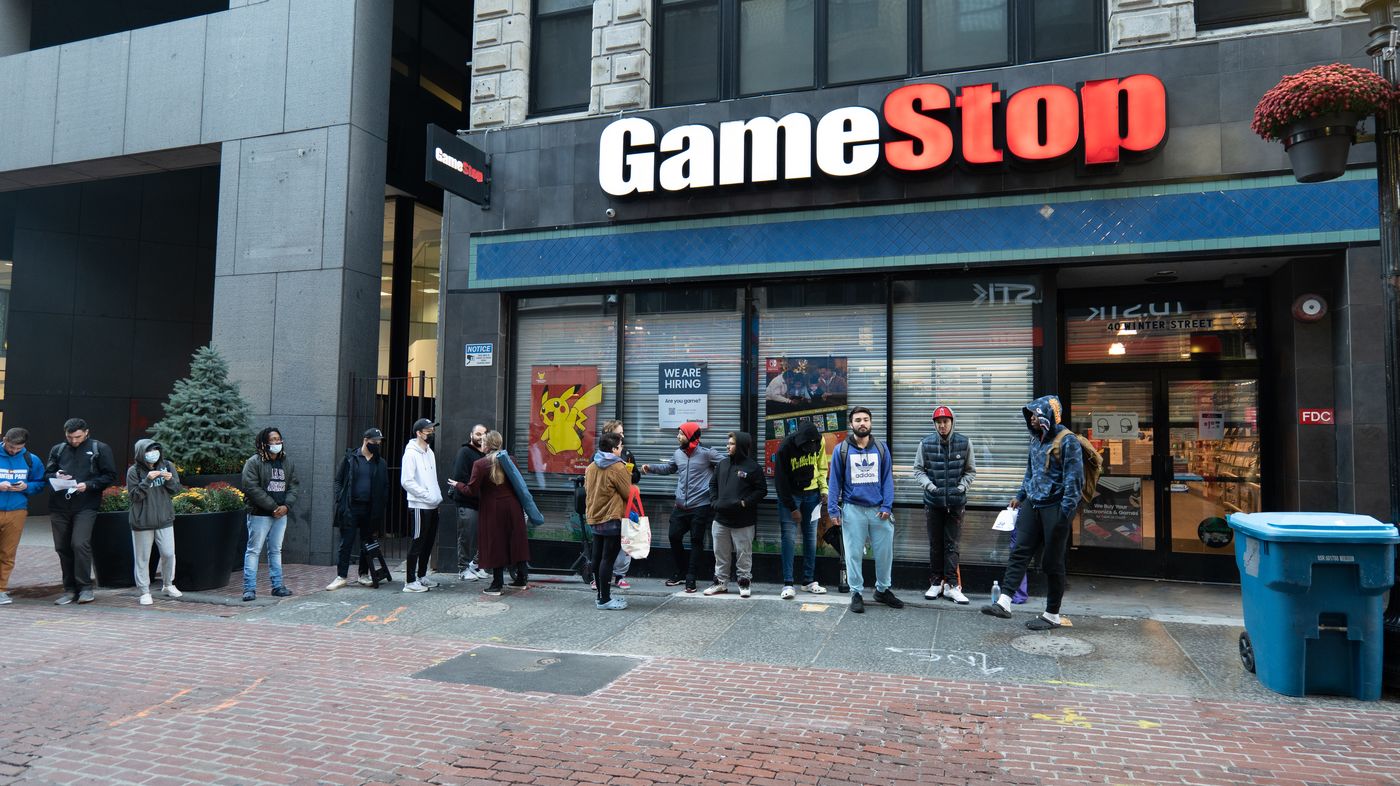
GameStop's primary store banners are GameStop and EB Games, with the latter being particularly familiar to Canadian shoppers from its previous standalone presence. In Europe, the company operates under the Micromania brand. For its collectibles business, GameStop uses the Zing Pop Culture brand for themed retail stores. The company's geographical footprint spans the United States, Australia, and Europe, serving a dedicated customer base of gamers and collectors. Its business model combines the retail of tangible products with digital sales, adapting to shifts in how consumers purchase and engage with entertainment content.
Company History and Evolution
GameStop was founded in 1996 and was originally known as GSC Holdings Corp. For many years, its business was heavily reliant on the cycle of new console releases and the trade-in market for pre-owned games. This model faced significant challenges with the industry's shift toward digital downloads and streaming, leading to financial difficulties and store closures in the 2010s. The company has focused on strengthening its balance sheet, reducing debt, and investing in its e-commerce capabilities to compete more effectively online. A key part of its transformation has been a greater emphasis on its collectibles and merchandise business, which offers higher margins than traditional game sales. The company executed a 4-for-1 stock split on July 21, 2022, which increased the number of shares outstanding. More recently, insider purchases by the CEO have drawn investor attention, signalling leadership's confidence in the ongoing turnaround plan.
GameStop Corp. was founded in 1996 and is based in Grapevine, Texas. The company was formerly known as GSC Holdings Corp. A key corporate event was the execution of a 4-for-1 stock split on July 21, 2022. More recently, in October 2026, CEO Ryan Cohen purchased an additional 844,130 shares, a transaction valued at US$22.8 million.
- Founded in 1996 under the name GSC Holdings Corp.
- Became a publicly traded specialty retailer for video games.
- Faced business challenges from digital distribution in the 2010s.
- Executed a 4-for-1 stock split on July 21, 2022.
- CEO Ryan Cohen purchased an additional 844,130 shares in October 2026.
Financial Profile and Key Metrics
GameStop's financial metrics provide insight into its valuation and operational scale. The company has a market capitalization of approximately $13.28 billion. Over the trailing twelve months, it reported revenue of around $3.6 billion. A key valuation ratio watched by investors is the price-to-earnings (P/E) ratio, which for GameStop is approximately 17.55 based on trailing earnings. This is derived by dividing the current share price by its earnings per share over the past year. Another related metric is the price/earnings-to-growth (PEG) ratio, which factors in expected earnings growth and is calculated at roughly 0.3059 for the company.
The company's earnings before interest, taxes, depreciation, and amortization (EBITDA) is $505.8 million. GameStop's stock is characterized by high volatility, as measured by its beta of 1.62. This higher beta suggests the potential for larger price swings, representing both greater risk and the possibility for higher returns relative to the market. The stock's 52-week trading range has been between $17.79 and $28.30, illustrating the substantial price movement it can experience.
GameStop has a trailing 12-month revenue of approximately $3.6 billion and employs about 4,000 staff. Its stock has a trailing price-to-earnings (P/E) ratio of roughly 18x and a price/earnings-to-growth (PEG) ratio of about 0.3059. The company's earnings before interest, taxes, depreciation and amortization (EBITDA) is $505.8 million. Its stock price has ranged from a 52-week low of $17.79 to a high of $28.30.
- Market Capitalization: Approximately $13.28 billion.
- Trailing 12-Month Revenue: Approximately $3.6 billion.
- Trailing Price-to-Earnings (P/E) Ratio: Approximately 17.55.
- Price/Earnings-to-Growth (PEG) Ratio: Approximately 0.3059.
- Earnings Before Interest, Taxes, Depreciation & Amortization (EBITDA): $505.8 million.
- Beta (Measure of Volatility): 1.62.
- 52-Week Price Range: $17.79 to $28.30.
How Canadians Can Invest in GME
Canadian investors cannot purchase GameStop stock directly on the Toronto Stock Exchange (TSX) because it is not listed there. The primary listing for GameStop Corp. is on the New York Stock Exchange (NYSE) under the ticker symbol GME. All trading and pricing for the stock is conducted in US dollars. However, Canadians can easily buy and hold GME shares through most major Canadian online brokerage platforms. These brokers provide access to US equity markets, allowing clients to trade stocks listed on exchanges like the NYSE and NASDAQ. Popular Canadian brokers that offer this access include Questrade and Wealthsimple Trade.
When buying US-listed stocks like GME, Canadian investors typically have two account currency options. They can hold US dollars within their brokerage account to purchase the shares directly, or they can use a Canadian dollar account where the broker automatically handles the currency conversion, often for a fee. GameStop shares can be held in registered Canadian investment accounts, including Tax-Free Savings Accounts (TFSAs) and Registered Retirement Savings Plans (RRSPs). Holding US stocks in these accounts has specific tax implications, particularly concerning US withholding tax on dividends, though this is not a current concern for GameStop as it does not pay a dividend. Investors should consult their broker for specific details on currency conversion fees, trading commissions, and account eligibility.
A Canadian investor cannot buy GameStop stock on the TSX as it is listed on the New York Stock Exchange (NYSE) under the symbol GME. To purchase shares, an investor must first open a trading account with a Canadian brokerage that provides access to US markets. Examples of such brokerages include Questrade or Wealthsimple. Once the account is funded, the investor can place an order to buy GME stock, with all prices listed in US dollars.
- Open a brokerage account with a Canadian platform that offers access to US markets (e.g., Questrade, Wealthsimple).
- Fund the account with Canadian or US dollars.
- Place a trade order for the ticker symbol GME, noting it trades on the NYSE.
- Decide whether to hold the shares in a non-registered, TFSA, or RRSP account.
- Monitor the investment, remembering all prices and financials are reported in US dollars.
Dividend Policy and Share Structure
GameStop does not currently pay a cash dividend to its shareholders and is not expected to initiate a dividend payment over the next twelve months. The company has historically not been a dividend-paying stock, preferring to reinvest capital into its business operations and strategic initiatives. This is common for companies in a turnaround or growth phase, where preserving cash for reinvestment is a priority. For income-focused investors, the lack of a dividend yield is a significant consideration, as the total return on an investment in GME is dependent entirely on capital appreciation. The absence of dividends also simplifies the tax considerations for Canadian holders, as there are no US withholding taxes to account for in non-registered accounts.
The company's share structure was altered by a 4-for-1 stock split executed on July 21, 2022. In a stock split, each existing share is divided into multiple new shares. In this case, for every one share an investor owned before the split, they received four shares afterward. The split did not change the total market value of an investor's holding at the time. It simply increased the number of shares outstanding and proportionally reduced the price per share. Stock splits are often undertaken to make shares more affordable and liquid for a broader base of investors. Alongside common stock, GameStop also has listed warrants (GME.WS) that trade separately and give the holder the right to purchase common stock at a specific price under defined conditions.
Principal Risks for Investors
Investing in GameStop carries several distinct risks that potential shareholders should carefully weigh. The most prominent risk is the stock's high volatility. With a beta of 1.62, GME shares are historically more volatile than the overall market. This means the stock price can experience sharp and rapid swings in both directions based on market sentiment, social media trends, or trading activity unrelated to the company's fundamentals. Such volatility can lead to significant short-term gains or losses and requires a high risk tolerance from investors.
The company also faces substantial business and competitive risks. GameStop operates in a retail sector that has been profoundly disrupted by the shift to e-commerce and digital distribution. Competing directly with giant online retailers and first-party digital storefronts from console manufacturers presents an ongoing challenge. The company's financial performance has been inconsistent, and its strategic pivot toward collectibles is still proving itself in a competitive market. Furthermore, the company's management and safety subratings have been assessed as low by some analytical services, indicating potential concerns about corporate governance and financial stability. These factors combine to make GameStop a speculative investment whose future success is highly uncertain.
GameStop stock exhibits high volatility, with a beta measurement of 1.62, indicating it is more volatile than the market average. The stock's price has swung sharply over recent years, which represents a higher risk for investors. The company faces intense competition in its retail sector, including from digital distribution platforms. Furthermore, an investment provides no income cushion as GameStop is not expected to pay a dividend over the next 12 months.
- High stock price volatility, with a beta of 1.62.
- Intense competition from digital distribution and large online retailers.
- Dependence on the cyclical video game hardware release cycle.
- Ongoing business model transformation and turnaround execution risk.
- Low management and safety subratings from some analytical services.
- Investment returns are solely from price appreciation, with no dividend income.
Trading and Market Information
GameStop's stock trades on the New York Stock Exchange under the ticker symbol GME. In Canada, real-time price updates and news for the stock are often displayed with the suffix -N (GME-N) on financial data platforms to denote the US listing. The stock sees substantial trading volume, with an average daily volume noted at approximately 11.55 million shares. Trading occurs in US dollars, and the price quoted is always the US dollar price. Canadian investors will see this price converted to Canadian dollars by their brokerage platform based on the current exchange rate at the time of a transaction or in their account summary.
The stock is a component of several market indexes and is closely watched by a large community of retail investors. Its trading activity is often analyzed using technical indicators like moving averages and oscillators, though such analysis does not guarantee future performance. The stock's liquidity is generally high due to its notoriety and large public float, ensuring that most investors can readily buy and sell shares. It is important for traders to be aware of the difference between regular market hours and after-hours trading, where volume is lower and price movements can be more pronounced and less predictable.
Frequently asked questions
What does GameStop company do?
GameStop Corp. is a specialty retailer that provides games, collectibles, and entertainment products. It sells new and pre-owned gaming platforms, software, accessories, and in-game digital content. The company also sells collectibles like apparel, toys, and trading cards for pop culture enthusiasts. It operates stores and e-commerce sites under the GameStop, EB Games, and Micromania brands in the United States, Australia, and Europe.
Can I buy GameStop stock on the TSX?
No, you cannot buy GameStop stock on the TSX. GameStop stock is listed on the New York Stock Exchange (NYSE) under the ticker symbol GME. Canadian investors can buy the stock through a Canadian brokerage account that provides access to the NYSE. Examples of such brokerages are Questrade or Wealthsimple.
Does GameStop pay a dividend?
GameStop does not currently pay a dividend to its shareholders. The company is not expected to pay a dividend over the next 12 months. This means returns on an investment in GME are solely dependent on changes in the stock's price. The lack of a dividend is a factor for income-focused investors to consider.
What was the GameStop stock split?
GameStop executed a 4-for-1 stock split on July 21, 2022. This means for every one share an investor owned before the split, they received four shares afterward. The split adjusted the share price proportionally lower to maintain the same total market value of each holding. It did not directly change the overall worth of an investor's GameStop stocks at the moment of the split.
Is GameStop stock volatile?
Yes, GameStop stock is considered highly volatile. Its beta, a measure of volatility compared to the market, is 1.62. This indicates it has historically been more volatile than the average stock on the NYSE. The stock's 52-week range of $17.79 to $28.30 also demonstrates significant price movement.
What are the risks of investing in GameStop?
Key risks include the stock's high volatility, as indicated by its beta of 1.62, meaning it is more volatile than the market average. The company operates in a competitive retail sector facing pressure from digital distribution. The stock price has experienced sharp swings based on market sentiment. Additionally, the investment offers no dividend income, as none is expected in the next 12 months.
Sources and further reading
- GameStop Corp. (GME) Stock Price, News, Quote & History ca.finance.yahoo.com
- GameStop: GME Stock Price Quote & News robinhood.com
- Guide to buying GameStop stock in Canada finder.com
This article explains how things work and is not financial, tax or legal advice. Rules, limits and rates change, so check the current figures with the Canada Revenue Agency, your province or your financial institution before you act.