Fortis Inc is a major North American regulated electric and gas utility headquartered in St. John's, Canada. Its shares trade on the Toronto Stock Exchange under the symbol FTS, providing Canadian investors with direct access to a diversified portfolio of essential service providers. The company is known for its long history, stable operations, and consistent dividend payments, which are designated as eligible dividends for Canadian tax purposes. For investors seeking income and lower volatility within their portfolio, Fortis represents a core holding in the utilities sector.
Business Operations and Geographic Footprint
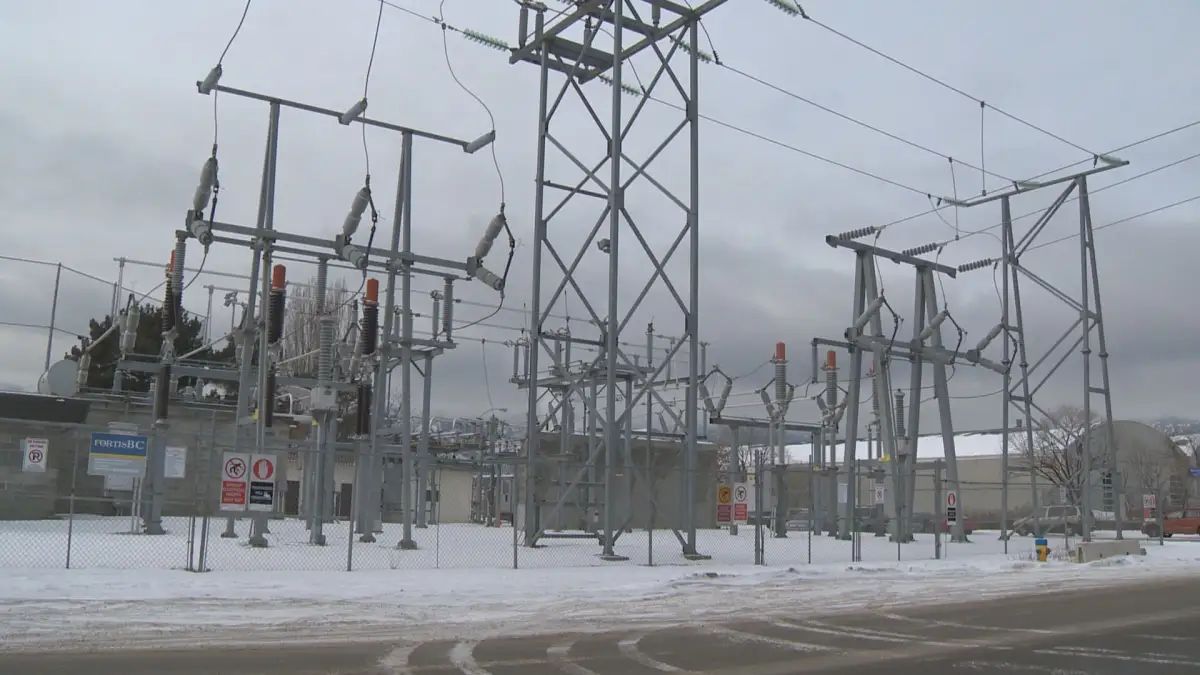
Fortis Inc operates as a fully regulated electric and gas utility across Canada, the United States, and the Caribbean. The company's primary business involves generating, transmitting, and distributing electricity, as well as distributing natural gas to millions of customers. The company's Canadian utility operations are extensive and form the core of its business. In British Columbia, FortisBC distributes natural gas to about 1,105,000 residential, commercial, and industrial customers. In Alberta, the company owns and operates the electricity distribution system serving roughly 615,000 customers in southern and central regions. Fortis also owns four hydroelectric generating facilities in the province with a combined capacity of 225 megawatts and provides operation, maintenance, and management services to other hydroelectric facilities. The utility's presence extends to Atlantic Canada, where it distributes electricity in Newfoundland and Labrador, serving around 280,000 customers with an installed generating capacity of 145 MW, and on Prince Edward Island with a generating capacity of 90 MW. Additional operations include providing electric utility service to approximately 70,000 customers in Ontario and to approximately 35,000 customers on Grand Cayman and 92,000 customers through Maritime Electric. In total, the company's infrastructure includes approximately 91,100 circuit kilometres of distribution lines and about 51,700 kilometres of natural gas pipelines, forming a vast network for delivering essential energy services.
Corporate History and Development
Fortis was founded in 1885, giving it a history spanning well over a century. The company has grown from its origins into a large, geographically diversified utility through a combination of organic development and strategic acquisitions. A significant corporate event was a 4-for-1 stock split executed on October 11, 2005, which increased the number of shares outstanding without changing the total market value held by each shareholder at the time. The company's growth strategy has consistently focused on investing in regulated utility assets, which provide predictable cash flows. This long-term approach has supported the company's ability to fund infrastructure projects and maintain its dividend policy. The utility's expansion into the United States and the Caribbean has diversified its revenue base and regulatory frameworks beyond Canada. The company's ten-year average annual total shareholder return has been reported as 9 percent, reflecting the compounding effect of share price appreciation and reinvested dividends over a long period for investors who held the stock.
Stock Listings and Trading Information
Fortis Inc offers investors two primary avenues for share ownership through major public exchanges. The company's common shares are listed on the Toronto Stock Exchange, which is the primary listing for Canadian investors, trading under the symbol FTS. Fortis shares are also cross-listed on the New York Stock Exchange, where they also trade under the symbol FTS, providing access for U.S. and international investors. All trading and price information for the TSX listing is denoted in Canadian dollars. The company's First Preference Shares, which are a separate class of equity, are also listed on the Toronto Stock Exchange. The dividend rate for the Series I First Preference Shares is reset every quarter based on the applicable 3-month Government of Canada Treasury Bill rate plus 1.45 percent, providing a floating rate return for holders of that series. For Canadian investors, holding Fortis shares in a Tax-Free Savings Account or a Registered Retirement Savings Plan is a common strategy to shelter investment income and dividends from taxation. The shares can be purchased through any Canadian brokerage account that provides access to the Toronto Stock Exchange, such as those offered by major online brokerages.
Dividend Policy and Shareholder Returns
Fortis has established a reputation for providing shareholders with consistent dividend income, a characteristic typical of regulated utility stocks. The company's dividend policy and payments are subject to approval by its Board of Directors. For Canadian shareholders, all dividends paid on common shares and preference shares in a given fiscal year are designated as eligible dividends. This designation is important for tax purposes as it entitles shareholders to a higher dividend tax credit in accordance with the Income Tax Act (Canada) and similar provincial legislation. The company offers a Dividend Reinvestment Plan, known as a DRIP, to registered common shareholders. This plan provides a convenient method to automatically reinvest cash dividends into additional common shares, and it includes an incentive in the form of a 2% discount on the purchase price of shares acquired through the plan.
Key dividend-related figures for Fortis Inc. are based on recent data. The company's dividend payout ratio is approximately 72 percent of net profits, which is considered high. Analysts estimate a forward annual dividend yield of about 3.27 percent based on the current stock value. Over the last 12 months, Fortis has paid about C$2.54 per share in dividends. The most recent dividend was paid on September 1, 2026, to shareholders who bought before August 19, 2026.
- The most recent dividend payout recorded was on September 1, 2026.
- The ex-dividend date for that payment was August 19, 2026.
- Over the twelve months prior to the data, the company paid approximately C$2.54 per share in dividends.
- The dividend payout ratio, representing dividends as a percentage of net profits, was around 72%.
- Based on recent payouts, analysts estimated a forward annual dividend yield of 3.27%.
- The trailing price-to-earnings ratio was approximately 23.
- The price/earnings-to-growth (PEG) ratio was about 2.507.
- The company's EBITDA was C$5.7 billion.
It is important for investors to understand that these dividend figures are based on historical data. They are not a guarantee of future payments or yields. The forward annual dividend yield of 3.27 percent is an analyst estimate. The actual yield an investor receives depends on the price at which they purchase the shares and the future dividends declared by the board. The high payout ratio of 72 percent means the company returns a substantial portion of profits to shareholders. This appeals to income focused investors but requires monitoring to ensure sufficient reinvestment for future growth.
Financial and Operational Metrics
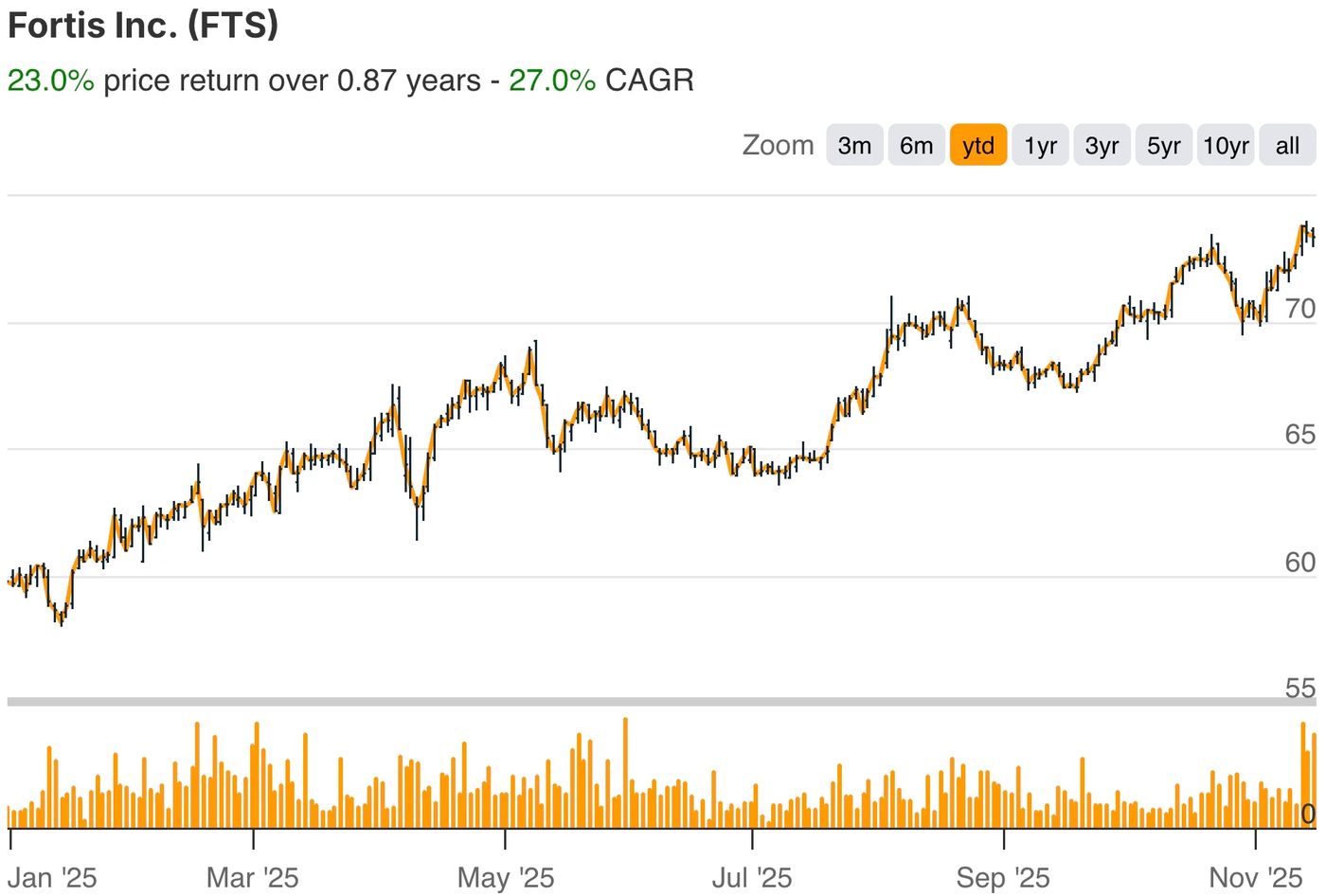
Several key metrics are used by analysts and investors to assess the financial health and valuation of Fortis. The company's trailing twelve-month revenue was approximately C$12.4 billion. Earnings before interest, taxes, depreciation, and amortization, a measure of operational profitability known as EBITDA, was C$5.7 billion. The price-to-earnings ratio, calculated by dividing the share price by per-share earnings over the past year, was roughly 23. Another valuation metric, the price/earnings-to-growth or PEG ratio, which factors in expected earnings growth, was about 2.507. In terms of stock price movement, the shares have exhibited lower volatility than the broader market, as indicated by a beta measurement of 0.41 compared to a market average of 1. Over a recent twelve-month period, the stock price ranged from a low of C$67.17 to a high of C$83.07, demonstrating the band within which the share price traded during that time.
Principal Risks and Considerations
As a regulated utility, Fortis operates within a framework that presents specific risks for investors. The company's financial performance is heavily influenced by the decisions of regulatory bodies in the many jurisdictions where it operates. These regulators set the allowed rates of return on the capital Fortis invests, and unfavorable rate decisions can impact profitability and growth plans. The business requires continuous and significant capital investment to maintain, upgrade, and expand its electricity and gas networks, which involves substantial upfront costs. While the regulated model provides revenue stability, it also limits the company's ability to rapidly increase profits beyond approved levels. Fortis is exposed to operational risks including natural disasters, severe weather, and environmental incidents that could damage infrastructure and interrupt service. The company also faces the ongoing industry challenge of transitioning its energy systems to meet climate goals, which requires managing the costs of integrating renewable energy and new technologies. Economic conditions in its service territories can affect demand for electricity and natural gas, particularly from industrial customers. Like all dividend-paying stocks, the company's ability to maintain and grow its dividend is not guaranteed and depends on future earnings, cash flow, and capital requirements. The high payout ratio indicates a commitment to shareholder returns but also means a smaller portion of earnings is retained for reinvestment, which could affect long-term growth if not managed alongside new debt or equity financing.
Ownership and Account Structures for Canadians
Canadian investors have several options for how to hold Fortis shares within their investment portfolios. The most direct method is to purchase the common shares listed on the Toronto Stock Exchange through a standard brokerage account. These shares are qualified investments for registered accounts, meaning they can be held within a Tax-Free Savings Account (TFSA) or a Registered Retirement Savings Plan (RRSP). Holding the stock in a TFSA allows all dividend income and any capital gains to accumulate completely free of Canadian income tax. Holding it in an RRSP provides a tax deduction on the contribution and allows the investment to grow tax-deferred until withdrawal. For investors focused on building their position over time, enrolling in the company's Dividend Reinvestment Plan (DRIP) is a strategic choice. The DRIP is available to registered common shareholders and automatically uses dividend payments to purchase additional shares, bypassing brokerage fees for those transactions. The plan offers a 2 percent discount on the share price for shares purchased through the DRIP, providing a small but consistent advantage for long-term holders. Investors should confirm with their broker or the company's transfer agent about DRIP enrollment procedures, as not all brokerage accounts support direct enrollment in corporate DRIPs. The company also owns gas-fired and hydroelectric generating capacity totalling 43 MW in its western U.S. operations, which contributes to the overall generation portfolio that supports its regulated business model.
Frequently asked questions
What is the ticker symbol for Fortis stock in Canada?
Fortis Inc common shares trade on the Toronto Stock Exchange under the symbol FTS. The shares are also cross-listed on the New York Stock Exchange under the same symbol, FTS. All price information for the TSX listing is in Canadian dollars. The company's First Preference Shares are also listed on the TSX.
Does Fortis pay a dividend?
Yes, Fortis has a history of paying dividends to shareholders. The dividends are paid quarterly and are designated as eligible dividends for Canadian tax purposes. The company offers a Dividend Reinvestment Plan (DRIP) that allows shareholders to automatically reinvest their dividends to purchase more shares, often at a 2% discount. Recent data indicated a trailing dividend of about C$2.54 per share.
What is Fortis's dividend yield?
Based on recent data and share prices, analysts have estimated a forward annual dividend yield of approximately 3.27%. It is important to note that this is an estimate based on recent payouts. The actual yield an investor receives depends on the purchase price of the shares and future dividend declarations by the company's board. The company's recent payout ratio was about 72% of net profits.
Is Fortis stock considered volatile?
Fortis stock has historically exhibited lower volatility compared to the broader stock market. This is indicated by a beta measurement of 0.41, which is less than the market average of 1. This lower beta is typical for regulated utility stocks, which are often considered defensive holdings due to the essential nature of their services. The stock's price range over a recent year was between C$67.17 and C$83.07.
Can I hold Fortis stock in my TFSA or RRSP?
Yes, Fortis shares are qualified investments for both Tax-Free Savings Accounts (TFSA) and Registered Retirement Savings Plans (RRSP). The company's common shares are listed on the Toronto Stock Exchange under the symbol FTS, which are eligible for these registered accounts. Holding the stock in a TFSA or RRSP allows Canadian investors to receive dividends and capital gains without immediate tax implications. This makes Fortis a popular holding for investors seeking tax efficient income from its dividend payments.
Sources and further reading
- Fortis Inc. (FTS.TO) Stock Price, News, Quote & History ca.finance.yahoo.com
- Share Information fortisinc.com
- Guide to buying Fortis stock in Canada finder.com
This article explains how things work and is not financial, tax or legal advice. Rules, limits and rates change, so check the current figures with the Canada Revenue Agency, your province or your financial institution before you act.