Canadian Solar Inc. is a global solar power and battery storage company founded in Canada. Headquartered in Kitchener, Ontario, it manufactures solar products and develops utility-scale energy projects worldwide. The company's common shares trade on the Nasdaq under the ticker CSIQ, making it accessible to Canadian investors. Understanding its business segments and market position is key for those considering this stock as part of a renewable energy investment portfolio.
What Canadian Solar Does
Canadian Solar Inc. provides solar energy and battery energy storage products and solutions on a global scale. The company operates through two distinct business segments which define its core activities. The Manufacturing segment, also referred to as CSI Solar, focuses on the design, development, and manufacturing of solar and battery storage products. This includes producing solar ingots, wafers, cells, and modules, as well as battery storage solutions, inverters, racking systems, and solar system kits. The Recurrent Energy segment is dedicated to project development and services, including building, selling, and operating solar power and battery energy storage projects. This segment also sells electricity, provides engineering, procurement, and construction (EPC) services, and offers operation and maintenance (O&M) and asset management services for solar projects. The company serves a wide range of customers from distributors and system integrators to utility companies and government end users. Its products are sold under several brand names including Canadian Solar, CSI Solar, e-STORAGE, SolBank, and EP Cube.
Company History and Background
Canadian Solar was founded by Shawn Qu in October 2001, establishing its roots in the early days of the modern solar industry. The company has grown from a solar module manufacturer into a vertically integrated provider of solar and storage solutions. A significant milestone was reached in 2006 when Canadian Solar became publicly listed on the Nasdaq stock exchange, providing it with capital to expand its operations globally. Over the years, the company has established a presence across North America, South America, Europe, Africa, the Middle East, Australia, and Asia. Its evolution included the development of its project development arm, now known as Recurrent Energy, which focuses on utility-scale solar and storage projects. The company describes itself as one of the most bankable companies in the solar and renewable energy industry, a status important for securing project financing. Its headquarters remain in Kitchener, Canada, maintaining its Canadian corporate identity despite its extensive international operations.
Canadian Solar Inc. was incorporated in Kitchener, Canada in 2001. The company has been publicly listed on the Nasdaq stock exchange since 2006. It operates globally in regions including Asia, the United States, and Europe. The company has grown from a manufacturer to a provider of comprehensive energy solutions.
- 2001: Company founded by Shawn Qu in Kitchener, Canada.
- 2006: Completed its initial public offering and began trading on the Nasdaq exchange.
- Global expansion established operations in North America, South America, Europe, Africa, the Middle East, Australia, and Asia.
- Development of the Recurrent Energy segment for utility-scale project development.
- Vertical integration expanded from module manufacturing into ingot, wafer, and cell production.
- Diversification into battery energy storage solutions under brands like e-STORAGE and SolBank.
The company operates through two main segments: Manufacturing and Recurrent Energy. The Manufacturing segment focuses on solar modules, battery storage, and other power technology products. The Recurrent Energy segment develops, builds, and operates solar power and battery storage projects. This structure supports both product sales and long term project ownership.
Business Segments and Operations
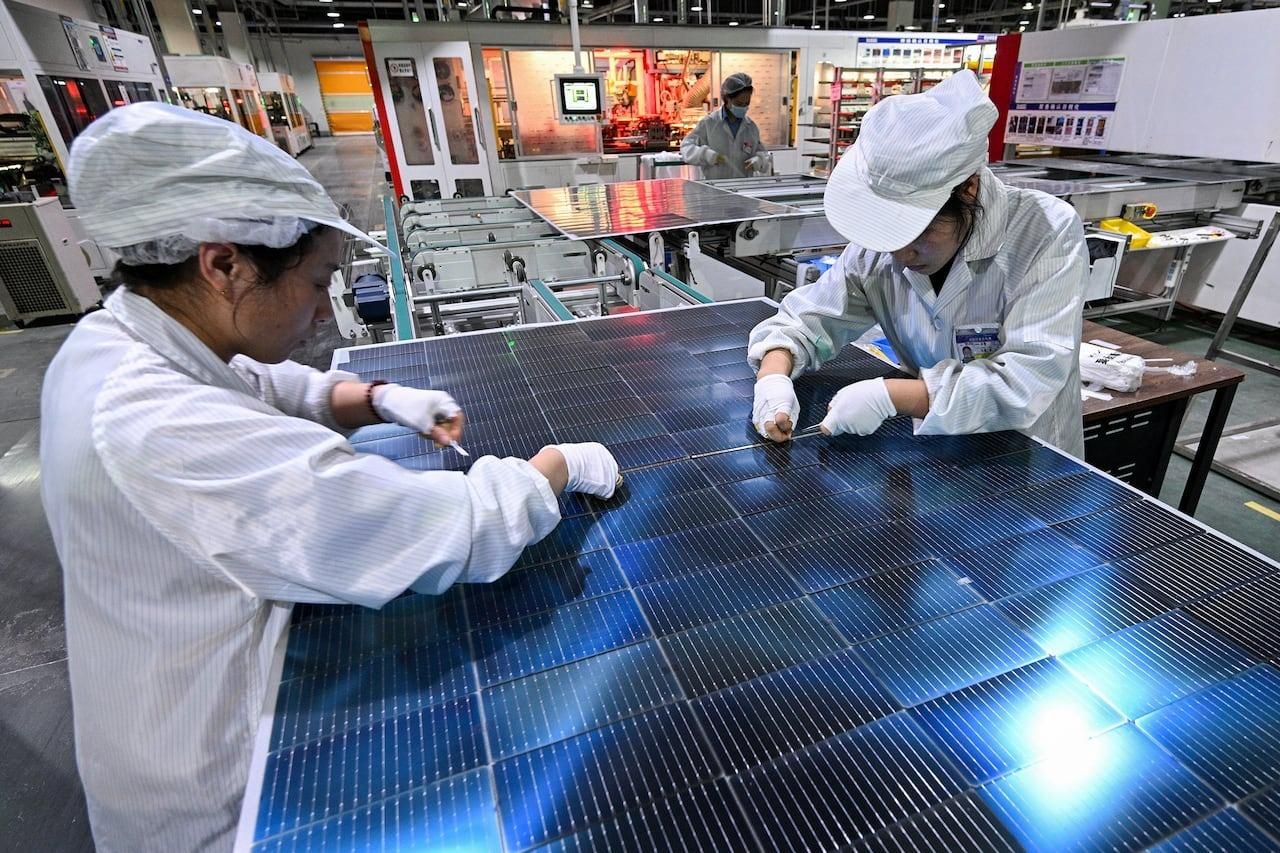
The Manufacturing Segment, also known as CSI Solar, is the industrial backbone of Canadian Solar, handling the production of key solar and storage components. It manufactures standard solar modules and specialty solar products that are used in residential, commercial, and industrial power generation systems. Beyond modules, it produces battery energy storage systems, power electronic products like inverters, and complete solar system kits. The segment also provides engineering, procurement, and construction services and operates some battery energy storage projects. Its manufacturing scale allows it to supply products to a global network of distributors, installers, and EPC companies under various brand names. The Recurrent Energy Segment focuses on the development and operation of solar and battery storage assets. Its activities include identifying project sites, securing permits and financing, managing construction, and then either selling the completed project or retaining ownership to sell the electricity generated. For projects it retains, the segment provides ongoing operation and maintenance services, which involve monitoring, inspecting, and repairing plant equipment. It also offers asset management services. The primary customers for this segment are utility companies, public utilities, licensed suppliers, and corporate offtakers who purchase clean power through long-term agreements. This segment transforms the company's manufactured products into operational, revenue-generating power plants.
Stock Listing and Trading Details for Canadians
Canadian Solar's common shares trade on the Nasdaq Global Select Market under the ticker symbol CSIQ. The stock has been listed on this US exchange since 2006, providing a long history of public market data for analysis. For Canadian investors, this means purchasing shares involves trading in US dollars on a US exchange, which requires a brokerage account capable of handling foreign securities. Investors can hold CSIQ shares in various Canadian registered accounts, including Tax-Free Savings Accounts (TFSAs) and Registered Retirement Savings Plans (RRSPs), though they will be subject to foreign currency conversion costs. The stock is categorized as a small-capitalization stock, with a market capitalization historically between 300 million and 2 billion US dollars, which can influence its risk and return profile. Trading liquidity, indicated by the bid-ask spread and average daily volume, can vary and investors should consider this when planning entry and exit points. The stock's 52-week trading range provides context for its price volatility within a given year and its position relative to recent highs and lows. Investors should be aware that as a US-listed security, corporate actions like dividends, if any were paid, would be subject to a non-resident withholding tax unless held in an RRSP, which typically has such taxes waived under the Canada-US tax treaty.
Canadian Solar stock trades on the Nasdaq under the ticker CSIQ. Canadian investors can hold these shares in registered accounts like TFSAs and RRSPs. Trades will be conducted in US dollars as it is a foreign security. The stock's bid ask spread can indicate its liquidity in the marketplace.
- Listing: Trades on the Nasdaq under ticker CSIQ.
- Currency: All transactions are conducted in US dollars, requiring currency exchange.
- Registered Accounts: Eligible for holding within TFSAs and RRSPs as a foreign security.
- Withholding Tax: US dividends are subject to non-resident withholding tax, typically waived in RRSPs.
- Market Cap Category: Classified as a small-cap stock, which can imply higher volatility.
- Liquidity: Average daily trading volume can be in the millions of shares, but the bid-ask spread can indicate market depth.
Holding US listed securities in Canadian registered accounts involves currency exchange considerations. The stock's market capitalization is approximately 668.1 million dollars. This places it in the small capitalization category. Investors should consider transaction costs and account administration for foreign holdings.
Financial Performance and Market Metrics
Canadian Solar's financial performance has shown variability, reflecting the competitive and cyclical nature of the solar industry. Recent financial data indicates that total revenue decreased year-over-year but increased on a quarterly basis, suggesting potential quarterly recovery or seasonal patterns. Net income and earnings per share (EPS) have also shown significant decreases compared to the previous year and quarter, highlighting pressures on profitability. The company's price-to-earnings (P/E) ratio has been negative, which can occur during periods of reported net losses and complicates traditional valuation comparisons. Many growth-oriented companies in the renewable energy sector, especially those focused on expanding manufacturing capacity and project pipelines, often reinvest their cash flow back into the business rather than paying dividends. Investors should consult the company's official investor relations materials for the most current and detailed information on capital allocation and any potential return of capital policies, as the financial landscape can shift rapidly.
Recent financial data shows total revenue decreased 6.65 percent since last year. Net income decreased 388.83 percent since last year. Earnings per share decreased 386.97 percent since last year. The stock price is trading near the bottom of its 52 week range of 9.30 to 34.59 dollars.
| Metric | Change vs. Prior Year | Change vs. Prior Quarter |
|---|---|---|
| Total Revenue | Decreased 6.65% | Increased 12.05% |
| Net Income | Decreased 388.83% | Decreased 139.49% |
| Earnings Per Share (EPS) | Decreased 386.97% | Decreased 139.18% |
These figures illustrate the volatility in profitability, with net income and EPS showing particularly large swings into negative territory. The stock's valuation, as indicated by a negative P/E ratio, reflects these challenging earnings results. The company's market capitalization places it in the small-cap segment, which often experiences higher volatility than larger, more established firms. This combination of financial metrics requires investors to have a higher risk tolerance and a long-term perspective on the industry's growth cycle.
Main Risks for Investors
Investing in Canadian Solar stock carries several risks common to the renewable energy and manufacturing sectors. The company operates in a highly competitive global market within the Electronic Technology and Semiconductors industry group, facing pressure on pricing and margins from numerous rivals. Financial performance can be volatile, as evidenced by significant fluctuations in net income and revenue, which directly impacts the stock's stability and investor returns. The stock itself has demonstrated price volatility, trading within a wide 52-week range that indicates substantial investor sentiment shifts. As a small-cap stock, it may be subject to greater price swings and lower trading liquidity compared to larger, more established companies, which can make large transactions more difficult. The solar industry is also influenced by government policies, subsidies, and trade regulations, which can change abruptly and impact demand in key markets. Supply chain disruptions, raw material cost inflation, and foreign exchange risks are persistent concerns for a global manufacturer with complex international operations. Furthermore, the company's project development business carries execution risks related to construction timelines, permitting, and securing financing for large-scale projects, any of which can delay or derail expected revenues.
Investment risks include the company's reported decrease in net income and earnings per share. The stock price has shown significant volatility within its 52 week range. The company operates in the competitive semiconductors and electronic technology sector. Financial performance is sensitive to market conditions and project execution.
- Industry Competition: Operates in the competitive Electronic Technology sector and Semiconductors group against large global players.
- Financial Volatility: Net income decreased 388.83% year-over-year in a recent period, indicating high earnings sensitivity.
- Stock Price Volatility: The stock has traded within a 52-week range with a significant difference between high and low points.
- Policy Dependence: Demand is sensitive to government energy policies and subsidies worldwide, which are subject to political change.
- Supply Chain Risks: Global manufacturing exposes the company to material cost fluctuations and logistical disruptions.
- Project Development Risks: The Recurrent Energy segment faces execution risks in construction, permitting, and financing large projects.
Investing in capital intensive sectors like solar energy involves inherent risks. The company's negative price to earnings ratio of negative 3.58 reflects recent financial challenges. Stock price volatility means the investment may not be suitable for all risk tolerances. Investors should conduct their own research before making any investment decision.
Competitive Landscape and Industry Position
Canadian Solar operates in the competitive Electronic Technology sector, specifically within the Semiconductors group which includes many solar cell manufacturers. Its status as one of the world's most bankable solar companies is a key differentiator, as it helps in securing non-recourse project financing for its utility-scale developments from institutional investors. The company's vertical integration, spanning from ingot and wafer production to project development, provides some control over its supply chain and cost structure, which can be an advantage during industry shortages. However, it competes with other large global solar manufacturers and project developers on cost, technology, scale, and geographic reach, requiring constant innovation and efficiency improvements. The industry is characterized by rapid technological advancement, requiring continuous investment in research and development to improve solar cell efficiency and reduce costs per watt. Canadian Solar's brand recognition and long operating history provide a foundation of customer trust, but maintaining market share demands effective management of intense global competition and shifting demand patterns across different regions. The company's ability to execute on both manufacturing excellence and project development will be central to its long-term position within the renewable energy transition.
Frequently asked questions
What does Canadian Solar Inc. do?
Canadian Solar Inc. manufactures solar photovoltaic modules and provides battery energy storage products and solutions. It operates through two segments: Manufacturing and Recurrent Energy. The company also develops, builds, and operates solar power and battery storage projects. It serves customers globally including distributors, utilities, and commercial end users.
Where is Canadian Solar headquartered?
Canadian Solar Inc. is headquartered in Kitchener, Canada. The company was founded there in 2001 by Shawn Qu. It maintains its corporate base in Ontario. Its operations and projects are located in North America, South America, Europe, Africa, the Middle East, Australia, and Asia.
What is the stock ticker for Canadian Solar and where does it trade?
The stock ticker for Canadian Solar is CSIQ. It trades on the Nasdaq stock exchange in the United States. The company has been publicly listed on the Nasdaq since 2006. Its shares are common shares listed under Canadian Solar Inc.
Can I hold Canadian Solar stock in my TFSA or RRSP?
Yes, you can hold Canadian Solar stock in a Tax Free Savings Account or a Registered Retirement Savings Plan. The shares trade on the US Nasdaq, so they are considered a foreign security. Purchases and holdings within these accounts will be in US dollars. This is a common practice for Canadian investors holding US listed stocks.
Does Canadian Solar pay a dividend?
The available financial information does not mention Canadian Solar paying a regular cash dividend. The company's financial focus appears to be on reinvesting capital into its business operations. Investors should consult the company's official investor relations materials for the most current dividend policy. The notes provided do not indicate any dividend payments.
What are the main risks of investing in Canadian Solar?
Main risks include volatility in the company's financial performance, as shown by significant decreases in net income. The stock price is highly volatile, trading near the bottom of its 52 week range. The company operates in the competitive electronic technology and semiconductors sector. Other risks involve execution of large projects and sensitivity to global market conditions.
Sources and further reading
- Canadian Solar Inc. (CSIQ) Stock Price, News, Quote & ... ca.finance.yahoo.com
- Canadian Solar Inc. Common Shares (ON) (CSIQ) - Stocks nasdaq.com
- CSIQ Stock Quote Price and Forecast cnn.com
- How To Invest In Canadian Solar Inc. Stock stash.com
- Canadian Solar Inc: CSIQ Stock Price Quote & News robinhood.com
This article explains how things work and is not financial, tax or legal advice. Rules, limits and rates change, so check the current figures with the Canada Revenue Agency, your province or your financial institution before you act.