CAE Inc is a Canadian technology company and a global leader in aviation and defense training and simulation. Headquartered in Saint-Laurent, Quebec, the company provides critical training solutions for pilots, cabin crew, and defense personnel worldwide. Its stock trades on the Toronto Stock Exchange under the ticker CAE, making it a core holding for many Canadian investors interested in the aerospace and defense sectors. Understanding CAE's business segments and market position is key for investors analyzing this homegrown industrial stock.
Company Overview and Core Business
CAE Inc is a global technology company specializing in training, simulation, and critical operation support solutions. The company operates through two distinct business segments: Civil Aviation, and Defense and Security. Its primary mission is to enhance safety, efficiency, and readiness across the aviation and defense industries through advanced simulation technology and comprehensive training programs. CAE's solutions are used by a wide range of clients including commercial airlines, business jet operators, defense forces, government agencies, and aircraft manufacturers. The company's headquarters are located in Saint-Laurent, Quebec, but its operational footprint spans across North America, Europe, Asia, and other regions worldwide.
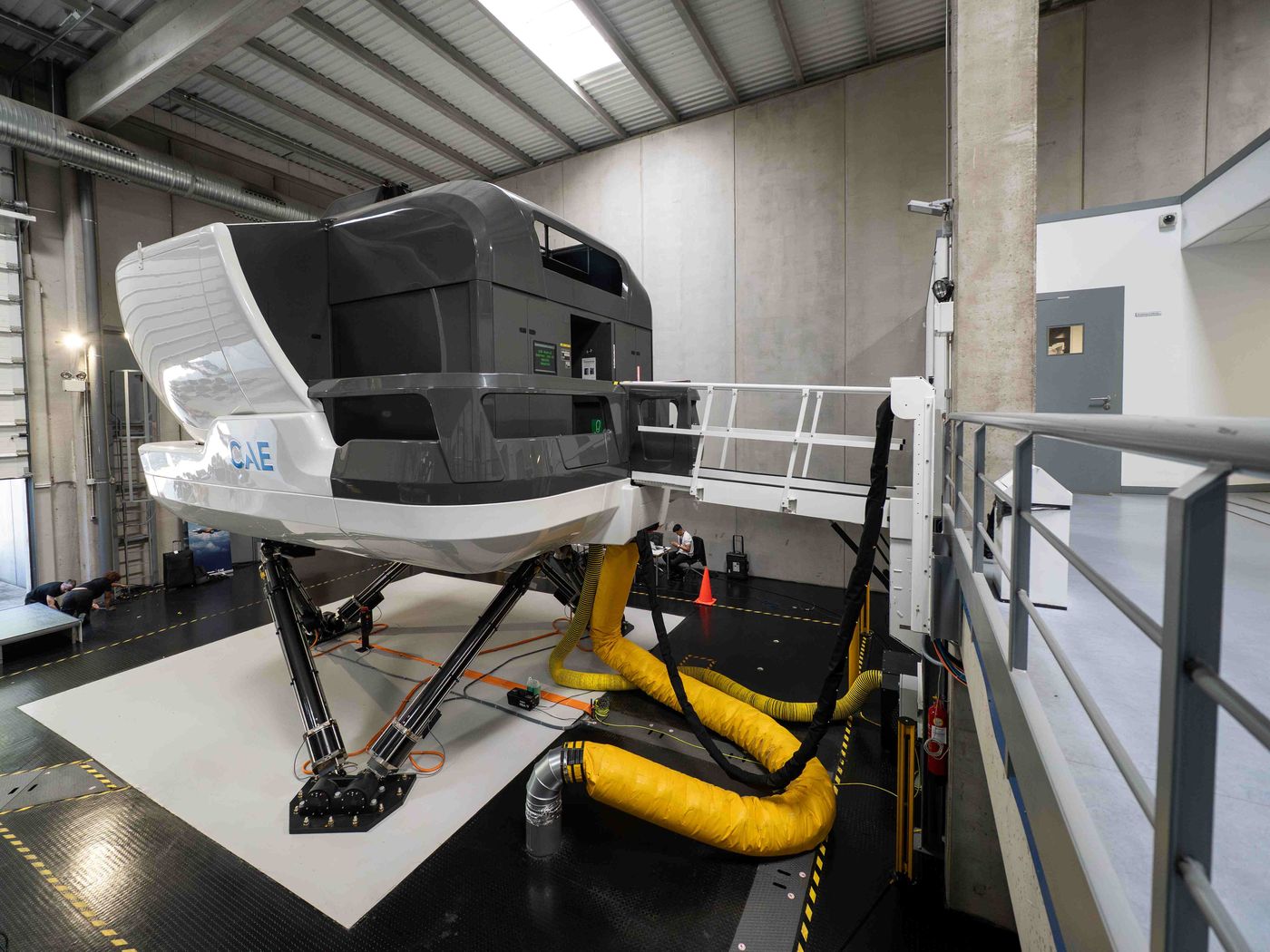
History and Corporate Evolution
CAE was originally incorporated in 1947, making it a company with a long history in Canadian industry. For much of its early history, the company was known as CAE Industries Ltd. This name was changed to the current CAE Inc in 1993, reflecting its evolving focus and corporate structure. Over the decades, CAE has grown from a domestic Canadian enterprise into a truly international player in the simulation and training market. The company's foundational expertise in flight simulation has been built upon and expanded to serve both the civil and military sectors. This historical depth provides CAE with significant institutional knowledge and technical expertise that is difficult for new competitors to replicate quickly.
Detailed Breakdown of Business Segments
The Civil Aviation segment is a major part of CAE's business, providing comprehensive training solutions for the commercial aviation industry. This segment offers training for flight crews, cabin crews, maintenance technicians, ground personnel, and air traffic controllers. It serves commercial airlines, regional carriers, business aircraft operators, and civil helicopter companies. A key product line within this segment is the full range of flight simulation training devices, which are sophisticated machines that replicate the experience of flying specific aircraft models. The segment also provides ab initio pilot training and crew sourcing services, helping to address the global pilot shortage. Furthermore, it supplies airline operations digital solutions designed to improve efficiency for airlines and maintenance organizations.
The Civil Aviation segment serves a diverse global client base. Its primary customers and partners include commercial airlines, regional airlines, and business aircraft operators. The segment also serves civil helicopter operators, aircraft manufacturers, and third-party training centres. Furthermore, it provides services to air navigation service providers and maintenance, repair and overhaul organizations. It also works with aircraft finance leasing companies.
- Commercial airlines and regional airlines
- Business aircraft operators and civil helicopter operators
- Aircraft manufacturers and aircraft finance leasing companies
- Third-party training centres and flight training organizations
- Air navigation service providers
- Maintenance, repair and overhaul organizations
The Defense and Security segment focuses on delivering training and simulation solutions to military and public safety clients. This segment operates as a platform-independent provider, meaning its solutions can be adapted for various military equipment and scenarios. Its services are aimed at enhancing force readiness and operational security for defense forces around the world. Clients include national defense departments, original equipment manufacturers (OEMs), and government security agencies. The segment's work often involves complex, large-scale simulation systems for training in air, land, sea, and cyber domains. CAE has also entered into strategic collaborations, such as an agreement with WB Electronics, to strengthen defense cooperation and support training needs in emerging areas like unmanned and autonomous systems.

Stock Listing and Trading Information for Canadians
CAE Inc's primary listing is on the Toronto Stock Exchange (TSX) under the ticker symbol CAE. The stock trades in Canadian dollars, which simplifies investment and eliminates currency exchange considerations for domestic investors. Canadian investors can hold CAE shares in registered accounts such as a Tax-Free Savings Account (TFSA) or a Registered Retirement Savings Plan (RRSP), allowing for tax-advantaged growth or retirement savings. The stock is a constituent of the S&P/TSX Composite Index, which is the benchmark for the Canadian equity market. Analyst coverage is active, with multiple firms providing research and price targets on the company. The stock's trading liquidity is generally sufficient for most retail and institutional investors, with daily volume typically in the hundreds of thousands of shares.
Analysts provide various metrics and estimates for CAE Inc. stock. Based on 12 analysts offering 12-month price targets in the last 6 months, the average target is $43.797. The highest analyst price target is $48.00. The lowest analyst price target is $36.563.
- A high 12-month price target of $48.00
- A low 12-month price target of $36.563
- An average 12-month price target of $43.797
- These targets were based on analysis from 12 analysts over the last 6 months
Other common valuation metrics used for CAE stock include the price-to-book value, price-to-sales, and price-to-cash ratios. The price-to-book value for CAE is 2.06. The price-to-sales ratio is 2.24. These figures help investors compare CAE's valuation against its own historical levels and against other companies in the sector.
Dividend Record and Financial Metrics
CAE has a history of paying dividends to its shareholders, though the specific dividend yield and payment schedule are subject to change based on the company's financial performance and board decisions. Investors should consult the company's investor relations materials for the most current dividend information. Several key valuation metrics are commonly used by analysts to assess the stock. These include the price-to-book value ratio, which compares the market value of the company to its net asset value. The price-to-sales ratio measures the stock price relative to the company's revenue per share. Another important metric is the price-to-cash flow ratio, which helps evaluate the company's valuation relative to the cash it generates. These figures provide context for the stock's valuation relative to its financial fundamentals and its peers in the industrial and technology sectors.

Primary Risks and Considerations for Investors
Investing in CAE stock involves several inherent risks tied to its business model and the sectors it serves. The company's performance is closely linked to the health of the global commercial aviation industry, which is cyclical and sensitive to economic downturns, fuel prices, and travel demand. Reductions in airline capital spending can delay or cancel orders for new simulators and training services. The Defense and Security segment is dependent on government budgets and procurement processes, which can be unpredictable and subject to political shifts. CAE operates in a competitive global market against other large simulation providers and faces ongoing pressure to invest heavily in research and development to keep its technology领先. Foreign exchange fluctuations can impact financial results, as a significant portion of revenue is generated outside of Canada. The company must also manage complex, long-term contracts and integration risks associated with acquisitions and partnerships.
The main risks facing CAE and its investors are varied. The company's performance is subject to the cyclical nature of the commercial aviation industry. Its Defense and Security segment depends on government budgets and political priorities. The company also operates internationally, which exposes it to foreign currency exchange risk.
- Cyclical demand from the commercial aviation industry
- Dependence on government defense budgets and procurement
- Intense global competition in simulation and training
- Need for continuous and significant research and development investment
- Exposure to foreign currency exchange rate fluctuations
- Complexities of managing long-term contracts and integrations
Key Global Partnerships and Collaborations
CAE engages in strategic collaborations to expand its capabilities and market access. One notable example is its collaboration agreement with WB Electronics, a Polish defense company. This partnership is focused on strengthening defense cooperation between Canada and Poland. A specific aim of the collaboration is to support the growing need for training and mission readiness in the unmanned and autonomous systems sector. Such partnerships allow CAE to leverage local expertise and relationships in key defense markets. They also facilitate joint development of new simulation technologies for emerging platforms like drones. These alliances are a critical part of CAE's strategy to remain at the forefront of simulation technology and to secure contracts in important geopolitical regions.
Frequently asked questions
What does CAE Inc do?
CAE Inc provides training, simulation, and critical operation solutions globally. It operates through two segments: Civil Aviation and Defense and Security. The Civil Aviation segment offers training and simulation for flight, cabin, and maintenance personnel. The Defense and Security segment provides training and simulation solutions for defense forces and government agencies.
What is the CAE stock ticker symbol in Canada?
CAE Inc's stock trades on the Toronto Stock Exchange under the ticker symbol CAE. It is also commonly referenced as CAE.TO or CAE-T in financial markets. The stock is a component of the S&P/TSX Composite index, which serves as a benchmark. Real time price updates and historical data are tracked under these symbols. The company's shares are actively traded, with recent daily volumes in the hundreds of thousands. This ticker information is essential for investors looking to buy, sell, or research the company's stock performance on Canadian exchanges.
Can I hold CAE stock in my TFSA or RRSP?
Yes, CAE shares listed on the TSX are eligible for holding in Canadian registered accounts. These accounts specifically include a Tax-Free Savings Account (TFSA) and a Registered Retirement Savings Plan (RRSP). The eligibility stems from CAE being a Canadian corporation listed on a major domestic exchange. Holding the stock in these accounts allows for tax advantaged growth or savings. Investors can include CAE as part of a diversified portfolio within these registered plans. It is always prudent to confirm eligibility with your specific financial institution or advisor.
Where is CAE headquartered?
CAE Inc is headquartered in Saint-Laurent, Canada. The company was originally incorporated in 1947, giving it a long history in its field. It was formerly known as CAE Industries Ltd. before changing its name to CAE Inc. in 1993. From this headquarters location, the company manages its global operations spanning multiple continents. Saint-Laurent is a borough within the city of Montreal, Quebec. This location has served as the central point for the company's development as a provider of training and simulation solutions.
What are the main risks of investing in CAE?
Key investment risks for CAE include the cyclical nature of the commercial aviation industry, which affects its Civil Aviation segment. Its Defense and Security business is heavily dependent on government budgets and procurement cycles. The company operates internationally and faces global competition from other training and simulation providers. Furthermore, its widespread operations expose it to foreign currency exchange risk. The stock's price has demonstrated volatility, trading within a 52 week range from a low of $31.42 to a high of $47.65. These factors collectively contribute to the investment risk profile for potential shareholders.
Sources and further reading
- CAE Inc. (CAE.TO) Stock Price, News, Quote & History ca.finance.yahoo.com
This article explains how things work and is not financial, tax or legal advice. Rules, limits and rates change, so check the current figures with the Canada Revenue Agency, your province or your financial institution before you act.