Brookfield Renewable Partners L.P. is one of the world's largest publicly traded renewable power platforms. Based in Toronto, the company owns and operates a globally diversified portfolio of hydroelectric, wind, solar, and other sustainable power assets. Canadian investors can access this portfolio through units trading on the TSX under the symbol BEP.UN. The company is known for its long-term growth strategy and consistent distribution to unitholders.
Business and Global Operations
Brookfield Renewable Partners owns and operates a vast portfolio of renewable power generating facilities across multiple continents. The company's core operations are focused on generating electricity through hydroelectric, wind, solar, distributed generation, and pumped storage technologies. Its sustainable solutions business includes technologies like renewable natural gas, carbon capture and storage, recycling, cogeneration, biomass, nuclear services, eFuels, and power transformation. The company's global footprint spans North America, South America, Europe, and Asia, which helps to mitigate localized risks and allows it to benefit from growth and policy incentives in various regions. This diversification across technologies and geographies is designed to generate consistent and durable cash flows for the business.
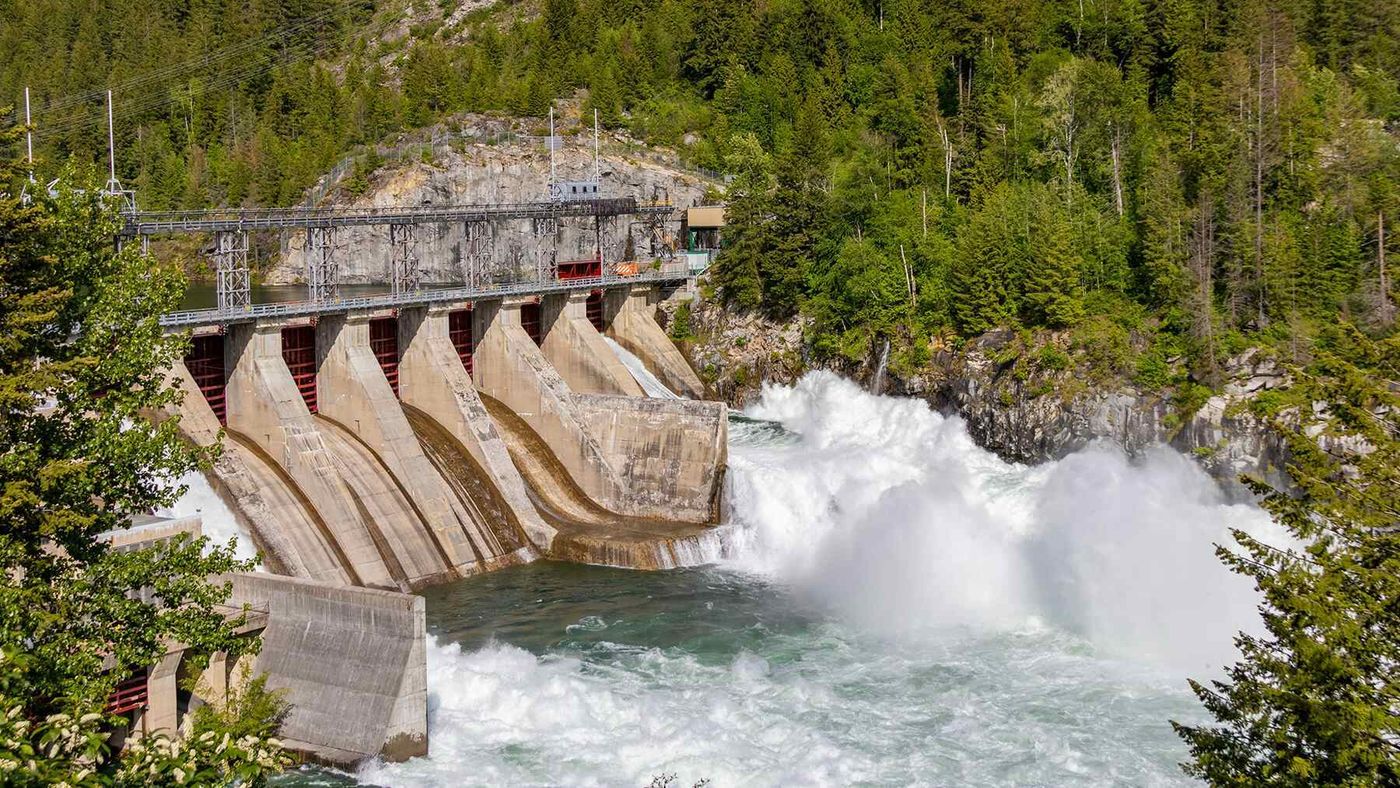
The company's hydro power facilities are considered perpetual assets with low operating costs and long lifespans, providing reliable clean energy and crucial storage capacity. Its wind portfolio is diversified across the Americas, Europe, and Asia, taking advantage of different market conditions. Brookfield Renewable's utility-scale solar assets operate across five continents, often paired with batteries to meet growing corporate demand for long-term power purchase agreements. The distributed energy and storage business enhances grid reliability for customers while reducing the need for costly infrastructure upgrades. The sustainable solutions portfolio focuses on enabling decarbonization in hard-to-abate sectors of the economy and supporting circular economy goals.
The company's capabilities are built on a strategy of owning, operating, and developing assets. Its hydro facilities support energy stability by meeting peak demand and improving the integration of other variable renewables like wind and solar. The wind portfolio's global exposure reduces localized risks from weather patterns or regional policy shifts. The solar business is positioned to capitalize on it being one of the fastest-growing ways to meet surging global power demand, particularly from large corporate clients. The distributed energy and storage assets strengthen grid reliability and deliver critical services across multiple markets. The sustainable solutions are focused on technologies that enable the broader energy transition beyond pure electricity generation.

Corporate History and Structure
Brookfield Renewable Partners was founded in 1999 and was originally known as Brookfield Renewable Energy Partners L.P. The company changed its name to Brookfield Renewable Partners L.P. in May 2016. It is structured as a Bermuda-based limited partnership and operates as the general partner of Brookfield Renewable Partners L.P. Investors have two primary vehicles for gaining economic exposure to the company's portfolio and its distribution profile. The first is through Brookfield Renewable Partners L.P. itself, which trades on the New York Stock Exchange under the ticker BEP and on the Toronto Stock Exchange under the ticker BEP.UN. The second is through Brookfield Renewable Corporation, a Canadian corporation that trades on the NYSE and TSX under the ticker BEPC. These two entities are structured with the intention of providing equivalent economic exposure, offering investors flexibility in how they choose to invest.
The partnership's structure is a key feature for investors to understand. As a limited partnership, Brookfield Renewable Partners L.P. is not a corporation but a flow-through entity. This means its income, gains, losses, and deductions flow through to its unitholders, who report them on their personal tax returns. In contrast, Brookfield Renewable Corporation (BEPC) is a traditional Canadian corporation that pays dividends, which are taxed differently. The company states that both BEP and BEPC are structured with the intention of providing equivalent economic exposure and an equivalent distribution profile, making the choice largely one of investor preference regarding tax treatment and account type.
Trading Information for Canadian Investors
Canadian investors can purchase Brookfield Renewable Partners through its primary listing on the Toronto Stock Exchange under the symbol BEP.UN, where it trades in Canadian dollars. The partnership also has a listing on the New York Stock Exchange under the symbol BEP, which trades in U.S. dollars. For investors seeking a corporate structure, Brookfield Renewable Corporation (BEPC) offers a similar economic profile and is also listed on both the TSX and NYSE. The units are eligible to be held in all major Canadian registered accounts, including Tax-Free Savings Accounts (TFSAs), Registered Retirement Savings Plans (RRSPs), and First Home Savings Accounts (FHSAs). Holding the TSX-listed BEP.UN units in a TFSA allows any distributions to be received and any capital gains to be realized completely tax-free, which can be a significant advantage for long-term compounding.
The choice between the TSX and NYSE listings often comes down to currency preference and brokerage capabilities. Canadian investors buying BEP on the NYSE would be transacting in U.S. dollars, which may involve currency conversion fees. The BEPC corporate share structure may be preferable for some investors in non-registered accounts due to the potential eligibility of its dividends for the dividend tax credit. It is important for investors to consult their own tax advisors regarding the specific implications for their situation. The company provides investor relations contact numbers for North America at 1-866-989-0311 and globally at +1-416-363-9491 for additional information.

Distribution Record and Financial Profile
Brookfield Renewable Partners has established a track record of providing distributions to its unitholders. As of 2026, the distribution yield was approximately 5.6%. The company has a stated target for funds from operations (FFO) growth of over 10 percent. Management has highlighted the company's proven growth engine as a structural advantage for delivering sustained long-term value. The company's balance sheet strength and access to scale capital are cited as key differentiators that enable it to generate consistent value. The partnership's strategy is focused on delivering the grids of the future, and it is positioned to benefit from the execution of this strategy and near-term catalysts in the renewable energy sector.
The company's financial strategy is built on the characteristics of its asset base. Its hydro power facilities, with their low operating costs and long lifespans, provide a stable foundation of cash flow. This supports the funding of growth initiatives in wind, solar, and new technologies. The company emphasizes its disciplined approach to growth and its scale, which provides a structural advantage in securing new projects and financing. The target of over 10% FFO growth is a central component of its value proposition to investors, aiming to combine this growth with the income from its distribution. The company's capabilities, scale and discipline are presented as key to delivering the grids of the future and achieving a re-rating of its valuation based on the execution of its strategy.
Portfolio and Growth Strategy
Brookfield Renewable's portfolio is constructed across technology types and geographies to mitigate risk and capture growth. The hydroelectric portfolio provides baseload power and storage that is important for grid stability. The wind and solar portfolios are expanded in regions with favourable regulatory frameworks and strong resource potential. The distributed generation and storage assets address the growing need for grid resilience and localized power solutions. The sustainable solutions segment represents a forward-looking investment in emerging technologies that complement its core electricity generation, such as carbon capture and renewable natural gas.
The company's growth strategy involves several components. It includes the organic development of new projects, particularly in solar and wind, often secured through long-term power purchase agreements with creditworthy counterparties. It also pursues acquisitions of operating assets or development platforms to enter new markets or scale existing ones. The company's stated goal is to deliver the grids of the future by investing in the necessary renewable generation, storage, and enabling technologies. This strategy is supported by its access to scale capital from its parent Brookfield Asset Management and its own strong balance sheet, which allows it to undertake large projects and weather market cycles.
- Hydroelectric: Perpetual assets providing stable cash flow and grid storage.
- Wind: Diversified global portfolio reducing regional resource risk.
- Solar: Utility-scale assets across five continents, often with battery storage.
- Distributed Generation & Storage: Onsite power solutions enhancing grid reliability.
- Sustainable Solutions: Technologies like carbon capture and eFuels for hard-to-abate sectors.
- Geographic Spread: Operations in North America, South America, Europe, and Asia.
Key Investment Considerations and Risks
Investing in Brookfield Renewable Partners involves several considerations specific to its business model and the renewable energy sector. The company's performance is influenced by factors such as energy pricing, regulatory policies in the many jurisdictions where it operates, and the successful execution of its development pipeline. Its global operations expose it to geopolitical risks and currency fluctuations, though this diversification also provides a hedge against regional downturns. The partnership's growth is dependent on continued investment in new projects and technologies, which requires consistent access to capital. The renewable energy sector is highly competitive and subject to rapid technological change, which could impact the economics of existing assets. Furthermore, as a limited partnership, the tax treatment of distributions for Canadian investors in non-registered accounts differs from that of corporate dividends, which may require additional consideration at tax time.
The risks are varied and inherent to a global infrastructure business. Regulatory risk is paramount, as government incentives, subsidies, and power pricing mechanisms can change. Project development carries execution risk, including construction delays and cost overruns. The company's assets are capital-intensive, making its cash flows and valuation sensitive to changes in interest rates, which affect financing costs. While the partnership structure provides tax advantages in some scenarios, it also creates complexity, as distributions are not simple dividends but a mix of return of capital and income, which must be tracked for adjusted cost base calculations. Investors must weigh these risks against the potential for long-term growth driven by the global transition to cleaner energy.
| Risk Category | Description |
|---|---|
| Regulatory & Policy | Changes in government incentives, subsidies, or power purchase agreements across multiple countries. |
| Project Execution | Delays or cost overruns in developing new wind, solar, or other renewable projects. |
| Market & Competition | Falling power prices, technological obsolescence, and intense competition for new projects. |
| Financial | Sensitivity to rising interest rates and reliance on continuous access to capital markets. |
| Operational | Resource variability (wind, hydro inflows), and operational performance of a global fleet. |
| Structural | Tax complexity of partnership distributions and currency exchange fluctuations. |
Comparison with Brookfield Renewable Corporation (BEPC)
Brookfield Renewable Corporation (BEPC) is a Canadian corporation that offers investors an alternative way to gain exposure to the same underlying portfolio of assets as Brookfield Renewable Partners (BEP/BEP.UN). The two entities are designed to provide equivalent economic exposure and have a similar distribution profile. The primary difference lies in their legal and tax structures. BEPC is a traditional corporation that issues dividends, which are typically eligible for the dividend tax credit for Canadian taxpayers in non-registered accounts. In contrast, BEP is a limited partnership that distributes cash, which may have different tax implications, often treated as a mix of return of capital and other income. This structural difference may influence an investor's choice depending on their account type and tax situation, though the core investment thesis and operational performance are intended to be aligned.
The creation of BEPC was aimed at attracting investors who prefer or are restricted to holding corporate shares rather than limited partnership units. For example, some registered accounts or institutional investors may have mandates that prohibit holding LP units. The economic equivalence is maintained through a corporate structure that mirrors the financial performance of the partnership. For the average Canadian retail investor, the decision often comes down to whether they hold the investment in a registered account like a TFSA or RRSP, where the tax distinctions are neutralized, or in a non-registered account, where the tax treatment of corporate dividends versus partnership distributions becomes a material consideration requiring professional advice.
Frequently asked questions
What does Brookfield Renewable Partners do?
Brookfield Renewable Partners L.P. owns and operates one of the world's largest publicly traded renewable power platforms. Its diversified portfolio generates electricity through hydroelectric, wind, solar, distributed generation, and pumped storage facilities across North America, South America, Europe, and Asia. The company also develops sustainable solutions including renewable natural gas, carbon capture and storage, recycling, and nuclear services. These assets are focused on providing reliable clean energy and enabling decarbonization in hard to abate sectors of the global economy.
What is the ticker symbol for Brookfield Renewable Partners in Canada?
In Canada, Brookfield Renewable Partners trades on the Toronto Stock Exchange under the ticker symbol BEP.UN. The security is also listed on the New York Stock Exchange under the symbol BEP. Investors have an alternative through Brookfield Renewable Corporation, a Canadian corporation which trades under BEPC on both the TSX and NYSE. Both BEP.UN and BEPC are structured to provide equivalent economic exposure and a similar distribution profile from the same underlying portfolio of renewable assets.
What are the main risks of investing in Brookfield Renewable?
Investing in Brookfield Renewable involves risks including exposure to changing energy policies and regulations across its many international markets. The company's growth relies on successfully developing new projects, which faces competitive and technological pressures in the renewable sector. As a capital intensive business, it is also sensitive to interest rate fluctuations and currency risks. Furthermore, the partnership structure of BEP.UN introduces specific tax considerations for investors in non registered accounts that differ from holding a typical corporate stock.
What is the current dividend yield for Brookfield Renewable Partners?
Brookfield Renewable Partners offers a 5.6% dividend yield. The company has a history of increasing its distribution, with 15 straight years of dividend increases. This attractive yield is supported by the company's target of achieving over 10% growth in Funds From Operations (FFO). The consistent dividend, combined with the growth target, is designed to provide durable returns for income-focused investors in the Canadian market.
What is the 52-week trading range for Brookfield Renewable Partners stock on the TSX?
The 52-week trading range for Brookfield Renewable Partners (BEP.UN) on the TSX is between $36.64 and $52.86. This range indicates the highest and lowest prices the stock has traded at over the past year. As of the latest data, the stock price was around $40.93, which is closer to the lower end of this range. Understanding this range provides context for the stock's recent price volatility and current valuation level.
How can Canadian investors access Brookfield Renewable's portfolio?
Canadian investors can access Brookfield Renewable's portfolio through two separate but equivalent securities. They can invest in Brookfield Renewable Partners L.P. (TSX: BEP.UN), which is a Bermuda-based limited partnership. Alternatively, they can invest in Brookfield Renewable Corporation (TSX: BEPC), which is a Canadian corporation. Both are structured to provide equivalent economic exposure and the same distribution profile, offering investors flexibility in their choice of investment vehicle.
Sources and further reading
- Brookfield Renewable Partners LP (BEP-UN.TO) ca.finance.yahoo.com
- Brookfield Renewable Partners: Homepage bep.brookfield.com
- TSX:BEP.UN (Brookfield Renewable Partners) fool.ca
This article explains how things work and is not financial, tax or legal advice. Rules, limits and rates change, so check the current figures with the Canada Revenue Agency, your province or your financial institution before you act.