Bombardier Inc. is a Canadian multinational aerospace manufacturer focused on the design, manufacture, and sale of business aircraft. The company is a significant name in Canada's industrial sector and trades on the Toronto Stock Exchange. Its stock is accessible to Canadian investors through registered accounts and is subject to market and industry-specific risks. Understanding its business and financial structure is key for those considering an investment.
Company Business and Operations
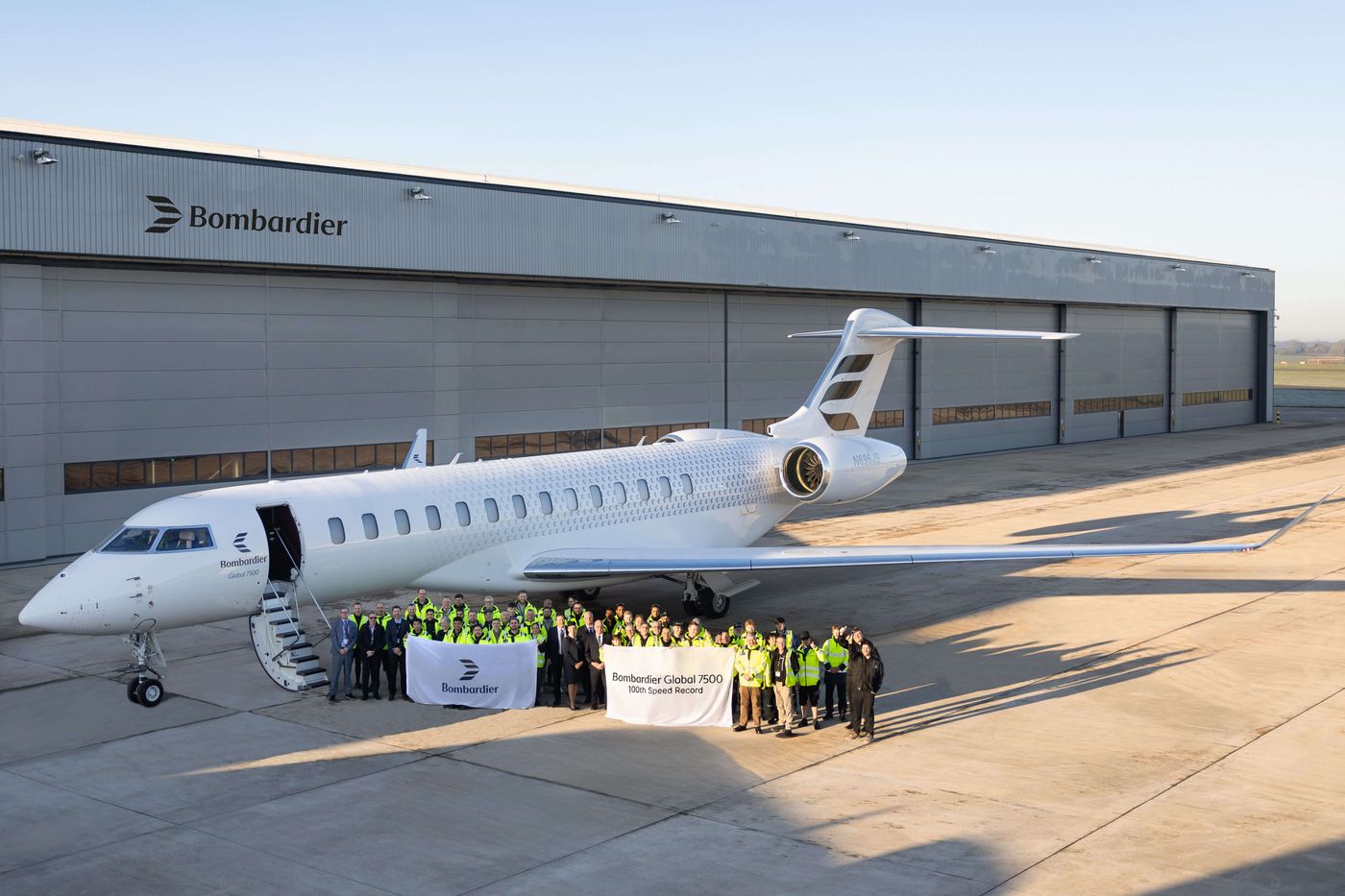
Bombardier Inc. operates as a global aerospace company with a core focus on business aviation. Its primary activities involve the design, manufacturing, and sale of business jets and aircraft structural components. Beyond manufacturing, the company provides a comprehensive suite of aftermarket services to support its products throughout their lifecycle. These services include parts supply, maintenance through a network of service centres, smart services for fleet management, pilot and technician training, and the publication of technical manuals. The company's client base is diverse, serving multinational corporations, charter and fractional ownership providers, various government entities, and private individuals. This business model aims to generate revenue not only from the initial sale of aircraft but also from the recurring income stream of supporting those aircraft in operation.

Corporate History and Evolution
Bombardier was founded in 1902, giving it a long and storied history in Canadian industry. Originally starting in the transportation sector, the company evolved significantly over the decades to become a major player in aerospace and rail transportation. In recent years, the company underwent a major strategic transformation to focus exclusively on its business aviation segment. This involved the divestiture of its commercial aircraft and rail transportation divisions. The completion of this restructuring has repositioned Bombardier as a pure-play business jet manufacturer and service provider. This historical shift is crucial for investors to understand, as the company's current financials and market position reflect this streamlined focus on the executive jet market.
Stock Listings and Share Structure
Bombardier's equity trades publicly on the Toronto Stock Exchange (TSX). The company has two main classes of publicly traded shares. The Class B Subordinate Voting Shares trade under the ticker symbol BBD.B and are the most common shares held by public investors. There are also Class A Multiple Voting Shares, which trade under the ticker BBD-A.TO and carry different voting rights. For most Canadian retail investors, the BBD.B ticker is the primary point of access. The stock is quoted and trades in Canadian dollars on the TSX. This domestic listing simplifies the investment process for Canadians, as there is no need for currency conversion or dealing with foreign exchanges when purchasing through a Canadian brokerage account.
Dividend Policy and Financial Metrics
As of the latest available information, Bombardier does not pay a regular cash dividend to shareholders. The company's capital allocation strategy in its current form is focused on reinvesting in the business, managing its debt, and pursuing growth within its core aerospace operations. Investors should not expect dividend income from this stock. Key financial metrics provide insight into the company's standing. The normalized price-to-earnings ratio is reported at 21.96, which is a valuation metric comparing the company's share price to its per-share earnings. The quick ratio, a measure of short-term liquidity, is 0.33, indicating the company's ability to meet its immediate obligations with its most liquid assets. These figures are part of the fundamental analysis investors consider alongside the company's revenue growth and backlog of orders.
How Canadian Investors Can Hold Bombardier Stock
Canadian investors can purchase Bombardier shares through any standard brokerage account that offers access to the Toronto Stock Exchange. The shares are eligible to be held in registered tax-advantaged accounts, including the Tax-Free Savings Account (TFSA) and the Registered Retirement Savings Plan (RRSP). Holding BBD.B shares in a TFSA allows any capital gains to accumulate free of tax. Holding them in an RRSP provides a tax deduction on contributions and allows for tax-deferred growth. Since the stock trades on the TSX in Canadian dollars under the BBD.B symbol, there is no need for a U.S. dollar account or to consider foreign withholding taxes typically associated with U.S.-listed securities. This makes it a straightforward domestic equity holding from an administrative perspective.

Primary Investment Risks and Considerations
Investing in Bombardier carries several specific risks tied to its business and the macroeconomic environment. The company's financial health is sensitive to global economic cycles, as demand for business jets is closely linked to corporate profits and discretionary spending. A significant concentration risk exists with the United States market, which accounts for more than 50 percent of the company's total revenue. This makes the stock particularly vulnerable to U.S. economic conditions and trade policy. Recent analysis highlights vulnerability to trade tensions and potential tariffs, which could disrupt supply chains or increase costs. The company's liquidity position, as suggested by a quick ratio of 0.33, indicates reliance on the continued generation of operating cash flow and access to financing. Furthermore, the aerospace industry is highly competitive and capital-intensive, requiring continuous investment in research and development to maintain market position.
Key risk factors for Bombardier investors include the company's significant exposure to the United States market. The U.S. accounts for more than 50% of Bombardier's total revenue, making it vulnerable to economic conditions and trade policies there. The company faces direct risks from potential trade tariffs and international trade disputes. Furthermore, the aerospace industry is capital-intensive and subject to intense global competition.
- Heavy reliance on the U.S. market for over half of its revenue.
- Exposure to international trade disputes and potential tariff increases.
- Cyclical demand tied to global economic health and corporate spending.
- High competition within the business jet manufacturing sector.
- Capital-intensive operations requiring sustained investment.
- Company-specific execution risks in managing production and its service network.
These factors can cause significant volatility in the company's stock price and are essential for any potential investor to evaluate. The stock has experienced notable price declines, such as a 20% drop from its recent highs, often linked to trade uncertainties. Investors should consider these risks alongside the company's financial performance and growth strategies. Careful analysis is required before making an investment decision in Bombardier stock.
Recent Business Context and Market Position
In the contemporary market, Bombardier's strategy emphasizes growth in its aftermarket services business, which provides a more stable revenue stream compared to the cyclical nature of jet sales. The company's growing backlog of orders is often cited as a positive indicator of future revenue. However, the stock has experienced price volatility, influenced by external factors such as remarks from political figures and broader market reactions to trade policies. Analyst commentary frequently discusses the company's efforts to manage trade issues between the U.S. and Canada while aiming to protect and grow its American operations and workforce. The evolving pattern of global defence spending is also noted as a potential tailwind for the aerospace sector, within which Bombardier's specialized aircraft may find opportunities. The company's performance is measured against benchmarks like the S&P/TSX Composite index, and its strategies are developed to cope with specific challenges to ensure growth and job opportunities in its key markets.
Frequently asked questions
What does Bombardier do?
Bombardier Inc. engages in the design, manufacture, and sale of business aircraft and aircraft structural components worldwide. The company also provides a comprehensive suite of services for its jets, including parts distribution, service centre maintenance, smart services, training, and technical publications. Its global customer base consists of multinational corporations, charter providers, fractional ownership companies, governments, and private individuals. Bombardier was incorporated in 1902 and is a foundational Canadian aerospace firm focused on the business aviation sector and its supporting ecosystem.
What is the Bombardier stock symbol on the TSX?
The primary stock symbol for Bombardier on the Toronto Stock Exchange is BBD.B, representing the company's Class B Subordinate Voting Shares. These common shares are widely quoted and traded. Bombardier also has Class A shares that trade under the symbol BBD-A.TO. Real time price updates, charts, historical performance, and news for the Class B shares are tracked under the BBD.B or BBD-B.TO tickers across various financial platforms and data services.
Does Bombardier pay a dividend?
No, Bombardier does not pay a dividend to shareholders. Information regarding its shares and dividends indicates no current distribution. The company's financial strategy appears focused on reinvesting capital into its core operations, which include expanding its business jet portfolio and growing its high margin aftermarket services business. This reinvestment is aimed at strengthening its balance sheet and funding growth initiatives rather than providing direct income to investors through dividend payments.
Can I hold Bombardier stock in my TFSA or RRSP?
Yes, you can hold Bombardier stock in a TFSA or RRSP. Bombardier's Class B Subordinate Voting Shares (BBD.B) are listed on the Toronto Stock Exchange, making them a qualified investment for both registered accounts. Holding the stock in a TFSA allows for tax free growth on any capital gains, while holding it in an RRSP provides a tax deferred environment. Investors should always confirm with their specific financial institution, but TSX listed securities like BBD.B are standard eligible investments for these Canadian registered plans.
What are the main risks of investing in Bombardier?
The main investment risks for Bombardier include significant exposure to geopolitical and trade policy shifts, as over 50 percent of its total revenue comes from the United States market. This makes the company vulnerable to disruptions from U.S. tariffs and trade tensions. Other noted risks are the cyclical nature of the aerospace industry, intense global competition, and the capital intensive business model. Recent analyst commentary specifically highlights tariff trouble and trade war uncertainties as immediate pressures that could impact the stock's performance and the company's financial results.
Where is Bombardier headquartered?
Bombardier Inc. is headquartered in Dorval, Canada. Dorval is a city located in the province of Quebec. The company has been based there since its incorporation in 1902, establishing a long standing presence in the Canadian aerospace sector. This headquarters serves as the central hub for its global operations in designing, manufacturing, and supporting business aircraft and related services for customers around the world.
Sources and further reading
- Bombardier Inc. (BBD-A.TO) Stock Price, News, Quote & ... ca.finance.yahoo.com
- Bombardier (TSX:BBD.B) Stock Price & News fool.ca
This article explains how things work and is not financial, tax or legal advice. Rules, limits and rates change, so check the current figures with the Canada Revenue Agency, your province or your financial institution before you act.