ASML Holding N.V. is a Dutch company that is a critical supplier to the global semiconductor industry, holding a unique position in manufacturing the advanced lithography machines needed to produce the world's most powerful computer chips. Its stock trades primarily on the NASDAQ exchange under the ticker ASML, and Canadian investors can access it through their brokerage accounts. While ASML pays a dividend, its primary appeal lies in its technological monopoly and growth potential within the tech supply chain. Understanding how to invest in this key player, its financial metrics, and the associated risks is important for Canadians looking to add global semiconductor exposure to portfolios like TFSAs or RRSPs.
What ASML Holding Does
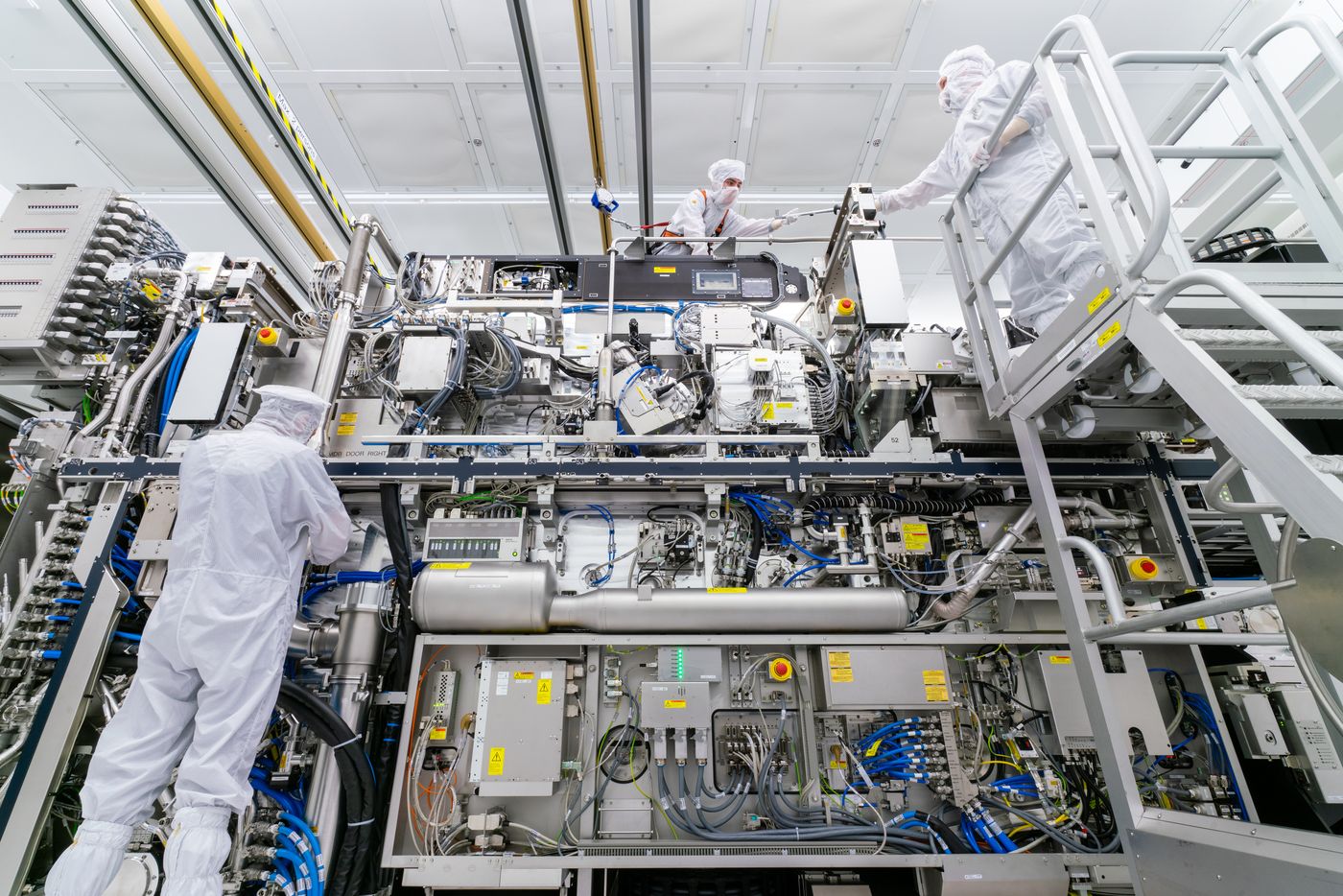
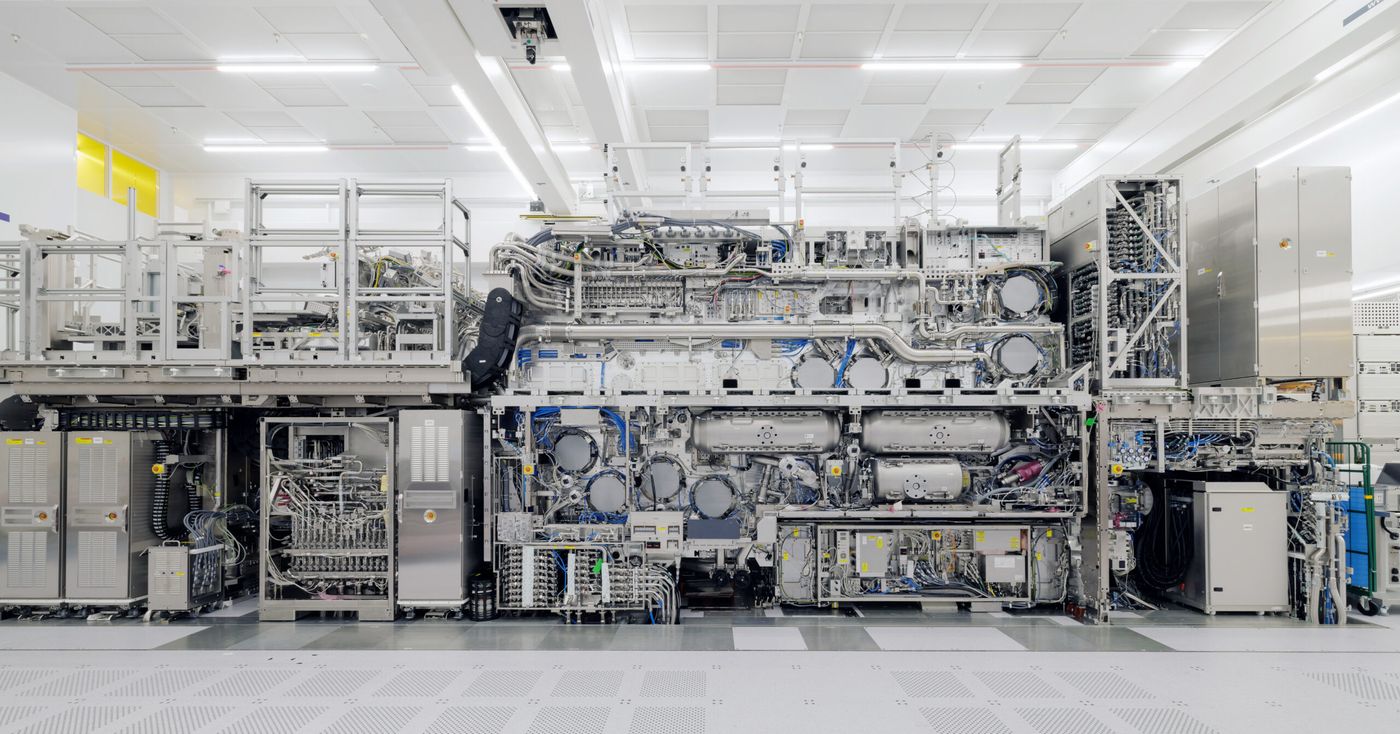
ASML Holding N.V. provides lithography solutions that are essential for the development, production, and servicing of advanced semiconductor equipment systems. The company's core business revolves around designing and manufacturing the complex machines that use light to etch microscopic circuits onto silicon wafers, which become the brains of computers, smartphones, and other electronic devices. Its product portfolio is segmented into several key system types that serve the entire chip manufacturing process. These systems include extreme ultraviolet (EUV) lithography, which is used for the most advanced chip nodes, and deep ultraviolet (DUV) lithography systems, which encompass both immersion and dry lithography solutions for a broader range of semiconductor technologies.
Beyond the core lithography tools, ASML offers metrology and inspection systems crucial for maintaining production quality. The YieldStar optical metrology systems assess the quality of patterns on the wafers, while HMI electron beam solutions are used to locate and analyze individual chip defects. The company also provides comprehensive computational lithography software and control solutions that optimize the patterning process. Furthermore, ASML engages in refurbishing and upgrading existing lithography systems and offers extensive customer support and related services to ensure its clients' manufacturing lines operate efficiently. The company operates globally, with significant business in Asia, Europe, and the United States.
Company History and Background
ASML was founded in 1984 and was originally known as ASM Lithography Holding N.V. The company underwent a name change to ASML Holding N.V. in 2001, reflecting its evolution and growing stature in the industry. From its beginnings, ASML focused on the complex field of photolithography, which is the process of using light to transfer geometric patterns onto a semiconductor substrate. Over decades, the company invested heavily in research and development to overcome significant technical hurdles, most notably in the development of extreme ultraviolet lithography. This long term commitment to overcoming fundamental physics challenges eventually led ASML to a position of market dominance in the most advanced lithography tools.
The company's technological journey included key milestones such as the introduction of immersion lithography and the eventual commercialization of EUV systems, which use an extremely short wavelength of light to create smaller features on chips. A notable corporate event in its history was a stock split executed on a 8:9 basis on September 30, 2007, which adjusted the share count for existing shareholders. Today, ASML is often described as holding a monopoly in the market for EUV lithography systems, making it a uniquely critical supplier to every major semiconductor foundry in the world. Its systems are indispensable for producing the advanced chips that power everything from data centres for artificial intelligence to consumer electronics.
ASML Holding N.V. was founded in 1984. The company was originally known as ASM Lithography Holding N.V. before changing its name to ASML Holding N.V. in 2001. On September 30, 2007, the company executed a stock split on an 8:9 basis. More recently, on October 14, 2026, ASML held its third quarter earnings call where it announced record total net sales.
Stock Listings and How Canadians Can Invest
ASML Holding's primary listing is on the NASDAQ stock exchange in the United States, where it trades under the ticker symbol ASML. All trading on the NASDAQ is conducted in US dollars. Canadian investors cannot buy ASML stock directly on the Toronto Stock Exchange (TSX) because the company is not listed there. However, Canadians have multiple avenues to gain exposure to ASML shares through their investment accounts. The most direct method is to use a Canadian online brokerage account that provides access to US markets, such as those offered by Questrade or Wealthsimple. Investors can buy the NASDAQ-listed ASML shares in US dollars through these platforms, holding them in accounts like a Tax Free Savings Account (TFSA) or a Registered Retirement Savings Plan (RRSP).
For investors who prefer to avoid direct currency exchange, there is a Canadian-listed alternative. ASML Canadian Depositary Receipts (CDRs) trade on the Neo Exchange under the ticker ASML.NE. These CDRs represent a beneficial ownership interest in a pool of ASML common shares and are hedged to the Canadian dollar, mitigating direct exposure to USDCAD currency fluctuations. Additionally, the ticker ASML.TO is referenced in some Canadian financial data, though it typically points to the same underlying security accessible via US markets or the CDR. When holding the US-listed shares in an RRSP, investors should be aware of US withholding tax on dividends, though this tax is typically waived for dividends paid into RRSPs due to the Canada US tax treaty.
The main methods for Canadian investors to buy ASML stock include:
- Purchasing US-listed shares (ASML) via a Canadian brokerage with US market access.
- Buying Canadian Depositary Receipts (ASML.NE) on the Neo Exchange.
- Holding the shares in registered accounts like a TFSA or RRSP.
- Using brokerages such as Questrade or Wealthsimple which support these transactions.

Dividend Policy and Financial Metrics
ASML pays a dividend to its shareholders, though the yield is historically modest as the company prioritizes reinvestment in its capital intensive business. Based on recent payouts, analysts estimate a forward annual dividend yield of approximately 0.56% of the current stock value. Over the last twelve months, ASML has paid about $7.50 per share in dividends. The company's dividend payout ratio, which is the proportion of net profits paid out as dividends, has been around 21%. This relatively low payout ratio indicates that ASML retains a significant majority of its earnings to fund research, development, and capital expenditures, which is common for a growth oriented technology firm at the forefront of its industry.
Several key financial metrics are used by analysts to evaluate ASML's stock. The trailing price to earnings (P/E) ratio is approximately 40x, which is high compared to broader market indices, suggesting investors are pricing in significant future growth. The price/earnings to growth (PEG) ratio, which factors in expected earnings growth, is about 1.5764. The company's earnings before interest, taxes, depreciation, and amortization (EBITDA) was $16.2 billion. It is important to note that dividend payments are not guaranteed and are declared at the discretion of the company's board. For example, a recent dividend was scheduled for payment around November 4, 2026, with an ex dividend date of October 27, 2026, requiring investors to own the stock before that date to qualify for the payment.
Key financial figures for ASML include a forward annual dividend yield estimated at 0.56 percent. Over the last twelve months, the dividend paid per share was approximately $7.50. The company's dividend payout ratio is about 21 percent of net profits. ASML's trailing price to earnings ratio is roughly 40x, and its price to earnings growth ratio is approximately 1.5764. The company's earnings before interest, taxes, depreciation and amortization is $16.2 billion. As an example, the next ex dividend date was noted as October 27, 2026, with a payment date expected around November 4, 2026.
Key Investment Risks and Volatility
Investing in ASML carries specific risks inherent to its business and market position. The company's stock has demonstrated higher than average volatility, as measured by its beta of 1.30. This means the share price may experience larger swings, representing a relatively higher risk profile, though it also carries the potential for market beating returns. The stock's price range over a recent twelve month period, from a low of $941.59 to a high of $1,997.38, illustrates this significant volatility. Investors must be prepared for substantial price fluctuations driven by semiconductor industry cycles, global economic conditions, and company specific news.
The company's business risks are concentrated due to its specialization. ASML's dominance in EUV lithography is a strength but also a risk, as its fortunes are tied to the capital expenditure cycles of a relatively small number of large semiconductor manufacturers. Geopolitical tensions, particularly between the US and China, can lead to export control restrictions that directly impact ASML's ability to sell its most advanced tools to certain customers, affecting revenue. Furthermore, the extreme technical complexity of its products means that any significant production delays, technical failures, or loss of key intellectual property could materially harm operations. The high valuation multiples also imply that the stock price is sensitive to any disappointment in growth expectations or earnings results.
Primary risks associated with investing in ASML include:
- High stock volatility, with a beta of 1.30.
- Dependence on the capital spending cycles of major chipmakers.
- Geopolitical and export control risks, especially related to China.
- Extreme technical complexity and risk of production delays.
- High valuation multiples (e.g., P/E of 40x) creating sensitivity to earnings misses.
- Concentration risk from its monopoly position in a niche market.
Recent Performance and Business Context
ASML's financial performance is closely watched as a barometer for the health and direction of the global semiconductor industry. In a recent quarterly earnings call for the third quarter of 2026, the company announced record total net sales of €11.7 billion. This performance was driven by expanding chip demand, particularly from sectors like artificial intelligence, which requires the most advanced semiconductors that ASML's machines are uniquely equipped to produce. The company's role has become increasingly highlighted as the artificial intelligence boom shifts from speculative hype into tangible infrastructure requiring vast amounts of computing power. This positions ASML as a critical enabler in the technology supply chain, though its stock price can react sharply to shifts in sentiment around the AI investment theme.
The company's market position is often described as a monopoly in extreme ultraviolet lithography, making it one of the most important companies in the semiconductor ecosystem. This unique status provides a durable competitive advantage but also attracts regulatory scrutiny and places immense expectations on its execution. With a trailing twelve month revenue of around $39.5 billion and a global workforce of 44,681 employees, ASML is a large cap stock whose performance can influence broader technology indices. For Canadian investors, understanding these business dynamics is crucial when considering ASML as a long term holding for a diversified portfolio, recognizing both its strategic importance and the cyclical and geopolitical risks it faces.
Frequently asked questions
Does ASML pay a dividend?
Yes, ASML pays a dividend. The estimated forward annual dividend yield is 0.56 percent of the current stock value. Over the last twelve months, the company paid about $7.50 per share in dividends. Its dividend payout ratio is around 21 percent of net profits.
What does ASML company do?
ASML Holding N.V. provides lithography solutions for the semiconductor industry. The company offers extreme ultraviolet and deep ultraviolet lithography systems. It also provides metrology and inspection systems, such as YieldStar and HMI electron beam solutions. Additionally, it offers computational lithography solutions, software, and customer support services.
Can I hold ASML in my TFSA or RRSP?
Yes, you can hold ASML shares in both a TFSA and an RRSP. If you purchase the US listed ASML shares, you can hold them in these registered accounts. Holding US dividends in an RRSP generally avoids US withholding tax, but this tax may apply in a TFSA. The Canadian CDR (ASML.NE) can also be held in these accounts.
What is the ASML stock symbol?
The stock symbol for ASML Holding N.V. is ASML on the NASDAQ. In Canada, investors can access the stock through Canadian Depositary Receipts, which trade on the Neo Exchange under the symbol ASML.NE. Financial data feeds may also list the stock under the symbol ASML.TO. The company is a semiconductor equipment business headquartered in the Netherlands and is a vital player in the semiconductor ecosystem, holding a monopoly in extreme ultraviolet lithography systems.
Can I buy ASML stock in Canada?
Yes, you can buy ASML Holding stock in Canada. It is not listed on the TSX, but you can purchase the NASDAQ listed shares by opening an account with a Canadian brokerage that provides access to US markets, such as Questrade or Wealthsimple. Alternatively, you can invest in the ASML CDR, which is a Canadian Depositary Receipt hedged to the Canadian dollar and trades under the symbol ASML.NE. This security represents a beneficial ownership interest in a pool of ASML common shares.
Is ASML stock volatile?
ASML stock is more volatile than the market average. Its beta measurement is 1.30, indicating it is 30 percent more volatile than the NASDAQ average, which has a beta of 1. This suggests the stock represents a relatively higher risk but also the potential for market beating returns. Over the last twelve months, the stock price has demonstrated this volatility, trading within a wide range from a low of $941.59 to a high of $1,997.38.
Sources and further reading
- ASML CDR (CAD Hedged) (ASML.NE) ca.finance.yahoo.com
- Guide to buying ASML Holding stock in Canada finder.com
- ASML Holding NV: ASML Stock Price Quote & News robinhood.com
This article explains how things work and is not financial, tax or legal advice. Rules, limits and rates change, so check the current figures with the Canada Revenue Agency, your province or your financial institution before you act.