Air Canada is the largest airline in Canada, providing essential domestic, transborder, and international air travel and cargo services. Its stock, trading under the symbol AC on the Toronto Stock Exchange, is a widely held component of the Canadian market, offering investors exposure to the travel and transportation sector. The company's performance is closely tied to economic cycles, fuel prices, and global travel demand, making its shares historically more volatile than the broader market. For Canadian investors, understanding Air Canada's business operations, financial metrics, and the mechanics of holding its shares in registered accounts is key to evaluating it as a potential investment.
Company Operations and Business Segments
Air Canada operates as a full-service global airline with a comprehensive network. Its core business is providing scheduled passenger air transportation across three main markets: domestic flights within Canada, transborder routes to the United States, and international flights to and from Canada. The company markets its services under several distinct brand names to cater to different travel segments. The flagship Air Canada brand offers full-service travel on its mainline fleet. Air Canada Rouge operates as its leisure-oriented subsidiary, typically serving vacation destinations with a lower-cost service model. Air Canada Express is the regional carrier network, operated through capacity purchase agreements with partner airlines, connecting smaller communities to the main hubs.
Beyond passenger travel, the company has diversified revenue streams through several ancillary businesses. Air Canada Cargo provides freight services on its passenger aircraft belly-hold capacity and dedicated freighters on routes spanning North America, Europe, Asia, South America, and Australia. Its Air Canada Vacations division develops, markets, and distributes packaged vacations to sun destinations, Europe, and other global locales, including cruise packages. The Aeroplan loyalty program is a significant asset, creating a recurring revenue stream as members earn and redeem points across Air Canada's network and with a wide array of partner retailers and service providers. The company also operates ground-based amenities like the Air Canada Café located at Toronto Pearson International Airport.
Fleet Composition and Scale
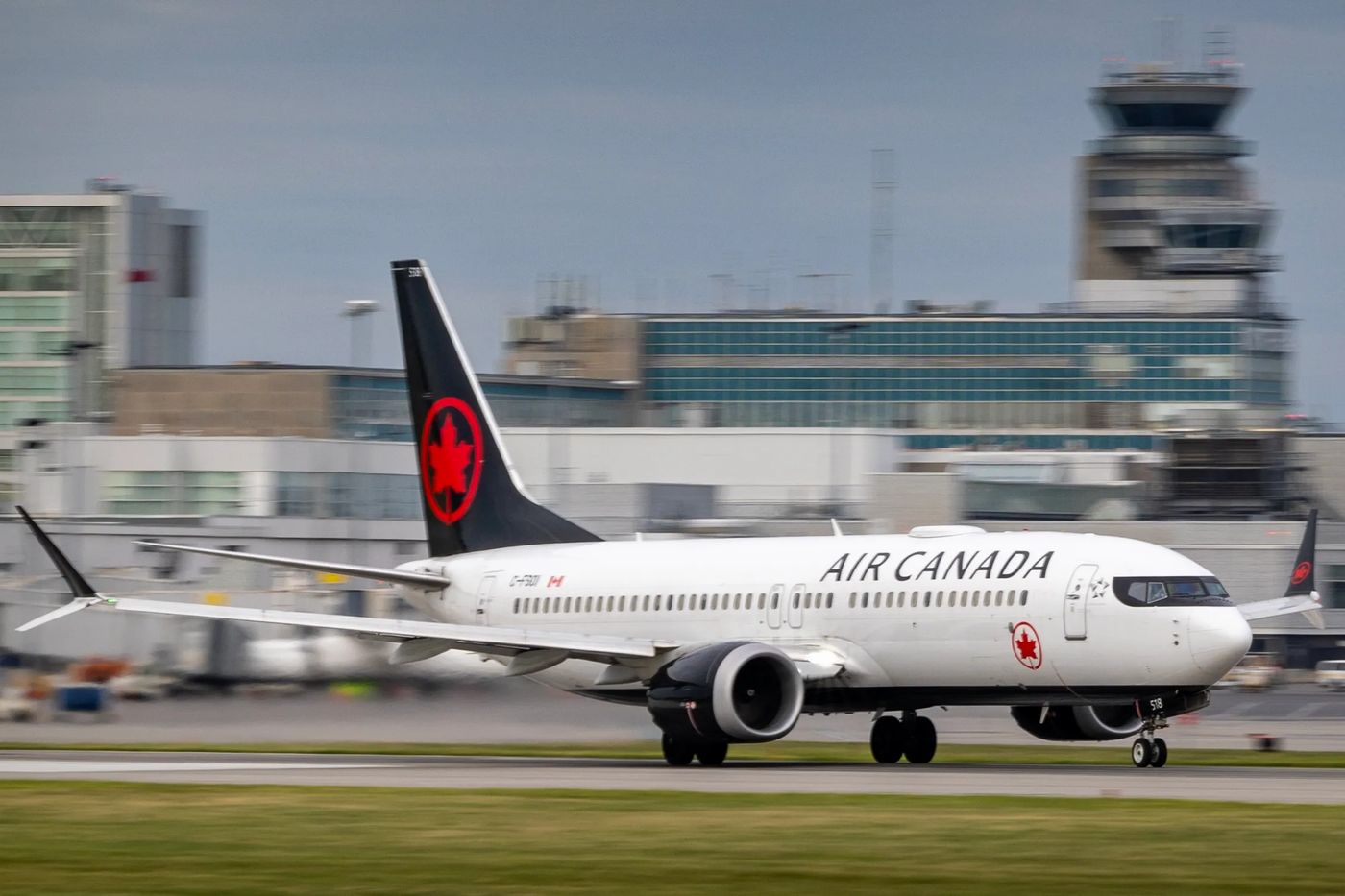
The mainline Air Canada fleet of 223 aircraft is predominantly composed of Airbus models, which provide a modern and fuel-efficient profile. This mainline group includes 132 Airbus narrow-body aircraft, such as the A220 and A320 family, used primarily for short and medium-haul routes. The composition of this fleet is a critical factor in the company's cost structure and its ability to serve a global network competitively. The Air Canada Rouge leisure subsidiary operated a fleet of 33 aircraft, all from the Airbus A320 family, which are configured for higher density on popular vacation routes. The regional network, flying under the Air Canada Express banner, comprised 105 aircraft from manufacturers like Embraer, Mitsubishi, and De Havilland. This mix includes jets like the Embraer 175 and CRJ-900 for longer regional routes and turboprops like the Dash 8-400 for shorter hops. An additional 15 older CRJ-200 aircraft were also part of the operational fleet. This layered fleet strategy allows the airline to match aircraft size and operating cost to the specific demand and economics of hundreds of different routes across its system.
As of December 31, 2025, the company operated 223 aircraft under the Air Canada brand, consisting of 132 Airbus narrow-body and 91 Airbus wide-body aircraft. It also operated 33 aircraft under the Air Canada Rouge brand, which includes 13 Airbus A321, 5 Airbus A320, and 15 Airbus A319 aircraft. The Air Canada Express brand operates 105 aircraft, including 25 Embraer 175, 35 Mitsubishi CRJ-900, and 45 De Havilland Dash 8-400 aircraft. The company additionally operates 15 Mitsubishi CRJ-200 aircraft.
- Air Canada Mainline: 223 total aircraft (132 Airbus narrow-body, 91 Airbus wide-body).
- Air Canada Rouge: 33 total aircraft (13 Airbus A321, 5 Airbus A320, 15 Airbus A319).
- Air Canada Express: 105 total aircraft (25 Embraer 175, 35 Mitsubishi CRJ-900, 45 De Havilland Dash 8-400).
- Additional Fleet: 15 Mitsubishi CRJ-200 aircraft.
Stock Listing and Trading Details
Air Canada's primary and most liquid listing is on the Toronto Stock Exchange under the ticker symbol AC. All trading for this listing is conducted in Canadian dollars, which is the functional currency for the company's financial reporting. The share price information, including the bid and ask quotes, daily trading range, and volume, is readily available through Canadian financial data providers and brokerage platforms. The company's shares are also available for trading in the United States through an unsponsored American Depositary Receipt (ADR) program, which trades over-the-counter under the symbol ACDVF. This ADR represents the company's variable voting shares and provides a conduit for U.S.-based investors, though liquidity is typically lower than on the TSX.
For the vast majority of Canadian investors, accessing Air Canada stock is straightforward through the TSX listing. The shares are a constituent of major Canadian market indices, including the S&P/TSX Composite Index, which means they are held by many index funds and exchange-traded funds that track the Canadian market. The stock's inclusion in these benchmarks ensures a baseline level of institutional ownership and analyst coverage. Investors should note that the trading symbol AC on the TSX is distinct from other potential symbols for derivative products or other securities, and confirming the full listing details is always prudent when placing a trade.
Financial Metrics and Valuation
Analysts and investors use several key financial metrics to assess Air Canada's valuation and operational performance. The price-to-earnings (P/E) ratio is a common measure, calculated by dividing the current share price by the company's earnings per share over the past twelve months. For Air Canada, this trailing P/E ratio has been approximately 17 times earnings. Another related metric is the price/earnings-to-growth (PEG) ratio, which incorporates expected future earnings growth into the valuation picture. Earnings before interest, taxes, depreciation, and amortization (EBITDA) is a measure of core operational profitability, and the company has reported a trailing twelve-month EBITDA of approximately C$1.9 billion.
The stock's trading history shows significant price volatility, which is characteristic of the cyclical airline industry. Over a recent twelve-month period, the share price has traded within a wide range, with a low around C$16.45 and a high near C$31.45. This volatility is quantified by the stock's beta, a measure of its price movements relative to the broader market. This higher beta suggests the stock may experience larger swings in price, both upward and downward, in response to market and sector news.
Dividend Policy and Shareholder Returns
Air Canada does not currently pay a cash dividend to its common shareholders, and based on recent analyst expectations, is not projected to initiate a dividend within the next twelve months. This policy is consistent with the capital allocation strategy of many airlines, particularly following periods of significant industry disruption. The company typically prioritizes reinvesting its cash flow back into the business to maintain and renew its fleet, pay down debt incurred during downturns, and fund strategic initiatives aimed at improving long-term competitiveness. Retaining earnings allows for financial flexibility to manage the capital-intensive and economically sensitive nature of the airline business.
The absence of a dividend means that the total return for an investor in Air Canada stock is derived entirely from capital appreciation, or the change in the share price over time. This contrasts with dividend-paying stocks that provide a component of return through regular income distributions. For income-focused investors, this is a crucial consideration. The company's approach to shareholder returns may evolve over time as its financial position strengthens, but any future decision to pay a dividend would depend on sustained profitability, a strong balance sheet, and confidence in its ability to fund ongoing capital requirements.

How Canadian Investors Can Hold Air Canada Stock
Canadian residents can purchase shares of Air Canada through any brokerage account that provides access to the Toronto Stock Exchange. This includes full-service brokerages, discount brokerages, and online investment platforms such as Questrade or Wealthsimple Trade. The process involves funding the account with Canadian dollars and placing an order to buy AC shares, specifying the number of shares and the order type. The shares will then be held in the investor's account in book-entry form, and all subsequent corporate actions, if any, will be handled by the brokerage. It is a routine transaction similar to buying any other TSX-listed equity. Investors have the option to hold Air Canada shares within various registered tax-advantaged accounts, which can significantly affect the investment's after-tax outcome. Shares can be held in a Tax-Free Savings Account (TFSA), where any capital gains earned from the sale of the stock are entirely tax-free, and no tax is levied on dividends if they were ever reinstated. They can also be held in a Registered Retirement Savings Plan (RRSP) or a Registered Retirement Income Fund (RRIF), where investment growth is tax-deferred until withdrawal.
Canadian investors can hold Air Canada stock in various registered and non-registered investment accounts. Common account types include Tax-Free Savings Accounts (TFSAs), Registered Retirement Savings Plans (RRSPs), and non-registered cash accounts. Each account type has distinct tax implications for investment income, such as capital gains or dividends. The Canada Revenue Agency taxes investment income from stocks based on factors like the type of income and the investor's marginal tax rate. Holding the stock in a TFSA allows capital gains and any future dividends to be earned entirely tax-free.
- Tax-Free Savings Account (TFSA): Capital gains and dividends are tax-free.
- Registered Retirement Savings Plan (RRSP): Investment growth is tax-deferred.
- Registered Retirement Income Fund (RRIF): Investment growth is tax-deferred.
- Non-Registered (Cash) Account: Capital gains are taxable upon sale.
Principal Risks for Investors
Investing in Air Canada carries a set of industry-specific and company-specific risks that potential shareholders must weigh. The airline business is highly cyclical and sensitive to macroeconomic conditions. During economic recessions or periods of reduced consumer confidence, demand for both business and leisure travel can decline sharply, negatively impacting revenue and profitability. Fuel expense is typically one of the largest operating costs, and fluctuations in the price of jet fuel, which is driven by global oil markets and geopolitical events, can have a material effect on earnings. The company also faces intense competition from other full-service carriers, low-cost airlines, and rail services on certain domestic routes, which can pressure ticket prices and market share.
Operational risks are ever-present, including the potential for labour disputes, severe weather events, and air traffic control disruptions that can lead to costly cancellations and delays. Pandemics and global health crises have proven to be extreme, existential risks for the travel industry, capable of causing unprecedented drops in passenger demand and leading to government-imposed travel restrictions. From a financial perspective, Air Canada has historically carried a significant amount of debt, particularly following industry downturns, which increases its interest expenses and financial leverage. Regulatory changes, environmental policies aimed at reducing carbon emissions, and currency exchange rate movements between the Canadian dollar and other global currencies also contribute to the company's risk profile.
Key investment risks for Air Canada stock include its high stock price volatility relative to the market. The stock has a beta measurement of 1.63, suggesting it is more volatile than the average stock on the Toronto Stock Exchange. The company's financial performance is sensitive to factors affecting the airline industry, such as fuel costs, economic cycles, and travel demand. Over a recent 52-week period, the stock price ranged from a low of 16.45 Canadian dollars to a high of 31.45 Canadian dollars, illustrating this significant price fluctuation.
- Economic Sensitivity: Demand declines sharply during recessions.
- Fuel Price Volatility: Jet fuel is a major and unpredictable cost.
- Intense Competition: Pressure from other airlines and rail services.
- Operational Disruptions: Labour disputes, weather, and air traffic issues.
- Pandemic Risk: Severe, global drops in travel demand.
- High Financial Leverage: Significant debt increases interest costs.
- Regulatory and Environmental Policy Changes: Impacting costs and operations.
- Foreign Exchange Risk: Earnings affected by currency movements.
Frequently asked questions
How can I buy Air Canada stock in Canada?
Canadian investors can buy Air Canada stock by opening an account with a brokerage that offers access to the Toronto Stock Exchange. This includes many online discount brokerages and investment apps. You would fund your account with Canadian dollars and place an order to purchase shares under the symbol AC. The shares can be held in non-registered accounts or within registered plans like a TFSA or RRSP.
What are Air Canada's main business operations?
Air Canada provides domestic, U.S. transborder, and international airline services. Its main operations include scheduled passenger services under the Air Canada, Air Canada Rouge, and Air Canada Express brands. The company also provides air cargo services globally and operates vacation travel packages through Air Canada Vacations. Additionally, it manages travel loyalty programs and operates Air Canada Café.
What is Air Canada's stock symbol on the TSX?
Air Canada's common shares trade on the Toronto Stock Exchange under the ticker symbol AC. It is important to note that all trading for this primary listing is conducted in Canadian dollars. The company's stock is not listed on the TSX Venture Exchange but specifically on the Toronto Stock Exchange. Investors can access this stock through most Canadian brokerage platforms that offer trading on the Toronto Stock Exchange. Air Canada is a major Canadian airline founded in 1937 and headquartered in Saint Laurent.
Does Air Canada pay a dividend?
Air Canada does not currently pay a dividend on its common shares. Furthermore, based on available financial analysis, the company is not expected to pay a dividend over the next 12 months. This is a key consideration for income-focused investors evaluating the stock. The company's financial metrics, such as its earnings and cash flow, are directed towards other corporate priorities rather than shareholder distributions. Therefore, potential returns for investors are primarily dependent on capital appreciation of the stock price.
Can I hold Air Canada stock in my TFSA?
Yes, Air Canada shares listed on the Toronto Stock Exchange are eligible to be held within a Tax-Free Savings Account (TFSA). Any capital gains earned from the stock's appreciation, as well as any potential future dividends, would be entirely tax-free while held within the account. This makes a TFSA a beneficial registered account for Canadian investors seeking exposure to Air Canada's equity. It is important to ensure your brokerage platform allows you to hold TSX-listed securities within your TFSA. All standard TFSA contribution rules and limits apply to investments in Air Canada stock.
Sources and further reading
- Air Canada (AC.TO) Stock Price, News, Quote & History ca.finance.yahoo.com
- Air Canada Stock (AC): Price, How to Buy & More finder.com
- Air Canada Inc Vtg & Var…: ACDVF Stock Price Quote & ... robinhood.com
This article explains how things work and is not financial, tax or legal advice. Rules, limits and rates change, so check the current figures with the Canada Revenue Agency, your province or your financial institution before you act.