A team at the Massachusetts Institute of Technology has built a small experimental house using low-cost robots and special blocks designed to tolerate assembly errors.
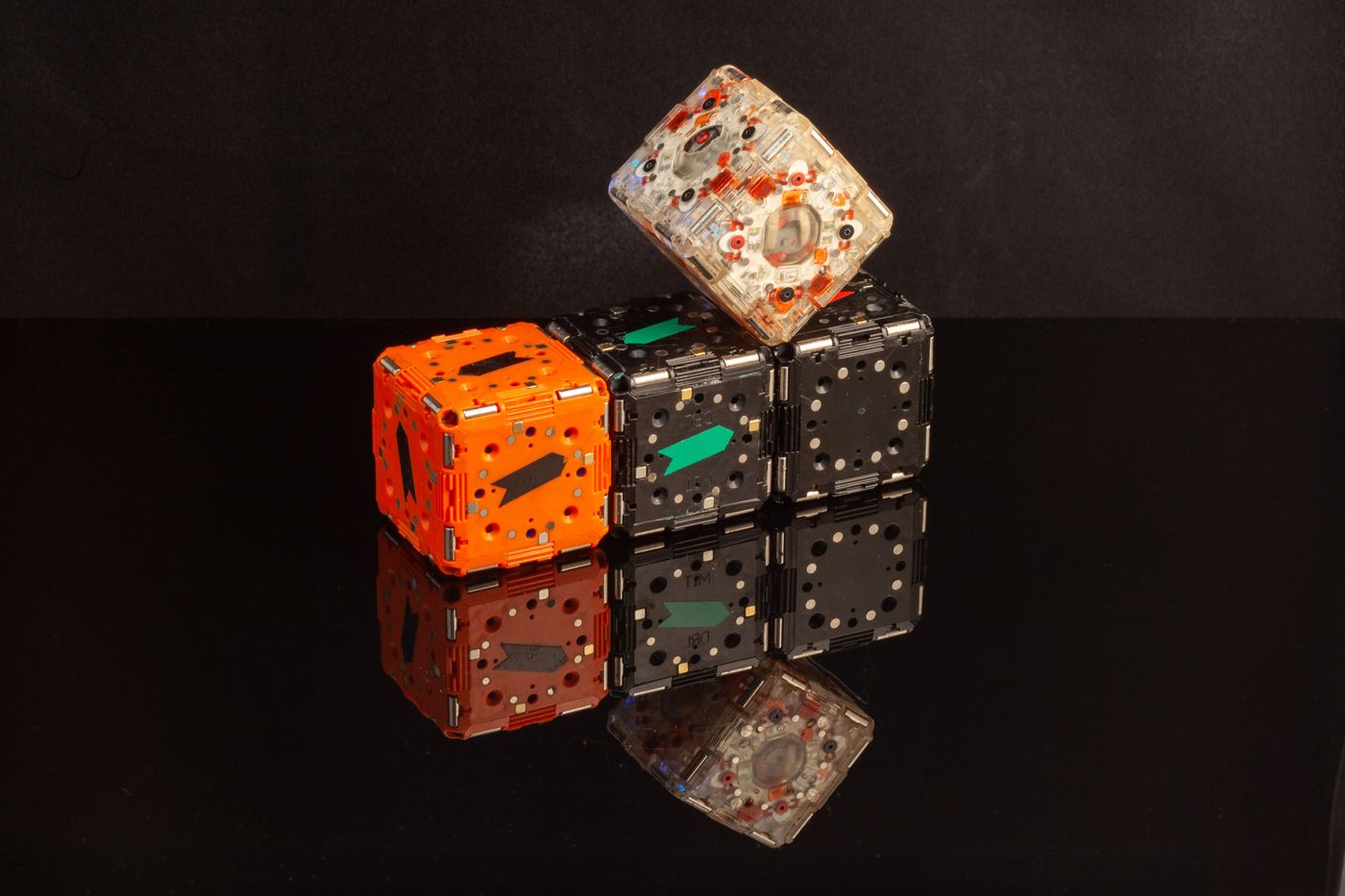
The research, led by engineer Miana Smith, uses modular components called voxels that fit together to form a three-dimensional lattice. The geometry of the blocks guides them into the correct position as they are connected, meaning robots can miss their target by about a centimetre without compromising the overall structure.
The robots in the study, known as MILAbots, have a tolerance of about 10 millimetres, far greater than the precision of around 100 micrometres required by specialized industrial equipment. Similar machines can cost a few hundred dollars each, while ultra-high-precision systems can cost tens of thousands.
"The principle is similar to Lego bricks: assembly can be done without millimeter-level precision because the object itself provides physical guides that prevent successive deviations," according to an article published by MIT on Nov. 18, 2026.
The work has progressed from tabletop prototypes to room-scale structural demonstrations. A single small robot may be slower, but multiple machines working in different areas can divide up the assembly task, with a digital interface turning a structure’s design into positioning instructions for each machine.
The team has tested versions of the blocks made of plywood, bio-based plastics, aluminum and steel. In April 2026, an MIT technical study assessed the feasibility of the robotic assembly and compared material options.
In simulations, some wood and steel configurations had an embodied-carbon footprint up to 82 percent lower than conventional methods used for comparison, including 3D-printed concrete and precast concrete. The group also estimated 99 hours of on-site assembly for configurations with teams of 20 robots, compared with an average of about 155 hours for the techniques analyzed.
The demonstration is still an experimental system. A home ready for occupancy would require assessments of thermal insulation, fire resistance, durability, electrical and plumbing systems, and performance under lateral loads such as wind.
The ability to disassemble, rearrange and reuse components is one of the system’s ambitions, meaning a structure could gain new modules or be reconfigured without requiring the entire assembly to be rebuilt.
MIT is working with Bhutan’s Druk Holding and Investments on research tied to the Gelephu Mindfulness City urban development project, with plans to expand testing at human scale using locally available materials.
The next phase calls for outdoor demonstrations and stability studies. The team also plans to refine the digital instructions, integrate cladding and building systems, and coordinate the movements of different robots.
For the construction industry, the immediate value lies in demonstrating an alternative where components that absorb imperfections could allow simpler equipment to assemble complex structures. Economic viability and safety in buildings for everyday use will depend on further testing.
In Canada, a Toronto artificial intelligence startup called Promise Robotics Inc. is also using automation in homebuilding, having developed AI software that breaks up home designs into pieces that robots produce in a factory. The company has built 200 homes to date and recently raised an additional $40 million to scale up.
This story was written by the e2gold.ca newsroom from reporting by The Globe and Mail and CPG Click Oil and Gas. Quotes are checked word for word against that reporting.