OAKVILLE
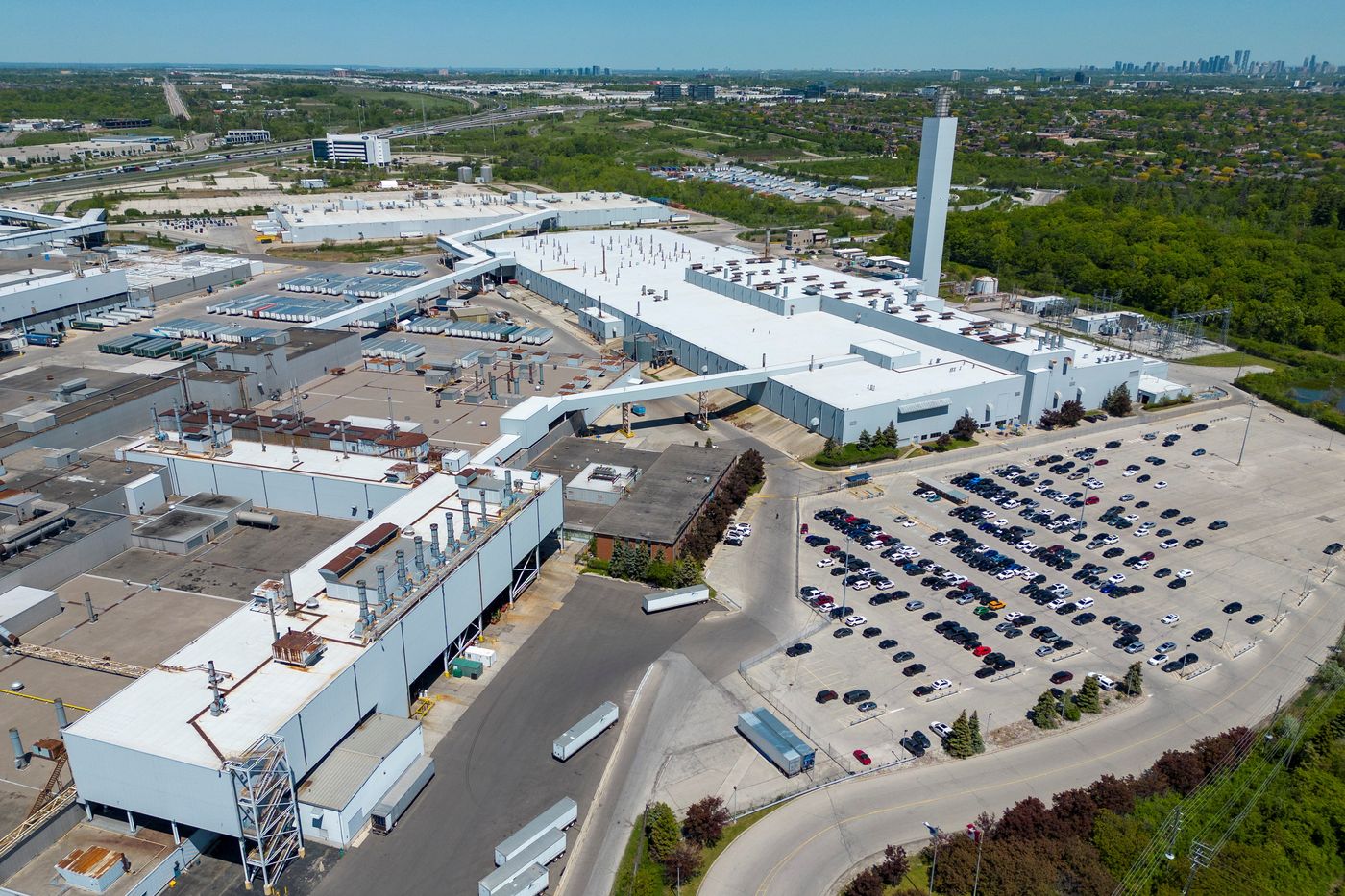
Ford Motor Co. has reopened its assembly plant in Oakville, Ont., to produce heavy-duty pickup trucks after a two-year shutdown and a $5-billion retooling project.
About 2,000 people have returned to work at the plant west of Toronto, which makes Ford’s F-Series Super Duty range of large pickups for Canadian, U.S. and global markets.
"This investment in this moment is really about staying true to our commitments," said Bev Goodman, Ford of Canada’s chief executive officer, in an interview. "That's a commitment to manufacturing here in Canada as well as to building new capabilities and supporting jobs here in Canada."
The automaker marked the occasion on Friday, hosting politicians, stakeholders and the media at the plant.
The plant, which used to make the Ford Edge, closed in 2024 to be retooled for an electric car. Ford scrapped that plan amid slowing demand for EVs and began work to make the trucks, including the F-250, F-350 and F-450, which are used in construction, agriculture and other commercial uses.
The federal and Ontario governments contributed $313 million and $156 million, respectively, to the total investment, which included retooling the assembly line and building a new stamping shop on the site for body panels.
"We believe in Canadian manufacturing," Goodman told the crowd at the opening ceremony, stressing "the value of an integrated North American manufacturing network."
The Oakville plant made 3,488 trucks in October and has the capacity to make 100,000 a year. Some of the trucks will use the 7.3-litre V8 gasoline engine made at Ford’s plant in Windsor, Ont.
"So what's really cool here is you're going to have a vehicle built in Oakville with engines from Windsor," said Flavio Volpe, head of the Automotive Parts Manufacturers’ Association.
Oakville production will supplement output at Super Duty plants in Kentucky and Ohio.
"The capacity that we're adding here at Oakville to our system will allow us to meet that demand," Goodman said, "and it will give us the ability to deliver to our customers more configurations and shorten our order time for the trucks to get to customers."
Goodman said the company committed to Oakville production before the U.S. announced 25-per-cent tariffs on heavy-duty trucks in October 2025.
"Our investments are long term," she said. "And they underscore that Canada is very, very important in our global Ford plan, but it's also importantly a reflection of the capability of our team and the demonstration of the quality that they can build here."
When asked why Ford did not delay the plant’s restart in the face of tariffs, Goodman said, "We made a commitment to our employees and made a commitment to our business, and we've retained those commitments, which is important to Ford."
Volpe said the plant’s reopening signals the automaker believes Canada and the U.S. will eventually eliminate tariffs and fall back on the continental free-trade agreement.
"It's a very public bet that they think they'll have tariff peace between Canada and the U.S.," he said.
The plant’s reopening is a rare bit of good news for parts suppliers that have been rocked by financial crises, market shocks, a pandemic and now trade war in the past 30 years, Volpe said.
"Ford is a really good customer to have. They pay on time and they're solid on their volumes," Volpe said.
Ontario Premier Doug Ford, a headline-grabbing Trump antagonist throughout the trade war, said the plant's reopening "shows we are fighting back and we are standing up for Canada."
Canadian Industry Minister Melanie Joly said Ford's commitment to Oakville shows "Canada is an auto nation" and intends to remain one.
Contrasting fortunes in Ontario auto sector
The reopening contrasts with recent setbacks elsewhere in the Ontario auto industry. e2gold.ca reported in November that Stellantis sold its idled Brampton plant and halted its Windsor assembly line for several weeks this fall. General Motors laid off workers in Oshawa in January and ended electric van production in Ingersoll last year.
Prime Minister Mark Carney has called Stellantis's actions a "betrayal."
Joly was due to meet later Friday with the chief executive of Stellantis, which is scaling back production in Canada in response to Trump's tariffs.
On the plant floor in Oakville, workers expressed relief at being back.
"It's good to get a routine going again," said Brad Walker, a 14-year Ford employee who assembles dashboards on the trucks. He said he never doubted the plant would reopen, given the demand for the vehicles. "Politically, I never thought they'd shut us down," Walker said.
Brent Hogenbirk, who started at the plant 30 years ago and conducts tests of finished trucks, has been back at work since May as the plant began ramping up production.
"It was hard," he said of the almost two years on layoff. The workers received about 70 per cent of their usual wage.
Goodman spoke of the plant's transformation over the past two years, from an almost empty factory and site, to the construction of the new stamping shop's structure and the sight of a full employee parking lot.
"Seeing the activity over that time period with the folks who were transforming the plant and now to have the employees back working full time is just something to be really proud of," Goodman said.
This story was written by the e2gold.ca newsroom from reporting by The Globe and Mail and France 24. Quotes are checked word for word against that reporting.