TORONTO
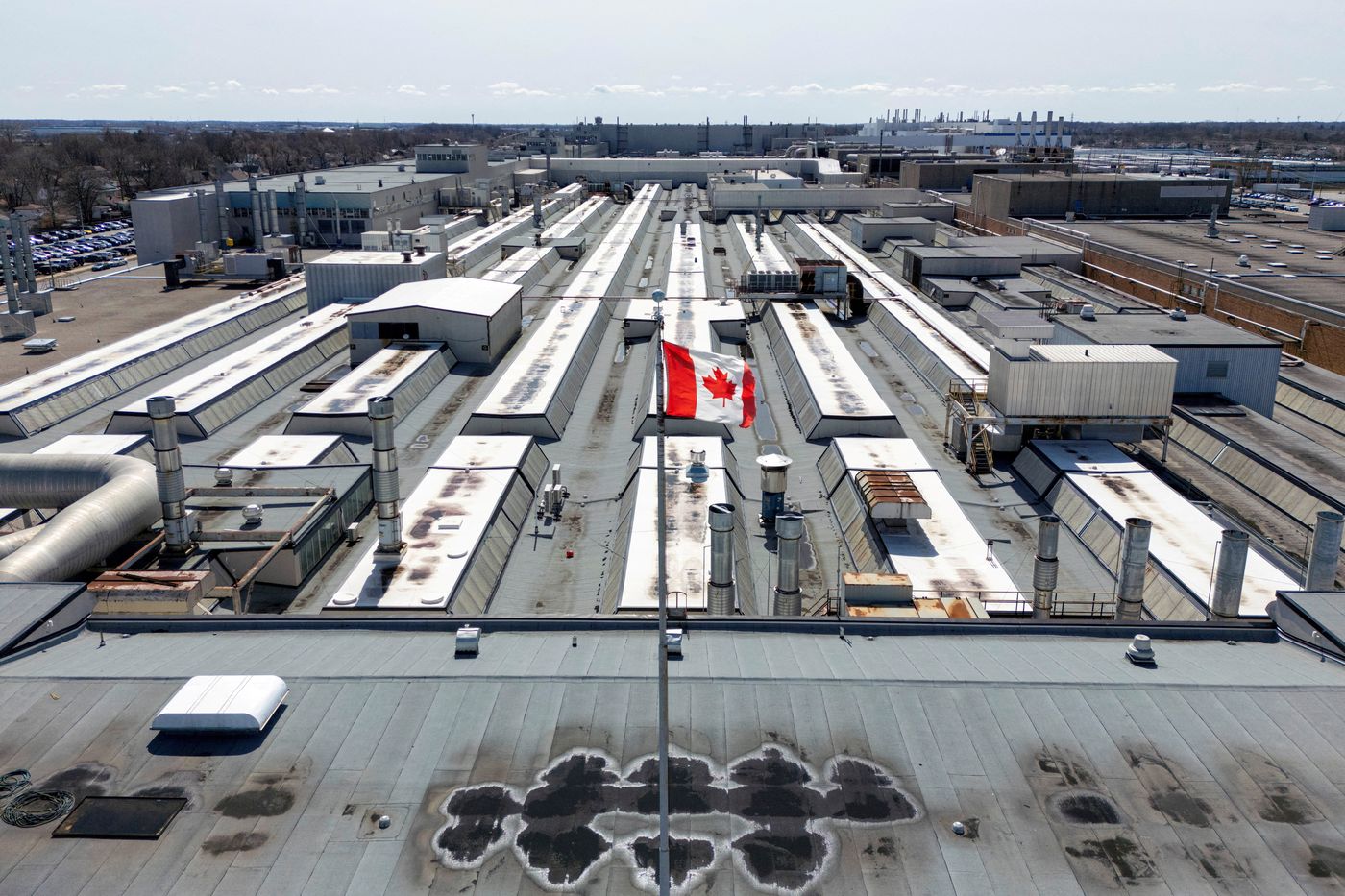
Canada has threatened to sue automaker Stellantis and recover hundreds of millions of dollars in government funding after the company shifted planned vehicle production to the United States and agreed to sell its idled assembly plant in Brampton, Ontario.
Industry Minister Mélanie Joly said Ottawa issued Stellantis a formal notice alleging breaches of its funding agreement, giving the automaker 30 days to address the violations or face legal action.
“We sent a notice of default and, basically, they have 30 days or else. Of course, we’ll sue them,” Joly told reporters in Toronto on Thursday.
She said Stellantis violated the agreement by abandoning production at Brampton without identifying a replacement vehicle.
Stellantis, the world’s fourth-largest carmaker, abandoned plans to build the Jeep Compass at its Brampton plant and shifted production to Illinois, leaving more than 2,000 Canadian workers without jobs.
Canada committed up to $529 million in 2022 to help Stellantis retool its Brampton and Windsor plants for electric vehicle production.
“Stellantis is on the hook for hundreds of millions of dollars,” Joly said.
A message left for a spokesperson for Stellantis was not immediately returned.
The company announced Monday it had agreed to sell the Brampton plant to Canadian armored vehicle manufacturer Roshel.
Prime Minister Mark Carney accused Stellantis of betraying Canadian workers, calling the sale a partial solution that failed to fulfill the company’s obligations.
Joly said federal and Ontario officials plan to meet with Stellantis’ global chief executive.
Unifor President Lana Payne said a meeting Thursday involving Stellantis, the union and both governments failed to produce a resolution.
“The time to stop that was last week, the week before and the week before that,” Payne said. “Now we’re going to a different situation. We can’t stop the sale. The sale has occurred, so we would have to reverse it, which is doubly difficult, obviously.”
Autos are Canada’s second-largest export and Carney has noted the sector employs 125,000 Canadians directly and almost another 500,000 in related industries.
U.S. political shift offers hope for trade peace
The dispute comes as a major political shift in the United States has raised hopes for an end to the broader trade war launched by President Donald Trump.
Voters handed Trump an enormous electoral reversal in this month’s midterms, and tariffs, particularly those on Canada, were a big part of the reason, according to analysis.
A docile Republican Congress will be replaced in January by large Democratic majorities in both houses, driven by voter fury over affordability.
Tariffs on Canada have far more public prominence than those on any other country, and U.S. industry is broadly opposed to them.
Canada should be pitching Americans on a return to the status quo ante of Canada-U.S. free trade, which means full respect for the United States-Canada-Mexico Agreement, according to the analysis.
With an incoming Democratic congressional majority opposed to Trump’s trade war on Canada, many Republicans similarly inclined and most voters onside, an end to the U.S. trade war on Canada has entered the realm of the possible.
Separately, Trump’s ban on Canadian liquor imports has failed to boost American whiskey producers, according to industry data.
In the 18 states where government agencies control liquor sales, Canadian whisky lost more than 15,000 cases of sales in September from a year earlier, while American whiskey gained none of them.
“There's no benefit to American producers with the import ban,” Chris Swonger, president and CEO of the Distilled Spirits Council of the United States, told Newsweek.
The best evidence that shelf bans don't work may come from Canada, where a boycott of American spirits in 2025 led to a decline in Canadian spirit sales and lost revenue for provinces.
Swonger said distillers have been handling “an unpredictable marketplace” and are “unfortunate victims in this broader trade dispute.”
On Nov. 1, Prime Minister Mark Carney said he'd had a constructive conversation with Trump and that negotiators would work toward a deal in the coming weeks.
Swonger said he is “very, very hopeful that American spirits can get back on the shelves in the provinces. And in return, the import ban can be lifted, as well.”
Time is short, with the holiday selling season being “the most important time of the year for the Canadian and U.S. spirits industry,” he said.
e2gold.ca reported earlier this month that the trade war with Canada shaped key U.S. midterm races, helping Democrats flip the Senate.
This story was written by the e2gold.ca newsroom from reporting by The Globe and Mail, Audacy and Newsweek. Quotes are checked word for word against that reporting.