US stock market news provides Canadian investors with critical information on the performance of major American indexes like the Dow Jones Industrial Average and the S&P 500, which often move independently of the Canadian market. This news is essential for Canadians with cross-border investments or those monitoring global economic trends that impact their portfolios. Understanding US market movements helps investors assess international risk, currency fluctuations, and sector-specific trends. Staying informed allows for more contextualized decisions regarding domestic holdings and broader asset allocation.
Why US Market News Matters to Canadians
Many Canadian investors hold US stocks or funds that track American indexes, making US market performance a direct component of their financial health. The economic fortunes of the United States significantly influence global trade, commodity prices, and investor sentiment, which in turn affect the Canadian economy and the TSX. News from Wall Street provides early signals about the health of sectors like technology and consumer goods that have substantial cross-border operations. Monitoring this news helps Canadians understand the external pressures and opportunities that may influence their domestic investments and the broader economic outlook.
Key Sources for US Market Updates
Canadian investors access US stock market news through a variety of dedicated financial portals and broadcasters. These sources aggregate real-time data, analysis, and headlines from both Canadian and American exchanges. They provide context by comparing the performance of the TSX against US benchmarks on the same trading day. This dual perspective is crucial for understanding relative market strength and identifying diverging trends between the two economies. Major financial news organizations offer comprehensive coverage that includes pre-market and after-hours trading activity, earnings reports from large US corporations, and commentary from market analysts. These platforms often feature curated stock picks and expert analysis from portfolio managers at Canadian wealth management firms, connecting global events to local investment strategies.
The integration of currency exchange rates, commodity prices, and geopolitical developments provides a holistic view of the factors moving markets. For example, coverage frequently notes the performance of the US dollar against the euro and the yen as investors focus on the interest rate outlook. Sources like CNBC and BNN Bloomberg deliver fast, actionable information and video summaries of daily market action. This constant flow of data and interpretation allows Canadian investors to stay current with the pace of change on Wall Street and its potential implications for their own portfolios.
How US and Canadian Markets Interact
The relationship between the US and Canadian stock markets is complex, with days of correlation and days of divergence. It is common for the S&P/TSX composite index to move in the opposite direction of major US indexes on any given trading day. For instance, the TSX can fall nearly 250 points on a day when US markets are mixed, or it can rise over 500 points while US markets also gain after a mixed start. This independence is driven by the different sector compositions of the two markets, with the TSX heavily weighted in financials and resources. Global events such as conflicts affecting oil production or shifts in central bank interest rate expectations can impact both markets, but often to varying degrees.
A rise in oil prices might lift the Canadian energy-heavy TSX while weighing on US markets concerned about inflation. Conversely, a sell-off in US technology stocks can pull the NASDAQ down but have a more muted effect on the TSX. Canadian investors must therefore analyze US news not just for its direct impact but for its potential spillover effects filtered through Canada's unique economic lens. Recent examples show the TSX closing higher with broad-based gains even as US markets had a mixed start, highlighting the importance of monitoring both sets of data independently.
Major Factors Driving US Market Headlines
US stock market news is dominated by several recurring themes that signal the health and direction of the world's largest economy. Corporate earnings season is a primary driver, where strong profit reports from major companies can lift indexes, as seen when most of the US market rose following such reports. Sector-specific momentum, particularly in technology and artificial intelligence, creates significant volatility, with those stocks swinging on worries about the sustainability of their boom. Macroeconomic data releases, such as inflation reports and job figures, directly influence market sentiment and expectations for Federal Reserve policy. Geopolitical events, including international conflicts that disrupt energy supplies, are closely watched for their potential to increase oil prices and create uncertainty. Finally, the performance of the US dollar against currencies like the euro and the yen is a key indicator of global capital flows and relative economic strength, frequently featured in market summaries. These factors combine to create the daily narrative of gains, losses, and mixed results that characterize financial news headlines and shape investor decisions.
Common Themes in Recent Market Coverage
A review of recent financial headlines reveals consistent patterns in what moves markets and captures analyst attention. The performance of artificial intelligence stocks is a major narrative, with Wall Street experiencing rebounds and steep losses in this sector based on long-term growth projections. Oil price volatility remains a central theme, frequently linked to geopolitical events such as refinery strikes in conflict zones, which officials have stated keep global energy prices high. Market coverage often highlights days where the Dow Jones Industrial Average outperforms other indexes, such as when it rose one percent while other averages had more modest gains.
The interplay between inflation data and central bank policy is a constant undercurrent in market news. Investors scrutinize reports like Canada's inflation rate increase to 3.1 percent for clues on future interest rate moves. Other common themes in market coverage include a broad sell-off in technology companies pulling stocks lower and capping off the market's worst week. Another theme is the US dollar heading for its first weekly fall against major currencies in over a month. These interconnected stories demonstrate how local data and global events weave together. They form the daily narrative of gains, losses, and mixed results in financial news.

Tracking Major Index Performance
Understanding the movement of key stock indexes is fundamental to interpreting market news. Each index represents a different segment of the market and tells a distinct story about investor sentiment and economic health. News reports frequently compare these indexes side-by-side, noting when they hit record highs, suffer their worst weeks in a period, or show mixed results. For example, the TSX can close significantly higher on the same day US markets have a mixed start, highlighting the importance of looking at multiple benchmarks for a complete picture.
- S&P 500 Index: A broader gauge of 500 large-cap US stocks, considered the leading indicator of US equity performance and its proximity to record levels.
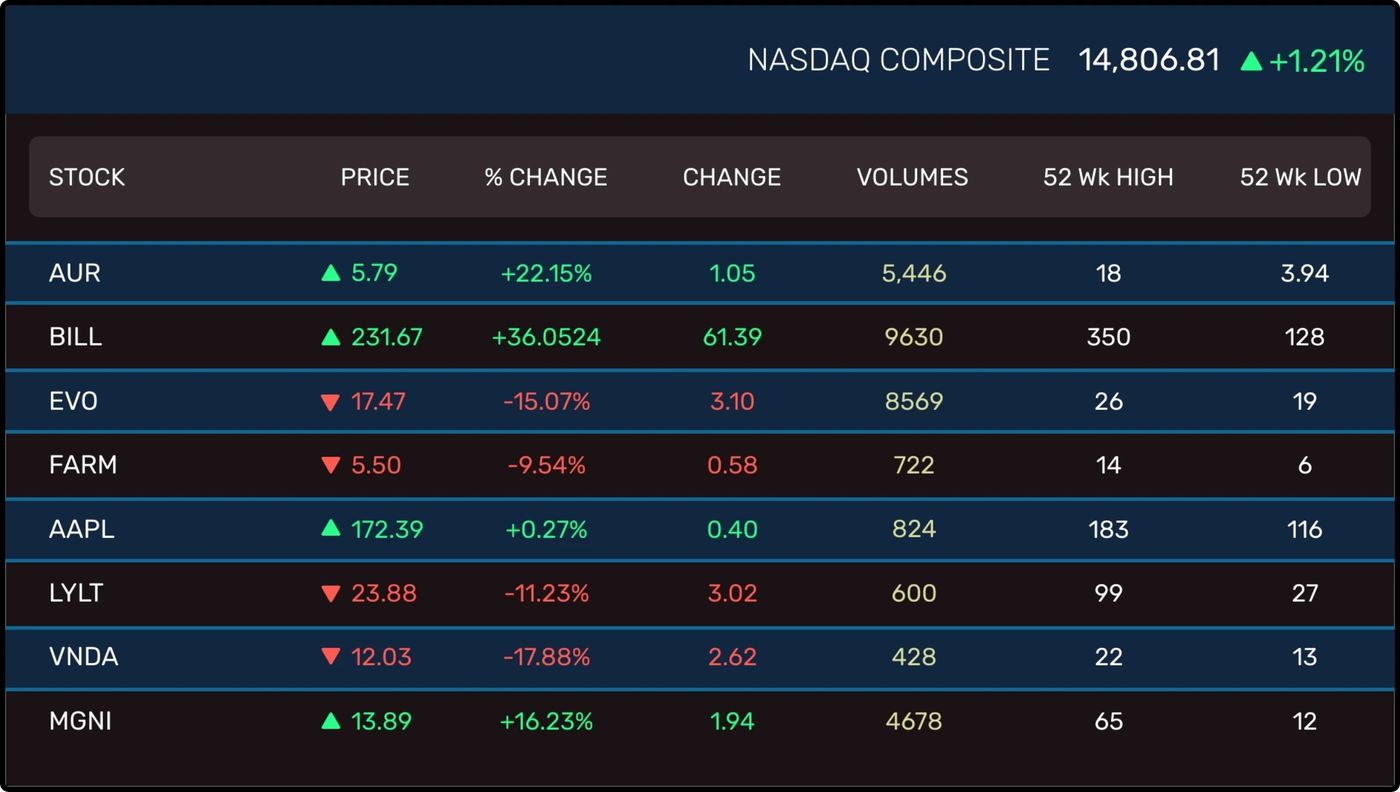
- NASDAQ Composite: Heavily weighted toward technology and growth stocks. Known for higher volatility, especially in sectors like AI where stocks swing sharply.
- S&P/TSX Composite Index: Canada's primary benchmark, reflecting the performance of the Toronto Stock Exchange, recently up 179.33 points to 36,108.
The daily change in market indexes forms the core quantitative data in most market summaries. For example, Canada's main stock index, the TSX, rose 179.33 points on one day, gaining 0.50 percent. In contrast, a broad sell-off in technology companies can pull US markets lower on another day. This tracking of index movements allows investors to quickly gauge the market's direction. It also helps indicate the relative strength of different economies and sectors. These daily changes are a fundamental part of financial news reporting.
Integrating News into a Canadian Investment Perspective
For Canadian investors, US market news should not be consumed in isolation but integrated with an understanding of domestic conditions. A rally on Wall Street driven by tech earnings may have limited direct impact on a portfolio concentrated in Canadian banks and pipelines. Conversely, news of rising US inflation can influence the Bank of Canada's policy trajectory, affecting borrowing costs for Canadian businesses and consumers. The currency exchange rate is a critical filter, as gains in US dollar-denominated assets can be amplified or reduced when converted back to Canadian dollars.
Expert analysis featured in Canadian financial news often provides this integration, with portfolio managers discussing how US trends influence their stock picks and asset allocation for Canadian clients. They may highlight opportunities or risks that arise from the divergence between markets. Ultimately, informed Canadian investors use US market news as one important data point among many, assessing its relevance to their specific holdings, financial goals, and the unique contours of the Canadian economic landscape. This approach helps in making balanced decisions that consider both the powerful influence of the US market and the distinct characteristics of the Canadian economy.
Frequently asked questions
Where can Canadians get US stock market news?
Canadians can access US market news through major financial portals like Yahoo Finance Canada and BNN Bloomberg, which provide free quotes, live updates, and analysis. These sources deliver data for all major US indexes alongside TSX information. They also feature expert commentary and stock picks from Canadian portfolio managers, contextualizing US events for a local audience. Video coverage and real-time financial market reports from global leaders like CNBC are also widely available.
Do US and Canadian stock markets move together?
US and Canadian stock markets do not always move in sync and frequently post mixed results relative to each other. The S&P/TSX composite index can fall sharply on a day when US markets are mixed, or rise strongly when US markets are also gaining. This divergence is due to different sector weights, with the TSX more focused on resources and financials compared to the technology-heavy US indexes. Daily summaries often explicitly note when one market is up while the other is down.
What was a recent example of US market performance?
A recent example saw the Dow Jones Industrial Average rise one percent on a Tuesday, outperforming other Wall Street indexes. This occurred alongside news that Canada's annual inflation rate had increased. In another instance, a broad sell-off in technology companies led to Wall Street's worst week since late June, demonstrating sector-specific volatility. US indexes have also pulled closer to their records even as AI stocks kept swinging, showing varied performance within the market.
How do oil prices affect US and Canadian markets differently?
Oil price movements often affect the Canadian and US markets differently due to their economic structures. Rising oil prices can lift Canada's resource-heavy TSX but may weigh on US markets by increasing costs and inflation concerns. News related to geopolitical events impacting oil supply, such as refinery attacks, is closely watched for its divergent impact on the two economies. This was evident when oil prices eased back after nearing high levels, a move that would be noted in both Canadian and US market coverage.
What role do earnings reports play in US market news?
Corporate earnings reports are a primary driver of US market news and daily index movements. Strong profit reports from major US companies have led to broad market gains. These quarterly reports provide direct insight into corporate health and consumer demand, making them a focal point for analysts and a frequent headline topic during earnings seasons. The absence of strong reports can contribute to mixed or negative market results, as investor sentiment hinges on this fundamental data.
Why is the artificial intelligence sector often in the news?
Stocks in the artificial intelligence industry are frequently highlighted in US market news due to their significant growth and volatility. This sector experiences sharp swings, bouncing back from steep losses or leading market sell-offs based on investor sentiment regarding the longevity of the AI boom. Its performance is a key narrative for technology-focused indexes like the NASDAQ. Recent coverage noted AI stocks recovering some of their steep losses from the prior week, illustrating the sector's headline-grabbing price movements.
Sources and further reading
- Markets bnnbloomberg.ca
This article explains how things work and is not financial, tax or legal advice. Rules, limits and rates change, so check the current figures with the Canada Revenue Agency, your province or your financial institution before you act.