Today's financial market news provides a snapshot of economic conditions, corporate developments, and policy changes that impact Canadian investors and consumers. The S&P/TSX Composite Index, Canada's primary stock market benchmark, closed at 36,107.96, reflecting a gain of 0.50% on the day. Key drivers include movements in the banking sector, energy prices, and expectations around Bank of Canada interest rate decisions. Monitoring this news is crucial for Canadians to understand the forces affecting their investments, savings, and the broader economy.
Major Canadian and Global Stock Market Indices
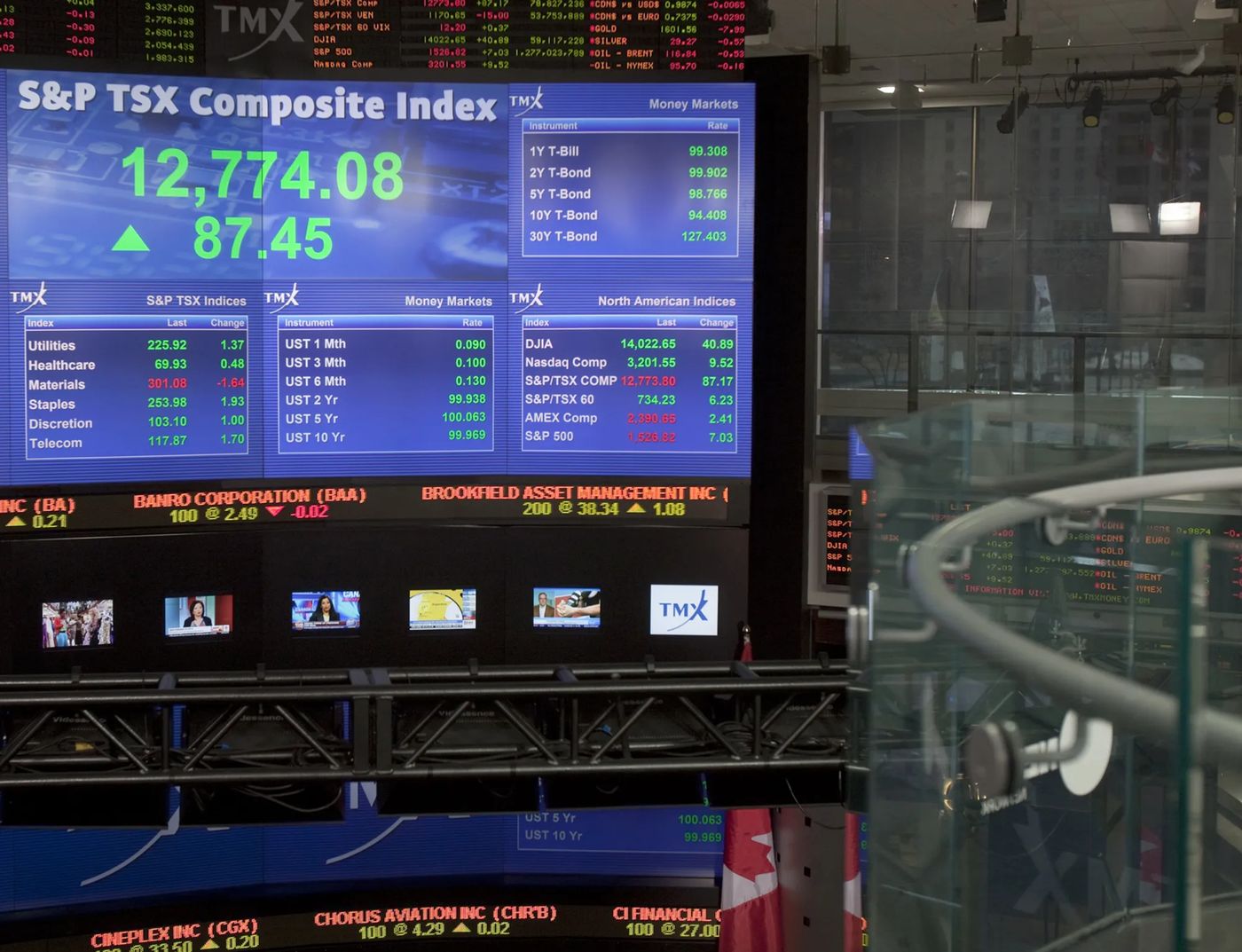
The performance of Canada's stock market is primarily tracked through the S&P/TSX Composite Index. This index closed at 36,107.96, marking a daily increase of 0.50%. In the United States, which heavily influences Canadian markets, the S&P 500 rose 0.28% to 7,712.57, while the Dow Jones Industrial Average gained 1.02% to 52,495.88. The Nasdaq 100 Index also closed higher by 0.38% on the day. These indices are updated throughout the trading day and provide a baseline for assessing market sentiment and economic health. Investors use these figures to gauge overall market direction and sector performance, with particular attention paid to the TSX's banking and resource components.

Key Economic Drivers: Commodities and Currency
Commodity prices are a fundamental component of the Canadian economy and market news. The price of crude oil, a critical export, was reported at 98.81 Canadian dollars, reflecting an increase of 1.01%. Conflicts in regions like the Middle East and Ukraine have contributed to rising diesel and gasoline prices, which strain household budgets but can boost the national economy through higher export revenues. The Canadian dollar, or loonie, traded at 0.7112 against the US dollar. Currency values are influenced by commodity prices and central bank policy expectations, with the loonie drawing support from expectations of a Bank of Canada rate hike. Cryptocurrency markets are also followed, with Bitcoin priced at 116,433.09 Canadian dollars, up 1.04%, and XRP also traded in Canadian dollars. These commodity and currency movements directly affect corporate profits, inflation, and the trade balance, making them a daily focus for analysts.
Bank of Canada Policy and Inflationary Pressures
Monetary policy set by the Bank of Canada is a central focus of financial news. Traders in overnight swaps placed an 80% probability on the Bank raising its key interest rate at its October 28 meeting. The central bank has warned that inflationary risks from energy price shocks are rising, a concern echoed in recent economic data. Governor Tiff Macklem's recent hawkish comments suggested the bank may not wait until the new year to adjust policy, indicating a sense of urgency. Higher interest rates can slow economic growth by making borrowing more expensive for consumers and businesses, potentially cooling the housing market. They also typically lead to higher returns on savings accounts and fixed-income investments, shifting capital flows. Market participants closely analyze every statement from the bank for clues about future policy direction, as these decisions ripple through every sector of the economy.
Significant Corporate Developments and Sector News
News from major corporations provides insight into sectoral health and economic trends. The performance of Canada's Big Six banks is regularly highlighted, as their results reflect consumer and business lending activity. In aerospace, former U.S. President Donald Trump appeared to be backing away from a threat to shut Canadian giant Bombardier out of the U.S. market, noting its significant operations in the state of Kansas. In the uranium sector, Cameco Corp. stated it is not hyper-promoting massive growth projects, a comment seen as a veiled dig at competitors like NexGen Energy, which decried what it called an old story of complacency. The artificial intelligence sector saw a milestone with a first Canadian lease signed by a major AI firm, marking its entry into the Canadian market. These stories illustrate the interplay between corporate strategy, government policy, and global market access.
Other notable corporate events and financial movements include the approval of a US$5.6 billion sale to Canadian billionaire Prem Watsa's firm, Fairfax. The Calgary-based airline WestJet has been hammered by global and domestic turmoil, with its bonds sliding to a record low. Dominion is looking at three facilities in Ontario and Quebec to boost its manufacturing footprint. The artificial intelligence giant secured its first lease in Canada, and a new plant in London, Ontario, is expected to open in 2028 to make transformer parts.
- Fairfax Financial Holdings, controlled by Canadian billionaire Prem Watsa, had a US$5.6 billion buyout in India approved, significantly expanding its presence there where it already invests in CSB Bank Ltd. and IIFL Capital Services Ltd.
- Stelco became involved in a potential lawsuit, with Ottawa threatening to sue its American owner in the latest development for the company with a storied history.
- WestJet bonds slid to a record low as the Calgary-based airline has been hammered by global and domestic turmoil and rising fuel costs.
- Dominion is evaluating three facilities in Ontario and Quebec to expand its manufacturing footprint and boost its production capacity.
- Dias Geophysical Ltd. will double the number of workers across its global offices over the next five years due to its new mapping technology.
- A company controlled by the family of Tom Hofstedter would buy assets worth about $2 billion, paying far less than that for them in a notable transaction.
- Two of Canada’s largest financial institutions landed on a list of banks accused of debanking, a practice of cutting off banking services.
These developments affect stock prices, employment, and Canada's competitive position in various industries. For example, Dias Geophysical Ltd. plans to double its global workforce over five years with new mapping technology. In the resource sector, Tim Hodgson noted the world is short on dependable supply of metals and minerals. Meanwhile, two of Canada's largest financial institutions were accused of debanking, and AI agents have the potential to disrupt bank business models.
Federal and Provincial Political Economic Developments
Political events at both the provincial and federal levels have direct market implications. In Alberta, Premier Danielle Smith stated it was time to move forward after the province voted against separation in a referendum, signalling a potential shift in federal-provincial relations where she noted a genuine effort to meet Alberta in the middle. The federal government is preparing its second budget under Prime Minister Mark Carney, which will outline new fiscal policy. Trade policy remains in focus, as the EU and Canada work towards fleshing out closer associate membership by 2027, building upon the existing CETA trade deal that was sealed a decade ago. Ottawa is also examining proposed changes to legislation that would raise the bar for ending strikes using Section 107, affecting labour relations. Furthermore, the defence sector is active, with the procurement of as many as 12 new vessels that could become the largest in Canadian history, and Nova Scotia finds itself positioned for a significant period of defence spending. These political decisions can alter regulatory environments, impact resource development, and influence investor confidence across the country.

Consumer Finance, Housing, and Labour Market Indicators
Market news extends to indicators of consumer health and the housing sector. Roughly half of firms surveyed in a recent report said they planned to pass on some or all of their cost increases related to the Iran war and tariffs to consumers, which can contribute to persistent inflation. In the housing market, data shows Canadians are still snapping up variable-rate mortgages despite higher interest rate expectations. Specialized products like reverse mortgages are also tracked, with new offerings from Home Equity Bank aimed at house-rich, cash-poor retirees, though a portion of the interest in such products compounds in the background. Furthermore, research indicates more than half of surveyed individuals would not be able to support themselves for six months if they lost their job, highlighting financial vulnerability. One in five hiring managers say planning labour needs is their company’s biggest hiring challenge, pointing to structural issues in the job market.
Labour Market Trends and International Interest
The Canadian labour market is showing signs of change that affect economic outlook. Foreign job seeker interest in Canadian jobs has plummeted by more than half since its recent peak in 2023, which could impact sectors reliant on international talent. Specific industrial expansions are underway, such as a new London, Ontario plant expected to open in 2028, which will be the first in Canada to make parts for transformers and employ about 100 people. In the defence industry, a company sees potential to invest with MDA Space in manufacturing or assembly facilities in Europe, creating international links. New research also questions government incentives, suggesting they can steer investment towards marginal projects and away from more deserving endeavours, affecting job creation. These trends influence wage growth, productivity, and regional economic development, with direct consequences for market sectors.
Technology, Innovation, and Market Disruption
Technological advancements are a growing theme in market news with potential to disrupt traditional sectors. Artificial intelligence agents have the potential to disrupt bank business models by automating cash transfers into higher-yielding accounts, changing personal finance. Canada's first tender for an autonomous vessel is noted as a chance to control the technology that will define the navy's future, representing a significant procurement shift. In mining and resources, an executive noted the world is not short on demand for metals and minerals, but it is short on dependable supply, highlighting a market opportunity. A lawsuit against former executives at Emerita Resources offers a view of what allegedly happened inside the company, showing the governance risks in emerging sectors. These developments point to how innovation drives new investment themes and can render old business models obsolete, a key consideration for long-term market analysis.
Historical Market Performance and Comparative Data
Today's market data is part of a longer-term historical context. The S&P/TSX Composite Index rose 0.5 percent to close at 36,108, supported by gains in the banking sector. The Dow Jones Industrial Average closed up by 1.02 percent, and the S&P 500 Index closed up by 0.38 percent. The price of crude oil was 98.81 Canadian dollars, up 1.01 percent, and Bitcoin was 116,433.09 Canadian dollars, up 1.04 percent.
| Indicator |
|---|
| S&P/TSX Composite |
| Dow Jones Industrial Average |
| S&P 500 Index |
| Nasdaq 100 Index |
| CAD/USD Exchange Rate |
| Crude Oil (CAD) |
| Bitcoin (CAD) |
| Bank of Canada Policy Rate |
Tracking these figures over weeks and months helps identify whether movements are part of a sustained trend or short-term volatility. For instance, the TSX's gain was supported by the banking sector, a common pattern during periods of rising interest rate expectations. The crude oil price remains a persistent factor, with its level significantly above historical averages due to ongoing geopolitical supply concerns from conflicts in the Middle East and Ukraine. The relative stability of the Canadian dollar despite these shocks is another point of analysis for currency traders.
Frequently asked questions
What was the TSX close today?
The S&P/TSX Composite Index, Canada's main stock market index, closed at 36,107.96 today. This represented a gain of 0.50% from the previous close. The increase was supported by positive movements in the banking sector among other factors. The TSX Venture Composite Index for smaller companies also saw activity.
What is the current Bank of Canada interest rate?
The Bank of Canada's policy interest rate is set by its governing council. The next rate announcement is scheduled for October 28. As of late afternoon trading, market participants using overnight swaps priced in an 80% probability of a rate hike at that meeting. Governor Tiff Macklem's hawkish comments have suggested the bank may act sooner rather than later.
Are Canadian mortgage rates rising?
Financial market news tracks mortgage rates closely. With an 80% probability of a Bank of Canada rate hike, borrowing costs generally face upward pressure. Reports indicate that Canadians are still opting for variable-rate mortgages. Analysts provide daily updates on the lowest national insured and uninsured mortgage rates, and new reverse mortgage products are being introduced to the market.
How are oil prices affecting Canada?
The price of crude oil was 98.81 Canadian dollars, reflecting a 1.01 percent increase. Higher crude oil values provide a boost to Canada's economy overall due to its role as a significant exporter. However, conflicts in the Middle East and Ukraine have dramatically pushed up diesel and gasoline prices, which strains Canadian households. The Bank of Canada has warned that inflationary risks from this energy shock are rising. This data influences monetary policy considerations as the central bank monitors economic impacts.
What happened with the Alberta separation referendum?
Alberta voted against separation in its recent referendum. Following the result, Premier Danielle Smith stated it was time to move forward. She described the post referendum period as a new day in the province's relationship with the federal government. Smith indicated she believes there is a genuine effort being made to meet Alberta in the middle and find a path forward. Concerns remain about how other ballot questions on immigration could impact businesses as the full results are analyzed.
What is the Canadian dollar worth versus the US dollar?
The Canadian dollar was valued at 0.7112 against the US dollar. The loonie drew support from expectations the Bank of Canada will raise interest rates at its October 28 meeting. As of late afternoon on the reporting date, traders in overnight swaps put the odds of such a rate hike at 80 percent. The currency also hit nearly a one year low recently, reflecting broader market pressures. Governor Tiff Macklem's hawkish comments have suggested the bank may not wait until the new year to adjust policy.
Sources and further reading
- BNN Bloomberg, Canada Business News, TSX Today, Oil ... bnnbloomberg.ca
- Home | Financial Post Home Page | Financial Post financialpost.com
This article explains how things work and is not financial, tax or legal advice. Rules, limits and rates change, so check the current figures with the Canada Revenue Agency, your province or your financial institution before you act.