Stocks to watch today are those with high trading activity, significant price movements, or notable company news on Canadian exchanges like the TSX and TSXV. Monitoring these stocks helps investors understand current market sentiment and sector trends. For Canadian investors, this daily view is crucial as the domestic market is concentrated in sectors like financials, energy, and basic materials. Keeping an eye on the most active and top-performing stocks provides a factual snapshot of where capital is flowing.
Understanding Daily Stock Activity
When investors look for stocks to watch, they typically refer to lists of the most actively traded securities by volume or those with the largest price movements. On a given day, the most active stocks on the TSX often include major Canadian financial institutions and energy companies. For example, recent data shows Manulife Financial Corporation, Royal Bank of Canada, Ivanhoe Mines Ltd., and Enbridge Inc. among the most active. High trading volume can indicate renewed investor interest, significant news, or institutional activity. It is a basic metric for gauging which companies are at the centre of market action without implying a recommendation to buy or sell.
Lists of most active stocks are compiled based on the total number of shares traded during the market session. This activity is a direct measure of liquidity and market interest. The specific companies that appear on these lists can change daily based on earnings releases, economic announcements, or sector-specific developments. Monitoring these lists over time can reveal patterns, such as the consistent presence of large banks and pipelines, reflecting their foundational role in the Canadian economy. This observation is descriptive and based on available trading data.

Top Gaining and Losing Stocks
Beyond daily volume, significant price changes highlight stocks experiencing notable momentum or pressure. Lists of top gainers feature companies whose share prices have risen sharply, such as Bright Minds Biosciences Inc., Booker Minerals Inc., and Deep Sea Minerals Corp. Conversely, quarterly performance reviews can show broader trends, with companies like Shopify ranking among the best performers in the third quarter of 2026 while RB Global and Aritzia were among the worst. These movements are influenced by earnings reports, sector trends, commodity prices, and broader economic data. Tracking these lists helps investors identify which sectors or stories are driving market performance at a given time.
Price movements are often analyzed over different time frames, from intraday to quarterly periods. The criteria for being a top gainer or loser is strictly numerical, based on the percentage change in a stock's price. Commentary on these movements often explores the underlying reasons, which can include company-specific news, clinical trial results for biotech firms, or changes in mineral demand. It is important to recognize that stocks appearing on these lists can be from a wide range of market capitalizations, from large established firms to smaller venture-stage companies trading on the TSX Venture Exchange.
- Bright Minds Biosciences Inc. (RUGB) is an example of a top gaining stock.
- Booker Minerals Inc. has appeared on lists of top stock gainers.
- Deep Sea Minerals Corp (SEAS) is another company identified as a top gainer.
- GURU Organic Energy (GURU) has been listed among top gaining Canadian stocks.
- Shopify was a top performer in the Canadian market for Q3 2026.
- RB Global was cited as one of the worst-performing stocks in Q3 2026.
- Aritzia was also listed among the worst-performing stocks for that quarter.
Key Sectors in the Canadian Market
The Canadian equity market has a distinct composition, with a heavy concentration in a few major sectors. Financials, energy, and basic materials traditionally represent a large portion of the TSX. This concentration means that movements in oil prices, interest rates, or commodity cycles can have an outsized impact on the overall market. Stocks like Canadian Natural Resources Limited and Suncor Energy Inc. are bellwethers for the energy sector. Similarly, Royal Bank of Canada and Toronto-Dominion Bank are central within financials. Understanding this sectoral focus is essential for contextualizing why certain stocks frequently appear on watchlists and how broader economic trends filter through to share prices.
The sector concentration is a defining characteristic of the Canadian market. This structure results from the country's economic foundations in natural resources and its stable banking system. When watching stocks, it is common to see multiple companies from the same sector move in tandem due to a macro-economic event. For instance, an announcement from the Bank of Canada on interest rates can cause simultaneous activity across all major bank stocks. This sector-driven dynamic is a key consideration when interpreting daily market data and constructing a diversified portfolio.

Sources for Market Data and Quotes
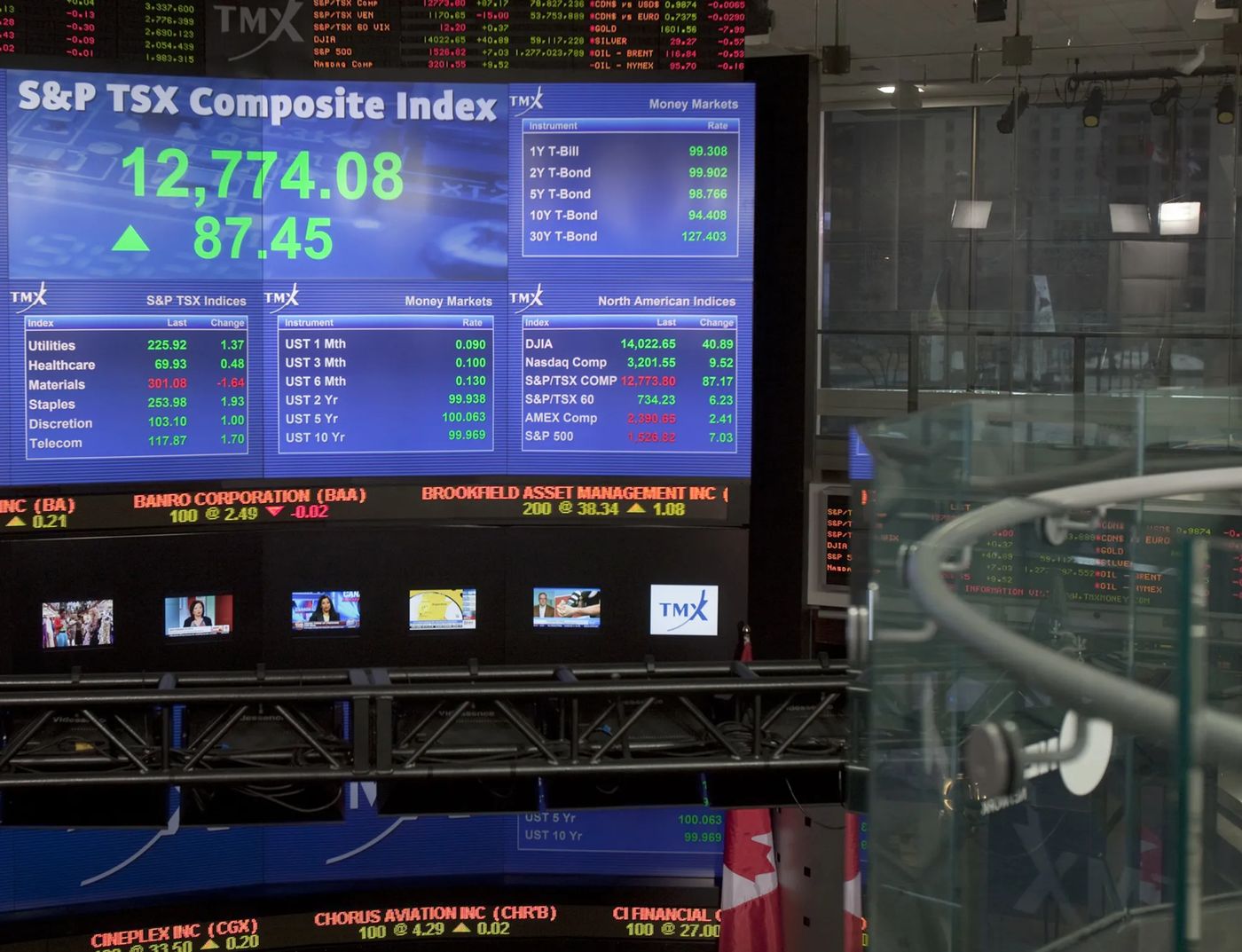
Canadian investors have access to several reliable sources for real-time stock data and news. TMX Money provides free real-time stock prices for the TSX today along with premium investor tools for research. Platforms like Yahoo Finance Canada offer live quotes and summaries of what to watch in the market each week. Stockwatch services aggregate news and quotes from multiple exchanges including the TSX, TSX Venture, CSE, and major U.S. markets like Nasdaq and NYSE. These sources provide the factual foundation for identifying stocks to watch without offering hyped analysis or product recommendations. They are essential tools for conducting independent research.
The availability of data spans both Canadian and international markets. TMX facilitates fully electronic trading on Canada's premier equities exchanges, the Toronto Stock Exchange and TSX Venture Exchange. Their market statistics provide a snapshot of trading activity. Other sources compile information from a wider array of venues, including the CSE, Montreal Exchange, and U.S. exchanges like the Nasdaq and NYSE. This allows Canadian investors to track not only domestic stocks but also foreign listings that may impact their portfolio or signal global trends.
- TMX Money offers free real-time TSX stock prices.
- Yahoo Finance Canada provides stock market live quotes and weekly outlooks.
- Stockwatch aggregates news and quotes from TSX, TSX-V, and CSE.
- Data sources also cover U.S. exchanges like Nasdaq, NYSE, and Amex.
- TMX is the operator of Canada's premier equities exchanges.
- Current market statistics are published by TMX.
Common Themes in Market Commentary
Financial commentary surrounding stocks often highlights specific attributes that attract investor attention. Common themes include dividend reliability, as seen with companies like Enbridge Inc. and its massive growth backlog. Other discussed factors are a company's underlying business strength, healthy financial performance, and the potential upside implied by analyst targets. For instance, commentary has noted a stock offering a dividend yield of close to a certain percentage or a target implying roughly 24 percent upside. These are descriptive observations about market discourse, not guarantees of future performance. They reflect the criteria some market participants use when evaluating opportunities.
The language used in market analysis frequently focuses on quantitative metrics and qualitative assessments. Dividend-related themes are prevalent due to the income focus of many Canadian investors. Observations might note a company's durable payouts, monthly distribution schedule, or how a dividend reinvestment plan can help compound returns. Other commentary may discuss a company's growth backlog, balance sheet cleanliness, or how its stock price may be on sale relative to its intrinsic value. This discourse provides context for why certain stocks become topics of discussion among investors and financial media.
Related Financial Context for Investors
The activity in the stock market exists within a broader personal finance context for Canadians. Discussions often connect to tools like the Tax Free Savings Account (TFSA), which is an excellent tool for saving and investing. Strategies such as dividend reinvestment plans (DRIPs) are highlighted for their role in helping investors compound returns. Retirement planning is another frequent topic, with analysis suggesting the savings required for a specific lifestyle can vary greatly. Furthermore, considerations like U.S. dividend withholding tax depend on the type of investment account held. These factors form the backdrop against which daily stock watching occurs, emphasizing the importance of a holistic financial plan.
Specific financial analyses often intersect with stock market observations. For example, commentary has noted that a Bank of Montreal report suggested Canadians need $1.7 million to retire, though individual needs vary. The impact of economic data, such as weak jobs figures, on potential central bank rate hikes is also discussed for its market implications. Understanding these connections helps investors see stocks not in isolation but as components of a larger financial picture that includes retirement goals, tax efficiency, and economic cycles.
- The TFSA is an excellent tool for saving and investing.
- Dividend reinvestment plans (DRIPs) help Canadian investors compound returns.
- A BMO report suggested Canadians need $1.7 million to retire.
- A rate hike remains possible after weak jobs data.
- U.S. dividend withholding tax depends on the type of account held.
- The same retirement lifestyle can require different savings balances.
Frequently asked questions
Which Canadian stock sectors are most important?
The Canadian stock market is heavily concentrated in the financials, energy, and basic materials sectors. Companies like the major banks and resource firms dominate the TSX. This means the performance of the overall market is often closely tied to commodity prices, such as oil, and to changes in interest rates that affect financial institutions. Understanding this sector concentration is key to interpreting daily market movements.
Where can I find real-time quotes for Canadian stocks?
Real-time quotes for stocks trading on the TSX and TSXV are available through several financial data providers. TMX Money offers free real-time prices for the TSX. Other sources include Yahoo Finance Canada and Stockwatch services, which aggregate data from Canadian and U.S. exchanges. These platforms provide the essential price and volume data needed to track stocks without providing investment advice.
What were some of the best-performing stocks recently?
Performance can be measured daily or over longer periods. In the third quarter of 2026, Shopify was cited among the best-performing Canadian stocks. On a daily basis, top gainers can include smaller companies like Bright Minds Biosciences Inc. or Booker Minerals Inc. that experience significant price increases. It is important to note that past performance, especially over short periods, is not indicative of future results.
Why do dividends feature so much in Canadian stock commentary?
Many large, established Canadian companies, particularly in the financial and energy sectors, have a history of paying dividends. This makes dividend yield, reliability, and growth a common focus for investors seeking income. Commentary often highlights features like Enbridge's reliable dividend or the benefits of dividend reinvestment plans (DRIPs) for compounding. Dividends are a tangible return of capital to shareholders, making them a key metric for a segment of the market.
What does 'most active stocks' mean?
Most active stocks refer to the securities with the highest trading volume on an exchange during a trading day. According to TMX Money data, examples on the TSX today include Manulife Financial Corporation (MFC.TO), Royal Bank of Canada (RY.TO), Ivanhoe Mines Ltd. (IVN.TO), and Enbridge Inc. (ENB.TO). This high volume indicates a significant number of shares are being bought and sold, which often reflects heightened investor attention. It is a measure of market liquidity and activity but does not inherently signify whether a stock is a good or bad investment.
How does the TFSA relate to stock investing?
The Tax Free Savings Account (TFSA) is a registered account that allows Canadians to invest in stocks and other securities without paying tax on any investment income earned within the account. According to The Motley Fool Canada, the TFSA is an excellent tool to help you save and build wealth through the stock market. This tax free status applies to capital gains and dividends, making it highly efficient for long term investing. Using a TFSA for stock investing can therefore help investors compound their returns more effectively over time.
Sources and further reading
This article explains how things work and is not financial, tax or legal advice. Rules, limits and rates change, so check the current figures with the Canada Revenue Agency, your province or your financial institution before you act.